Mixed Heterocycles
Subcategories of "Mixed Heterocycles"
- 7H-Purine(1 products)
- Azaindoles(26 products)
- Benzofurans(928 products)
- Benzothiophenes(701 products)
- Benzotriazoles(438 products)
- Benzoxazine(30 products)
- Benzoxazole(39 products)
- Carbolines(37 products)
- Indazoles(2,040 products)
- Isoquinoline(1,064 products)
- Morpholine(2,224 products)
- Oxadiazoles(1,174 products)
- Oxaziridines(4 products)
- Oxazole(152 products)
- Pyrazolo[1,5-a]pyridine(233 products)
- Pyrido[2,3-b]pyrazine(35 products)
- Pyrrolo[1,2-a]pyrazine(11 products)
- Pyrrolo[1,2-b]pyridazine(10 products)
- Pyrrolo[2,3-b]pyridine(285 products)
- Pyrrolo[2,3-c]pyridine(196 products)
- Quinazoline(1,013 products)
- Quinolines(5,410 products)
- Quinoxaline(439 products)
- Thiadiazoles(481 products)
- Thiazines(124 products)
- Thiazoles(4,514 products)
- Thiomorpholine(371 products)
- [1,2,3]Triazolo[4,5-b]pyridine(20 products)
- [1,2,4]Triazolo[4,3-a]pyridine(162 products)
Found 4874 products of "Mixed Heterocycles"
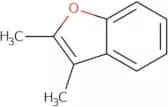
2,3-Dimethylbenzofuran
CAS:2,3-Dimethylbenzofuran (2,3-DBF) is a specific interaction that is an inorganic chemical. It has shown genotoxic effects, such as DNA damage and chromosomal aberrations, in hl-60 cells. 2,3-DBF can be acetylated by the activity of acetyltransferases to form 2,3-dimethylbenzoic acid (DMBA). DMBA is oxidized by cytochrome P450 enzymes to form DMBA quinone. DMBA quinone reacts with deuterium isotope to form an ionizable compound which can then be hydrolyzed into benzoic acid and methyl alcohol. The oxidation products of 2,3-DBF have been studied using analytical methods such as gas chromatography and mass spectrometry. These analyses showed the presence of acidic hydrolysis products and ionizable compounds.
Formula:C10H10OPurity:Min. 98 Area-%Color and Shape:Clear LiquidMolecular weight:146.19 g/mol6-FAM azide
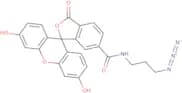
CAS:6-Fluorescein Azide or 6-FAM azide finds application in biomolecules labelling. 6-FAM azide reacts with a terminal alkyne or cyclooctene derivative with a fast click reaction, forming a stable adduct.Formula:C24H18N4O6Purity:Min. 95%Color and Shape:PowderMolecular weight:458.43 g/molRef: 3D-FC72896
Discontinued product2,5-Furandicarboxylic acid
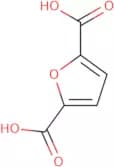
CAS:Interest in renewable based polymers has led to 2,5-furandicarboxylic acid being proposed as a green, sustainable alternative to the widely used petroleum-based terephthalic acid in the synthesis of polyesters. 2,5-Furandicarboxylic acid is produced from oxidation of 5-hydroxymethylfurfural (HMF) which is obtained from the dehydration of bio-based sugars such as fructose.
Formula:C6H4O5Purity:Min. 98 Area-%Color and Shape:White Clear LiquidMolecular weight:156.09 g/mol3-Azido-7-hydroxycoumarin
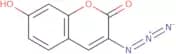
CAS:3-Azido-7-hydroxycoumarin is a water soluble coumarin derivative. 3-Azido-7-hydroxycoumarin is able to undergo highly selective and high yielding Cu(I) catalysed cycloaddition reactions with terminal alkynes (Huisgen cycloaddition or “click” chemistry) to afford the corresponding 1,2,3-triazole under relatively mild reaction conditions. The triazoles thus formed, like 7-hydroxycoumarine, are highly fluorescent and, as 3-azido-7-hydroxycoumarin itself does not fluoresce, terminal alkyne containing molecules can be effectively tagged and visualised by fluorescence spectroscopy.
Formula:C9H5N3O3Purity:Min. 98 Area-%Color and Shape:PowderMolecular weight:203.15 g/molRef: 3D-FA31762
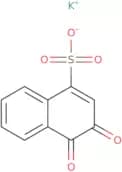
Discontinued product1,2-Naphthoquinone-4-sulfonic acid potassium salt
CAS:1,2-Naphthoquinone-4-sulfonic acid potassium salt is a pesticide that has been shown to be active against many types of insects. It is used as an insecticide and acaricide in agriculture, horticulture, and forestry. The compound is stable and does not hydrolyze in water, making it easy to handle. This product is also a natural product that can be synthesized from cyanamide and amines, which are both commercially available. 1,2-Naphthoquinone-4-sulfonic acid potassium salt has been found to be effective at killing insects when injected into their bodies with the use of a syringe or when sprayed on the surface where they live. GC–MS analysis has shown that this compound contains no reactive functional groups or substances that would cause harm to humans or animals. Research has shown this product to be safe for use in food crops and animal feed.
Formula:C10H5O5SKPurity:Min. 98 Area-%Color and Shape:Orange PowderMolecular weight:276.31 g/molRef: 3D-FN166782
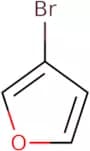
Discontinued product3-Bromofuran
CAS:3-Bromofuran is a synthetic chemical that can be used to treat cancer, specifically as an anti-cancer agent. 3-Bromofuran has been shown to inhibit the growth of tumour cells in culture. It also selectively inhibits antigen expression and induces apoptosis in tumour cells. 3-Bromofuran is synthesized by a Sharpless asymmetric dihydroxylation of hippuric acid and efficiently undergoes cross coupling reactions with electron deficient polyatomic molecules such as organoaluminium compounds. The major metabolite of 3-bromofuran is 3,4-dihydroxybenzoic acid (3,4-DHBA), which has been found to have antiviral and antibacterial properties.
Formula:C4H3BrOPurity:Min. 95%Color and Shape:Clear LiquidMolecular weight:146.97 g/mol1,6-Anhydrochitobiose hydrochloride
Please enquire for more information about 1,6-Anhydrochitobiose hydrochloride including the price, delivery time and more detailed product information at the technical inquiry form on this page
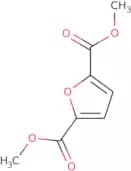
Formula:C12H22N2O8•(HCl)xPurity:Min. 95%Color and Shape:PowderMolecular weight:322.31 g/mol2,5-Furandicarboxylic acid dimethyl ester
CAS:2,5-Furandicarboxylic acid dimethyl ester is a structural analog of diacids. It has been synthesized by the reaction of 5-hydroxymethylfurfural with ethyl esters and phosphotungstic acid. The isolated yield was determined by gravimetric analysis. The structure of 2,5-furandicarboxylic acid dimethyl ester is shown in the following figure:
Formula:C8H8O5Purity:Min. 98 Area-%Color and Shape:White Off-White PowderMolecular weight:184.15 g/molRef: 3D-FF31748
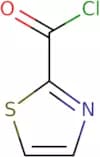
Discontinued product1,3-Thiazole-2-carbonyl chloride
CAS:1,3-Thiazole-2-carbonyl chloride is a hydrogen chloride with an amide and thionyl group. It is used in the synthesis of alicyclic compounds. 1,3-Thiazole-2-carbonyl chloride can be chlorinated to produce a chlorinating agent. This compound has been shown to have oncologic properties and can cause cancer in target cells by binding to the tyrosine kinase enzyme. It is also orally active and aromatic hydrocarbon.
Formula:C4H2ClNOSPurity:Min. 95%Color and Shape:Yellow PowderMolecular weight:147.58 g/molRef: 3D-FT06898
Discontinued product2-(Chloromethyl)-1,3-thiazole
CAS:2-(Chloromethyl)-1,3-thiazole is an aromatic hydrocarbon that is used as a pesticide. It is also a metabolic intermediate in the metabolism of chlorinating agents and has been shown to be carcinogenic. This compound degrades by reacting with hydrochloric acid, nitric acid, sodium hydroxide solution, or hydrogen chloride to form 2-chloro-1,3-thiazole or 2-chloromethyltetrahydrothiophene. The pharmacokinetic properties of this compound are unknown.
Formula:C4H4ClNSPurity:Min. 95%Color and Shape:PowderMolecular weight:133.6 g/molRef: 3D-FC124123
Discontinued product2-Thiophenemethanol
CAS:2-Thiophenemethanol is a colorless liquid that has a strong, disagreeable odor and is soluble in water. It can be prepared by the reaction of 2-methylpropanal with trifluoroacetic acid. This compound reacts with methapyrilene to form polymers, which have a cationic character. The chemical structure of the molecule was determined by a combination of experimental techniques such as proton nuclear magnetic resonance spectroscopy, infrared spectroscopy, and mass spectrometry. Hydrogen bonding plays an important role in the structure of 2-thiophenemethanol as it forms intermolecular hydrogen bonds with neighboring molecules. The chemical formula for this compound is CH3C6H4SO2H. Hydrochloric acid can be used to break down this compound into methylmercaptan and sulfur dioxide.
Formula:C5H6OSPurity:Min. 98%Color and Shape:Clear LiquidMolecular weight:114.17 g/molRef: 3D-FT00670
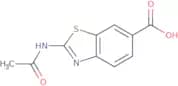
Discontinued product2-(Acetylamino)-1,3-benzothiazole-6-carboxylic acid
CAS:2-(Acetylamino)-1,3-benzothiazole-6-carboxylic acid is a chemical intermediate that is used in organic synthesis as a reagent for the preparation of other compounds. It is a versatile building block and useful scaffold for the preparation of complex compounds. This compound can be used as a reaction component for research chemicals and speciality chemicals.Formula:C10H8N2O3SPurity:Min. 95%Color and Shape:PowderMolecular weight:236.25 g/molRef: 3D-FA124679
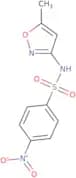
Discontinued product4-Nitro-sulfamethoxazole
CAS:Please enquire for more information about 4-Nitro-sulfamethoxazole including the price, delivery time and more detailed product information at the technical inquiry form on this page
Formula:C10H9N3O5SPurity:Min. 95%Color and Shape:PowderMolecular weight:283.26 g/molRef: 3D-FN182590
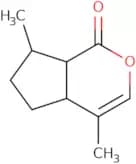
Discontinued productcis-trans Nepetalactone
CAS:荆芥内酯是一种驱虫的化合物,使猫薄荷开花植物能够吸引猫。据信,荆芥内酯可以通过模仿猫的信息素来改变猫的行为。
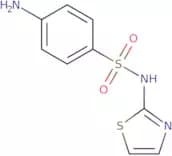
Formula:C10H14O2Purity:Min. 97 Area-%Color and Shape:Colorless Clear LiquidMolecular weight:166.22 g/molSulfathiazole
CAS:Sulfathiazole is a sulfonamide antibacterial agent with a chemical structure similar to that of the sulfa drugs. It is active against Gram-positive and Gram-negative bacteria, including those resistant to other antibiotics. Sulfathiazole has been shown to be effective against infectious diseases caused by Escherichia coli, Klebsiella pneumoniae, Proteus mirabilis, and Salmonella typhi. The mechanism of action of sulfathiazole is not fully understood. One hypothesis is that it inhibits the synthesis of folic acid in bacteria by inhibiting enzymes involved in purine metabolism. This drug also has complex pharmacological effects on human cells because it can inhibit both receptor activity and enzyme activity in complex cellular processes such as protein synthesis and DNA synthesis.
Formula:C9H9N3O2S2Purity:Min. 95%Color and Shape:PowderMolecular weight:255.32 g/molDasatinib-d8
CAS:Controlled ProductPlease enquire for more information about Dasatinib-d8 including the price, delivery time and more detailed product information at the technical inquiry form on this page
Formula:C22H18D8ClN7O2SPurity:Min. 95%Molecular weight:496.05 g/molRef: 3D-FD183325
Discontinued productFluocinolone acetonide-21-carboxylic acid
CAS:Please enquire for more information about Fluocinolone acetonide-21-carboxylic acid including the price, delivery time and more detailed product information at the technical inquiry form on this page
Formula:C24H28F2O7Purity:Min. 95%Color and Shape:PowderMolecular weight:466.47 g/molRef: 3D-FF183645
Discontinued productFmoc-Arg(Pbf)-OH (U-13C6, U-15N4)
CAS:Please enquire for more information about Fmoc-Arg(Pbf)-OH (U-13C6, U-15N4) including the price, delivery time and more detailed product information at the technical inquiry form on this page
Formula:C28C)6H40N)4O7SPurity:Min. 95%Molecular weight:658.7 g/molRef: 3D-FF183500
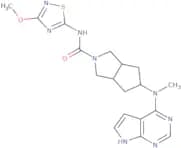
Discontinued productSHR 0302
CAS:Please enquire for more information about SHR 0302 including the price, delivery time and more detailed product information at the technical inquiry form on this page
Formula:C18H22N8O2SPurity:Min. 95%Molecular weight:414.49 g/molRef: 3D-FS182635
Discontinued product2-Furanamine hydrochloride
CAS:Please enquire for more information about 2-Furanamine hydrochloride including the price, delivery time and more detailed product information at the technical inquiry form on this page
Formula:C4H5NO•HClPurity:Min. 95%Color and Shape:PowderMolecular weight:119.55 g/molRef: 3D-FF183657
Discontinued productInosine 5'-monophosphate disodium hydrate
CAS:Please enquire for more information about Inosine 5'-monophosphate disodium hydrate including the price, delivery time and more detailed product information at the technical inquiry form on this page
Formula:C10H13N4O8P•Na2•(H2O)xPurity:Min. 95%Ref: 3D-FI183272
Discontinued productN-(2-Methyl-6-benzoxazolyl)-2-propenamide
CAS:Please enquire for more information about N-(2-Methyl-6-benzoxazolyl)-2-propenamide including the price, delivery time and more detailed product information at the technical inquiry form on this page
Formula:C11H10N2O2Purity:Min. 95%Molecular weight:202.21 g/molRef: 3D-FM184094
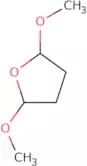
Discontinued product2,5-Dimethoxytetrahydrofuran
CAS:2,5-Dimethoxytetrahydrofuran is an organic compound that can be synthesized from 2,5-dimethoxybenzaldehyde and tetrahydrofuran. The asymmetric synthesis of this compound was first reported in 1968. The nmr spectrum of 2,5-dimethoxytetrahydrofuran shows two signals at δ 5.89 and δ 7.03 ppm. This compound is soluble in water and organic solvents such as dichloromethane, benzene, toluene, chloroform, and methanol. 2,5-Dimethoxytetrahydrofuran has been shown to have pain-relieving effects using the formalin test in mice and rats. It also has antineoplastic properties when used with other quinoline derivatives.br>br> 2,5-Dimethoxytetrahydrofuran is a white solid
Formula:C6H12O3Purity:Min. 95%Color and Shape:PowderMolecular weight:132.16 g/molRef: 3D-FD00819
Discontinued product