Mixed Heterocycles
Subcategories of "Mixed Heterocycles"
- 7H-Purine(1 products)
- Azaindoles(25 products)
- Benzofurans(924 products)
- Benzothiophenes(700 products)
- Benzotriazoles(438 products)
- Benzoxazine(30 products)
- Benzoxazole(39 products)
- Carbolines(37 products)
- Indazoles(2,038 products)
- Isoquinoline(1,064 products)
- Morpholine(2,220 products)
- Oxadiazoles(1,174 products)
- Oxaziridines(4 products)
- Oxazole(152 products)
- Pyrazolo[1,5-a]pyridine(233 products)
- Pyrido[2,3-b]pyrazine(35 products)
- Pyrrolo[1,2-a]pyrazine(11 products)
- Pyrrolo[1,2-b]pyridazine(10 products)
- Pyrrolo[2,3-b]pyridine(284 products)
- Pyrrolo[2,3-c]pyridine(196 products)
- Quinazoline(1,010 products)
- Quinolines(5,408 products)
- Quinoxaline(439 products)
- Thiadiazoles(479 products)
- Thiazines(124 products)
- Thiazoles(4,506 products)
- Thiomorpholine(371 products)
- [1,2,3]Triazolo[4,5-b]pyridine(20 products)
- [1,2,4]Triazolo[4,3-a]pyridine(162 products)
Found 4869 products of "Mixed Heterocycles"
1,6-Anhydrochitobiose hydrochloride
Please enquire for more information about 1,6-Anhydrochitobiose hydrochloride including the price, delivery time and more detailed product information at the technical inquiry form on this page
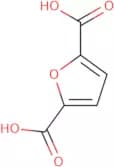
Formula:C12H22N2O8•(HCl)xPurity:Min. 95%Color and Shape:PowderMolecular weight:322.31 g/mol2,5-Furandicarboxylic acid
CAS:Interest in renewable based polymers has led to 2,5-furandicarboxylic acid being proposed as a green, sustainable alternative to the widely used petroleum-based terephthalic acid in the synthesis of polyesters. 2,5-Furandicarboxylic acid is produced from oxidation of 5-hydroxymethylfurfural (HMF) which is obtained from the dehydration of bio-based sugars such as fructose.
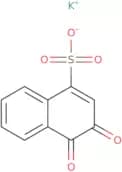
Formula:C6H4O5Purity:Min. 98 Area-%Color and Shape:White Clear LiquidMolecular weight:156.09 g/mol1,2-Naphthoquinone-4-sulfonic acid potassium salt
CAS:1,2-Naphthoquinone-4-sulfonic acid potassium salt is a pesticide that has been shown to be active against many types of insects. It is used as an insecticide and acaricide in agriculture, horticulture, and forestry. The compound is stable and does not hydrolyze in water, making it easy to handle. This product is also a natural product that can be synthesized from cyanamide and amines, which are both commercially available. 1,2-Naphthoquinone-4-sulfonic acid potassium salt has been found to be effective at killing insects when injected into their bodies with the use of a syringe or when sprayed on the surface where they live. GC–MS analysis has shown that this compound contains no reactive functional groups or substances that would cause harm to humans or animals. Research has shown this product to be safe for use in food crops and animal feed.
Formula:C10H5O5SKPurity:Min. 98 Area-%Color and Shape:Orange PowderMolecular weight:276.31 g/molRef: 3D-FN166782
Discontinued product2-Thiophenecarboxylic acid hydrazide
CAS:2-Thiophenecarboxylic acid hydrazide is a potent antifungal agent that inhibits the growth of bacteria by binding to the cell membrane. It has been shown to be an effective inhibitor of Candida albicans, as well as other fungi, including Saccharomyces cerevisiae and Aspergillus niger. 2-Thiophenecarboxylic acid hydrazide binds to the cell membrane by forming stable complexes with nitrogen atoms in the bacterial cell wall. This binding prevents the formation of an antibiotic-inhibitor complex with enzymes required for protein synthesis, resulting in inhibition of protein synthesis and cell division. 2-Thiophenecarboxylic acid hydrazide also inhibits epidermal growth factor (EGF) activity in vitro, which may be due to its ability to form amide bonds with α1-acid glycoprotein.
Formula:C5H6N2OSPurity:Min. 98 Area-%Color and Shape:White PowderMolecular weight:142.18 g/molRef: 3D-FT31175
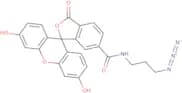
Discontinued product6-FAM azide
CAS:6-Fluorescein Azide or 6-FAM azide finds application in biomolecules labelling. 6-FAM azide reacts with a terminal alkyne or cyclooctene derivative with a fast click reaction, forming a stable adduct.Formula:C24H18N4O6Purity:Min. 95%Color and Shape:PowderMolecular weight:458.43 g/molRef: 3D-FC72896
Discontinued product2-(Chloromethyl)-1,3-thiazole
CAS:2-(Chloromethyl)-1,3-thiazole is an aromatic hydrocarbon that is used as a pesticide. It is also a metabolic intermediate in the metabolism of chlorinating agents and has been shown to be carcinogenic. This compound degrades by reacting with hydrochloric acid, nitric acid, sodium hydroxide solution, or hydrogen chloride to form 2-chloro-1,3-thiazole or 2-chloromethyltetrahydrothiophene. The pharmacokinetic properties of this compound are unknown.
Formula:C4H4ClNSPurity:Min. 95%Color and Shape:PowderMolecular weight:133.6 g/molRef: 3D-FC124123
Discontinued product2-Thiophenemethanol
CAS:2-Thiophenemethanol is a colorless liquid that has a strong, disagreeable odor and is soluble in water. It can be prepared by the reaction of 2-methylpropanal with trifluoroacetic acid. This compound reacts with methapyrilene to form polymers, which have a cationic character. The chemical structure of the molecule was determined by a combination of experimental techniques such as proton nuclear magnetic resonance spectroscopy, infrared spectroscopy, and mass spectrometry. Hydrogen bonding plays an important role in the structure of 2-thiophenemethanol as it forms intermolecular hydrogen bonds with neighboring molecules. The chemical formula for this compound is CH3C6H4SO2H. Hydrochloric acid can be used to break down this compound into methylmercaptan and sulfur dioxide.
Formula:C5H6OSPurity:Min. 98%Color and Shape:Clear LiquidMolecular weight:114.17 g/molRef: 3D-FT00670
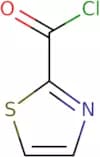
Discontinued product1,3-Thiazole-2-carbonyl chloride
CAS:1,3-Thiazole-2-carbonyl chloride is a hydrogen chloride with an amide and thionyl group. It is used in the synthesis of alicyclic compounds. 1,3-Thiazole-2-carbonyl chloride can be chlorinated to produce a chlorinating agent. This compound has been shown to have oncologic properties and can cause cancer in target cells by binding to the tyrosine kinase enzyme. It is also orally active and aromatic hydrocarbon.
Formula:C4H2ClNOSPurity:Min. 95%Color and Shape:Yellow PowderMolecular weight:147.58 g/molRef: 3D-FT06898
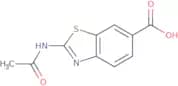
Discontinued product2-(Acetylamino)-1,3-benzothiazole-6-carboxylic acid
CAS:2-(Acetylamino)-1,3-benzothiazole-6-carboxylic acid is a chemical intermediate that is used in organic synthesis as a reagent for the preparation of other compounds. It is a versatile building block and useful scaffold for the preparation of complex compounds. This compound can be used as a reaction component for research chemicals and speciality chemicals.Formula:C10H8N2O3SPurity:Min. 95%Color and Shape:PowderMolecular weight:236.25 g/molRef: 3D-FA124679
Discontinued productFluocinolone acetonide-21-carboxylic acid
CAS:Please enquire for more information about Fluocinolone acetonide-21-carboxylic acid including the price, delivery time and more detailed product information at the technical inquiry form on this page
Formula:C24H28F2O7Purity:Min. 95%Color and Shape:PowderMolecular weight:466.47 g/molRef: 3D-FF183645
Discontinued productDasatinib-d8
CAS:Controlled ProductPlease enquire for more information about Dasatinib-d8 including the price, delivery time and more detailed product information at the technical inquiry form on this page
Formula:C22H18D8ClN7O2SPurity:Min. 95%Molecular weight:496.05 g/molRef: 3D-FD183325
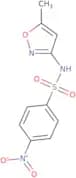
Discontinued product4-Nitro-sulfamethoxazole
CAS:Please enquire for more information about 4-Nitro-sulfamethoxazole including the price, delivery time and more detailed product information at the technical inquiry form on this page
Formula:C10H9N3O5SPurity:Min. 95%Color and Shape:PowderMolecular weight:283.26 g/molRef: 3D-FN182590
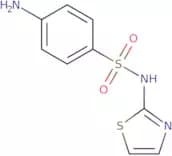
Discontinued productSulfathiazole
CAS:Sulfathiazole is a sulfonamide antibacterial agent with a chemical structure similar to that of the sulfa drugs. It is active against Gram-positive and Gram-negative bacteria, including those resistant to other antibiotics. Sulfathiazole has been shown to be effective against infectious diseases caused by Escherichia coli, Klebsiella pneumoniae, Proteus mirabilis, and Salmonella typhi. The mechanism of action of sulfathiazole is not fully understood. One hypothesis is that it inhibits the synthesis of folic acid in bacteria by inhibiting enzymes involved in purine metabolism. This drug also has complex pharmacological effects on human cells because it can inhibit both receptor activity and enzyme activity in complex cellular processes such as protein synthesis and DNA synthesis.
Formula:C9H9N3O2S2Purity:Min. 95%Color and Shape:PowderMolecular weight:255.32 g/molInosine 5'-monophosphate disodium hydrate
CAS:Please enquire for more information about Inosine 5'-monophosphate disodium hydrate including the price, delivery time and more detailed product information at the technical inquiry form on this page
Formula:C10H13N4O8P•Na2•(H2O)xPurity:Min. 95%Ref: 3D-FI183272
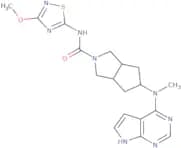
Discontinued productSHR 0302
CAS:Please enquire for more information about SHR 0302 including the price, delivery time and more detailed product information at the technical inquiry form on this page
Formula:C18H22N8O2SPurity:Min. 95%Molecular weight:414.49 g/molRef: 3D-FS182635
Discontinued product2-Furanamine hydrochloride
CAS:Please enquire for more information about 2-Furanamine hydrochloride including the price, delivery time and more detailed product information at the technical inquiry form on this page
Formula:C4H5NO•HClPurity:Min. 95%Color and Shape:PowderMolecular weight:119.55 g/molRef: 3D-FF183657
Discontinued productN-(2-Methyl-6-benzoxazolyl)-2-propenamide
CAS:Please enquire for more information about N-(2-Methyl-6-benzoxazolyl)-2-propenamide including the price, delivery time and more detailed product information at the technical inquiry form on this page
Formula:C11H10N2O2Purity:Min. 95%Molecular weight:202.21 g/molRef: 3D-FM184094
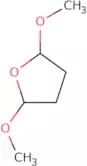
Discontinued product2,5-Dimethoxytetrahydrofuran
CAS:2,5-Dimethoxytetrahydrofuran is an organic compound that can be synthesized from 2,5-dimethoxybenzaldehyde and tetrahydrofuran. The asymmetric synthesis of this compound was first reported in 1968. The nmr spectrum of 2,5-dimethoxytetrahydrofuran shows two signals at δ 5.89 and δ 7.03 ppm. This compound is soluble in water and organic solvents such as dichloromethane, benzene, toluene, chloroform, and methanol. 2,5-Dimethoxytetrahydrofuran has been shown to have pain-relieving effects using the formalin test in mice and rats. It also has antineoplastic properties when used with other quinoline derivatives.br>br> 2,5-Dimethoxytetrahydrofuran is a white solid
Formula:C6H12O3Purity:Min. 95%Color and Shape:PowderMolecular weight:132.16 g/molRef: 3D-FD00819
Discontinued product