


Mixed Heterocycles
Subcategories of "Mixed Heterocycles"
- 7H-Purine(1 products)
- Azaindoles(26 products)
- Benzofurans(928 products)
- Benzothiophenes(701 products)
- Benzotriazoles(438 products)
- Benzoxazine(30 products)
- Benzoxazole(39 products)
- Carbolines(37 products)
- Indazoles(2,038 products)
- Isoquinoline(1,064 products)
- Morpholine(2,220 products)
- Oxadiazoles(1,174 products)
- Oxaziridines(4 products)
- Oxazole(152 products)
- Pyrazolo[1,5-a]pyridine(233 products)
- Pyrido[2,3-b]pyrazine(35 products)
- Pyrrolo[1,2-a]pyrazine(11 products)
- Pyrrolo[1,2-b]pyridazine(10 products)
- Pyrrolo[2,3-b]pyridine(284 products)
- Pyrrolo[2,3-c]pyridine(196 products)
- Quinazoline(1,012 products)
- Quinolines(5,408 products)
- Quinoxaline(439 products)
- Thiadiazoles(480 products)
- Thiazines(124 products)
- Thiazoles(4,510 products)
- Thiomorpholine(371 products)
- [1,2,3]Triazolo[4,5-b]pyridine(20 products)
- [1,2,4]Triazolo[4,3-a]pyridine(162 products)
Found 4869 products of "Mixed Heterocycles"
Benzo[d]isoxazol-3-yl-methanesulfonyl chloride
CAS:Benzo[d]isoxazol-3-yl-methanesulfonyl chloride is a synthetic intermediate that is used in the synthesis of zonisamide. This compound has a flow rate of 1.0 mL/min, monitored at 215 nm, and reproducible within 3% or 10%. It is manufactured to pharmaceutical standards and has impurities below 0.1%. Benzo[d]isoxazol-3-yl-methanesulfonyl chloride has been validated for use with liquid chromatography, and the elution time for this compound is 7 minutes. The chromatographic method for this substance consists of an acetonitrile and hydrogen phosphate mobile phase. Disodium hydrogen phosphate (DSP) can be used as an eluent modifier to reduce peak tailing and improve resolution.Formula:C8H6ClNO3SPurity:Min. 95%Color and Shape:Clear LiquidMolecular weight:231.66 g/molBenzo[b]furan-2-boronic acid
CAS:Benzo[b]furan-2-boronic acid is a potent matrix metalloproteinase inhibitor that can be used in the treatment of cancer. It is synthesized from 2-aminobenzofuran by using a Suzuki coupling reaction with boronic acid. Benzo[b]furan-2-boronic acid has been shown to inhibit MMP-1, MMP-13, and MMP-14. This compound also inhibits the activity of other proteases such as cathepsin G, elastase, and chymase. The compound has been shown to be cytotoxic against human breast cancer cells and colon cancer cells. In addition, this compound is fluorescent and its fluorescence has been shown to increase when it binds to cancer cells.Formula:C8H7BO3Purity:Min. 95%Color and Shape:White PowderMolecular weight:161.95 g/molBenzofuran-2-carboxaldehyde
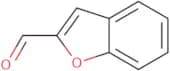
CAS:Benzofuran-2-carboxaldehyde is a compound that inhibits metathesis reactions. It has been shown to inhibit the growth of cancer cells in vivo and in vitro. Benzofuran-2-carboxaldehyde also shows estrogen receptor modulator activity, which may be due to its ability to bind to estrogen receptors. The molecular modelling study of this compound reveals a possible mechanism for benzofuran-2-carboxaldehyde’s inhibition of metathesis reactions as well as its cytotoxicity. This mechanism suggests that the benzofuran-2-carboxaldehyde molecule can form hydrogen bonds with diphenyl ether and mcf7 cells, leading to their destabilization.
Formula:C9H6O2Purity:Min. 95%Molecular weight:146.14 g/mol2-Ethoxy-1,3-thiazole-5-carbaldehyde
CAS:2-Ethoxy-1,3-thiazole-5-carbaldehyde is a fine chemical that is a versatile building block for the synthesis of complex molecules. It can be used as a reagent in organic chemistry, and it is also an intermediate in the synthesis of drugs and other compounds. This compound has been shown to be useful as a scaffold in the development of novel drug candidates.Formula:C6H7NO2SPurity:Min. 95%Color and Shape:PowderMolecular weight:157.19 g/molCopper(I) 2-Thiophenecarboxylate
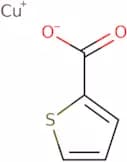
CAS:Copper(I) 2-Thiophenecarboxylate is a copper complex that has been shown to inhibit the polymerase chain reaction. It binds to the active site of DNA polymerases, blocking the ability of these enzymes to synthesize DNA. This inhibition is irreversible and can be reversed by adding excess thiophenecarboxylate ligands. Copper(I) 2-Thiophenecarboxylate also inhibits lipid kinases, which are involved in signal transduction pathways that regulate immune responses and inflammation. The compound may have potential for the treatment of autoimmune diseases such as rheumatoid arthritis. The synthesis of this compound is an example of asymmetric synthesis.Formula:C5H3CuO2SPurity:Min. 95%Color and Shape:PowderMolecular weight:190.69 g/mol2-Hydroxytetrahydrofuran
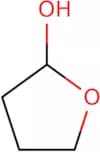
CAS:2-Hydroxytetrahydrofuran is a glycol ether that is used as an agent in various industrial processes. It has been shown to be a potent inhibitor of the Mcl-1 protein, which plays an important role in apoptosis. 2-Hydroxytetrahydrofuran has also been found to be effective against autoimmune diseases and metabolic disorders such as diabetes mellitus. In addition, this chemical is known for its ability to inhibit the oxidation of hydrogen peroxide by acting as a catalyst. 2-Hydroxytetrahydrofuran is used in wastewater treatment because it prevents the formation of nitrates and nitrites from nitrogen-containing organic compounds. This chemical can also cause eye disorders if it penetrates the cornea or other parts of the eye.Formula:C4H8O2Purity:Min. 95 Area-%Color and Shape:Colorless Clear LiquidMolecular weight:88.11 g/mol2-Acetylthiazole
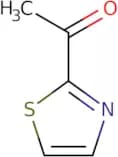
CAS:2-Acetylthiazole is a heterocyclic compound that is a derivative of thiazole. It is used in the production of dyes, pharmaceuticals and other organic compounds. 2-Acetylthiazole can be synthesized by reacting glyoxal with an acid chloride or carboxylic acid to form the corresponding sulfonyl chloride, which can then be reacted with sodium acetate in ethanol to produce 2-acetylthiazole. This reaction was found to proceed efficiently at room temperature and without the need for strong acids or bases. The product has been shown to have anticancer activity in model systems, with carbonyl groups being suggested as a possible mechanism of action. 2-Acetylthiazole is also an intermediate in the synthesis of many other organic compounds and has been shown to react with d-arabinose, producing d-ribofuranose and water.Formula:C5H5NOSPurity:Min. 95%Color and Shape:Colorless Clear LiquidMolecular weight:127.17 g/molTetrahydropyranylethyleneglycol
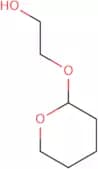
CAS:Tetrahydropyranyl ethyleneglycol is a polymerized, telechelic molecule with a hetero-bifunctional linkage. It is used in bioconjugate chemistry and has been shown to be effective in the treatment of neuropathic pain. Tetrahydropyranyl ethyleneglycol has an acidic hydroxyl group that can be used for ring-opening reactions. It also has a primary amino group that can be used for ion exchange or as a bifunctional agent. The heterobifunctional properties of tetrahydropyranyl ethyleneglycol allow it to be incorporated into polymers and other polymeric materials.Formula:C7H14O3Purity:Min. 95%Color and Shape:PowderMolecular weight:146.18 g/mol3-Amino-2-thiophenecarboxylic acid methyl ester
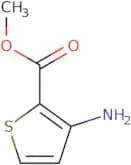
CAS:3-Amino-2-thiophenecarboxylic acid methyl ester is a replication inhibitor that targets hydroxyl groups in the mitochondrial membrane. It has been shown to induce a decrease in the mitochondrial membrane potential, leading to a loss of cell viability and an increase in locomotor activity. 3-Amino-2-thiophenecarboxylic acid methyl ester also induces apoptosis by inhibiting the expression of cyclin D1 and Bcl-XL proteins, which are key regulators of cancer cell proliferation. 3-Amino-2-thiophenecarboxylic acid methyl ester is able to inhibit cancer cell growth in vitro, which may be due to its ability to inhibit h3 acetylation and MDA-MB231 cell proliferation. 3-Amino-2-thiophenecarboxylic acid methyl ester also has antiinflammatory effects by modulating inflammation pathways such as NFκB signaling.Formula:C6H7NO2SPurity:Min. 95%Color and Shape:PowderMolecular weight:157.19 g/mol(αS)-α-[[2-(4-Morpholinyl)acetyl]amino]benzenebutanoyl-L-leucyl-L-phenylalanine phenylmethyl ester
CAS:Please enquire for more information about (αS)-α-[[2-(4-Morpholinyl)acetyl]amino]benzenebutanoyl-L-leucyl-L-phenylalanine phenylmethyl ester including the price, delivery time and more detailed product information at the technical inquiry form on this pageFormula:C38H48N4O6Purity:Min. 95%Color and Shape:PowderMolecular weight:656.81 g/mol2-Amino-4-thiazole acetic acid
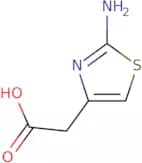
CAS:2-Amino-4-thiazole acetic acid is a trifluoroacetic acid salt that is formed by the reaction of hydrochloric acid with 2-amino-4-thiazoleacetic acid. This compound has been shown to have antimicrobial activity against gram positive bacteria, such as Staphylococcus aureus and Enterococcus faecalis. The mechanism of action is not known, but it has been hypothesized that this compound may inhibit the bacterial gyrase enzyme.Formula:C5H6N2O2SPurity:Min. 95%Color and Shape:PowderMolecular weight:158.18 g/molEthyl 2-aminothiophene-3-carboxylate
CAS:Ethyl 2-aminothiophene-3-carboxylate is a triazole derivative with anticancer activity. It has been shown to inhibit the adenosine A1 receptor and show anticancer activity in vitro. The drug has also been shown to have potent cytotoxic effects against cancer cells, which may be due to its ability to activate apoptosis in tumor cells through structural modifications that lead to the inhibition of DNA synthesis. This compound has also been shown to be less toxic than other chemotherapeutic drugs, such as thiosemicarbazide and ethylene diamine, and it does not cause red blood cell lysis or hemolysis.Formula:C7H9NO2SPurity:Min. 95%Color and Shape:Slightly Yellow PowderMolecular weight:171.22 g/mol2-Chlorobenzothiazole
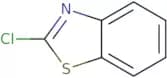
CAS:2-Chlorobenzothiazole is an organic compound with the formula CHClS. It is a reactive and versatile chemical that can be used in both synthesis and as a reagent. The compound is a white solid, but samples are often yellow due to impurities. 2-Chlorobenzothiazole can be prepared by reaction of hydrochloric acid with benzotriazole, followed by reduction of the resulting salt with sodium hydroxide. This product has shown antiinflammatory activity in mice. It has also been shown to inhibit prostaglandin synthesis in vitro through its reaction with amines and carbodiimides, which are nucleophiles, or halides such as Cl or Br. 2-Chlorobenzothiazole was also found to have cytotoxic activity against human colon cancer cells in culture.Formula:C7H4ClNPurity:Min. 95%Color and Shape:Yellow PowderMolecular weight:137.57 g/mol3-Hexylthiophene
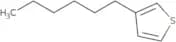
CAS:Starting reagent for synthesis of P3HT; nanofibres used for preparation of OPTsFormula:C10H16SPurity:Min. 95%Color and Shape:Colorless Clear LiquidMolecular weight:168.3 g/mol2-Mercapto-1-methylimidazole
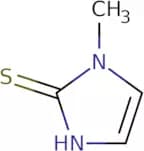
CAS:Inhibitor of thyroid peroxidase; treatment for hyperthyroidismFormula:C4H6N2SPurity:Min. 95%Color and Shape:PowderMolecular weight:114.17 g/mol2-Cyano-6-methoxy benzothiazole
CAS:2-Cyano-6-methoxy benzothiazole is a bioluminescent molecule that emits light when reacted with an enzyme from the firefly luciferase family. This molecule has been used in assays for detecting gram-negative bacteria and in vitro assays for measuring the enzyme activities of cytochrome P450, β-lactamases, and DNA gyrase. 2-Cyano-6-methoxy benzothiazole has also been used to measure human serum concentrations of drugs such as acetaminophen and phenytoin. The luminescence intensity is proportional to the concentration of these drugs in the serum. 2-Cyano-6-methoxy benzothiazole is synthesized by reacting a hydroxyl group with an inorganic acid.Formula:C9H6N2OSPurity:Min. 95%Color and Shape:White PowderMolecular weight:190.22 g/mol2-Amino-5-methylthiazole
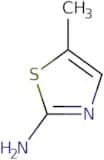
CAS:2-Amino-5-methylthiazole is a nonsteroidal anti-inflammatory drug (NSAID) that inhibits the enzyme cyclooxygenase. It has been shown to inhibit the activity of two different types of cyclooxygenase, COX-1 and COX-2, in vitro. 2-Amino-5-methylthiazole also has shown antimicrobial activity against Escherichia coli and Staphylococcus aureus. This compound is stable in high salt concentrations and at high pH values. 2-Amino-5-methylthiazole does not contain any nitrogen atoms but does have an electron rich aromatic ring and a methyl group on the side chain. The redox potential for this molecule is -0.16 V vs SHE at pH 7.4, making it more likely to be oxidized than reduced, which may explain its low reactivity with hydrogen peroxide and its ability to be stable inFormula:C4H6N2SPurity:Min. 95%Color and Shape:Off-White PowderMolecular weight:114.17 g/mol3,7-Dibromodibenzo[b,d]thiophene
CAS:3,7-Dibromodibenzo[b,d]thiophene is a polymerizable monomer that can be used for the synthesis of polymers with interesting optical properties. This material has been shown to undergo copolymerization with vinyl ethers and vinyl esters in the presence of sodium carbonate. The resulting copolymer has semiconducting properties and gel permeation chromatography showed a ring structure. Cross-coupling reactions have been used to synthesize 3,7-dibromodibenzo[b,d]thiophene from 2-bromo-1,3-dithiolane and 2-iodobenzene.
Formula:C12H6Br2SPurity:Min. 95%Color and Shape:White PowderMolecular weight:342.05 g/mol7-Bromobenzo[b]thiophene-2-carboxylic acid
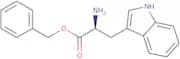
CAS:7-Bromobenzo[b]thiophene-2-carboxylic acid is a fine chemical with CAS No. 19075-59-3. It is a useful building block for research chemicals, reagents, and speciality chemicals. It has high quality and can be used as a versatile building block for reactions. 7-Bromobenzo[b]thiophene-2-carboxylic acid can also be used as an intermediate or scaffold in synthesis of complex compounds.Formula:C9H5BrO2SPurity:Min. 95%Color and Shape:White PowderMolecular weight:257.1 g/molL-Tryptophan benzyl ester
CAS:L-Tryptophan benzyl ester is an angiotensin converting enzyme (ACE) inhibitor that is used as a deodorant. It inhibits the action of ACE, which leads to the formation of angiotensin II and a decrease in blood pressure. L-Tryptophan benzyl ester also prevents the formation of metastases and reduces the risk of cancer cells spreading to other parts of the body. This drug also has solvating properties, which may lead to its ability to inhibit enzymes such as catalase and isomerase. L-Tryptophan benzyl ester has been shown to have antithrombotic effects by inhibiting platelet aggregation and reducing blood clotting time. The geometric isomers of this compound have different plasma concentrations than the optical isomers because they are not metabolised in the same way in humans.Formula:C18H18N2O2Purity:Min. 95%Color and Shape:White To Off-White SolidMolecular weight:294.35 g/mol2-(Methylthio)benzo[d]oxazole
CAS:Formula:C8H7NOSPurity:98%Color and Shape:ClearMolecular weight:165.21Ethyl 1H-pyrrolo[2,3-c]pyridine-5-carboxylate
CAS:Formula:C10H10N2O2Purity:95.0%Color and Shape:Pale-yellow to yellow-brown solidMolecular weight:190.202Pyrazolo[1,5-a]pyridin-5-ylmethanol
CAS:Formula:C8H8N2OPurity:95.0%Color and Shape:SolidMolecular weight:148.1652-{[(tert-butoxycarbonyl)amino]methyl}-1,3-oxazole-4-carboxylic acid
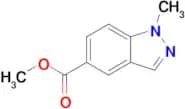
CAS:Formula:C10H14N2O5Purity:95.0%Color and Shape:SolidMolecular weight:242.231Methyl 1-methyl-1H-indazole-5-carboxylate
CAS:Formula:C10H10N2O2Purity:98%Color and Shape:Liquid, No data available.Molecular weight:190.2027-BROMO-PYRAZOLO[1,5-A]PYRIDINE-3-CARBOXYLIC ACID
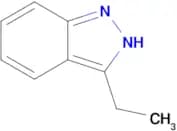
CAS:Formula:C8H5BrN2O2Purity:95.0%Molecular weight:241.044METHYL 2-(1H-INDAZOL-4-YL)ACETATE
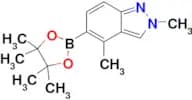
CAS:Formula:C10H10N2O2Purity:95.0%Color and Shape:Liquid, No data available.Molecular weight:190.2022,4-Dimethyl-5-(4,4,5,5-tetramethyl-1,3,2-dioxaborolan-2-yl)-2H-indazole
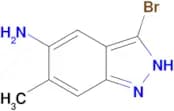
CAS:Purity:98%Molecular weight:272.1600037Ref: 10-F718532
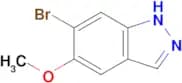
1g763.00€5g2,029.00€10g3,010.00€25g6,920.00€100g24,217.00€2.5g1,371.00€100mg252.00€250mg331.00€500mg594.00€6-Bromo-5-methoxy-1H-indazole
CAS:Formula:C8H7BrN2OPurity:98%Color and Shape:SolidMolecular weight:227.0614,5,6,7-Tetrahydro-pyrazolo[1,5-a]pyridine-3-carboxylic acid ethyl ester
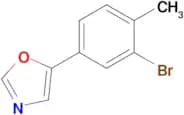
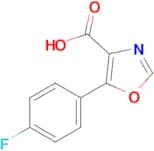
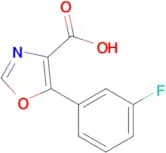
CAS:Formula:C10H14N2O2Purity:95%Molecular weight:194.2345-(3-FLUORO-PHENYL)-OXAZOLE-4-CARBOXYLIC ACID
CAS:Formula:C10H6FNO3Purity:95.0%Molecular weight:207.163-Bromo-[1,2,4]triazolo[4,3-a]pyridine-7-carboxylic acid ethyl ester
Formula:C9H8BrN3O2Purity:95.0%Molecular weight:270.0861-(4-(Benzo[d]oxazol-2-yl)phenyl)-1H-pyrrole-2,5-dione
CAS:Formula:C17H10N2O3Purity:98%Molecular weight:290.278

![Benzo[d]isoxazol-3-yl-methanesulfonyl chloride](/_next/image/?url=https%3A%2Fstatic.cymitquimica.com%2Fproducts%2F3D%2Fthumb-webp%2FFB18205.webp&w=3840&q=75)

![Benzo[b]furan-2-boronic acid](/_next/image/?url=https%3A%2Fstatic.cymitquimica.com%2Fproducts%2F3D%2Fthumb-webp%2FFB40264.webp&w=3840&q=75)

![(αS)-α-[[2-(4-Morpholinyl)acetyl]amino]benzenebutanoyl-L-leucyl-L-phenylalanine phenylmethyl ester](/_next/image/?url=https%3A%2Fstatic.cymitquimica.com%2Fproducts%2F3D%2Fthumb-webp%2FFM183824.webp&w=3840&q=75)


![3,7-Dibromodibenzo[b,d]thiophene](/_next/image/?url=https%3A%2Fstatic.cymitquimica.com%2Fproducts%2F3D%2Fthumb-webp%2FFD62242.webp&w=3840&q=75)
![7-Bromobenzo[b]thiophene-2-carboxylic acid](/_next/image/?url=https%3A%2Fstatic.cymitquimica.com%2Fproducts%2F3D%2Fthumb-webp%2FFB139377.webp&w=3840&q=75)
![2-(Methylthio)benzo[d]oxazole](/_next/image/?url=https%3A%2Fstatic.cymitquimica.com%2Fproducts%2F10%2Fthumb-webp%2FF233125.webp&w=3840&q=75)
![Ethyl 1H-pyrrolo[2,3-c]pyridine-5-carboxylate](/_next/image/?url=https%3A%2Fstatic.cymitquimica.com%2Fproducts%2F10%2Fthumb-webp%2FF221048.webp&w=3840&q=75)
![Pyrazolo[1,5-a]pyridin-5-ylmethanol](/_next/image/?url=https%3A%2Fstatic.cymitquimica.com%2Fproducts%2F10%2Fthumb-webp%2FF229605.webp&w=3840&q=75)
![4,5,6,7-Tetrahydropyrazolo[1,5-a]pyridin-5-amine](/_next/image/?url=https%3A%2Fstatic.cymitquimica.com%2Fproducts%2F10%2Fthumb-webp%2FF776654.webp&w=3840&q=75)

![2-{[(tert-butoxycarbonyl)amino]methyl}-1,3-oxazole-4-carboxylic acid](/_next/image/?url=https%3A%2Fstatic.cymitquimica.com%2Fproducts%2F10%2Fthumb-webp%2FF496754.webp&w=3840&q=75)
![5-Methoxypyrazolo[1,5-a]pyridine-2-carboxylic acid](/_next/image/?url=https%3A%2Fstatic.cymitquimica.com%2Fproducts%2F10%2Fthumb-webp%2FF634975.webp&w=3840&q=75)


![Methyl 5-aminobenzo[d]oxazole-2-carboxylate](/_next/image/?url=https%3A%2Fstatic.cymitquimica.com%2Fproducts%2F10%2Fthumb-webp%2FF225509.webp&w=3840&q=75)
![7-BROMO-PYRAZOLO[1,5-A]PYRIDINE-3-CARBOXYLIC ACID](/_next/image/?url=https%3A%2Fstatic.cymitquimica.com%2Fproducts%2F10%2Fthumb-webp%2FF467805.webp&w=3840&q=75)

![6-Methoxypyrido[3,2-b]pyrazin-3(4H)-one](/_next/image/?url=https%3A%2Fstatic.cymitquimica.com%2Fproducts%2F10%2Fthumb-webp%2FF222277.webp&w=3840&q=75)

![4,5,6,7-Tetrahydro-pyrazolo[1,5-a]pyridine-3-carboxylic acid ethyl ester](/_next/image/?url=https%3A%2Fstatic.cymitquimica.com%2Fproducts%2F10%2Fthumb-webp%2FF475652.webp&w=3840&q=75)

![3-Bromo-[1,2,4]triazolo[4,3-a]pyridine-7-carboxylic acid ethyl ester](/_next/image/?url=https%3A%2Fstatic.cymitquimica.com%2Fproducts%2F10%2Fthumb-webp%2FF521900.webp&w=3840&q=75)
![1-(4-(Benzo[d]oxazol-2-yl)phenyl)-1H-pyrrole-2,5-dione](/_next/image/?url=https%3A%2Fstatic.cymitquimica.com%2Fproducts%2F10%2Fthumb-webp%2FF437631.webp&w=3840&q=75)