Benzenes
Benzenes are simple aromatic hydrocarbons consisting of a six-membered carbon ring with alternating double bonds. This fundamental structure is a building block for numerous chemical compounds, including pharmaceuticals, polymers, and dyes. Benzenes are used extensively in organic synthesis due to their stability and versatility. At CymitQuimica, we provide a broad range of high-quality benzenes to support your research and industrial applications.
Subcategories of "Benzenes"
- Benzamides(62 products)
- Benzoic Acids(5,475 products)
- Benzyl alcohols(1,458 products)
- Halogenated Benzenes(33,965 products)
- Phenols(2,663 products)
Found 11887 products of "Benzenes"
Sort by
Purity (%)
0
100
|
0
|
50
|
90
|
95
|
100
2-Chloro-4-methylsulfonylbenzoic acid
CAS:2-Chloro-4-methylsulfonylbenzoic acid is a chlorinating agent that can be used to produce triketones from ketones. It is usually used as a hydrogen peroxide scavenger and a chlorinating agent in the food industry. 2-Chloro-4-methylsulfonylbenzoic acid can also be used to produce glyphosate, phosphoric acid solution, and chloride. The chlorinating property of this compound is due to its ability to form hypochlorous acid when it reacts with water. This reaction produces hypochlorite ions that are active against microorganisms by disrupting the cell membrane. 2-Chloro-4-methylsulfonylbenzoic acid can react with organic solvents such as carbon tetrachloride and optimizes the introduction of chlorine into organic compounds.Formula:C8H7ClO4SPurity:Min. 95%Color and Shape:White PowderMolecular weight:234.66 g/mol3,5-Dichlorobenzaldehyde
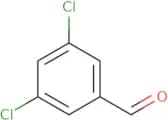
CAS:3,5-Dichlorobenzaldehyde is an organic compound with the formula CHClO. It is a colorless liquid that smells like freshly cut grass. 3,5-Dichlorobenzaldehyde is used in organic synthesis as an electrophile for the preparation of substituted benzoquinones and other heterocycles. It is also used to prepare aromatic amines via aldol condensation with ketones. In addition, it can be used to generate azides from nitroarenes or nitroalkanes in the presence of sodium azide or potassium azide. Finally, it can be used to synthesize molybdenum compounds such as molybdic acid and ammonium molybdate.Formula:C7H4Cl2OPurity:Min. 95%Color and Shape:PowderMolecular weight:175.01 g/mol2,4-Dinitrobenzoic acid
CAS:2,4-Dinitrobenzoic acid (2,4-DNBA) is a chemical reagent that has been used as a positive control for the detection of hydrogen bonding interactions. It is also used in analytical methods to detect protonation, carboxylate, and hydroxyl groups. This compound can be prepared from picric acid by nitration with nitric acid and then reacting with aniline. The 2,4-DNBA molecule contains two intramolecular hydrogen bonds and four intermolecular hydrogen bonds. 2,4-DNBA is classified as a trifluoroacetic acid derivative.Formula:C7H4N2O6Purity:Min. 96 Area-%Color and Shape:Slightly Yellow PowderMolecular weight:212.12 g/mol2,4,6-Trihydroxybenzoic acid methyl ester
CAS:2,4,6-Trihydroxybenzoic acid methyl ester is a synthetic compound that has been used in animal studies to investigate the inflammatory effects of substances. It has been shown to have anti-inflammatory properties in vitro and in vivo. Furthermore, 2,4,6-Trihydroxybenzoic acid methyl ester has been shown to inhibit the production of tumour necrosis factor-α (TNF-α) and other cytokines. This drug also has anti-fungal activity against Candida albicans and Aspergillus fumigatus. 2,4,6-Trihydroxybenzoic acid methyl ester is biodegradable.
Formula:C8H8O5Purity:Min. 95%Color and Shape:PowderMolecular weight:184.15 g/mol2,3,4-Trimethoxy-6-methylbenzaldehyde
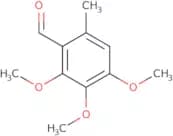
CAS:2,3,4-Trimethoxy-6-methylbenzaldehyde is a synthetic coumarin with antibacterial activity. It is synthesized by the condensation of 3-hydroxyacetophenone and benzaldehyde. 2,3,4-Trimethoxy-6-methylbenzaldehyde has been shown to have antibacterial activity against both Gram-positive and Gram-negative bacteria. This molecule has also been shown to inhibit the growth of Gram negative bacteria in the presence of hydrogen peroxide. The crystal structure of this molecule was determined by XRD analysis and shows that it contains a dihedral angle of about 155°.Formula:C11H14O4Purity:Min. 95%Molecular weight:210.23 g/mol2-Iodo-6-nitrotoluene
CAS:Formula:C7H6INO2Purity:97%Color and Shape:Solid, Low Melting SolidMolecular weight:263.0344-Bromo-2-fluoro-5-nitrobenzaldehyde
CAS:Formula:C7H3BrFNO3Purity:95%Color and Shape:SolidMolecular weight:248.0073-Methyl-4-nitrobenzoic acid
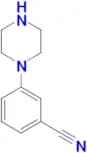
CAS:Formula:C8H7NO4Purity:97%Color and Shape:SolidMolecular weight:181.1471-(3-Cyanophenyl)piperazine
CAS:Formula:C11H13N3Purity:96%Color and Shape:Low Melting SolidMolecular weight:187.2465-Bromo-2,4-difluoronitrobenzene
CAS:Formula:C6H2BrF2NO2Purity:95%Color and Shape:Solid, Low Melting SolidMolecular weight:237.9884-Fluoro-3-(trifluoromethoxy)benzonitrile
CAS:Formula:C8H3F4NOPurity:98%Color and Shape:LiquidMolecular weight:205.112




![4-[(6-oxo-1,6-dihydropyrimidin-2-yl)amino]benzonitrile](/_next/image/?url=https%3A%2Fstatic.cymitquimica.com%2Fproducts%2F10%2Fthumb-webp%2FF857779.webp&w=3840&q=75)