Benzenes
Subcategories of "Benzenes"
- Benzamides(62 products)
- Benzoic Acids(5,474 products)
- Benzyl alcohols(1,458 products)
- Halogenated Benzenes(33,965 products)
- Phenols(2,664 products)
Found 11889 products of "Benzenes"
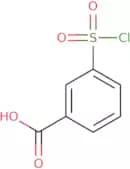
3-(Chlorosulfonyl)benzoic acid
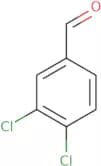
CAS:3-(Chlorosulfonyl)benzoic acid is a synthetic compound that inhibits histone lysine methylation. It has been shown to protect against neuronal injury and cognitive impairment. 3-(Chlorosulfonyl)benzoic acid also has an inhibitory effect on the activation of Sirt2, which is an enzyme involved in cellular processes such as cancer, diabetes, inflammation, and aging. 3-(Chlorosulfonyl)benzoic acid has low potency and is not very soluble in water. It can be used to treat metabolic disorders by increasing the amount of insulin released from the pancreas and lowering blood glucose levels.Formula:C7H5ClO4SPurity:Min. 95%Molecular weight:220.63 g/mol3,4-Dichlorobenzaldehyde
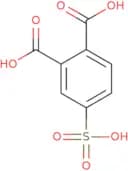
CAS:3,4-Dichlorobenzaldehyde is a monosubstituted aromatic organic compound with inhibitory effects. 3,4-Dichlorobenzaldehyde has shown significant antifungal activity against Candida albicans and Saccharomyces cerevisiae. It also inhibits the growth of certain cancer cells in cell culture studies. 3,4-Dichlorobenzaldehyde has been found to have anti-inflammatory properties and would be effective in treating inflammatory diseases such as asthma or arthritis. This compound has been shown to have significant effects on energy metabolism and fatty acid synthesis by inhibiting enzymes that are involved in these processes. 3,4-Dichlorobenzaldehyde can also be used to treat metabolic disorders such as diabetes mellitus type II and hyperlipidemia by inhibiting enzymes that are involved in these processes.Formula:C7H4Cl2OPurity:Min. 95%Color and Shape:White To Off-White SolidMolecular weight:175.01 g/mol4-Sulfophthalic acid (contains 3-sulfophthalic acid), 50% aqueous solution
CAS:Please enquire for more information about 4-Sulfophthalic acid (contains 3-sulfophthalic acid), 50% aqueous solution including the price, delivery time and more detailed product information at the technical inquiry form on this page
Formula:C8H6O7SPurity:80%Molecular weight:246.2 g/mol4-Cyanobenzoic acid
CAS:4-Cyanobenzoic acid (4CB) is a benzene derivative that inhibits the activity of tyrosinase, an enzyme involved in the production of melanin. It is synthesized by reacting 2,4-dichlorobenzoic acid with sodium hydroxide and acetone. 4CB has been shown to have a potent inhibitory effect on the enzyme, with an isolated yield of up to 83%. The compound also shows strong hydrogen bonding interactions with water molecules and coordinates in a geometry where one of its oxygen atoms is double bonded to two nitrogen atoms. This structural analysis suggests that 4 CB may bind to tyrosinase through adsorption mechanism.
Formula:C8H5NO2Purity:Min. 95%Color and Shape:White PowderMolecular weight:147.13 g/mol2-Fluoro-4-iodobenzonitrile
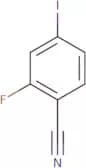
CAS:2-fluoro-4-iodobenzonitrile is a potent inhibitor of the functions of VEGFR receptors. It inhibits the proliferation and migration of cancer cells by binding to VEGFR receptors, which are tyrosine kinases that regulate cell growth and differentiation. 2-Fluoro-4-iodobenzonitrile has been shown to inhibit angiogenesis, or the formation of new blood vessels, in vitro. This drug also has potent inhibitory activity against tumor growth in vivo. Clinical trials have shown that 2-fluoro-4-iodobenzonitrile can be used to treat various types of cancers, including breast cancer and colon cancer.
Formula:C7H3FINPurity:Min. 95%Color and Shape:PowderMolecular weight:247.01 g/mol4-Bromo-2-hydroxybenzaldehyde
CAS:4-Bromo-2-hydroxybenzaldehyde is a versatile building block that can be used as a reaction component to synthesize other compounds. 4-Bromo-2-hydroxybenzaldehyde is a useful intermediate in the manufacture of pharmaceuticals, pesticides, and herbicides. This chemical also has various applications in research and industry. It is an important reagent for the production of polymers and resins, as well as being an essential raw material for the synthesis of pharmaceuticals and agrochemicals.
Formula:C7H5BrO2Molecular weight:201.02 g/molRef: 3D-W-201939
25gTo inquire50gTo inquire100gTo inquire250gTo inquire500gTo inquire-Unit-ggTo inquire4-(Bromomethyl) benzoic acid
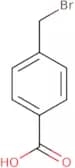
CAS:4-(Bromomethyl) benzoic acid (4-BA) is a chemical compound that is used as an antimicrobial agent and a reagent in organic synthesis. It has been shown to have a broad spectrum of activity against Gram-positive and Gram-negative bacteria, fungi, and protozoa. 4-BA is stable at neutral pH and can be prepared by the reaction of 2-bromobenzeneacetic acid with sodium borohydride in the presence of acetic acid. This compound reacts with nucleophiles such as imatinib, forming an iminium intermediate. The resulting product can then react with chloride or hydrogen bond to form 4-BA chloride or 4-BA hydrogen bond respectively. Magnetic resonance spectroscopy has also been used to study the magnetic properties of this compound.
Formula:C8H7BrO2Purity:Min. 95%Color and Shape:White PowderMolecular weight:215.04 g/mol1,4-Dicaffeoylquinic acid
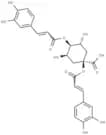
CAS:1,4-Dicaffeoylquinic acid: an antioxidant and selective HIV-1 integrase inhibitor, non-toxic at effective doses.Formula:C25H24O12Purity:97.32% - 99.85%Color and Shape:SolidMolecular weight:516.453-Chloro-5-iodobenzoic acid methyl ester
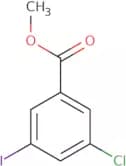
CAS:3-Chloro-5-iodobenzoic acid methyl ester is a versatile building block that can be used to make many complex compounds, including research chemicals and reagents. 3-Chloro-5-iodobenzoic acid methyl ester is used as an intermediate for the production of speciality chemicals and has many uses in chemical reactions. This compound was previously sold under the CAS number 289039-85-6.Formula:C8H6ClIO2Purity:Min. 95%Color and Shape:PowderMolecular weight:296.49 g/mol(-)-Corey lactone 4-phenylbenzoate
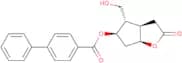
CAS:Corey lactone 4-phenylbenzoate is an efficient, large-scale preparation of (-)-Corey lactone. It is synthesized in two steps from 4-phenylbenzoic acid and ethyl acetoacetate. Corey lactone 4-phenylbenzoate has been used for the synthesis of a variety of natural products. This compound is also a precursor to the synthesis of other compounds, such as 3-amino-4-(2'-hydroxyethoxy)benzaldehyde.Formula:C21H20O5Purity:Min. 95%Molecular weight:352.38 g/mol4-Hydrazinobenzoic acid hydrochloride
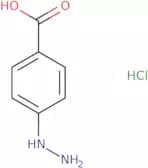
CAS:4-Hydrazinobenzoic acid hydrochloride is a chemical species that has an oxidative effect on DNA. It is a reactive oxygen species (ROS) that changes the hydrogen spectrum of water. The hydrogen bond is broken and the electrons in the molecule are excited to a higher energy level, which results in ROS formation. 4-Hydrazinobenzoic acid hydrochloride also inhibits mitochondrial function and causes heart disease by increasing blood pressure and weakening the heart muscle. This compound can be used as a cancer treatment for human cells, because it suppresses genes that promote cell growth. In addition, 4-hydrazinobenzoic acid hydrochloride may inhibit endothelial cell proliferation in animal experiments.
Formula:C7H8N2O2•HClPurity:Min. 95%Color and Shape:PowderMolecular weight:188.61 g/molMethyl 4-amino-2-methoxybenzoate
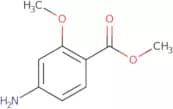
CAS:Methyl 4-amino-2-methoxybenzoate is a solute with anticancer activity. It has been shown to inhibit the growth of erythrocytes and cancer cells in vitro. The mechanism of action is associated with its ability to bind to aminobenzothiazole, which inhibits the production of DNA and RNA. Methyl 4-amino-2-methoxybenzoate has also been shown to inhibit the proliferation of human muscle cells and induce their differentiation. This drug does not have any effect on lipid or protein synthesis in cells, which may be due to its solvent perturbation properties.Formula:C9H11NO3Purity:Min. 95%Color and Shape:PowderMolecular weight:181.19 g/mol4,6-Dimethoxysalicylaldehyde
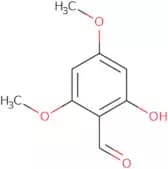
CAS:4,6-Dimethoxysalicylaldehyde is a protonated molecule with a cyclohexane ring and 4 hydroxyl groups. Its chemical formula is C6H8O3. The compound has low bioavailability due to the presence of an intramolecular hydrogen bond that causes high redox potential. There are two amines on the aromatic ring which can coordinate with metal ions to form a complex. This compound's structural analysis has been conducted using X-ray crystallography, NMR spectroscopy, and IR spectroscopy. The structure of 4,6-dimethoxysalicylaldehyde is unsymmetrical due to the presence of two asymmetric carbon atoms in the molecule. It forms hydrogen bonds with other molecules due to its hydroxyl group and intramolecular hydrogen bond. Hydrogen bonding interactions occur between this compound and other molecules including water, alcohols, ammonia, amines, and carboxylic acids.Formula:C9H10O4Purity:Min. 95%Color and Shape:Off-White PowderMolecular weight:182.17 g/mol2-(Boc-aminomethyl)benzoic acid
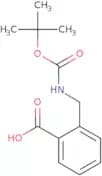
CAS:2-(Boc-aminomethyl)benzoic acid is a versatile building block with a wide range of applications in the field of organic chemistry. It has been shown to be useful as a reagent in the synthesis of complex compounds and fine chemicals, as well as a reaction component for the preparation of pharmaceuticals. 2-(Boc-aminomethyl)benzoic acid can also be used as an intermediate in the synthesis of speciality chemicals such as herbicides, pesticides, and fungicides.
Formula:C13H17NO4Purity:Min. 95%Color and Shape:PowderMolecular weight:251.28 g/molMethyl 3,4-dimethoxybenzoate
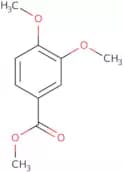
CAS:Methyl 3,4-dimethoxybenzoate is an acetate extract that has been shown to inhibit tyrosinase activity. This compound also has a potent inhibitory effect on the production of p-hydroxybenzoic acid. Methyl 3,4-dimethoxybenzoate can be synthesized from protocatechuic acid and methoxy groups. It is a chemical reaction involving three steps: condensation, dehydration, and reduction. Tyrosinase is an enzyme in the melanin biosynthetic pathway that catalyzes the conversion of tyrosine to dopaquinone. Tyrosinase activity can be inhibited by methyl 3,4-dimethoxybenzoate through competitive inhibition or by its ability to reduce the availability of substrate for this enzyme.Formula:C10H12O4Purity:Min. 95%Color and Shape:PowderMolecular weight:196.2 g/mol2-Acetylbenzoic acid
CAS:2-Acetylbenzoic acid is a functional molecule that contains an acetyl group. It can form hydrogen bonds with other molecules and has been shown to induce apoptosis in cells. The reaction products of 2-acetylbenzoic acid are malonic acid, acetylsalicylic acid, and 2-benzoylbenzoic acid. These three compounds are made by the addition of hydrogen or hydroxide to the molecule 2-acetylbenzoic acid. The molecule has two functional groups: a carbonyl group and an acetyl group. The chemical structure of this molecule can be seen in the figure below.
2-Acetylbenzoic AcidFormula:C9H8O3Purity:Min. 95%Color and Shape:PowderMolecular weight:164.16 g/mol3,3'-Dithiobis[6-nitrobenzoic acid] bis(succinimide) ester
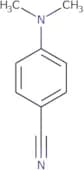
CAS:3,3'-Dithiobis[6-nitrobenzoic acid] bis(succinimide) ester is a reagent and reaction component. It is used as a building block to create other compounds that are useful in research and development of pharmaceuticals, agrochemicals, cosmetics, and other applications. 3,3'-Dithiobis[6-nitrobenzoic acid] bis(succinimide) ester can be used as a versatile building block to produce complex structures with high purity. It is also used as an intermediate for the synthesis of fine chemicals such as pharmaceuticals and agrochemicals. This product has CAS No. 60129-38-6.Formula:C22H14N4O12S2Purity:Min. 95%Color and Shape:PowderMolecular weight:590.5 g/mol1-Cyano-4-(dimethylamino)benzene
CAS:1-Cyano-4-(dimethylamino)benzene is a molecule that has been shown to inhibit the growth of hamster v79 cells. It also inhibits the synthesis of DNA and RNA. The binding constants for this molecule have been determined to be 1.0 x 10^9 M^-1, with an n-octanol/water partition coefficient (log P) of 5.5. This molecule is soluble in nonpolar solvents and may be used as a model system for hydrogen bonding interactions or reaction mechanisms in organic chemistry. This compound contains a deuterium isotope and can be used to study the effects of hydrogen bonding on reactions in organic chemistry at high temperatures, with the use of preparative hplc.Formula:C9H10N2Purity:Min. 95%Color and Shape:Beige PowderMolecular weight:146.19 g/mol4-Bromobenzaldehyde
CAS:4-Bromobenzaldehyde is a chemical compound that belongs to the group of aromatic compounds. It has been shown to have a potent stimulatory effect on locomotor activity in mice, which may be due to its ability to increase levels of epidermal growth factor and gamma-aminobutyric acid in the brain. 4-Bromobenzaldehyde can be synthesized from 2,4-dibromophenol and anhydrous copper chloride in the presence of sodium hydroxide. The reaction mechanism for this synthesis is believed to involve an intermediate enamine form of 4-bromobenzaldehyde, which can then undergo hydrolysis into 2,4-dibromophenol and benzaldehyde. This product is used as a reagent in organic synthesis because it can be used to form esters with trifluoroacetic acid or hydrochloric acid in high yield.
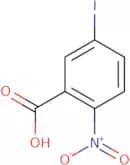
Formula:C7H5BrOPurity:Min. 90 Area-%Color and Shape:White PowderMolecular weight:185.02 g/mol5-Iodo-2-nitrobenzoic acid
CAS:5-Iodo-2-nitrobenzoic acid is a fine chemical that is used as a building block in the synthesis of complex compounds and research chemicals. This compound has been shown to be an effective reagent for the synthesis of many different types of compounds. It can also be used as a reactant or intermediate in organic syntheses, such as those involving cross-coupling reactions. 5-Iodo-2-nitrobenzoic acid is a versatile building block that can be used in both simple and complex chemical reactions.Formula:C7H4INO4Purity:Min. 95%Color and Shape:Yellow PowderMolecular weight:293.02 g/mol





![3,3'-Dithiobis[6-nitrobenzoic acid] bis(succinimide) ester](/_next/image/?url=https%3A%2Fstatic.cymitquimica.com%2Fproducts%2F3D%2Fthumb-webp%2FFD15467.webp&w=3840&q=75)