Benzenes
Benzenes are simple aromatic hydrocarbons consisting of a six-membered carbon ring with alternating double bonds. This fundamental structure is a building block for numerous chemical compounds, including pharmaceuticals, polymers, and dyes. Benzenes are used extensively in organic synthesis due to their stability and versatility. At CymitQuimica, we provide a broad range of high-quality benzenes to support your research and industrial applications.
Subcategories of "Benzenes"
- Benzamides(62 products)
- Benzoic Acids(5,433 products)
- Benzyl alcohols(1,453 products)
- Halogenated Benzenes(33,773 products)
- Phenols(2,646 products)
Found 11835 products of "Benzenes"
Sort by
Purity (%)
0
100
|
0
|
50
|
90
|
95
|
100
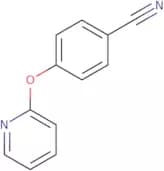
4-(Pyridin-2-yloxy)benzonitrile
CAS:<p>4-(Pyridin-2-yloxy)benzonitrile is a reagent that is used in the synthesis of heterocycles. It is also a useful intermediate for the preparation of highly substituted pyridine derivatives. 4-(Pyridin-2-yloxy)benzonitrile can be used to synthesize complex compounds, such as pharmaceuticals and agricultural chemicals.</p>Formula:C12H8N2OPurity:Min. 95%Molecular weight:196.2 g/mol4-Cyanobenzoic acid
CAS:<p>4-Cyanobenzoic acid (4CB) is a benzene derivative that inhibits the activity of tyrosinase, an enzyme involved in the production of melanin. It is synthesized by reacting 2,4-dichlorobenzoic acid with sodium hydroxide and acetone. 4CB has been shown to have a potent inhibitory effect on the enzyme, with an isolated yield of up to 83%. The compound also shows strong hydrogen bonding interactions with water molecules and coordinates in a geometry where one of its oxygen atoms is double bonded to two nitrogen atoms. This structural analysis suggests that 4 CB may bind to tyrosinase through adsorption mechanism.</p>Formula:C8H5NO2Purity:Min. 95%Color and Shape:White PowderMolecular weight:147.13 g/mol2-Fluoro-4-iodobenzonitrile
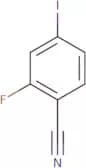
CAS:<p>2-fluoro-4-iodobenzonitrile is a potent inhibitor of the functions of VEGFR receptors. It inhibits the proliferation and migration of cancer cells by binding to VEGFR receptors, which are tyrosine kinases that regulate cell growth and differentiation. 2-Fluoro-4-iodobenzonitrile has been shown to inhibit angiogenesis, or the formation of new blood vessels, in vitro. This drug also has potent inhibitory activity against tumor growth in vivo. Clinical trials have shown that 2-fluoro-4-iodobenzonitrile can be used to treat various types of cancers, including breast cancer and colon cancer.</p>Formula:C7H3FINPurity:Min. 95%Color and Shape:PowderMolecular weight:247.01 g/mol4-Methyl-3-nitrobenzoic acid
CAS:<p>4-Methyl-3-nitrobenzoic acid is a fine chemical that is used as a building block in the synthesis of complex compounds. It is often used as a reagent or speciality chemical, and it has a CAS number of 96-98-0. 4-Methyl-3-nitrobenzoic acid can be react with other chemicals to form useful intermediates or scaffolds for larger molecules. This chemical is versatile and can be used in many different reactions.</p>Formula:C8H7NO4Purity:Min. 98.0 Area-%Molecular weight:181.15 g/mol2,3-Diaminobenzoic acid
CAS:<p>2,3-Diaminobenzoic acid is a benzimidazole derivative that is used in the treatment of microbial infections. It has been shown to inhibit the growth of bacteria by binding to their ribosomes and inhibiting protein synthesis. The reaction solution of 2,3-diaminobenzoic acid has fluorescence properties that can be used to detect contaminating substances. The conjugates formed with p-hydroxyphenylacetic acid are more soluble than those formed with hydroxybenzoic acid. 2,3-Diaminobenzoic acid is not very toxic and does not cause any detectable changes in enzyme activities or other biochemical parameters in short term exposure. It can be easily decomposed by sodium chloride into chlorine gas and hydrochloric acid, which are both highly reactive with water.</p>Formula:C7H8N2O2Purity:Min. 95%Color and Shape:PowderMolecular weight:152.15 g/mol4-(Bromomethyl) benzoic acid
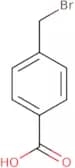
CAS:<p>4-(Bromomethyl) benzoic acid (4-BA) is a chemical compound that is used as an antimicrobial agent and a reagent in organic synthesis. It has been shown to have a broad spectrum of activity against Gram-positive and Gram-negative bacteria, fungi, and protozoa. 4-BA is stable at neutral pH and can be prepared by the reaction of 2-bromobenzeneacetic acid with sodium borohydride in the presence of acetic acid. This compound reacts with nucleophiles such as imatinib, forming an iminium intermediate. The resulting product can then react with chloride or hydrogen bond to form 4-BA chloride or 4-BA hydrogen bond respectively. Magnetic resonance spectroscopy has also been used to study the magnetic properties of this compound.</p>Formula:C8H7BrO2Purity:Min. 95%Color and Shape:White PowderMolecular weight:215.04 g/mol1,4-Dicaffeoylquinic acid
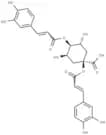
CAS:<p>1,4-Dicaffeoylquinic acid: an antioxidant and selective HIV-1 integrase inhibitor, non-toxic at effective doses.</p>Formula:C25H24O12Purity:97.32%Color and Shape:SolidMolecular weight:516.452,4,5-Trimethoxybenzylamine
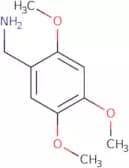
CAS:<p>2,4,5-Trimethoxybenzylamine is a synthetic compound that can be used as a precursor to the synthesis of other chemicals. It is prepared by reacting phenol with deuterium gas in a process called amination. This reaction is followed by reductive quaternization with cyanide. 2,4,5-Trimethoxybenzylamine is often used as an intermediate for the synthesis of drugs such as tamoxifen and clonidine.</p>Formula:C10H15NO3Purity:Min. 95%Color and Shape:PowderMolecular weight:197.23 g/mol5-Iodo-2-nitrobenzoic acid
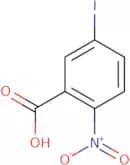
CAS:<p>5-Iodo-2-nitrobenzoic acid is a fine chemical that is used as a building block in the synthesis of complex compounds and research chemicals. This compound has been shown to be an effective reagent for the synthesis of many different types of compounds. It can also be used as a reactant or intermediate in organic syntheses, such as those involving cross-coupling reactions. 5-Iodo-2-nitrobenzoic acid is a versatile building block that can be used in both simple and complex chemical reactions.</p>Formula:C7H4INO4Purity:Min. 95%Color and Shape:Yellow PowderMolecular weight:293.02 g/mol2-Iodobenzoic acid
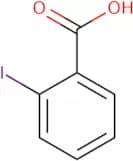
CAS:<p>2-Iodobenzoic acid is a synthetic compound that is used in the treatment of wastewater. It is produced by the reaction of benzoate and nitrite in the presence of sodium hydroxide. The intramolecular hydrogen atom transfer from the 2-iodobenzoic acid to benzoate is a reversible reaction. This process can be catalyzed by palladium, which has been shown to be effective in coupling 2-iodobenzoic acid with other compounds to produce cyclic peptides. The use of 2-iodobenzoic acid as a contraceptive has been investigated for its ability to inhibit acetylcholinesterase activity, which may lead to increased levels of acetylcholine and inhibition of muscle contractions.</p>Formula:C7H5IO2Purity:Min. 98 Area-%Color and Shape:PowderMolecular weight:248.02 g/mol2-Chlorobenzonitrile
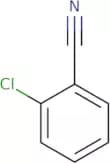
CAS:<p>2-Chlorobenzonitrile is a white solid that is soluble in organic solvents. It is an aryl halide and has a chemical structure of C6ClCN. 2-Chlorobenzonitrile is used as a raw material for the production of dyes and pharmaceuticals. This compound reacts with hydrochloric acid to form 4-chlorobenzonitrile, which can be used in the synthesis of other chemicals. 2-Chlorobenzonitrile can also react with n-dimethyl formamide in an optimal reaction solution to form 4-chlorobenzonitrile. The FTIR spectroscopy on this compound shows that it has a chloride group at 795 cm−1. The optimum reaction temperature for this compound is between 100 and 120 °C, but it will react with inorganic acids such as sulfuric acid or phosphoric acid at higher temperatures. Synthesis of this compound can be done by reacting</p>Formula:C7H4ClNPurity:Min. 95%Color and Shape:White PowderMolecular weight:137.57 g/mol(-)-Corey lactone 4-phenylbenzoate
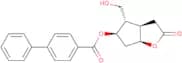
CAS:<p>Corey lactone 4-phenylbenzoate is an efficient, large-scale preparation of (-)-Corey lactone. It is synthesized in two steps from 4-phenylbenzoic acid and ethyl acetoacetate. Corey lactone 4-phenylbenzoate has been used for the synthesis of a variety of natural products. This compound is also a precursor to the synthesis of other compounds, such as 3-amino-4-(2'-hydroxyethoxy)benzaldehyde.</p>Formula:C21H20O5Purity:Min. 95%Molecular weight:352.38 g/molMethyl 3,4-dimethoxybenzoate
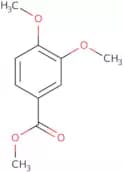
CAS:<p>Methyl 3,4-dimethoxybenzoate is an acetate extract that has been shown to inhibit tyrosinase activity. This compound also has a potent inhibitory effect on the production of p-hydroxybenzoic acid. Methyl 3,4-dimethoxybenzoate can be synthesized from protocatechuic acid and methoxy groups. It is a chemical reaction involving three steps: condensation, dehydration, and reduction. Tyrosinase is an enzyme in the melanin biosynthetic pathway that catalyzes the conversion of tyrosine to dopaquinone. Tyrosinase activity can be inhibited by methyl 3,4-dimethoxybenzoate through competitive inhibition or by its ability to reduce the availability of substrate for this enzyme.</p>Formula:C10H12O4Purity:Min. 95%Color and Shape:PowderMolecular weight:196.2 g/mol3-Chloro-5-iodobenzoic acid methyl ester
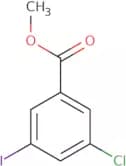
CAS:<p>3-Chloro-5-iodobenzoic acid methyl ester is a versatile building block that can be used to make many complex compounds, including research chemicals and reagents. 3-Chloro-5-iodobenzoic acid methyl ester is used as an intermediate for the production of speciality chemicals and has many uses in chemical reactions. This compound was previously sold under the CAS number 289039-85-6.</p>Formula:C8H6ClIO2Purity:Min. 95%Color and Shape:PowderMolecular weight:296.49 g/mol3,5-Dimethylbenzaldehyde
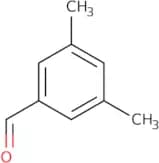
CAS:<p>3,5-Dimethylbenzaldehyde is an organic compound that is a colorless liquid. It has a chemical formula of C9H12O2 and is classified as an aldehyde. 3,5-Dimethylbenzaldehyde can be synthesized by the reaction of isopropyl palmitate with xylene in the presence of carbon as a source. The reaction time required for this synthesis is approximately one day. The major products of this reaction are 3,5-dimethylbenzaldehyde and 2-methylbutanal. This reaction mechanism can also be used to determine the concentration of urinary metabolites in human urine samples. Analysis of these samples requires an organic solvent such as hexane or dichloromethane. Kinetic data was collected from the rate at which zinc powder reacts with 3,5-dimethylbenzaldehyde over time at different concentrations. A kinetic experiment was conducted using c–h bond activation to produce 3,5-dimethoxy</p>Formula:C9H10OPurity:Min. 95%Color and Shape:Colorless Clear LiquidMolecular weight:134.18 g/mol4-tert-Butoxybenzaldehyde
CAS:<p>4-tert-Butoxybenzaldehyde is a colorless liquid that has a viscosity of 0.3 mm2/s at 25 °C. It can be synthesized by reacting pyridine with hydrochloric acid in the presence of a Grignard reagent. 4-tert-Butoxybenzaldehyde reacts with phenolic antioxidants to form an ester, which can be used as an industrial solvent. The crystal x-ray diffraction pattern of 4-tert-Butoxybenzaldehyde exhibits peaks at 2θ = 8.0, 11.5, and 18.5° corresponding to the (100), (200), and (220) planes, respectively. This chemical can also undergo reactions that lead to termination or transfer reactions, including diethyl ketomalonate formation with diethyl malonate in the presence of water as a solvent and potassium hydroxide as a catalyst for transfer reactions.END></p>Formula:C11H14O2Purity:Min. 95%Color and Shape:PowderMolecular weight:178.23 g/molMethyl 3-bromobenzoate
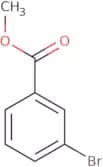
CAS:<p>Methyl 3-bromobenzoate is a cross-coupled compound with three functional groups: a methyl group, an acid bromo group, and a carboxylic acid benzoic ester. It is used in the synthesis of antigens that are chemically reactive to trifluoroacetic acid gas. The clinical studies have shown that the efficiency of this study is low because it has been found to be difficult to synthesize methyl 3-bromobenzoate in large quantities. This molecule can be prepared by the reaction of vinylene with an electrophile in non-polar solvents or by catalytic mechanisms.</p>Formula:C8H7BrO2Purity:Min. 95%Color and Shape:White PowderMolecular weight:215.04 g/mol2-Methyl-5-nitrobenzaldehyde
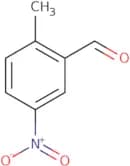
CAS:<p>2-Methyl-5-nitrobenzaldehyde is a nitro compound that is used in the synthesis of dobutamine. It has been shown to undergo rearrangements, with the formation of 2-methyl-5-nitrophenol. Kinetic studies have shown that chlorine can be substituted for hydrogen at the 2 position, and this substitution leads to an increase in reactivity. 2-methyl-5-nitrobenzaldehyde also reacts with dopamine to form a ketone. The hydroxy group on this molecule is nucleophilic and can attack electrophiles, making it useful as an active site for synthetic reactions. This compound is also pyrophoric, which means it will spontaneously ignite in air and burn until all its fuel is consumed.</p>Formula:C8H7NO3Purity:Min. 95%Color and Shape:Off-White PowderMolecular weight:165.15 g/mol4,6-Dimethoxysalicylaldehyde
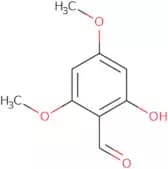
CAS:<p>4,6-Dimethoxysalicylaldehyde is a protonated molecule with a cyclohexane ring and 4 hydroxyl groups. Its chemical formula is C6H8O3. The compound has low bioavailability due to the presence of an intramolecular hydrogen bond that causes high redox potential. There are two amines on the aromatic ring which can coordinate with metal ions to form a complex. This compound's structural analysis has been conducted using X-ray crystallography, NMR spectroscopy, and IR spectroscopy. The structure of 4,6-dimethoxysalicylaldehyde is unsymmetrical due to the presence of two asymmetric carbon atoms in the molecule. It forms hydrogen bonds with other molecules due to its hydroxyl group and intramolecular hydrogen bond. Hydrogen bonding interactions occur between this compound and other molecules including water, alcohols, ammonia, amines, and carboxylic acids.</p>Formula:C9H10O4Purity:Min. 95%Color and Shape:Off-White PowderMolecular weight:182.17 g/mol3,5-Dihydroxy-4-methylbenzoic acid
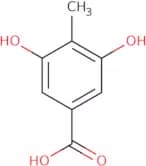
CAS:<p>3,5-Dihydroxy-4-methylbenzoic acid is an efficient synthesis of the natural product lucidin. It is a quinone that is found in citrifolia and morindone, compounds which are used as analgesics and antipyretics. This compound has been shown to inhibit the growth of fungi by inhibition of protein synthesis. 3,5-Dihydroxy-4-methylbenzoic acid also inhibits the production of citric acid cycle intermediates such as succinic acid and fumaric acid.</p>Formula:C8H8O4Purity:Min. 80%Color and Shape:PowderMolecular weight:168.15 g/mol