Benzenes
Benzenes are simple aromatic hydrocarbons consisting of a six-membered carbon ring with alternating double bonds. This fundamental structure is a building block for numerous chemical compounds, including pharmaceuticals, polymers, and dyes. Benzenes are used extensively in organic synthesis due to their stability and versatility. At CymitQuimica, we provide a broad range of high-quality benzenes to support your research and industrial applications.
Subcategories of "Benzenes"
- Benzamides(62 products)
- Benzoic Acids(5,433 products)
- Benzyl alcohols(1,453 products)
- Halogenated Benzenes(33,773 products)
- Phenols(2,646 products)
Found 11835 products of "Benzenes"
Sort by
Purity (%)
0
100
|
0
|
50
|
90
|
95
|
100
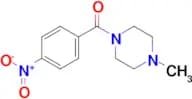
(4-Methylpiperazin-1-yl)(4-nitrophenyl)methanone
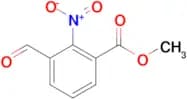
CAS:Formula:C12H15N3O3Purity:95%Molecular weight:249.27METHYL 3-FORMYL-2-NITROBENZOATE
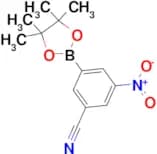
CAS:Formula:C9H7NO5Purity:95%Color and Shape:SolidMolecular weight:209.1573-Nitro-5-(4,4,5,5-tetramethyl-1,3,2-dioxaborolan-2-yl)benzonitrile
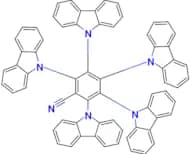
CAS:Purity:98%Molecular weight:274.07998662,3,4,5,6-Penta(9H-carbazol-9-yl)benzonitrile
CAS:Purity:98%Color and Shape:SolidMolecular weight:929.0989992,6-Dimethylbenzaldehyde
CAS:<p>2,6-Dimethylbenzaldehyde is a colorless liquid with a sweet odor. It is used in the synthesis of fatty acids and as an intermediate for other compounds. This chemical has significant cytotoxicity against leukemia cells, and is used in the production of acrylonitrile. 2,6-Dimethylbenzaldehyde can be synthesized by reacting an amine with an acyl chloride, followed by hydrolysis of the resulting ester. A contactor is usually added to facilitate the reaction. The reaction can also be carried out in the presence of a phosphorane or organic solvent.<br>2,6-Dimethylbenzaldehyde can be hydrogenated to produce 2,4-dimethylaniline and 2,4,6-trimethylaniline.</p>Formula:C9H10OPurity:Min. 95%Color and Shape:Clear White Solid Or Liquid (May Vary)Molecular weight:134.18 g/mol2,4-Dihydroxybenzoic acid
CAS:<p>2,4-Dihydroxybenzoic acid (2,4-DB) is a metabolite of salicylic acid. It is used as an intermediate in the production of various drugs and dyes. 2,4-DB has been shown to be effective against hepatic steatosis induced by hydrogen fluoride in mice. This drug also inhibits mitochondrial membrane potential and DNA binding activity in human serum. 2,4-DB can bind to the α subunit of mitochondrial ATPase and act as a competitive inhibitor for p-hydroxybenzoic acid which is essential for the activation of this enzyme. The x-ray diffraction data from crystalline 2,4-DB shows that this compound binds to dna with coordination geometry that resembles that of salicylic acid. The kinetic studies have shown that 2,4-DB reacts noncompetitively with nonsteroidal anti-inflammatory drugs (NSAIDs).</p>Formula:C7H6O4Purity:Min 98%Color and Shape:PowderMolecular weight:154.12 g/mol

![2-Nitro-[1,1′-biphenyl]-4,4′-dicarboxylic acid](/_next/image/?url=https%3A%2Fstatic.cymitquimica.com%2Fproducts%2F10%2Fthumb-webp%2FF690488.webp&w=3840&q=75)