Benzenes
Benzenes are simple aromatic hydrocarbons consisting of a six-membered carbon ring with alternating double bonds. This fundamental structure is a building block for numerous chemical compounds, including pharmaceuticals, polymers, and dyes. Benzenes are used extensively in organic synthesis due to their stability and versatility. At CymitQuimica, we provide a broad range of high-quality benzenes to support your research and industrial applications.
Subcategories of "Benzenes"
- Benzamides(62 products)
- Benzoic Acids(5,431 products)
- Benzyl alcohols(1,453 products)
- Halogenated Benzenes(33,758 products)
- Phenols(2,644 products)
Found 11830 products of "Benzenes"
Sort by
Purity (%)
0
100
|
0
|
50
|
90
|
95
|
100
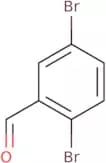
2,5-Dibromobenzaldehyde
CAS:<p>2,5-Dibromobenzaldehyde is a synthetic compound that has been shown to have a red fluorescent emission. It is also thermally stable and can be used in the synthesis of quinoline derivatives. 2,5-Dibromobenzaldehyde may be used as a potential fluorescent label for viologen or amines. This compound can undergo an intermolecular Diels-Alder reaction with diacetate to form a bicyclic system, which is important to the understanding of its interactions with other compounds.</p>Formula:C7H4Br2OPurity:Min. 95%Color and Shape:PowderMolecular weight:263.91 g/mol3,5-Dimethoxy-4-hydroxybenzoic acid methyl ester
CAS:<p>3,5-Dimethoxy-4-hydroxybenzoic acid methyl ester (DMHBME) is a natural compound that has been shown to have high redox potential values and chemical stability. This compound is an inhibitor of p-hydroxylases and has been shown to inhibit human serum laccase activity. DMHBME also inhibits polymerase chain reactions in the presence of DNA templates, which may be due to its ability to bind to the enzyme at the active site. DMHBME is a potent antimicrobial agent that can be used as a fungicide or preservative in food products. It is also effective against bacteria such as Staphylococcus aureus, Clostridium perfringens, Escherichia coli, and Mycobacterium tuberculosis.</p>Formula:C10H12O5Purity:Min. 95%Color and Shape:White PowderMolecular weight:212.2 g/mol2-[(Phenylsulfonyl)amino]benzoic acid
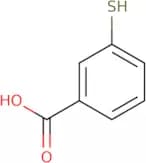
CAS:<p>2-[(Phenylsulfonyl)amino]benzoic acid is a white crystalline solid that is soluble in water and ethanol. It has a melting point of 176°C and a boiling point of 280°C. 2-[(Phenylsulfonyl)amino]benzoic acid binds to DNA by an intercalative mechanism, forming covalent bonds with the bases on the DNA. This binding prevents the DNA from unwinding during replication and transcription, thus inhibiting the synthesis of RNA and protein. The dimers form between two molecules of 2-[(Phenylsulfonyl)amino]benzoic acid, due to hydrogen bonding between the carboxylic acid groups. The crystal structure has been determined for this compound as centrosymmetric with space group P2 1 /c. A benzene ring is found in the molecule, which can form a pyridine ring when exposed to heat or</p>Formula:C13H11NO4SPurity:Min. 95%Color and Shape:White PowderMolecular weight:277.3 g/mol3-Mercaptobenzoic acid
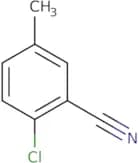
CAS:<p>3-Mercaptobenzoic acid is an antimicrobial agent that inhibits bacterial enzyme. It binds to the active site of the enzyme, and prevents it from carrying out its function. 3-Mercaptobenzoic acid has been shown to be an efficient method for the prevention of corrosion in metal surfaces. The binding of 3-mercaptobenzoic acid to metal ions forms a protective film on the surface, preventing corrosion.</p>Formula:C7H6O2SPurity:Min. 95%Color and Shape:PowderMolecular weight:154.19 g/mol2-Chloro-5-methylbenzonitrile
CAS:<p>2-Chloro-5-methylbenzonitrile (2C5MB) is a versatile building block that is used in the production of fine chemicals, specialty chemicals, and pharmaceuticals. It is also used as a reagent for organic synthesis and as a speciality chemical. 2C5MB can be used in the synthesis of various complex compounds and research chemicals. The compound has been shown to have high reactivity and has been used as a reaction component or scaffold for the synthesis of other products.</p>Formula:C8H6ClNPurity:Min. 95%Color and Shape:PowderMolecular weight:151.59 g/mol2-Nitrobenzylamine hydrochloride
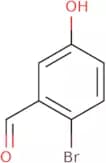
CAS:<p>2-Nitrobenzylamine hydrochloride is a compound that has been shown to have cancer-fighting properties. It inhibits the synthesis of proteins necessary for the proliferation of cancer cells, but it does not affect the synthesis of proteins in healthy cells. This drug is used to diagnose and treat certain types of cancers, such as lymphoma and leukemia. 2-Nitrobenzylamine hydrochloride can be modified by genetic engineering techniques to specifically target cancer cells, which may help with the treatment of other types of diseases in the future. It is believed that this drug will be useful for treating cancers that are resistant to chemotherapy or radiation therapy, as well as those that are caused by mutations in DNA.</p>Formula:C7H9ClN2O2Purity:Min. 95%Color and Shape:PowderMolecular weight:188.61 g/mol2-Bromo-5-hydroxybenzaldehyde
CAS:<p>Intermediate in the synthesis of crisaborole AN2728</p>Formula:C7H5BrO2Purity:Min. 95%Color and Shape:White PowderMolecular weight:201.02 g/mol2,3,4-Trifluorobenzoic acid
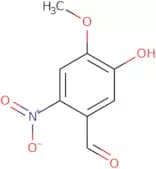
CAS:<p>2,3,4-Trifluorobenzoic acid is a fluorinated fatty acid that has been shown to have anticancer activity. The molecule can be synthesized by reacting 2-bromo-1-(trifluoromethyl)benzene with potassium hydroxide in the presence of benzoic anhydride. This synthesis reaction yields (2,3,4-trifluoro)benzoic acid as the main product and a small amount of 2,3-dihydrobenzoic acid. The analytical method used to determine the purity of this compound is LC-MS/MS. The vibrational spectrum of this compound has been found to show strong absorption in the UV region at 290 nm. It also shows strong absorption at uv wavelengths greater than 300 nm due to its conjugation with fluorine atoms. This chemical is a precursor for synthesis of coumarin derivatives such as 4-[(2,3</p>Formula:C7H3F3O2Purity:Min. 95%Color and Shape:White PowderMolecular weight:176.09 g/mol5-Hydroxy-4-methoxy-2-nitrobenzaldehyde
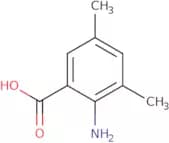
CAS:<p>5-Hydroxy-4-methoxy-2-nitrobenzaldehyde is a substrate molecule that can be minimised to the corresponding oxime, which can then be oxidised to form an aldehyde. The product of this reaction is a conformationally restricted dienone. This compound has been synthesized using a number of different methods, including oxidation by sodium dichromate. 5-Hydroxy-4-methoxy-2-nitrobenzaldehyde is a phenolic compound with two aromatic rings and one carbon ring. It has natural product properties and is used as a chemical skeleton in the synthesis of other compounds.</p>Formula:C8H7NO5Purity:Min. 95%Color and Shape:Slightly Yellow PowderMolecular weight:197.14 g/mol3,5-Dimethylanthranilic acid
CAS:<p>3,5-Dimethylanthranilic acid is an acridone that has significant effects on the topoisomerase enzymes. It is a reactive compound and can cause sensitivity to light and heat, as well as irritation in the respiratory tract. 3,5-Dimethylanthranilic acid has been shown to have antitumour activity in mice. 3,5-Dimethylanthranilic acid also has cytotoxic potency against cancer cells and can be used to evaluate the sensitivity of tumours to anticancer drugs. This compound may also have mutagenic properties. The dehalogenation of 3,5-dimethylanthranilic acid is not yet fully understood.</p>Formula:C9H11NO2Purity:Min. 95%Color and Shape:Off-White PowderMolecular weight:165.19 g/mol2,4-Dihydroxybenzoic acid
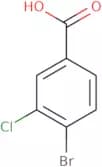
CAS:<p>2,4-Dihydroxybenzoic acid (2,4-DB) is a metabolite of salicylic acid. It is used as an intermediate in the production of various drugs and dyes. 2,4-DB has been shown to be effective against hepatic steatosis induced by hydrogen fluoride in mice. This drug also inhibits mitochondrial membrane potential and DNA binding activity in human serum. 2,4-DB can bind to the α subunit of mitochondrial ATPase and act as a competitive inhibitor for p-hydroxybenzoic acid which is essential for the activation of this enzyme. The x-ray diffraction data from crystalline 2,4-DB shows that this compound binds to dna with coordination geometry that resembles that of salicylic acid. The kinetic studies have shown that 2,4-DB reacts noncompetitively with nonsteroidal anti-inflammatory drugs (NSAIDs).</p>Formula:C7H6O4Purity:Min 98%Color and Shape:PowderMolecular weight:154.12 g/mol4-Bromo-3-chlorobenzoic acid
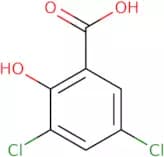
CAS:<p>4-Bromo-3-chlorobenzoic acid is a molecule that belongs to the class of antimicrobial compounds and is used for the treatment of gram-negative pathogens. It inhibits the growth of these bacteria by blocking their ability to synthesize DNA, RNA, and proteins. 4-Bromo-3-chlorobenzoic acid has been shown to be effective against bacteria in mammalian cells and also has activity against multidrug resistant strains. This compound is biosynthesized in plant cells from carbon sources like glucose, and it can be found in plants like carrot tissue. The resistance of bacteria to this compound has been observed globally, with outbreaks occurring in Japan and India.</p>Formula:C7H4BrClO2Purity:Min. 95%Color and Shape:White PowderMolecular weight:235.46 g/mol3,5-Dichlorosalicylic acid
CAS:<p>3,5-Dichlorosalicylic acid is a proton donor that is used to inhibit the 5-nitrosalicylic acid chain reaction. It has a high binding constant with the chlorine atom and can be used as a competitive inhibitor for the binding of 5-nitrosalicylic acid to its target enzyme. 3,5-Dichlorosalicylic acid inhibits the polymerase chain reaction by binding to DNA. This chemical also has biological properties that are similar to those of salicylic acid, including anti-inflammatory activities. 3,5-Dichlorosalicylic acid is not an effective anti-cancer agent because it does not form intramolecular hydrogen bonds or hydrogen bond interactions with DNA bases.</p>Formula:C7H4Cl2O3Purity:Min. 95%Color and Shape:White PowderMolecular weight:207.01 g/mol2,6-Dibromobenzaldehyde
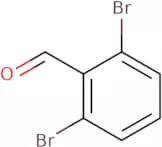
CAS:<p>2,6-Dibromobenzaldehyde is an imidazole derivative that has been shown to be a potent inhibitor of tyrosine kinase. It has been shown to inhibit the replication of virus type-1 and is effective in the treatment of pain models. 2,6-Dibromobenzaldehyde also inhibits the activity of enzymes, such as phosphodiesterases and protein kinases. This compound has shown promising results in animal studies for the treatment of human immunodeficiency virus type 1 (HIV-1) infection. The pharmacokinetic properties of 2,6-dibromobenzaldehyde have been studied in rats and dogs with oral administration and found to be linear and rapid with high bioavailability.</p>Formula:C7H4Br2OPurity:Min. 95%Color and Shape:PowderMolecular weight:263.91 g/mol4-Bromo-2-nitrobenzoic acid
CAS:<p>4-Bromo-2-nitrobenzoic acid is an anthranilic acid derivative that can be used as a radiolabel for the diagnosis of bladder cancer. The uptake of 4-Bromo-2-nitrobenzoic acid in the bladder is proportional to the number of cells, which are then detected by positron emission tomography (PET) scanning. The affinity of 4-Bromo-2-nitrobenzoic acid to human bladder tissue was determined by measuring its uptake in humans and rats. 4-Bromo-2-nitrobenzoic acid has been shown to be effective against cancer cells in vitro. Radiolabeling with this compound allows for more accurate diagnostic imaging than using other radiopharmaceuticals.</p>Formula:C7H4BrNO4Purity:Min. 95%Color and Shape:PowderMolecular weight:246.02 g/mol3-[Bis(phenylmethyl)amino]-5-fluoro-6-methyl-2-(phenylmethoxy)benzoic acid phenyl ester
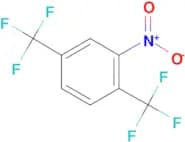
CAS:<p>Building block in tetracycline antibiotic synthesis</p>Formula:C35H30FNO3Purity:Min. 95%Color and Shape:PowderMolecular weight:531.62 g/mol2,5-Bis(trifluoromethyl)nitrobenzene
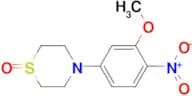
CAS:Formula:C8H3F6NO2Purity:97%Color and Shape:LiquidMolecular weight:259.1074-(3-METHOXY-4-NITROPHENYL)THIOMORPHOLINE 1-OXIDE
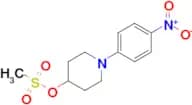
CAS:Formula:C11H14N2O4SPurity:95.0%Molecular weight:270.31-(4-NITROPHENYL)PIPERIDIN-4-YL METHANESULFONATE
CAS:Formula:C12H16N2O5SPurity:≥95%Molecular weight:300.33


![2-[(Phenylsulfonyl)amino]benzoic acid](/_next/image/?url=https%3A%2Fstatic.cymitquimica.com%2Fproducts%2F3D%2Fthumb-webp%2FFP136709.webp&w=3840&q=75)




![3-[Bis(phenylmethyl)amino]-5-fluoro-6-methyl-2-(phenylmethoxy)benzoic acid phenyl ester](/_next/image/?url=https%3A%2Fstatic.cymitquimica.com%2Fproducts%2F3D%2Fthumb-webp%2FFB101468.webp&w=3840&q=75)