Benzenes
Subcategories of "Benzenes"
- Benzamides(62 products)
- Benzoic Acids(5,474 products)
- Benzyl alcohols(1,458 products)
- Halogenated Benzenes(33,965 products)
- Phenols(2,664 products)
Found 11889 products of "Benzenes"
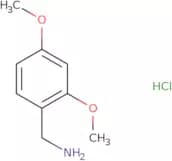
2,4-Dimethoxybenzylamine hydrochloride
CAS:2,4-Dimethoxybenzylamine hydrochloride is a substrate for glutathione reductase and a competitive inhibitor of dithioerythritol. The reaction mechanism is the same as that of triflic acid, which is generated by the reaction between triflic acid and glutathione. The inhibitory effect of 2,4-dimethoxybenzylamine hydrochloride on glutathione reductase has been studied computationally using molecular docking simulations. It was found that 2,4-dimethoxybenzylamine hydrochloride binds to the active site of glutathione reductase with an affinity comparable to that of triflic acid. This computational study also revealed that 2,4-dimethoxybenzylamine hydrochloride can be converted into triflic acid in vivo.Formula:C9H13NO2HClPurity:Min. 95%Color and Shape:PowderMolecular weight:203.67 g/molRef: 3D-FD37841
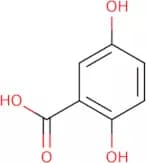
Discontinued product2,5-Dihydroxybenzoic acid
CAS:2,5-Dihydroxybenzoic acid is a natural compound that has been shown to inhibit the matrix metalloproteinase enzyme activity of α1-acid glycoprotein. The 2,5-dihydroxybenzoic acid structure is similar to p-hydroxybenzoic acid and gentisic acid. It is also an inhibitor of xanthine oxidase and caffeic acid oxidase. 2,5-Dihydroxybenzoic acid has a number of potential uses in analytical chemistry as it can be used to measure the concentrations of caffeic acids and other related compounds in biological samples.
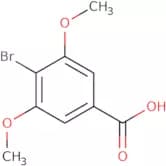
Formula:C7H6O4Purity:(%) Min. 98%Color and Shape:White PowderMolecular weight:154.12 g/mol4-Bromo-3,5-dimethoxybenzoic acid
CAS:4-Bromo-3,5-dimethoxybenzoic acid is a synthetic molecule that has been shown to have catalytic properties. It was generated by the reaction of resorcinol and dimethoxybenzoic acid in the presence of copper(II) acetate. This compound has also been shown to be bioinspired by its similarity to natural products such as 3,5-dihydroxybenzoic acid. 4-Bromo-3,5-dimethoxybenzoic acid has been used for the synthesis of bioactive molecules with cyclic structures. These advances are important for sustainable development and may help in the discovery of new natural products.
Formula:C9H9BrO4Purity:Min. 95%Color and Shape:PowderMolecular weight:261.07 g/molRef: 3D-FB55410
Discontinued product4-Chloro-3-hydroxybenzoic acid
CAS:4-Chloro-3-hydroxybenzoic acid (4-CHB) is a reactive compound that can be used for the detection of bacteria. 4-CHB reacts with peroxyl radicals in solution to form a chlorobenzoic acid derivative, which emits light when excited by radiation. 4-CHB is also capable of dehalogenating chlorobenzene, and can be used as a bioluminescent probe for the detection of bacteria. The reactions are efficient at low concentrations and are detectable with an ultraviolet or visible spectrophotometer.
Formula:C7H5ClO3Purity:Min. 95%Color and Shape:PowderMolecular weight:172.57 g/molRef: 3D-FC70409
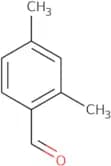
Discontinued product2,4-Dimethylbenzaldehyde
CAS:2,4-Dimethylbenzaldehyde is used in the diagnosis of cancer. It reacts with acetaldehyde to form a compound that binds to hemoglobin and is excreted in the urine, leading to a diagnostic test for cancer. 2,4-Dimethylbenzaldehyde has been shown to be genotoxic in both in vitro and in vivo studies. This aromatic hydrocarbon has been shown to cause DNA strand breaks in the target cells through a reaction mechanism involving radical formation from acetaldehyde. In addition, 2,4-Dimethylbenzaldehyde has been shown to have genotoxic effects on mice exposed by inhalation or injection.
Formula:C9H10OPurity:Min. 90 Area-%Color and Shape:Colorless Clear LiquidMolecular weight:134.18 g/molRef: 3D-FD29084
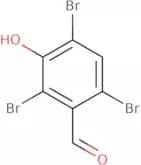
Discontinued product2,4,6-Tribromo-3-hydroxybenzaldehyde
CAS:2,4,6-Tribromo-3-hydroxybenzaldehyde (2,4,6-TBHB) is an aldehyde that is synthesized from the reaction of 2,4,6-trichlorobenzaldehyde and bromine. It has been shown to be cytotoxic in tumour cell lines in vitro. This compound binds to DNA by covalent binding and inhibits the synthesis of proteins. 2,4,6-TBHB also inhibits cellular uptake of halides such as chloride and bromide ions. This aldehyde has been shown to induce cell death in human lung cancer cells in a concentration dependent manner.
Formula:C7H3Br3O2Purity:Min. 95%Color and Shape:PowderMolecular weight:358.81 g/molRef: 3D-FT57259
Discontinued productEthyl 2,4-dihydroxy-6-methylbenzoate
CAS:Ethyl 2,4-dihydroxy-6-methylbenzoate is a phenolic acid that is found in lichens. It has been shown to have anti-cancer and anti-inflammatory properties. The hydrogen bonds of ethyl 2,4-dihydroxy-6-methylbenzoate are the result of an intramolecular hydrogen bonding between the benzoic acid group and the hydroxymethyl group. This compound can also be found in matrix effect health care products as well as wastewater treatment plants. Ethyl 2,4-dihydroxy-6-methylbenzoate has also been shown to inhibit enzymes such as uv absorption and phenolic acids.
Formula:C10H12O4Purity:Min. 95%Molecular weight:196.2 g/molRef: 3D-FE155424
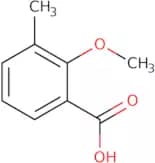
Discontinued product2-Methoxy-3-methylbenzoic acid
CAS:2-Methoxy-3-methylbenzoic acid is a methoxy methyl, benzyl, methyl ether that can be used as a reagent in organic chemistry. It is an intermediate in the synthesis of phthalic anhydride and in the production of esters and quinones. 2-Methoxy-3-methylbenzoic acid is also used to produce potassium t-butoxide, which can be used for the synthesis of new types of reagents for organic synthesis. The chemical reacts with potassium hydroxide or potassium t-butoxide to form potassium 2-methoxy 3-methyl benzoate, which is soluble in water. This compound can also be produced from methoxy methyl benzyl chloride by reacting it with either potassium or sodium hydroxide.
Formula:C9H10O3Purity:Min. 95%Color and Shape:White PowderMolecular weight:166.17 g/molRef: 3D-FM70200
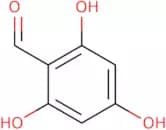
Discontinued product2,4,6-Trihydroxybenzaldehyde
CAS:2,4,6-Trihydroxybenzaldehyde is a polymerase chain inhibitor that blocks the synthesis of DNA and RNA. It has been shown to have significant cytotoxicity in vitro and has been used as an antimicrobial agent to inhibit the growth of bacteria. 2,4,6-Trihydroxybenzaldehyde also inhibits tetracycline resistance in Mycobacterium tuberculosis (Mtb) by inhibiting the production of proteins vital for bacterial cell division. This compound is structurally related to naturally occurring compounds such as anthocyanins and it has been shown to have inhibitory properties on mitochondrial membrane potential, which may be due to its ability to inhibit protein synthesis and induce apoptosis. The analytical methods used for this compound are thin layer chromatography and high performance liquid chromatography.
Formula:C7H6O4Purity:Min. 98 Area-%Color and Shape:PowderMolecular weight:154.12 g/molRef: 3D-FT42976
Discontinued productMethyl 4-iodosalicylate
CAS:Methyl 4-iodosalicylate is a redox potential molecule that can be used in the treatment of HIV infections. Studies have shown that methyl 4-iodosalicylate is able to enhance the activity of antiretroviral therapies, and is also able to increase the light emission from fluorophores when combined with sodium triflate. This compound has been shown to have pharmacokinetic properties that are similar to those of salicylic acid. Methyl 4-iodosalicylate has been shown to transport into human erythrocytes, and fluoresce when excited by light with a wavelength of 365 nm.
Methyl 4-iodosalicylate has been studied as a possible therapy for various conditions including cancer, arthritis, and heart disease. It may also be useful for improving skin health or for use as a topical antimicrobial agent.Formula:C8H7IO3Purity:Min. 95%Color and Shape:PowderMolecular weight:278.04 g/molRef: 3D-FM69811
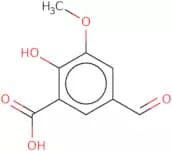
Discontinued product5-Carboxyvanillin
CAS:5-Carboxyvanillin is the oxidation product of isoeugenol and p-hydroxybenzoic acid. It can be produced by reacting these two compounds with a peroxide in an oxidizing reaction. The reaction products include 5-carboxyvanillic acid, which can be hydrolyzed to vanillin. 5-Carboxyvanillin is a white crystalline solid with a chemical nature similar to that of vanillin. It has been shown to have antimicrobial properties against tissues, such as guinea pig ileum and rat liver, but not against bacterial cultures. This compound may also be used in pulping processes for the production of paper or cellulose fibers.
Formula:C9H8O5Purity:Min. 95%Color and Shape:PowderMolecular weight:196.16 g/molRef: 3D-FC70545
Discontinued product2,5-Dichlorobenzoic acid methyl ester
CAS:2,5-Dichlorobenzoic acid methyl ester is a synthetic chemical compound that belongs to the class of aryl chlorides. It is soluble in organic solvents and can be polymerized using the vibrational method. 2,5-Dichlorobenzoic acid methyl ester has been shown to inhibit the growth of various bacteria strains by binding to sulfhydryl groups on proteins and inhibiting protein synthesis. This chemical also inhibits the uptake of sulfate ions by inhibiting the enzyme sulfate adenylyltransferase.
Formula:C8H6Cl2O2Purity:Min. 95%Color and Shape:PowderMolecular weight:205.04 g/molRef: 3D-FD71204
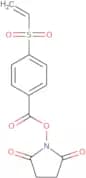
Discontinued product4-(Ethenylsulfonyl)benzoic acid 2,5-dioxo-1-pyrrolidinyl ester
CAS:4-(Ethenylsulfonyl)benzoic acid 2,5-dioxo-1-pyrrolidinyl ester is a fine chemical that is a useful scaffold for the synthesis of complex compounds. It can be used as a versatile building block in the production of research chemicals and pharmaceuticals, as well as a reaction component in speciality chemicals. The CAS Number for 4-(Ethenylsulfonyl)benzoic acid 2,5-dioxo-1-pyrrolidinyl ester is 343934-41-8.
Formula:C13H11NO6SPurity:Min. 95%Color and Shape:White PowderMolecular weight:309.3 g/molRef: 3D-FE22859
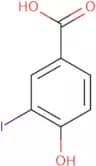
Discontinued product4-Hydroxy-3-iodobenzoic acid
CAS:4-Hydroxy-3-iodobenzoic acid is a synthetic retinoid that is used in the synthesis of various other pharmaceutical compounds. It is also an inhibitor of bacterial growth, which may be due to its ability to bind to receptors on the bacterial cell surface. The antibiotic activity of 4-hydroxy-3-iodobenzoic acid has been demonstrated using an in vitro assay with Escherichia coli and Streptococcus pyogenes. 4-Hydroxy-3-iodobenzoic acid has also been shown to have antiestrogen properties when it competes with estradiol for receptor binding sites. This compound binds to the estrogen receptor and blocks its activity, inhibiting estrogen production by the ovaries or from other sources. Structural analysis of 4-hydroxy-3-iodobenzoic acid revealed that this compound has two functional groups: one group that interacts with nitrogen and another that binds to hydrogen or oxygen. These
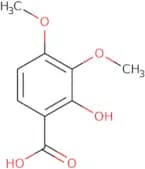
Formula:C7H5IO3Purity:Min. 95%Color and Shape:PowderMolecular weight:264.02 g/mol3,4-Dimethoxy-2-hydroxybenzoic acid
CAS:3,4-Dimethoxy-2-hydroxybenzoic acid (DMHA) is a potential drug candidate that has been shown to scavenge free radicals and protect against the damage caused by oxidative stress. It has also been found to have heartwood extract-modulating properties, inhibiting the growth of Madagascariensis, Angolensis, and Leukemia cells. DMHA has been shown to be effective in preventing lipid peroxidation and may have dietary benefits for prevention of chronic diseases such as cancer and diabetes. This compound is being investigated as a potential drug for administration by chemometric methods. DMHA was also found to be a potent inhibitor of cyclooxygenase 2 (COX-2), which could make it useful for treating inflammatory conditions.
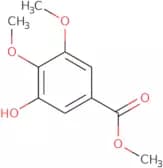
Formula:C9H10O5Purity:Min. 95%Color and Shape:PowderMolecular weight:198.17 g/molMethyl 4,5-dimethoxy-3-hydroxybenzoate
CAS:Methyl 4,5-dimethoxy-3-hydroxybenzoate is a synthetic chemical that inhibits the enzyme tectorigenin reductase. Tectorigenin reductase is responsible for the production of tectorigenin, a phytoestrogen found in plants such as china. Methyl 4,5-dimethoxy-3-hydroxybenzoate was shown to inhibit the activity of platelets from human blood and has been studied for its pharmacological properties. The thermodynamic and kinetic parameters of methyl 4,5-dimethoxy-3-hydroxybenzoate have been determined using gas chromatography - mass spectrometry (GC–MS) and nuclear magnetic resonance (NMR) spectroscopy. It exists as both an enantiomeric mixture and racemic mixture.
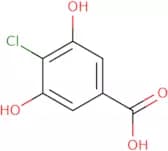
Formula:C10H12O5Purity:Min. 95%Color and Shape:PowderMolecular weight:212.2 g/mol4-Chloro-3,5-dihydroxybenzoic acid
CAS:4-Chloro-3,5-dihydroxybenzoic acid is a chemical substance that can be used as a building block in organic synthesis. It is also a versatile intermediate and scaffold for the synthesis of more complex compounds. 4-Chloro-3,5-dihydroxybenzoic acid has been found to be useful in research and as a reagent because it is an inexpensive, high quality chemical. This compound reacts rapidly with many other chemicals, including alcohols and amines. 4-Chloro-3,5-dihydroxybenzoic acid has been shown to be stable under acidic conditions and can be purified by crystallization or recrystallization.
Formula:C7H5ClO4Purity:Min. 95%Color and Shape:PowderMolecular weight:188.56 g/molRef: 3D-FC67072
Discontinued productMethyl 4-fluorobenzoate
CAS:Methyl 4-fluorobenzoate is a potent inhibitor of human cancer cells. It inhibits tyrosine kinases by binding to an imidazole group and forms a ruthenium complex in the presence of sodium carbonate. Methyl 4-fluorobenzoate has shown inhibitory activity against the amination reaction catalyzed by sulfoxide reductase, which is important for the synthesis of nucleic acids. This inhibition may be due to its ability to reduce oxidized species of thiols, sulfoxides, and disulfides. Further studies are needed to elucidate the mechanism by which methyl 4-fluorobenzoate interacts with redox potentials and functional theory.
Formula:C8H7FO2Purity:Min. 95%Color and Shape:Colorless Clear LiquidMolecular weight:154.14 g/molRef: 3D-FM37718
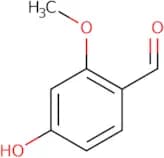
Discontinued product4-Hydroxy-2-methoxybenzaldehyde
CAS:Echinatin is a benzaldehyde derivative that is found in the roots of Echinacea purpurea. It is a phenolic compound with a carbonyl group and two benzyl groups. 4-Hydroxy-2-methoxybenzaldehyde has been shown to have photophysical, cell culture, and functional group properties. This compound is used as a precursor for the production of echinatin and other plant polyphenols such as malonic acid. The biosynthesis of 4-hydroxy-2-methoxybenzaldehyde begins with the oxidation of cinnamic acid by cytochrome P450 monooxygenase to form cinnamoyl CoA. The enzyme cinnamate decarboxylase then converts this intermediate to p-hydroxybenzoic acid, which is then hydroxylated to form 4-hydroxy-2-methoxybenzaldehyde.
Formula:C8H8O3Purity:Min. 95%Color and Shape:PowderMolecular weight:152.15 g/molRef: 3D-FH24199
Discontinued product3-Chlorobenzoic acid
CAS:3-Chlorobenzoic acid is a compound that has been shown to have potent antibacterial activity against Pseudomonas aeruginosa and other bacteria. It has been shown to inhibit the ATP-binding cassette transporter, which is a protein that transports various molecules across cell membranes. 3-Chlorobenzoic acid also inhibits the growth of bacteria by lysing cells and interfering with DNA synthesis. This compound is an effective inhibitor of wild-type strains of E. coli, but not mutants resistant to 2,4-dichlorobenzoic acid. 3-Chlorobenzoic acid reacts with benzoate to form a crystal structure at room temperature and pressure. Further studies are needed to determine the coordination geometry and thermodynamic data for this reaction.
Formula:C7H5ClO2Purity:Min. 95%Color and Shape:PowderMolecular weight:156.57 g/mol