Benzyl alcohols
Found 1458 products of "Benzyl alcohols"
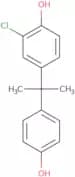
3-Chlorobisphenol A
CAS:3-Chlorobisphenol A is a hydroxy group containing compound that occurs naturally in plants. It is a byproduct of the production of polycarbonate plastics, and is also used as an intermediate in the manufacture of other chemicals. 3-Chlorobisphenol A can be found in wastewater, which has led to it being studied for use in wastewater treatment. 3-Chlorobisphenol A has been shown to have constitutive androstane receptor agonist activity, which may account for its toxicities. 3-Chlorobisphenol A has been shown to cause adverse effects on animal health, with high chloride concentrations leading to toxicity. These effects are likely due to its ability to inhibit the response pathway involving cytochrome P450 enzymes.
Formula:C15H15ClO2Purity:Min. 95%Color and Shape:PowderMolecular weight:262.73 g/molRef: 3D-FC20207
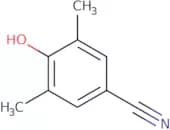
Discontinued product2,6-Dimethyl-4-cyanophenol
CAS:2,6-Dimethyl-4-cyanophenol is a pyrimidine compound that has been used as a pharmaceutical drug to inhibit the replication of human immunodeficiency virus (HIV). It has also been shown to be effective against the strains of HIV that are resistant to other drugs. 2,6-Dimethyl-4-cyanophenol is an inhibitor of reverse transcriptase, which is an enzyme necessary for the production of viral DNA from viral RNA. This drug also inhibits bacterial growth by binding to bacterial DNA gyrase and topoisomerase IV. 2,6-Dimethyl-4-cyanophenol has a number of functionalities: it can act as an acid or base depending on its environment and it can form hydrogen bonding interactions with other molecules. This drug also has acidic properties that make it useful in the treatment of ph problems caused by trifluoroacetic acid.
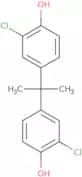
Formula:C9H9NOPurity:Min. 95%Color and Shape:Yellow PowderMolecular weight:147.17 g/mol3,3'-Dichlorobisphenol A
CAS:3,3'-Dichlorobisphenol A is a chlorine-containing organic compound that is used in the manufacture of polycarbonate plastics. It has been found to be genotoxic and carcinogenic in animals. 3,3'-Dichlorobisphenol A is also toxic to aquatic organisms and may persist for long periods in the environment. 3,3'-Dichlorobisphenol A enters wastewater when it is released during the production of polycarbonate plastics or as a byproduct of other chlorination reactions. The most common method for removing 3,3'-dichlorobisphenol A from wastewater is to use UV irradiation followed by chlorine gas treatment. This process can lead to the formation of additional chlorinated compounds that are more toxic than 3,3'-dichlorobisphenol A.
Formula:C15H14Cl2O2Purity:Min. 95%Color and Shape:White PowderMolecular weight:297.18 g/molRef: 3D-FD21667
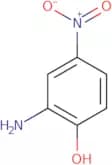
Discontinued product2-Amino-4-nitrophenol
CAS:2-Amino-4-nitrophenol is a chemical compound that has been used in the modeling of hydrogen bonds. It is also used as a reagent for the determination of the concentration of hydrochloric acid and sodium carbonate. 2-Amino-4-nitrophenol is activated with hydrochloric acid and then reacts with sodium carbonate to produce a yellow solution. The solution's colour changes with pH, which can be determined by measuring the absorption at different wavelengths on an nmr spectrometer. Nitro groups are present in 2-amino-4-nitrophenol, which may cause allergic reactions. This chemical also has an acidic nature due to its inorganic acid properties.
Formula:C6H6N2O3Purity:Min. 95%Color and Shape:Slightly Yellow PowderMolecular weight:154.12 g/molRef: 3D-FA17585
Discontinued product4-Ethoxybenzyl alcohol
CAS:4-Ethoxybenzyl alcohol is a reactive compound that can be photoexcited. It has been shown to have a cavity and is able to absorb light of wavelengths between 250 nm and 500 nm. 4-Ethoxybenzyl alcohol reacts with various compounds, such as aldehydes, to form new compounds. It has been shown that the reaction system can be used for high-throughput analysis, which may lead to the discovery of new drugs. It also has been found that 4-ethoxybenzyl alcohol can react with sulfates in an organic solvent to produce sulfonates. This reaction system has potential for use in the production of new drugs or other chemical products.
Formula:C9H12O2Purity:Min. 95%Color and Shape:Colorless PowderMolecular weight:152.19 g/molRef: 3D-FE70748
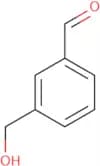
Discontinued product3-Formylbenzyl alcohol
CAS:3-Formylbenzyl alcohol is a fatty acid that has been shown to inhibit the growth of bacteria by binding to the hydroxyl group of the bacterial cell membrane. 3-Formylbenzyl alcohol's antimicrobial activity is due to its ability to inhibit the production of fatty acids in the cell membrane, preventing the formation of an outer layer that protects bacteria from attack. The antibacterial agent also inhibits protein synthesis and prevents DNA replication, resulting in cell death. 3-Formylbenzyl alcohol binds to bacteria through hydrogen bonding and has been shown to be effective against Staphylococcus aureus, Bacillus subtilis, Escherichia coli, and Pseudomonas aeruginosa. The mechanism for this action is not clear but may involve an intramolecular hydrogen bond or nucleophilic attack by one of its carbonyl groups on a nitrogen atom in the bacterial molecule.
Formula:C8H8O2Purity:Min. 95%Color and Shape:Off-White PowderMolecular weight:136.15 g/molRef: 3D-FF69891
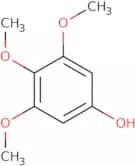
Discontinued product3,4,5-Trimethoxyphenol
CAS:3,4,5-Trimethoxyphenol is a fruit extract that has been shown to inhibit the activity of protein synthesis. It also inhibits the replication of hepatitis C virus in vitro by interfering with the acylation reaction and preventing the attachment of lipoproteins to cell membranes. 3,4,5-Trimethoxyphenol may be used as an analytical reagent for determining the degree of unsaturation in cinnamic acid derivatives.
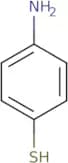
Formula:C9H12O4Purity:Min. 96%Color and Shape:PowderMolecular weight:184.19 g/mol4-Aminothiophenol
CAS:4-Aminothiophenol is a redox potential probe that is used as an analytical chemistry reagent. It has been shown to react with nitrite ion and form a nitrogen atom, which can be detected by Raman spectroscopy. 4-Aminothiophenol has also been used to measure the amount of fatty acid in human serum samples. 4-Aminothiophenol has been shown to have an enhancement effect on the detection sensitivity of model system reactions and can be used as a model system for these reactions. The reaction mechanism for this compound is not well understood, but it is believed that it may involve electron transfer from the aminothiophenol radical cation to the nitrite ion.
Purity:Min. 95%Color and Shape:White PowderMolecular weight:125.19 g/molRef: 3D-FA02055
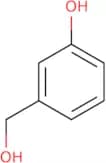
Discontinued product3-Hydroxybenzyl alcohol
CAS:3-Hydroxybenzyl alcohol is a fatty acid with a hydroxyl group. The clinical relevance of 3-hydroxybenzyl alcohol remains unclear. It has been used in acetate extract and ph optimum tests, as well as to study reaction solutions and nmr spectroscopic data. Hydrogen bonds have been observed between the molecule's hydroxyl group and the oxygen atoms in water molecules, which may explain its antifungal properties. 3-hydroxybenzyl alcohol also has an inhibitory effect on cyclic peptide synthesis, rotarod test performance, and analytical methods. It is a broad-spectrum antimicrobial that can be used against bacteria, fungi, protozoa and viruses. 3-hydroxybenzyl alcohol has an acidic character because it reacts with copper ions to form a copper complex.
Formula:C7H8O2Purity:Min. 95%Color and Shape:White PowderMolecular weight:124.14 g/molRef: 3D-FH64467
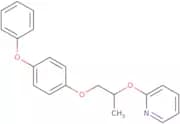
Discontinued productPyriproxyfen
CAS:Pesticidal insect growth regulator
Formula:C20H19NO3Purity:Min. 95%Color and Shape:White Clear LiquidMolecular weight:321.37 g/molRef: 3D-FP31951
Discontinued product3,5-Diaminobenzyl alcohol dihydrochloride
CAS:3,5-Diaminobenzyl alcohol dihydrochloride is a quinoline derivative that is cytotoxic to tumor cells. It binds to the DNA and inhibits protein synthesis by inhibiting the enzyme ribonucleotide reductase. 3,5-Diaminobenzyl alcohol dihydrochloride has been shown to be cytotoxic in the nanomolar range against tumor cells and is an antitumor agent. This drug has been shown to inhibit growth of cells in culture by binding to DNA.
Formula:C7H10N2O·2HClPurity:Min. 95%Color and Shape:Light (Or Pale) Orange To Brown SolidMolecular weight:211.09 g/molRef: 3D-FD170838
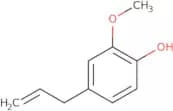
Discontinued product4-Allyl-2-methoxyphenol
CAS:4-Allyl-2-methoxyphenol is a natural compound that has been shown to be cytotoxic and neuroprotective in rat cortical neuron cultures. 4-Allyl-2-methoxyphenol is a competitive inhibitor of the enzyme that catalyzes the conversion of arachidonic acid to prostaglandin H2 (PGH2), which leads to the inhibition of both cyclooxygenase and lipoxygenase. The cytotoxicity of this compound is due to its ability to increase intracellular Ca2+ levels, which may lead to neuronal death. In addition, 4-allyl-2-methoxyphenol has been shown to inhibit polymerase chain reaction (PCR) in human HL60 cells, which may have implications for cancer treatment.
Formula:C10H12O2Purity:Min. 98 Area-%Color and Shape:Clear LiquidMolecular weight:164.2 g/molRef: 3D-FA12114
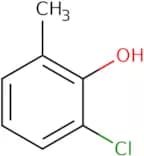
Discontinued product2-Chloro-6-methylphenol
CAS:2-Chloro-6-methylphenol (2CM) is a chemical compound that has a hydroxyl group, which is found in nature. It is used as an intermediate for the production of other chemicals. 2CM can be biodegraded and is not persistent in the environment. It can be analyzed using analytical methods such as gas chromatography and high-performance liquid chromatography. 2CM can be detected using vibrational spectroscopy. This compound can cause high concentrations to accumulate in wastewater treatment plants when it is present at high levels in industrial effluents, so it must be monitored carefully.
Formula:C7H7ClOPurity:Min. 98 Area-%Color and Shape:Colorless PowderMolecular weight:142.58 g/molRef: 3D-FC09890
Discontinued product5-Amino-2-methoxyphenol
CAS:5-Amino-2-methoxyphenol is a p-hydroxybenzoic acid, which is an amide derivative of 5-amino-2-methoxybenzoic acid. It can be used to prepare a sample for the detection of fatty acids in human serum by cycle analysis. 5-Amino-2-methoxyphenol has been shown to have antinociceptive properties and can be used as a chemical precursor in the synthesis of other compounds. The reaction mechanism for 5-Amino-2-methoxyphenol has been determined using NMR spectroscopy and chemical structures. The compound is stable at neutral pH and reacts with hydrogen to form an intramolecular hydrogen bond between the hydroxyl group and the nitrogen atom on the amino group.
Formula:C7H9NO2Purity:Min. 95%Color and Shape:Brown PowderMolecular weight:139.15 g/molp-Cresol
CAS:单酚香气;胶粘剂;密封剂;抗氧化剂;消毒剂
Formula:C7H8OPurity:Min. 95%Color and Shape:Colorless Clear LiquidMolecular weight:108.14 g/molRef: 3D-FC01590
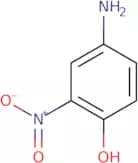
Discontinued product4-Amino-2-nitrophenol
CAS:4-Amino-2-nitrophenol (4ANP) is a chemical substance that has been shown to be carcinogenic in animal models. It has also been shown to induce bladder cancer in women who are occupationally exposed to the chemical. The carcinogenic potential of 4ANP is due to its ability to react with nucleophilic groups such as amines and hydroxyl groups on proteins, DNA, and RNA. This reaction leads to the formation of nitrosamines and their metabolites, which are known carcinogens. 4ANP can also act as a receptor molecule for certain types of cancer cells. These interactions have been studied using chromatographic methods.
Formula:C6H6N2O3Purity:Min. 95%Color and Shape:PowderMolecular weight:154.12 g/molRef: 3D-FA70568
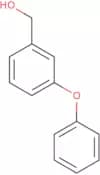
Discontinued product3-Phenoxybenzyl alcohol
CAS:3-Phenoxybenzyl alcohol is a chemical compound that has a basic structure. It is soluble in water and organic solvents, but not in hydrochloric acid. This compound is used as an intermediate to produce other chemicals. 3-Phenoxybenzyl alcohol has been shown to inhibit the growth of bacteria by preventing the formation of fatty acids during the metabolism process. The production of epidermal growth factor and acid formation were inhibited by 3-phenoxybenzyl alcohol in rat liver microsomes. Recombinant cytochrome P450 enzymes have also been shown to be inhibited by this compound, which may lead to analytical methods for determining its concentration in blood plasma or urine.
Formula:C13H12O2Purity:Min. 98 Area-%Color and Shape:PowderMolecular weight:200.23 g/molRef: 3D-FP71261
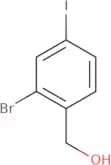
Discontinued product2-Bromo-4-iodobenzyl alcohol
CAS:2-Bromo-4-iodobenzyl alcohol is a versatile building block that can be used in the synthesis of complex compounds. It is a high quality, useful intermediate that can be used as a reaction component or scaffold for the synthesis of many different compounds. This chemical is also useful for research purposes and as a reagent.
Formula:C7H6BrIOPurity:Min. 95%Color and Shape:White PowderMolecular weight:312.93 g/mol