Benzyl alcohols
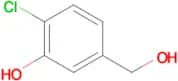
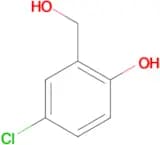
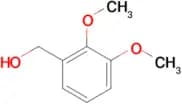
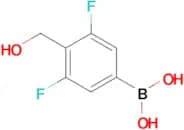
Benzyl alcohols are aromatic alcohols featuring a benzene ring attached to a hydroxymethyl group (-CH2OH). These compounds are used as solvents, preservatives, and intermediates in the synthesis of pharmaceuticals, fragrances, and resins. Benzyl alcohols are known for their antimicrobial properties and versatility in various chemical reactions. At CymitQuimica, we offer a wide selection of high-quality benzyl alcohols to support your research and industrial applications.
Found 1453 products of "Benzyl alcohols"
Sort by
Purity (%)
0
100
|
0
|
50
|
90
|
95
|
100
4-(4'-Iodophenyl)phenol
CAS:<p>4-(4'-Iodophenyl)phenol is an analog of the natural substrate thymidine. It is a liquid crystalline compound that has been shown to inhibit the activity of virus thymidine kinase in vitro and in vivo. 4-(4'-Iodophenyl)phenol was also shown to have affinity for the active site of viral thymidine kinase, which may account for its effect on viral replication.</p>Formula:C12H9IOPurity:Min. 98 Area-%Color and Shape:PowderMolecular weight:296.1 g/mol4-Acetamidophenol
CAS:<p>4-Acetamidophenol (4AP) is a natural compound that has been shown to inhibit nuclear DNA damage in vitro. It also has anti-inflammatory activity, which may be due to its ability to inhibit cyclooxygenase-1 and cyclooxygenase-2 enzymes. 4AP is synthesized by the condensation of acetaminophen with formaldehyde and sodium hydroxide. This drug binds to the signal peptide in the Toll-like receptor 2 (TLR2) protein, preventing TLR2 from activating inflammatory pathways. The matrix effect of 4AP is thought to play a role in its mechanism of action, as well as its biocompatibility with tissues.<br>The analytical method used for this product is high performance liquid chromatography with ultraviolet detection at 280 nm.</p>Formula:C8H9NO2Purity:Min. 95%Color and Shape:PowderMolecular weight:151.16 g/mol4-Cyano-3-fluorophenol
CAS:<p>4-Cyano-3-fluorophenol is a chemical compound that has two phenoxy groups and one fluorine atom. 4-Cyano-3-fluorophenol has been shown to be an effective antagonist of GABA A receptors, which may be due to its ability to interact with the chloride ion site on the receptor, or its hydrogen bonding effects with the receptor. 4-Cyano-3-fluorophenol has been shown to have potent effects in a number of other biological systems. These include inhibition of suzuki coupling reactions (a type of nucleophilic substitution reaction), as well as acylation reactions in which an acid reacts with an alcohol to form an ester, and pharmacokinetic properties. 4-Cyano-3-fluorophenol also has been shown to bind selectively to proteins, including those involved in protein–protein interactions.</p>Formula:C7H4FNOPurity:Min. 95%Color and Shape:White PowderMolecular weight:137.11 g/mol4-Methyl-3-nitrophenol
CAS:<p>4-Methyl-3-nitrophenol is a versatile building block that is used in the synthesis of many organic compounds. This compound is an important precursor to many chemical products, including pharmaceuticals and pesticides. 4-Methyl-3-nitrophenol can be used as a reaction component in various reactions, such as the Friedel Crafts Acylation Reaction, the Michael Addition Reaction, and the Darzens Reaction. It can also be used as a reagent for nitration of alcohols and phenols or for the preparation of dyes. CAS No.: 2042-14-0</p>Formula:C7H7NO3Molecular weight:153.14 g/molRef: 3D-M-4257
1kgTo inquire5kgTo inquire10kgTo inquire500gTo inquire2500gTo inquire-Unit-ggTo inquire2,3-Dichlorobenzyl alcohol
CAS:<p>2,3-Dichlorobenzyl alcohol (2,3-DCBA) is a chlorinated aromatic compound that is used as an industrial solvent. It has significant effects on aerobic bacteria and fungi. 2,3-DCBA inhibits the enzyme lactaldehyde dehydrogenase by covalent binding to its zinc atom. This inhibition leads to the accumulation of lactaldehyde in cells, which can be toxic. 2,3-DCBA also inhibits the enzyme catalase and the synthesis of DNA in eukaryotic cells. In addition, it can catalyze the dioxygenation of naphthalene to form a number of polychlorinated derivatives. The rate of naphthalene formation is dependent on temperature and pressure conditions.</p>Formula:C7H6Cl2OPurity:Min. 95%Color and Shape:PowderMolecular weight:177.03 g/molN1,N2-Bis(2,4,6-trimethoxyphenyl)ethanediamide
CAS:<p>Adriamycin is a cytotoxic drug that inhibits the growth of cells by causing cross-linking in DNA. It is an analogue of the naturally occurring molecule bis(2,4,6-trimethoxyphenyl)ethanediamide. Adriamycin has been shown to inhibit cell proliferation in vitro and in vivo by interfering with DNA synthesis. This agent also inhibits the production of proteins and lipids needed for cellular division by binding to the purine base adenine. Adriamycin binds to the enzyme ribonucleotide reductase, which catalyzes the conversion of ribonucleosides into deoxyribonucleosides. Adriamycin has a relatively low activation energy and can be activated thermally or photolytically.</p>Formula:C20H24N2O8Purity:Min. 95%Color and Shape:PowderMolecular weight:420.41 g/mol2-Chloro-4-nitrophenol
CAS:<p>2-Chloro-4-nitrophenol (2CP) is a chemical that has been found to be an optical sensor for nitrite ion. It reacts with nitrite ion at a pH of 5 and changes its color from yellow or orange to red. 2CP is also an antimicrobial agent and has shown biological properties against bacteria, including the ability to inhibit bacterial growth and reduce the number of bacteria in human serum. The optimum concentration for the inhibition of bacterial growth was found to be 0.5 mg/mL, which is much lower than the concentration used in other studies. The genus, bacterial strain, and pH were all found to influence the activity of 2CP against bacteria. Process optimization trials have shown that 4-hydroxycinnamic acid can be used as an alternative substrate for 2CP's reaction with nitrite ion. Monoclonal antibodies were also developed that are specific for transfer reactions with nitrate ion and can be used as a detection system for nit</p>Formula:C6H4ClNO3Purity:Min. 95%Color and Shape:PowderMolecular weight:173.55 g/mol2-Methoxyphenol
CAS:<p>Please enquire for more information about 2-Methoxyphenol including the price, delivery time and more detailed product information at the technical inquiry form on this page</p>Formula:C7H8O2Purity:Min. 95%Color and Shape:Clear Liquid Solidified MassMolecular weight:124.14 g/mol3-Ethoxy-4-hydroxybenzyl alcohol
CAS:<p>3-Ethoxy-4-hydroxybenzyl alcohol (EHBA) is a functional gene that has been shown to have anti-oxidant properties. EHBA is capable of scavenging free radicals and reactive oxygen species, and is therefore thought to be a potential treatment for diseases caused by peroxide and aldehydes. It has also been shown to reduce the production of vanillyl alcohol, which is associated with pain in tissues such as the trigeminal nerve. The anti-oxidant properties of EHBA are thought to be due to its ability to inhibit lipid peroxidation, protein oxidation, and DNA damage. EHBA can be administered orally or topically.</p>Formula:C9H12O3Purity:Min. 95%Color and Shape:PowderMolecular weight:168.19 g/mol2,4-Dichlorobenzyl alcohol
CAS:<p>Mild antiseptic agent</p>Formula:C7H6Cl2OPurity:Min. 98%Color and Shape:PowderMolecular weight:177.03 g/mol3-Bromo-5-hydroxybenzyl alcohol
CAS:<p>3-Bromo-5-hydroxybenzyl alcohol is a useful building block that can be used to synthesize more complex compounds. This chemical is a reagent and reaction component for organic synthesis. 3-Bromo-5-hydroxybenzyl alcohol is useful as a high quality research chemical, speciality chemical, or versatile building block. It reacts rapidly with strong oxidants and strong bases to form the corresponding bromohydrins. The CAS number for 3-bromo-5-hydroxybenzyl alcohol is 1020336-51-9.</p>Formula:C7H7BrO2Purity:Min. 95%Color and Shape:PowderMolecular weight:203.03 g/mol5-Fluoro-2-nitrophenol
CAS:<p>5-Fluoro-2-nitrophenol is a synthetic compound that has been shown to inhibit the production of nitric oxide in cells. It is most active in inhibiting the release of nitric oxide from cells, but also inhibits its synthesis. 5-Fluoro-2-nitrophenol has been shown to inhibit the production of thromboxane A2, prostacyclin, and endothelin 1. This drug also binds to bacteria and prevents their growth by inhibiting protein synthesis. The binding of 5-fluoro-2-nitrophenol to bacterial DNA leads to inhibition of transcription and translation, preventing protein synthesis.<br>5-Fluoro-2-nitrophenol has been shown to be effective against Trichophyton mentagrophytes (a fungus) and may be useful for the treatment of onychomycosis (fungal infection).</p>Formula:C6H4FNO3Purity:Min. 95%Color and Shape:Yellow PowderMolecular weight:157.1 g/mol3,3'-Dichlorobisphenol A
CAS:<p>3,3'-Dichlorobisphenol A is a chlorine-containing organic compound that is used in the manufacture of polycarbonate plastics. It has been found to be genotoxic and carcinogenic in animals. 3,3'-Dichlorobisphenol A is also toxic to aquatic organisms and may persist for long periods in the environment. 3,3'-Dichlorobisphenol A enters wastewater when it is released during the production of polycarbonate plastics or as a byproduct of other chlorination reactions. The most common method for removing 3,3'-dichlorobisphenol A from wastewater is to use UV irradiation followed by chlorine gas treatment. This process can lead to the formation of additional chlorinated compounds that are more toxic than 3,3'-dichlorobisphenol A.</p>Formula:C15H14Cl2O2Purity:Min. 95%Color and Shape:White PowderMolecular weight:297.18 g/mol4-Isopropoxybenzyl alcohol
CAS:<p>4-Isopropoxybenzyl alcohol is a reaction component that can be used as a reagent, useful scaffold, and high-quality research chemical. It is also a versatile building block and useful intermediate for the production of complex compounds. This chemical has been assigned CAS No. 82657-71-4. 4-Isopropoxybenzyl alcohol is a fine chemical with uses in the production of polymers, pharmaceuticals, and other chemicals.</p>Formula:C10H14O2Purity:Min. 95%Color and Shape:Clear LiquidMolecular weight:166.22 g/molChlorophenol red
CAS:<p>Chlorophenol red is a fluorescent probe that can be used in the detection of microbial infection. It has been shown to react with malonic acid (MAA) and fluoresce at an excitation wavelength of ~480 nm and emission wavelength of ~520 nm. The linear calibration curve for this assay was generated using human serum, which is a good model system for detecting infectious diseases. Chlorophenol red was also shown to bind to the receptor activity on mammalian cells and can be used as a marker for autoimmune diseases.</p>Formula:C19H12Cl2O5SPurity:Min. 95%Color and Shape:Green PowderMolecular weight:423.27 g/mol3-Hydroxy-4-methoxybenzyl alcohol
CAS:<p>3-Hydroxy-4-methoxybenzyl alcohol is a metabolite of vanillic acid, an aldehyde that is produced by the oxidation of catecholamines. This compound has been shown to inhibit the activity of aldehyde oxidase, which converts aldehydes into acids. 3-Hydroxy-4-methoxybenzyl alcohol has also been shown to inhibit cellular dehydrogenase and protocatechuic aldehyde dehydrogenase activities, as well as inhibiting cellular metabolism.</p>Formula:C8H10O3Purity:Min. 95%Color and Shape:PowderMolecular weight:154.16 g/mol3-Chloro-2-nitrobenzoic acid
CAS:<p>3-Chloro-2-nitrobenzoic acid is a chemical compound that is used in the synthesis of quinoline derivatives. It has been shown to be genotoxic and cytotoxic in cell culture. 3-Chloro-2-nitrobenzoic acid binds to DNA, forming a covalent bond with the nitrogen atoms in the DNA bases. This binding may lead to changes in the structure of DNA, which could potentially be mutagenic. 3-Chloro-2-nitrobenzoic acid also has an optical absorption maximum at around 260 nm, which is indicative of hydrogen bonding between molecules.<br>3-Chloro-2-nitrobenzoic acid has been shown to inhibit brain cells and lung cells by interfering with cellular respiration and mitochondrial function.</p>Formula:C7H4ClNO4Purity:Min. 95%Color and Shape:White PowderMolecular weight:201.56 g/molTERT-BUTYL (2-(HYDROXYMETHYL)PHENYL)CARBAMATE
CAS:Formula:C12H17NO3Purity:97%Color and Shape:Liquid, ViscousMolecular weight:223.272