Benzyl alcohols
Found 1458 products of "Benzyl alcohols"
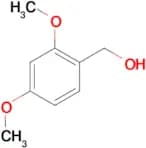
2,4-Dimethoxybenzyl alcohol
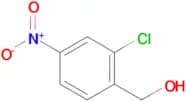
CAS:Formula:C9H12O3Purity:98%Color and Shape:SolidMolecular weight:168.192(2-Chloro-4-nitrophenyl)methanol
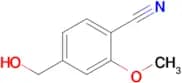
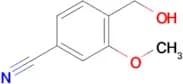
CAS:Formula:C7H6ClNO3Purity:97%Color and Shape:SolidMolecular weight:187.584-(Hydroxymethyl)-3-methoxybenzonitrile
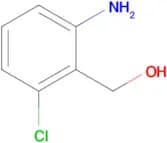
CAS:Purity:98%Color and Shape:SolidMolecular weight:163.17599492-Amino-6-chlorobenzyl alcohol
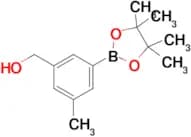
CAS:Formula:C7H8ClNOPurity:98%Color and Shape:SolidMolecular weight:157.6(3-Methyl-5-(4,4,5,5-tetramethyl-1,3,2-dioxaborolan-2-yl)phenyl)methanol
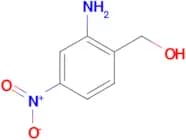
CAS:Purity:98%Molecular weight:248.13000492-Amino-4-nitrobenzenemethanol
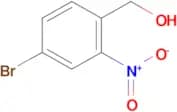
CAS:Formula:C7H8N2O3Purity:97%Color and Shape:SolidMolecular weight:168.1524-Bromo-2-nitrobenzylalcohol
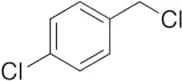
CAS:Formula:C7H6BrNO3Purity:95%Color and Shape:SolidMolecular weight:232.0334-Chlorobenzyl Chloride (~90%)
CAS:Controlled ProductStability Moisture Sensitive
Applications 4-Chlorobenzyl Chloride is a benzylchloride derivative used in the preparation of various biologically active compounds such as bronchodilators and antibacterial agents.
Not a dangerous good if item is equal to or less than 1g/ml and there is less than 100g/ml in the package
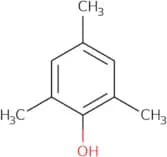
References Adams, M. et al.: Synth. Comm., 29, 2419 (1999); Foroumadi, A. et al.: Arch. Pharm. Res., 30, 138 (2007);Formula:C7H6Cl2Purity:~90%Color and Shape:NeatMolecular weight:161.032,4,6-Trimethylphenol
CAS:2,4,6-Trimethylphenol is a non-volatile organic compound that has been shown to have thermal expansion properties when mixed with trifluoromethanesulfonic acid. It reacts with hydrogen ions to form 2,4,6-trimethylphenol chloride and hydrogen gas. This reaction mechanism has been determined using FTIR spectroscopy. The chlorine atom in the molecule is cationic and can be used as a catalyst for esterification reactions. 2,4,6-Trimethylphenol also forms esters with fatty acids and can be used as a solid catalyst in the chlorination of fatty acid esters.
Formula:C9H12OPurity:Min. 95%Color and Shape:White PowderMolecular weight:136.19 g/mol5-Methoxy-2-nitrophenol
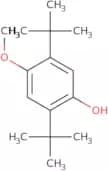
CAS:5-Methoxy-2-nitrophenol is a potential drug candidate with anti-tumor effects. It has been shown to inhibit the growth of various types of cancer cells, including leukemia and breast cancer cells. 5-Methoxy-2-nitrophenol has also been shown to be effective in reducing the size of tumors in mice by inhibiting fatty acid synthase, which is an enzyme that catalyzes the synthesis of fatty acids and lipids. This drug candidate is synthesized from chloroformate and hydroxamic acids. The functional theory states that it inhibits an enzyme called methyltransferase, which transfers methyl groups to DNA. The hydrogenation reduction theory suggests that 5-Methoxy-2-nitrophenol may inhibit the activity of reductively activated enzymes in tissue samples by forming a covalent bond with their sulfhydryl groups or other active sites.Formula:C7H7NO4Purity:Min. 95%Color and Shape:PowderMolecular weight:169.13 g/mol2,5-Di-tert-butyl-4-methoxyphenol
CAS:2,5-Di-tert-butyl-4-methoxyphenol is a persulfate reductant that has been shown to have peroxidase-like activity. This compound also has been shown to induce lung toxicity in animals, as well as exhibiting tumorigenicity. 2,5-Di-tert-butyl-4-methoxyphenol is an industrial chemical that is used as a catalyst in the production of polymers and dyes. It is also used in the manufacture of herbicides, plastics, and pharmaceuticals. This compound reacts with a number of oxidizing agents to form reactive radicals such as hydroxyl radicals and hydrogen peroxide. These radicals can then react with other substances present in the environment to produce toxic byproducts such as trifluoromethanesulfonic acid (TFMS). The redox potential for this compound is -0.8 V vs NHE at pH 7.
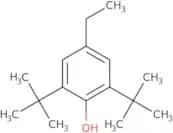
Formula:C15H24O2Purity:Min. 95%Color and Shape:PowderMolecular weight:236.35 g/mol2,6-di-tert-Butyl-4-ethylphenol
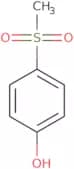
CAS:2,6-Di-tert-butyl-4-ethylphenol is a chemical compound that is used as an antioxidant in industrial processes. It is hydrophobic and readily soluble in organic solvents. The chemical structure of 2,6-di-tert-butyl-4-ethylphenol consists of two phenolic groups and four methyl groups, which are located on the benzene ring. This compound can be detected by gas chromatography coupled with mass spectrometry (GC/MS) using a quadrupole mass spectrometer. The GC/MS technique is used to identify the presence of 2,6-di-tert-butyl-4-ethylphenol in a sample by measuring its retention time on the chromatographic column and its relative abundance compared to other compounds in the sample. Analysis of this compound has been conducted in vitro and in cultured cells.Formula:C16H26OPurity:90%Color and Shape:PowderMolecular weight:234.38 g/mol4-(Methylsulfonyl)phenol
CAS:4-Methanesulfonylphenol is a versatile building block used in the manufacturing of pharmaceuticals and agrochemicals. 4-Methanesulfonylphenol, also known as 4-Hydroxyphenyl methyl sulfone, is utilised as a protecting group for the synthesis of several phenol derivatives. Exemplary reactions include the preparation of esters by reacting with carboxylic acids or anhydrides in the presence of an acid catalyst and an organic base.Formula:C7H8O3SPurity:Min. 98 Area-%Color and Shape:White Off-White Yellow PowderMolecular weight:172.2 g/mol3-(Trifluoromethylthio)phenol
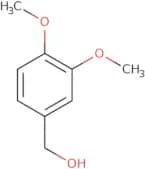
CAS:3-(Trifluoromethylthio)phenol is a high quality reagent that is used as a building block in the synthesis of complex compounds. It has been shown to be an intermediate for the production of fine chemicals and research chemicals, as well as being used as a versatile building block in reactions with other chemical substances. 3-(Trifluoromethylthio)phenol has CAS No. 3823-40-3 and is useful for a wide range of applications, and can be used in the production of speciality chemicals.Formula:C7H5F3OSPurity:Min. 95%Color and Shape:Off-White PowderMolecular weight:194.18 g/mol3,4-Dimethoxybenzyl alcohol
CAS:3,4-Dimethoxybenzyl alcohol is a compound that is used as a reactant in the reaction solution for the analytical method of measuring lignin. It is also used as a reagent to measure the redox potentials of various substances. 3,4-Dimethoxybenzyl alcohol is an antioxidant that can be found in the human body at physiological levels. This compound has been shown to have anti-inflammatory and antioxidant properties, which may be due to its ability to inhibit prostaglandin synthesis. 3,4-Dimethoxybenzyl alcohol also has been shown to have effects on bowel disease and autoimmune diseases.Formula:C9H12O3Purity:Min. 95%Color and Shape:PowderMolecular weight:168.19 g/mol3-Nitro-4-acetamidophenol
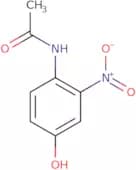
CAS:3-Nitro-4-acetamidophenol is a molecule that is used in research. It has been shown to inhibit the production of nitrous oxide and nitrite, which are reactive nitrogen oxides that can cause acidification. 3-Nitro-4-acetamidophenol inhibits the enzyme nitrate reductase, which reduces nitrate to nitrite ion. It has been shown to have a recirculating effect on the production of these oxidizing agents, but has no effect on acetaminophen metabolism or organic acids. 3-Nitro-4-acetamidophenol is an acidic compound that can be synthesized by reacting an amine with an organic acid in the presence of sodium nitrite.Formula:C8H8N2O4Purity:Min. 95%Color and Shape:PowderMolecular weight:196.16 g/mol4-(Dodecyloxy)-phenol
CAS:4-(Dodecyloxy)-phenol is a polymerizable monomer with a tetradentate structure. It has been shown to be photostable in the presence of ultraviolet and visible light, as well as stable to heat denaturation. 4-(Dodecyloxy)-phenol is used for the synthesis of polymers with mesomorphic properties. The compound can also be used as a nucleophile in organic chemistry reactions, including esterification and hydrolysis reactions. 4-(Dodecyloxy)-phenol can be synthesized from phenolates or by hydrolyzing dodecanol with sodium hydroxide in the presence of hydrochloric acid. 4-(Dodecyloxy)-phenol has been shown to have high polarizability, which facilitates its interaction with metal ions.
Formula:C18H30O2Purity:Min. 95%Color and Shape:PowderMolecular weight:278.43 g/mol2,6-Dichloro-3-methylphenol
CAS:2,6-Dichloro-3-methylphenol is a high quality chemical that is useful as an intermediate in organic synthesis. It is also an important reagent for the production of complex compounds, such as fine chemicals, speciality chemicals and research chemicals. 2,6-Dichloro-3-methylphenol is a versatile building block that can be used to produce a variety of reaction components and scaffolds. This compound has been used as a starting material for the production of other compounds with pharmaceutical applications.Formula:C7H6Cl2OPurity:Min. 95%Color and Shape:Off-White PowderMolecular weight:177.03 g/mol2,6-Diphenylphenol
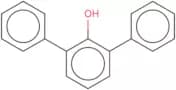
CAS:2,6-Diphenylphenol is a phenolic compound that can be synthesized by the Friedel-Crafts reaction or by the Suzuki coupling reaction. It has been shown to have light emission properties in an electrochemical impedance spectroscopy model system. 2,6-Diphenylphenol is an electron donor and a cross-linking agent that is used to form strong covalent bonds between two molecules. Protonation of 2,6-diphenylphenol results in intramolecular hydrogen bonding and intermolecular hydrogen bonding. 2,6-Diphenylphenol also forms hydrogen bonds with water vapor and has been shown to have proton transfer properties.Formula:C18H14OPurity:Min. 95%Color and Shape:White PowderMolecular weight:246.31 g/mol(4-{[6-(Trifluoromethyl)pyridin-2-yl]oxy}phenyl)methanol
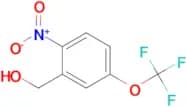
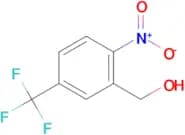
CAS:Formula:C13H10F3NO2Purity:97%Molecular weight:269.223(2-Nitro-5-(trifluoromethyl)phenyl)methanol
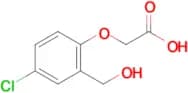
CAS:Formula:C8H6F3NO3Purity:95.0%Molecular weight:221.1352-(4-Chloro-2-(hydroxymethyl)phenoxy)acetic acid
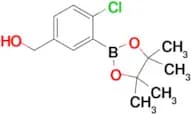
CAS:Formula:C9H9ClO4Purity:95.0%Molecular weight:216.62(4-Chloro-3-(4,4,5,5-tetramethyl-1,3,2-dioxaborolan-2-yl)phenyl)methanol
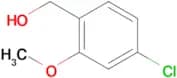
CAS:Purity:96%Molecular weight:268.5400085(4-Chloro-2-methoxyphenyl)methanol
CAS:Formula:C8H9ClO2Purity:97%Color and Shape:SolidMolecular weight:172.61








![(4-{[6-(Trifluoromethyl)pyridin-2-yl]oxy}phenyl)methanol](/_next/image/?url=https%3A%2Fstatic.cymitquimica.com%2Fproducts%2F10%2Fthumb-webp%2FF067676.webp&w=3840&q=75)


![[2-Methoxy-6-(methylsulfanyl)phenyl]methanol](/_next/image/?url=https%3A%2Fstatic.cymitquimica.com%2Fproducts%2F10%2Fthumb-webp%2FF633309.webp&w=3840&q=75)


![[4-Chloro-2-fluoro-3-(methylsulfanyl)phenyl]methanol](/_next/image/?url=https%3A%2Fstatic.cymitquimica.com%2Fproducts%2F10%2Fthumb-webp%2FF631278.webp&w=3840&q=75)
![(2-Methyl-[1,1′-biphenyl]-4-yl)methanol](/_next/image/?url=https%3A%2Fstatic.cymitquimica.com%2Fproducts%2F10%2Fthumb-webp%2FF633255.webp&w=3840&q=75)