Phenols
Phenols are aromatic compounds characterized by a hydroxyl group (-OH) bonded directly to a benzene ring. These compounds exhibit unique chemical properties, including acidity and reactivity, making them valuable in the production of pharmaceuticals, plastics, and dyes. Phenols are also used as antiseptics and in the synthesis of antioxidants and resins. At CymitQuimica, we provide a comprehensive range of high-quality phenols to support your research and industrial projects.
Subcategories of "Phenols"
Found 2522 products of "Phenols"
Sort by
Purity (%)
0
100
|
0
|
50
|
90
|
95
|
100
Tschimganin
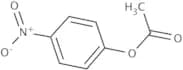
CAS:Tschimganin is a terpene ester with estrogenic activity, found in F. tschimganica. It can stimulate uterine growth in immature rats.Formula:C18H24O4Color and Shape:SolidMolecular weight:304.3814-Nitrophenyl acetate
CAS:Formula:C8H7NO4Purity:(GC) ≥ 96.0%Color and Shape:White to yellow or pale brown, powder or crystalsMolecular weight:181.15Anticancer agent 180
Anticanceragent 180 (compound 4) is a secondary metabolite found in fungal strains, extracted through physical interaction with streptomycetes. It possesses potential antitumor activity and can inhibit the migration of MDA-MB-231 breast cancer cells.Formula:C26H37NO4Molecular weight:427.27226(3S,5S)-Octahydrocurcumin
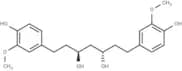
CAS:(3S,5S)-Octahydrocurcumin ((3S,5S)-Hexahydrobisdemethoxycurcumin) is a fungal metabolite that can be isolated from turmeric.Formula:C21H28O6Color and Shape:SolidMolecular weight:376.44Moracin M 3’-O-β-glucopyranoside
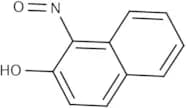
Moracin M 3’-O-β-glucopyranoside is found in Morus alba and acts as an sEH inhibitor (IC50: 7.7 µM), exhibiting anti-inflammatory properties.Formula:C20H20O9Color and Shape:SolidMolecular weight:404.110731-Nitroso-2-naphthol
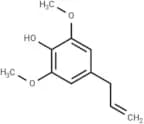
CAS:Formula:C10H7NO2Purity:≥ 98.0%Color and Shape:Light-brown to brown powder, crystals or solidMolecular weight:173.17Methoxyeugenol
CAS:Methoxyeugenol exhibits inhibitory activity against Sialidase A/B and can also inhibit the growth of Staphylococcus aureus.Formula:C11H14O3Purity:98.00%Color and Shape:SolidMolecular weight:194.233,5-Di-tert-butylphenol
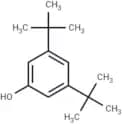
CAS:3,5-Di-tert-butylphenol induces accumulation of reactive oxygen species. 3,5-Di-tert-butylphenol exhibits anti-biofilm and antifungal activities.Formula:C14H22OPurity:99.905% - 99.93%Color and Shape:Off-White Crystals Or PowderMolecular weight:206.322,4-Diaminophenol dihydrochloride
CAS:Formula:C6H10Cl2N2OPurity:≥ 98.0% (dried basis)Color and Shape:White to brown or green, powder or crystalsMolecular weight:197.06Actiphenol
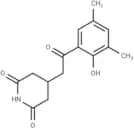
CAS:Actiphenol is a glutarimide antibiotic with antifungal and antitumor activity and biosynthesis controlled by a single PKS gene cluster.Formula:C15H17NO4Color and Shape:SolidMolecular weight:275.30Bithionol
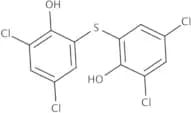
CAS:Formula:C12H6Cl4O2SPurity:≥ 97.0% (anhydrous basis)Color and Shape:White, off-white or beige powderMolecular weight:356.05Hericenone B
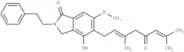
CAS:Hericenone B is a compound isolated from Hericium erinaceus. It exhibits cytotoxic effects on HeLa cells and specifically inhibits collagen-induced platelet aggregation. Hericenone B is utilized in research focused on tumor and antithrombotic drugs.Formula:C27H31NO4Color and Shape:SolidMolecular weight:433.539Djalonensone
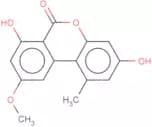
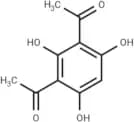
CAS:Djalonensone (Alternariol monomethyl ether), an Alternaria toxin, is a strong mutagen in Escherichia coli strain ND-160.Formula:C15H12O5Purity:98.00%Color and Shape:SolidMolecular weight:272.252,4-Diacetylphloroglucinol
CAS:2,4-Diacetylphloroglucinol is a polyketide antibiotic discovered in Pseudomonas fluorescens, exhibiting broad-spectrum toxicity.Formula:C10H10O5Purity:99.71%Color and Shape:SolidMolecular weight:210.18Ref: TM-T21619
5mgTo inquire10mgTo inquire25mgTo inquire50mgTo inquire100mg181.00€1mL*10mM (DMSO)To inquireActinoplanone A
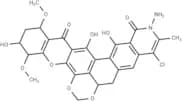
CAS:Actinoplanone A is a polycyclic flavonoid antibiotic (antibiotic) with potent antibacterial activity against bacteria and Magnaporthe oryzae. It exhibits cytotoxicity against various tumor cells and inhibits DNA synthesis.Formula:C28H25ClN2O10Color and Shape:SolidMolecular weight:584.959Albiducin A
CAS:Albiducin A is an antibiotic discovered in Hymenoscyphus albidus, possessing both antibacterial and anticancer properties. Its minimum inhibitory concentration (MIC) against bacteria and fungi ranges from 16.7 to 66.7 mg/mL. The IC50 values for mouse fibroblasts (L929) and human cervical carcinoma cells (KB3-1) are 6.1 and 2.7 μg/mL, respectively. Albiducin A shows potential for research in the fields of infectious and cancer diseases.Formula:C16H20O3Color and Shape:SolidMolecular weight:260.328