Naphthalenes
Naphthalenes are polycyclic aromatic hydrocarbons consisting of two fused benzene rings. These compounds are used in the synthesis of dyes, resins, and pharmaceuticals. Naphthalenes are valued for their chemical stability and aromatic properties. At CymitQuimica, we provide a wide selection of high-quality naphthalenes for your research and industrial applications.
Found 2426 products of "Naphthalenes"
Sort by
Purity (%)
0
100
|
0
|
50
|
90
|
95
|
100
1,3-Bis((R)-1-(naphthalen-1-yl)ethyl)-1H-imidazol-3-ium chloride
CAS:Purity:95%Molecular weight:412.95999152-(4-(TERT-BUTYL)NAPHTHALEN-2-YL)-4,4,5,5-TETRAMETHYL-1,3,2-DIOXABOROLANE
CAS:Purity:98%Molecular weight:310.23999022-(7-Methoxynaphthalen-2-yl)-4,4,5,5-tetramethyl-1,3,2-dioxaborolane
CAS:Purity:97%Molecular weight:284.16000372,6-Dibromonaphthalene-1,5-diol
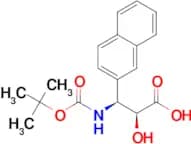
CAS:Formula:C10H6Br2O2Purity:93%Color and Shape:SolidMolecular weight:317.964(R)-3-((tert-Butoxycarbonyl)amino)-3-(naphthalen-2-yl)propanoic acid
CAS:Purity:98%Molecular weight:315.3689882,3-Dimethylnaphthalene
CAS:<p>Dimethylnaphthalene is an aromatic hydrocarbon that absorbs UV radiation. The absorption of UV radiation can be used to measure the concentration of this compound in a sample. The solubility data for dimethylnaphthalene show that it is soluble in supercritical carbon dioxide, but insoluble in water. Dimethylnaphthalene is a chemical compound that can be used as a skin conditioner or in biological treatment. It has been shown to have antioxidant properties and may also have anti-inflammatory effects. Dimethylnaphthalene is synthesized from naphthalene by two different reactions: hydrogenation and oxidation. The reaction mechanism for these two reactions has not yet been determined, but both are believed to produce the same product.</p>Formula:C12H12Purity:Min. 95%Color and Shape:White PowderMolecular weight:156.22 g/mol1-Bromo-4-iodonaphthalene
CAS:<p>1-Bromo-4-iodonaphthalene is an organic compound that can be synthesized in a number of steps. The first step involves the reaction of 4-bromobenzonitrile with sulfur. This is followed by the acetylation of the product to give 2-(acetyloxy)benzonitrile. An intermediate product is then obtained by reacting this with sodium azide in water and heating to 90°C for 12 hours. Finally, the intermediate product is reacted with phenylmagnesium bromide in ether and hydrolyzed with an alkali to give 1-bromo-4-iodonaphthalene. This compound has been used in the industrial synthesis of biphenyls and dyes such as methyl violet.</p>Formula:C10H6BrIPurity:Min. 95%Color and Shape:Off-White PowderMolecular weight:332.96 g/mol2-Naphthalenesulfonic acid sodium
CAS:<p>2-Naphthalenesulfonic acid sodium is a chemical compound that belongs to the class of naphthalene sulfonic acids. It is used in the production of medicines and as an industrial chemical. 2-Naphthalenesulfonic acid sodium has been shown to inhibit the viscosity of blood capillaries and has been proposed for use in the treatment of diabetic retinopathy. This compound also reduces the permeability of cell membranes by binding to fatty acids, which has led it to be studied for its potential effects on prostate cancer. 2-Naphthalenesulfonic acid sodium has been shown to have a Michaelis–Menten kinetics with respect to the enzyme ft-ir spectroscopy and can be used as a reagent for cationic surfactants. 2-Naphthalenesulfonic acid sodium is soluble in water, but insoluble in hydrochloric acid or solvents such as chloroform or acetone.</p>Formula:C10H7O3SNaPurity:Min. 98 Area-%Color and Shape:White Off-White PowderMolecular weight:230.22 g/mol4-Methoxy-1-naphthol
CAS:<p>Spectrophotometric substrate for peroxidase</p>Formula:C11H10O2Purity:Min. 95%Color and Shape:Brown PowderMolecular weight:174.2 g/mol6-Hydroxy-2-naphtoic acid
CAS:<p>6-Hydroxy-2-naphtoic acid is an amide that is hydrolyzed to 6-hydroxybenzoic acid and formamide. It has been used as a viscosity modifier in the synthesis of polymers. 6-Hydroxy-2-naphtoic acid can be produced by a borane-tetrahydrofuran complex reaction with naphthalene. This reaction also produces p-hydroxybenzoic acid, which can then be converted to hydroxybenzoic acid with hydrochloric acid. The structural analysis of this compound has been performed using fluorescence probes and an inorganic acid.</p>Formula:C11H8O3Purity:Min. 95%Color and Shape:Yellow PowderMolecular weight:188.18 g/mol1-Nitroso-2-naphthol
CAS:<p>1-Nitroso-2-naphthol is a copper complex that is used as an analytical reagent for the determination of nitrogen content in organic compounds. It has been shown to have linear calibration curves with a detection limit of 0.01% nitrogen at a concentration of 20 ppm. The thermodynamic data for the formation of this complex is available and includes free energy, enthalpy, entropy, and Gibbs free energy values. A reaction mechanism has also been proposed for this compound. 1-Nitroso-2-naphthol has been shown to chelate ligands such as picolinic acid and matrix effects on its electrochemical impedance spectra can be seen. Pharmaceutical preparations containing 1-nitroso-2-naphthol are on the market as treatment for gastric ulcers and duodenal ulcers.</p>Formula:C10H7NO2Purity:Min. 95%Color and Shape:Brown PowderMolecular weight:173.17 g/mol5,6,7,8-Tetrahydronaphthalene-2-carbaldehyde
CAS:<p>5,6,7,8-Tetrahydronaphthalene-2-carbaldehyde is an indole derivative that is used as a precursor to produce other compounds. It is an inducers of enzymes (e.g., hydroxylase) and has been shown to increase the production of toxic metabolites such as cyclized products. 5,6,7,8-Tetrahydronaphthalene-2-carbaldehyde can be synthesized from anthracene by reacting it with acetone and hydrochloric acid. This compound can be converted into a variety of derivatives including esters and zoxazolamine. 5,6,7,8-Tetrahydronaphthalene-2-carbaldehyde also has carcinogenic properties and has been shown to cause cancer in rats when injected or orally administered in high doses.</p>Formula:C11H12OPurity:Min. 95%Color and Shape:PowderMolecular weight:160.21 g/molCalmagite [Metal indicator for Ca, Mg etc.]
CAS:Formula:C17H14N2O5SColor and Shape:Red to Dark blue to Black powder to crystalMolecular weight:358.37(S)-1,1'-Bi-2-Naphthol
CAS:<p>The chemical structure of 1,1'-bi-2-naphthol is an alkanoic acid with a hydroxyl group. It has been shown to react in the presence of amines and sodium salts to form hydrogen bonding interactions. The x-ray crystal structures of magnesium salt and hydrogen bonding interactions were found to have a steric interaction with the fatty acids. The reaction mechanism for 1,1'-bi-2-naphthol is similar to that of other alkanoic acids: it reacts with a nucleophilic compound, such as water or ammonia, to produce an alcohol (hydroxyl group). When these reactions occur intramolecularly, the hydrogen bonds are formed between adjacent molecules.</p>Formula:C20H14O2Purity:Min. 95%Color and Shape:White PowderMolecular weight:286.32 g/mol5,6,7,8-Tetrahydro-1-naphthol
CAS:<p>5,6,7,8-Tetrahydro-1-naphthol is a natural compound that belongs to the group of diazonium compounds. It reacts with an alkanoic acid and a hydrochloric acid in the presence of a diazo compound to form an alkylating product. This product can be used as a precursor for the synthesis of other organic compounds. The reaction mechanism has been studied using rat liver microsomes. 5,6,7,8-Tetrahydro-1-naphthol can react with dopamine in human liver samples to form 1-hydroxyindole and phenylhydroxyl radicals (a reactive oxygen species). 5,6,7,8-Tetrahydro-1-naphthol also reacts with soybean lipoxygenase to produce an alkyl radical intermediate that can react with molecular oxygen to form peroxides.</p>Formula:C10H12OPurity:Min. 98 Area-%Color and Shape:PowderMolecular weight:148.2 g/mol2-Bromo-1-(4-fluoronaphthalen-1-yl)ethan-1-one
CAS:Formula:C12H8BrFOPurity:97.0%Molecular weight:267.097[1-methyl-1-(1-naphthyl)ethyl]amine hydrochloride
CAS:Formula:C13H16ClNPurity:95.0%Molecular weight:221.73Sodium-2-naphthol-7-sulfonate
CAS:Formula:C10H7NaO4SPurity:98%Color and Shape:SolidMolecular weight:246.21(6-Bromo-naphthalen-2-yloxy)-acetic acid hydrazide
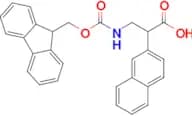
CAS:Formula:C12H11BrN2O2Purity:97.0%Molecular weight:295.136(R,S)-Boc-3-amino-2-(naphthalen-2-yl)-propionic acid
CAS:Formula:C18H21NO4Purity:97%Molecular weight:315.3696-Aminonaphthalene-2-sulfonic acid
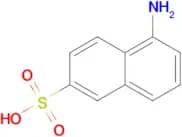
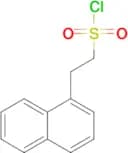
CAS:Formula:C10H9NO3SPurity:95.0%Color and Shape:Very pale yellow – Pale reddish yellow powderMolecular weight:223.252-(Naphthalen-1-yl)ethanesulfonyl chloride
CAS:Formula:C12H11ClO2SPurity:95.0%Molecular weight:254.739-(4-(Naphthalen-1-yl)phenyl)-10-(naphthalen-2-yl)anthracene
CAS:Purity:95%Color and Shape:SolidMolecular weight:506.6480103TERT-BUTYL (5-HYDROXYNAPHTHALEN-1-YL)CARBAMATE
CAS:Formula:C15H17NO3Purity:95.0%Molecular weight:259.3055-Diethylaminonaphthalene-1-sulfonyl chloride
CAS:Formula:C14H16ClNO2SColor and Shape:SolidMolecular weight:297.8methyl 3-hydroxy-2-naphthoate
CAS:Formula:C12H10O3Purity:98%Color and Shape:Solid, Pale yellow - Yellow powderMolecular weight:202.2092-(azidomethyl)naphthalene
CAS:Formula:C11H9N3Purity:95.0%Color and Shape:SolidMolecular weight:183.2141-(2-methoxynaphthalen-1-yl)methanamine hydrochloride
CAS:Formula:C12H14ClNOPurity:95.0%Molecular weight:223.7