Pharmaceutical Standards
Pharmaceutical standards are a comprehensive set of reference materials essential for ensuring the safety, efficacy, and quality of pharmaceutical products. This category includes standards for active pharmaceutical ingredients (APIs), which are the core components responsible for therapeutic effects. Additionally, it covers compounds and metabolites relevant to both the pharmaceutical and veterinary industries, providing benchmarks for the accurate measurement and analysis of these substances. Nitrosamine control standards are crucial for detecting and mitigating potentially harmful nitrosamines in drug formulations. Toxicology standards help assess the safety and potential adverse effects of pharmaceutical compounds. Furthermore, enzyme activators and inhibitors standards are vital for research and development, enabling precise studies of biochemical pathways and drug mechanisms. These pharmaceutical standards are indispensable tools for regulatory compliance, quality control, and research, ensuring that pharmaceutical products meet stringent safety and effectiveness criteria.
Subcategories of "Pharmaceutical Standards"
- APIs for research and impurities(273,720 products)
- Enzyme Activators and Inhibitors(2,827 products)
- Nitrosamines(2,605 products)
- Pharmaceutical and Veterinary Compounds and Metabolites(2,602 products)
- Toxicology(13,652 products)
Found 7836 products of "Pharmaceutical Standards"
Sort by
Purity (%)
0
100
|
0
|
50
|
90
|
95
|
100
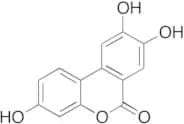
Urolithin C
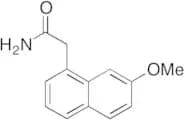
CAS:<p>Stability Hygroscopic<br>Applications Urolithin C is used in biological studies to evaluate the metabolite antioxidant activity.<br>References Ishimoto, H., et. al.: Bioorg. Med. Chem. Lett., 21, 5901 (2011);<br></p>Formula:C13H8O5Color and Shape:NeatMolecular weight:244.27-Methoxy-1-naphthaleneacetamide
CAS:Controlled Product<p>Applications 7-Methoxy-1-naphthaleneacetamide, can be used for the synthesis of the analogs of Melatonin (M215000), containing naphthalene moiety instead of indole nucleus, having high affinity for the melatonin receptor. Agomelatine Impurity 6<br>References Tang, J. D., et al.: Org. Prep. Proc. Int., 41, 164 (2009); Sndrieux Y. J., et al.: J. Med. Chem., 35, 1484 (1992);<br></p>Formula:C13H13NO2Color and Shape:NeatMolecular weight:215.253,3'-Dithiobis(propionohydrazide)
CAS:Controlled Product<p>Applications 3,3'-dithiobis(propionohydrazide) (cas# 50906-77-9) is a useful research chemical.<br></p>Formula:C6H14N4O2S2Color and Shape:NeatMolecular weight:238.335-Chloronaphthalene-2-sulfonyl Chloride
CAS:Controlled Product<p>Applications 5-Chloronaphthalene-2-sulfonyl Chloride (cas# 89108-45-2) is a compound useful in organic synthesis.<br></p>Formula:C10H6Cl2O2SColor and Shape:NeatMolecular weight:261.12N-Methylcytisine
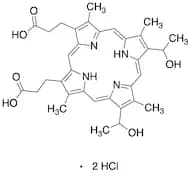
CAS:<p>Applications N-Methylcytisine (cas# 486-86-2) is a compound useful in organic synthesis.<br></p>Formula:C12H16N2OColor and Shape:Off-WhiteMolecular weight:204.27Hematoporphyrin Dihydrochloride
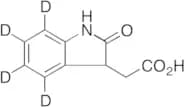
CAS:Controlled Product<p>Stability Hygroscopic<br>Applications Hematoporphyrin dihydrochlordie (cas# 17696-69-4) is a useful research chemical.<br></p>Formula:C34H38N4O6·2ClHColor and Shape:NeatMolecular weight:671.61Oxindole-3-acetic Acid-d4
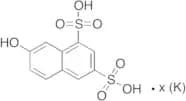
CAS:Controlled ProductFormula:C10D4H5NO3Color and Shape:NeatMolecular weight:195.2082-Naphthol-6,8-disulfonic Acid Potassium Salt
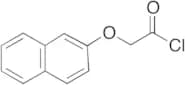
CAS:<p>Applications 2-Naphthol-6,8-disulfonic Acid Potassium Salt is a salt of 2-Naphthol-6,8-disulfonic Acid (N368023). 2-Naphthol-6,8-disulfonic acid is a useful research chemical for organic synthesis and other chemical processes. A reagent used in the preparation of food dyes with numerous applications.<br>References Baltac, T., et al.: Revista de Chimie, 63, 618 (2012)<br></p>Formula:C10H8O7S2•x(K)Color and Shape:Off-WhiteMolecular weight:304.30391(2-Naphthyloxy)acetyl Chloride
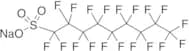
CAS:Controlled Product<p>Applications (2-Naphthyloxy)acetyl Chloride serves as one of the reagents for the discovery of indoline-2-carboxamide derivatives as new classs of brain-penetrant inhibitors of trypanosoma brucei. Also in preparation and antibacterial activity of N-(phenylquinazolinonyl) aryl-amides by amidation of amino(phenyl)quinazolone with aroyl chlorides<br>References Cleghorn, L. A., et al.: J. Med. Chem., 58, 7695 (2015); Prajapati, A. K., et al.: Indian J. Heterocycl. Chem., 19, 269 (2010)<br></p>Formula:C12H9ClO2Color and Shape:NeatMolecular weight:220.652Sodium Perfluoro-1-nonanesulfonate (50 ug/mL in Methanol)
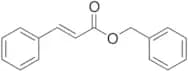
CAS:Controlled ProductFormula:C9F19O3S·NaColor and Shape:Single SolutionMolecular weight:572.12Benzyl Cinnamate
CAS:<p>Applications BENZYL CINNAMATE (cas# 103-41-3) is a useful research chemical.<br></p>Formula:C16H14O2Color and Shape:WhiteMolecular weight:238.28D-Tyrosine-d2
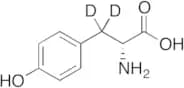
CAS:Controlled Product<p>Applications D-Tyrosine-d2 is deuterium labelled D-Tyrosine (T899970). D-Tyrosine, the stereoisomer to L-Tyrosine (T899975), is an amino acid used in various organic syntheses for antibiotics. It is used in the synthesis of (-)-anisomycin, as well as BATSI (boronic acid transition state inhibitors) which act on β-lactamases. It has also been studied as an inhibitor of microbial growth on surfaces, reducing microbial attachment to hydrophillic glass and hydrophobic polypropylene surfaces.<br>References Li, Ji. et al.: Chin. Chem. Lett., 23, 647 (2012); Xu, H. et al.: Water Res., 45, 5796 (2011); Ke, W. et al.: Antimicrob. Agents Chemother., 55, 174 (2011)<br></p>Formula:C9D2H9NO3Color and Shape:NeatMolecular weight:183.2Protoporphyrin IX Dimethyl Ester
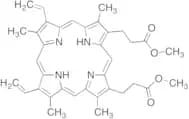
CAS:Controlled Product<p>Applications Protoporphyrin IX Dimethyl Ester is a derivative of Protoporphyrin IX (P839138), which is an important precursor to biologically essential prosthetic groups such as heme, cytochrome c, and chlorophylls.<br>References Battersby, A.R., et al.: Nature, 285, 17-21 (1980); Leeper, F.J., et al.: Natural Product Reports, 2, 19-47 (1983); Layer, G., et al.: Protein Science, 19, 1137-1161 (2010)<br></p>Formula:C36H38N4O4Color and Shape:NeatMolecular weight:590.711-Acenaphthenone
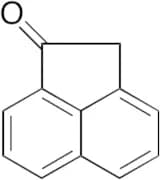
CAS:<p>Applications 1-Acenaphthenone is a product of the photolysis (and microbial metabolism) of acenaphthene, a polycyclic hydrocarbon that has potential to act as polyploidizing agents in plants.<br>References Kostoff, D.: Nature, 142, 753 (1938); Reyes, C., et al.: J. Photochem. Photobio. A, 112, 277 (1998); Schocken, M. & Gibson, D.: Appl. Environ. Microb., 48, 10 (1984)<br></p>Formula:C12H8OColor and Shape:NeatMolecular weight:168.194-Nitrophenethyl Bromide
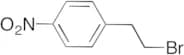
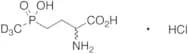
CAS:Controlled ProductFormula:C8H8BrNO2Color and Shape:Off White To Light YellowMolecular weight:230.06Glufosinate-d3 Hydrochloride
CAS:Controlled Product<p>Stability Very Hygroscopic<br>Applications Labelled Glufosinate (G596952). Used as a herbicide.<br>References Abbas, H., et al.: J. Agric. Food Chem., 50, 5246<br></p>Formula:C52H3H9NO4P·ClHColor and Shape:White To Light BeigeMolecular weight:220.61Chlorophyll a (Technical Grade)
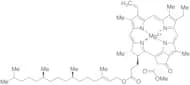
CAS:<p>Stability Light Sensitive<br>Applications Chlorophyll A is a photosynthetic pigment that is essential for photosynthesis of eukaryotes and cyanobacteria, acting as a primary donor in the electron transport chain. Dyes and metabolites.<br>References Prasad, K., et al.: Curr. Res. Chem., 3, 98 (2011); Shanab, S.M., et al.: Int. J. Electrochem. Sci., 6, 3017 (2011); Ajayan, K.V., et al.: Biores. Techol., 102, 7591 (2011); Felming, I.: Nature, 216, 151 (1967); Woodward, R.B. et al.: Tetrahedron, 46, 7599 1990); Chen, M. et al.: Sciemce, 319, 1318 (2010); Gitelson, A.A. et al.: Rem. Sens. Environ., 69, 296 (1999);<br></p>Formula:C55H72MgN4O5Color and Shape:Green To BlackMolecular weight:893.492-Nonenedioic Acid
CAS:Controlled Product<p>Applications 2-Nonenedioic Acid is an impurity of Azelaic acid (A808140) which is an antiacne agent.<br>References Bladon, P.T., et al.: Br. J. Dermatol., 114, 493 (1986)<br></p>Formula:C9H14O4Color and Shape:White To Light BeigeMolecular weight:186.21Cinnamyl Alcohol
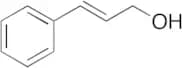
CAS:Controlled Product<p>Stability Light Sensitive<br>Applications Cinnamyl alcohol is used as a fragrance ingredient and is a known a cause of allergic dermatitis in humans. Cinnamyl alcohol is also part of a group of cinnamic acid derivatives (for example: 4-Methoxycinnamic acid -M262150) that might be useful for the treatment of diabetes and obesity.<br>References Adisakwattana, S., et al.: J. Emzym. Inhib., 28, 1067, (2013); Basketter, D.: Acta-Derm.-Venereol., 72, 264 (1992); Letizia, C. S., et al.: Food Chem. Toxicol., 43, 837 (2005);<br></p>Formula:C9H10OColor and Shape:Light YellowMolecular weight:134.183,3'-di-tert-Butyl-5,5'-dimethoxybiphenyl-2,2'-diol
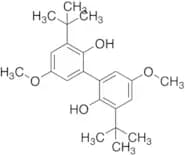
CAS:Controlled Product<p>Applications 3,3'-di-tert-butyl-5,5'-dimethoxybiphenyl-2,2'-diol (cas# 14078-41-2) is a useful research chemical.<br></p>Formula:C22H30O4Color and Shape:Light OrangeMolecular weight:358.471