Pharmaceutical Standards
Pharmaceutical standards are a comprehensive set of reference materials essential for ensuring the safety, efficacy, and quality of pharmaceutical products. This category includes standards for active pharmaceutical ingredients (APIs), which are the core components responsible for therapeutic effects. Additionally, it covers compounds and metabolites relevant to both the pharmaceutical and veterinary industries, providing benchmarks for the accurate measurement and analysis of these substances. Nitrosamine control standards are crucial for detecting and mitigating potentially harmful nitrosamines in drug formulations. Toxicology standards help assess the safety and potential adverse effects of pharmaceutical compounds. Furthermore, enzyme activators and inhibitors standards are vital for research and development, enabling precise studies of biochemical pathways and drug mechanisms. These pharmaceutical standards are indispensable tools for regulatory compliance, quality control, and research, ensuring that pharmaceutical products meet stringent safety and effectiveness criteria.
Subcategories of "Pharmaceutical Standards"
- APIs for research and impurities(273,647 products)
- Enzyme Activators and Inhibitors(2,827 products)
- Nitrosamines(2,605 products)
- Pharmaceutical and Veterinary Compounds and Metabolites(2,602 products)
- Toxicology(13,652 products)
Found 7836 products of "Pharmaceutical Standards"
Sort by
Purity (%)
0
100
|
0
|
50
|
90
|
95
|
100
Cesium Carbonate
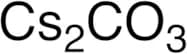
CAS:Controlled Product<p>Applications Cesium Carbonate is used in the preparation of prodrugs based upon phosphonooxymethyl as HIV-1 attachment inhibitors. Also used in the synthesis of dodecahedral nanocrystals as effective antibacterial agents.<br>References Leahy, D. et al.: Org. Proc. Res. Dev., 17, 1440 (2013); He, J. et al.: Dalton Trans., 42, 15637 (2013);<br></p>Formula:Cs2CO3Color and Shape:White To Off-WhiteMolecular weight:325.828-Amino-7-oxopelargonic Acid Hydrochloride
CAS:Controlled Product<p>Applications An intermediate in the synthesis of biotin. Pimeloyl-CoA is transformed into AOP in the presence of L-alanine by the enzyme AOP synthase. The catalytic mechanism of AOP synthase has been studied for the elucidation of inhibitors as potential antimicrobial agents.<br>References Ohsugi, M., et al.: J. Nutr. Sci. Vitaminol., 34 (4), 343 (1985), Pearson, B.M., et al.: Lett. Appl. Microbiol., 10 (2), 89 (1990), Ploux, O., et al.: Biochem. J., 283, 327 (1992)<br></p>Formula:C9H17NO3·ClHColor and Shape:NeatMolecular weight:223.70apo-Ipratropium Bromide (mixture of stereoisomers)
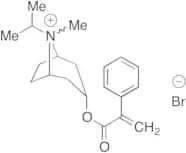
CAS:Controlled Product<p>Stability Light Sensitive<br>Applications 8-Isopropyl-8-methyl-3-endo((2-phenylacryloyl)oxy)-8-azabicyclo[3.2.1]octan-8-ium Bromide is an intermediate used in the preparation of quaternary salts of alkaloids.<br>References Ivanov, V., et al.: Farmatsiya17, 18 (1967)<br></p>Formula:C20H28NO2·BrColor and Shape:NeatMolecular weight:394.342-Naphthol
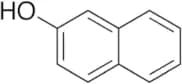
CAS:<p>Applications: Has been used as antiseptic, anthelmintic and counter-irritant in alopecia.<br>Dangerous Goods Info: Not a dangerous good if item is equal to or less than 1g/ml and there is less than 100g/ml in the package<br>References Diggle, S., et al.: Chem. Biol., 13, 701 (2006), Tashiro, Y., et al.: J. Bacteriol.,190, 3969 (2008),<br></p>Formula:C10H8OColor and Shape:NeatMolecular weight:144.172-Hydrazino Adenosine
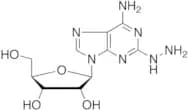
CAS:Controlled Product<p>Stability Moisture Sensitive<br>Applications A useful synthetic intermediate for making potent and selective coronary vasodilators.<br>References Niiya, K., et al.: J. Med. Chem., 35, 4557 (1992)<br></p>Formula:C10H15N7O4Color and Shape:NeatMolecular weight:297.278-Thioguanosine
CAS:Controlled Product<p>Stability Hygroscopic<br>Applications 8-Thioguanosine (cas# 26001-38-7) is a useful research chemical.<br></p>Formula:C10H13N5O5SColor and Shape:NeatMolecular weight:315.3Cyanidin 3-O-β-D-Galactopyranoside Chloride
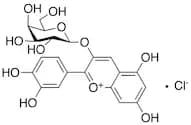
CAS:Controlled Product<p>Applications An anthocyanin responsible for red pigment in fruits and berries. It is an antioxidant, protecting the cell against damage from SOD.<br>References Riihinen, K., et al.: Food Chem., 110, 156 (2008), Khanizadeh, S., et al.: J. Food Comp. Anal., 21, 396 (2008), Viskelis, P., et al.: J. Food Sci., 74, C157 (2009), Comeskey, D., et al.: J. Agric. Food Chem., 57, 2035 (2009),<br></p>Formula:C21H21O11·ClColor and Shape:Dark Brown SolidMolecular weight:484.847,10-Dichloro-2-methoxybenzo[b][1,5]naphthyridine
CAS:Controlled Product<p>Applications 7,10-Dichloro-2-methoxybenzo[b][1,5]naphthyridine is used in the preparation of pyronaridine.<br>References Li, J., et al.: PCT Int. Appl., 2013:1701510 (2013)<br></p>Formula:C13H8Cl2N2OColor and Shape:NeatMolecular weight:279.12N,N'-Bis[3-(trifluoromethyl-4-cyanophenyl]urea
CAS:Controlled Product<p>Applications N,N'-Bis[3-(trifluoromethyl-4-cyanophenyl]urea can be obtained from 5-Amino-2-cyanobenzotrifluoride (A603630) which can be used for the preparation of benzene derivatives as non-steroidal androgen receptor modulators.<br>References Xiao, H.-Y., et al.: Bioorg. Med. Chem. Lett., 20, 4491 (2010)<br></p>Formula:C17H8F6N4OColor and Shape:NeatMolecular weight:398.2622,6-Dichlorophenylacetic Acid Methyl Ester
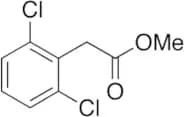
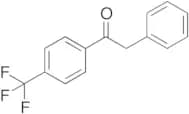
CAS:Controlled Product<p>Applications Intermediate in the preparation of Guanfacine<br></p>Formula:C9H8Cl2O2Color and Shape:NeatMolecular weight:219.062-Phenyl-4’-trifluoromethylacetophenone
CAS:Controlled Product<p>Applications 2-Phenyl-4’-trifluoromethylacetophenone, is used in the preparation of arylketones via palladium-tedicyp-catalyzed Heck reaction.<br>References Battace, A., et al.: Eur. J. Org. Chem., 19, 3122 (2007)<br></p>Formula:C15H11F3OColor and Shape:NeatMolecular weight:264.2421-Naphthol
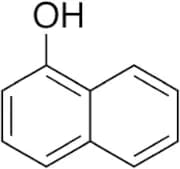
CAS:<p>Impurity Duloxetine EP Impurity D<br>Applications 1-Naphthol (Duloxetine EP Impurity D) is used in the manufacturing of dyes, intermediates, synthetic perfumes.<br> Not a dangerous good if item is equal to or less than 1g/ml and there is less than 100g/ml in the package<br></p>Formula:C10H8OColor and Shape:Light Red To Light BrownMolecular weight:144.175'-Cholesteryl-TEG Phosphoramidite
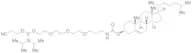
CAS:Controlled Product<p>Applications 5’-Cholesteryl-TEG Phosphoramidite is used in the synthesis of immunostimulatory oligonucleotides for in vivo cell modification for immunotherapy.<br>References Liu, H. et al.: Angew. Chem. Int. Ed., 50, 7052 (2011);<br></p>Formula:C46H82N3O7PColor and Shape:NeatMolecular weight:820.133-(4'-Bromo[1,1'-biphenyl]-4-yl)-1,2,3,4-tetrahydro-1-naphthalenol
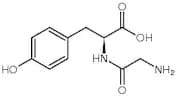
CAS:Controlled Product<p>Applications 3-(4'-Bromo[1,1'-biphenyl]-4-yl)-1,2,3,4-tetrahydro-1-naphthalenol is used to prepare 4-hydroxycoumarin derivatives with antitumor activities. It is also used to synthesize diphenacoum and brodifacoum (B677900) as the rodenticides.<br>References Jung, J., et al.: Bioorg. Med. Chem. Lett., 14, 5527 (2004); Van Heerden, P., et al.: J. Chem. Soc. Perkin Transactions 1: Organic and Bio-Organic Chemistry, 8, 1141 (1997)<br></p>Formula:C22H19BrOColor and Shape:NeatMolecular weight:379.29Glycyl-L-tyrosine
CAS:Controlled Product<p>Applications Glycyl-L-tyrosine<br></p>Formula:C11H14N2O4Color and Shape:NeatMolecular weight:238.24(-)-Citronellal
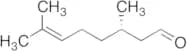
CAS:Controlled Product<p>Applications (-)-Citronellal is the s-isomer of (R)-Citronellal (C525025), a natural insect repellant. (-)-Citronellal (a monoterpene) was found to activate human olfactory receptor OR1A2 at the mRNA and protein levels resulting in reduced cell proliferation and reduced hepatocellular carcinoma progression.<br>References Massberg, D., et al.: Arch. Biochem. Biophys., 566, 100 (2015);<br></p>Formula:C10H18OColor and Shape:NeatMolecular weight:154.25Homogentisic Acid-13C6
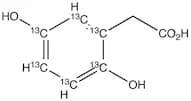
CAS:<p>Applications Labelled Homogentisic acid. An intermediate in the metabolism of tyrosine and phenylalanine. Occurs in plants and in the urine of alkaptonurics.<br>References Knox, W.E., et al.: Biochem. J., 49, 686 (1951), LaDu, B.N., et al.: J. Biol. Chem., 217, 777 (1955)<br></p>Formula:C213C6H8O4Color and Shape:NeatMolecular weight:174.12-(Dimethylamino)guanosine
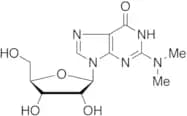
CAS:Controlled Product<p>Applications 2-(Dimethylamino)guanosine (cas# 2140-67-2) is a compound useful in organic synthesis.<br></p>Formula:C12H17N5O5Color and Shape:NeatMolecular weight:311.29Boc-L-aspartic Acid β-Methyl Ester
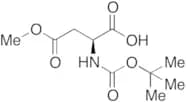
CAS:Controlled Product<p>Applications Boc-L-aspartic Acid β-Methyl Ester is used to prepare isoxazoline glycoprotein IIb/IIIa antagonists. It is also used to synthesize glutamic acid analogs as potent inhibitors of leukotriene A4 hydrolase.<br>References Xue, C., et al.: J. Med. Chem., 40, 2064 (1997); Kirkland, T., et al.: Bioorg. Med. Chem., 16, 4963 (2008)<br></p>Formula:C10H17NO6Color and Shape:NeatMolecular weight:247.245



![7,10-Dichloro-2-methoxybenzo[b][1,5]naphthyridine](/_next/image/?url=https%3A%2Fstatic.cymitquimica.com%2Fproducts%2FTR%2Fthumb-webp%2FD435410.webp&w=3840&q=75)
![N,N'-Bis[3-(trifluoromethyl-4-cyanophenyl]urea](/_next/image/?url=https%3A%2Fstatic.cymitquimica.com%2Fproducts%2FTR%2Fthumb-webp%2FB585473.webp&w=3840&q=75)
![3-(4'-Bromo[1,1'-biphenyl]-4-yl)-1,2,3,4-tetrahydro-1-naphthalenol](/_next/image/?url=https%3A%2Fstatic.cymitquimica.com%2Fproducts%2FTR%2Fthumb-webp%2FB680565.webp&w=3840&q=75)