Pharmaceutical Standards
Pharmaceutical standards are a comprehensive set of reference materials essential for ensuring the safety, efficacy, and quality of pharmaceutical products. This category includes standards for active pharmaceutical ingredients (APIs), which are the core components responsible for therapeutic effects. Additionally, it covers compounds and metabolites relevant to both the pharmaceutical and veterinary industries, providing benchmarks for the accurate measurement and analysis of these substances. Nitrosamine control standards are crucial for detecting and mitigating potentially harmful nitrosamines in drug formulations. Toxicology standards help assess the safety and potential adverse effects of pharmaceutical compounds. Furthermore, enzyme activators and inhibitors standards are vital for research and development, enabling precise studies of biochemical pathways and drug mechanisms. These pharmaceutical standards are indispensable tools for regulatory compliance, quality control, and research, ensuring that pharmaceutical products meet stringent safety and effectiveness criteria.
Subcategories of "Pharmaceutical Standards"
- APIs for research and impurities(273,486 products)
- Enzyme Activators and Inhibitors(2,827 products)
- Nitrosamines(2,606 products)
- Pharmaceutical and Veterinary Compounds and Metabolites(2,602 products)
- Toxicology(13,652 products)
Found 7836 products of "Pharmaceutical Standards"
Sort by
Purity (%)
0
100
|
0
|
50
|
90
|
95
|
100
trans-Linalool Oxide
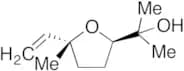
CAS:<p>Applications trans-Linalool Oxide is a derivative of Linalool (L465950), which is a terpene alcohol common in various flowers and spice plants. trans-Linalool Oxide is also an isomer of cis-Linalool Oxide, which has been employed to assess the effect of vine on the glycosylated flavour procurers in grapes.<br> Not a dangerous good if item is equal to or less than 1g/ml and there is less than 100g/ml in the package<br>References Baratta, M. T., et al.: J Essent Oil Res 10, 618 (1998); Bureau, S. M., et al.: J. Agric. Food Chem. 48, 1290 (2000)<br></p>Formula:C10H18O2Color and Shape:NeatMolecular weight:170.253,7,4'-Trihydroxyflavone
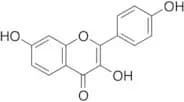
CAS:Controlled Product<p>Stability Hygroscopic<br>Applications 3,7,4'-Trihydroxyflavone (cas# 2034-65-3) is a useful research chemical.<br></p>Formula:C15H10O5Color and Shape:NeatMolecular weight:270.24Bivalirudin α-ASPA 9 Analog Trifluoroacetic Acid Salt (Impurity)
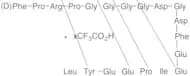
<p>Applications Impurity of Bivalirudin, a direct thrombin inhibitor acting as an anticoagulant through inhibition of the enzyme thrombin.<br>References Bertrand, O. et al.: Am. J. Cardio., 110, 599 (2012); Patti, G. et al.: Am. J. Cardio., 110, 478 (2012);<br></p>Formula:C98H137N23O34•xC2HF3O2Color and Shape:NeatMolecular weight:2181.27all-trans-Retinol-d5, >80%
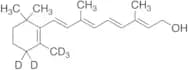
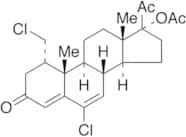
CAS:Controlled ProductFormula:C20H25D5OPurity:>80%Color and Shape:NeatMolecular weight:291.481α-(Chloromethyl) Chlormadinone Acetate
CAS:Controlled Product<p>(1α)-17-(Acetyloxy)-6-chloro-1-(chloromethyl)-pregna-4,6-<br>diene-3,20-dione; 6-Chloro-1α-(chloromethyl)-17-<br>hydroxypregna-4,6-diene-3,20-dione Acetate; Cyproterone<br>Acetate EP Impurity C</p>Formula:C24H30Cl2O4Color and Shape:NeatMolecular weight:453.40Muraglitazar
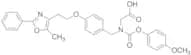
CAS:Controlled Product<p>Applications It is a peroxisome proliferator-activated receptor (PPAR) α/γ dual agonist.<br>References Barlocco, D., et al.: Curr. Opin. Invest. Drugs, 6, 427 (2005), Devasthale, P.V., et al.: J. Med. Chem., 48, 2248 (2005), Kendall, D.M., et al.: Diabetes care, 29, 1016 (2006),<br></p>Formula:C29H28N2O7Color and Shape:NeatMolecular weight:516.54γ-Butyrobetaine-d9
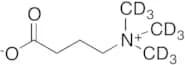
CAS:Controlled Product<p>Applications γ-Butyrobetaine-d9 is the labelled analogue of γ-Butyrobetaine, a synthetic carnitine related compound used as a transporter substrate in the cloning and sequencing of human carnitine transporter 2 (CT2).<br>References Enomoto, A. et al.: J. Biol. Chem., 277, 36262 (2002)<br></p>Formula:C72H9H7NO2Color and Shape:NeatMolecular weight:155.26(±)-9,10-Dihydrojasmonic Acid
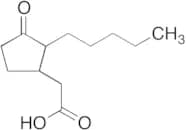
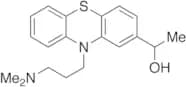
CAS:<p>Applications (±)-9,10-Dihydrojasmonic Acid can be used as analyte in biological and analytical study for UHPLC-MS/MS based target profiling of stress-induced phytohormones including jasmonic acid and its precursors and amino acid conjugates.<br>References Flokova, K., et al.: Phytochemistry, 105, 147-157 (2014)<br></p>Formula:C12H20O3Color and Shape:NeatMolecular weight:212.292-(1-Hydroxyethyl) Promazine
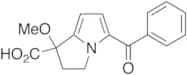
CAS:<p>Applications A metabolite of Acepromazine (A130900).<br>References Cossum, P., et al.: Drug Dispos., 9, 321 (1988), Stowell, L., et al.: J. Anal. Toxicol., 22, 166 (1998),<br></p>Formula:C19H24N2OSColor and Shape:NeatMolecular weight:328.47rac 1-Methoxy Ketorolac
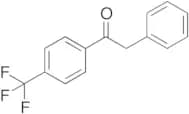
CAS:Controlled Product<p>Applications An impurity of the analgesic Ketorolac (K235650).<br></p>Formula:C16H15NO4Color and Shape:NeatMolecular weight:285.292-Phenyl-4’-trifluoromethylacetophenone
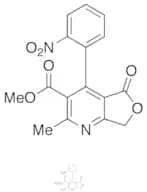
CAS:Controlled Product<p>Applications 2-Phenyl-4’-trifluoromethylacetophenone, is used in the preparation of arylketones via palladium-tedicyp-catalyzed Heck reaction.<br>References Battace, A., et al.: Eur. J. Org. Chem., 19, 3122 (2007)<br></p>Formula:C15H11F3OColor and Shape:NeatMolecular weight:264.242Hydroxy Dehydro Nifedipine Lactone
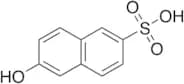
CAS:Controlled ProductFormula:C16H12N2O6Color and Shape:NeatMolecular weight:328.286-Hydroxynaphthalene-2-sulfonic Acid Potassium Salt
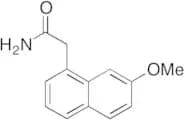
CAS:<p>Applications 6-Hydroxynaphthalene-2-sulfonic Acid Potassium Salt is used the in the synthesis of azo dyes and pigments.<br>References Gao, Pu. et al., Dyes Pigm. 179, 108376(2020);<br></p>Formula:C10H7O4S·KColor and Shape:NeatMolecular weight:262.32357-Methoxy-1-naphthaleneacetamide
CAS:Controlled Product<p>Applications 7-Methoxy-1-naphthaleneacetamide, can be used for the synthesis of the analogs of Melatonin (M215000), containing naphthalene moiety instead of indole nucleus, having high affinity for the melatonin receptor. Agomelatine Impurity 6<br>References Tang, J. D., et al.: Org. Prep. Proc. Int., 41, 164 (2009); Sndrieux Y. J., et al.: J. Med. Chem., 35, 1484 (1992);<br></p>Formula:C13H13NO2Color and Shape:NeatMolecular weight:215.25Roquefortine C
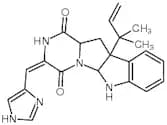
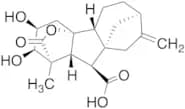
CAS:<p>Applications Roquefortine C is a potent neurotoxin produced most notably by Penicillium species.<br> Not a dangerous good if item is equal to or less than 1g/ml and there is less than 100g/ml in the package<br></p>Formula:C22H23N5O2Color and Shape:Off-WhiteMolecular weight:389.45Gibberellin A34 (>90%)
CAS:Formula:C19H24O6Purity:>90%Color and Shape:Light Yellow SolidMolecular weight:348.39Diazoxide-d3
CAS:Controlled Product<p>Applications Diazoxide-d3 is the labeled analogue of Diazoxide (D417305), which reduces status epilepticus neuron damage in diabetes.<br>References Baba, A., et al.: J. Neurosci., 23, 7737 (2003); Bancila, V., et al.: J. Neurochem., 90, 1243 (2004); Bancila, V., et al.: J. Biol. Chem., 280, 8793 (2005)<br></p>Formula:C8H4D3ClN2O2SColor and Shape:NeatMolecular weight:233.69Acetyltropic Acid
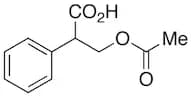
CAS:Controlled Product<p>Applications Intermediate in the synthesis of Tropine and respective derivatives<br>References Schmidt, G., et al.: J. Pharm. Sci., 56, 215 (1967),<br></p>Formula:C11H12O4Color and Shape:NeatMolecular weight:208.21Diphenyl-2,2',4,4',6,6'-d6-amine
CAS:Controlled Product<p>Applications Diphenyl-2,2',4,4',6,6'-d6-amine (CAS# 99234-91-0) is a useful isotopically labeled research compound.<br></p>Formula:C12D6H5NColor and Shape:NeatMolecular weight:175.26Deschloro-N-ethyl-ketamine Hydrochloride (1 mg/ml in Acetonitrile)
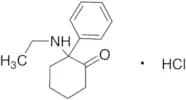
CAS:Controlled ProductFormula:C14H19NO·HClColor and Shape:Single SolutionMolecular weight:253.80