Pharmaceutical Standards
Pharmaceutical standards are a comprehensive set of reference materials essential for ensuring the safety, efficacy, and quality of pharmaceutical products. This category includes standards for active pharmaceutical ingredients (APIs), which are the core components responsible for therapeutic effects. Additionally, it covers compounds and metabolites relevant to both the pharmaceutical and veterinary industries, providing benchmarks for the accurate measurement and analysis of these substances. Nitrosamine control standards are crucial for detecting and mitigating potentially harmful nitrosamines in drug formulations. Toxicology standards help assess the safety and potential adverse effects of pharmaceutical compounds. Furthermore, enzyme activators and inhibitors standards are vital for research and development, enabling precise studies of biochemical pathways and drug mechanisms. These pharmaceutical standards are indispensable tools for regulatory compliance, quality control, and research, ensuring that pharmaceutical products meet stringent safety and effectiveness criteria.
Subcategories of "Pharmaceutical Standards"
- APIs for research and impurities(273,720 products)
- Enzyme Activators and Inhibitors(2,827 products)
- Nitrosamines(2,605 products)
- Pharmaceutical and Veterinary Compounds and Metabolites(2,602 products)
- Toxicology(13,652 products)
Found 7836 products of "Pharmaceutical Standards"
Sort by
Purity (%)
0
100
|
0
|
50
|
90
|
95
|
100
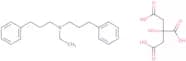
N-Ethyl-3,3'-diphenyldipropylamine citrate
CAS:<p>N-Ethyl-3,3'-diphenyldipropylamine citrate is a nonsteroidal anti-inflammatory drug (NSAID) that inhibits the activity of cyclooxygenase and lipoxygenase. It reduces pain, fever, and inflammation. The drug has been shown to be effective in the treatment of inflammatory bowel disease and colitis. N-Ethyl-3,3'-diphenyldipropylamine citrate is used for the relief of chronic and acute pain associated with osteoarthritis, rheumatoid arthritis, ankylosing spondylitis, or other forms of joint inflammation; as well as for temporary relief from the symptoms of minor aches or pains due to headache, toothache, muscular aches, backache, or menstrual cramps. N-Ethyl-3,3'-diphenyldipropylamine citrate also has been found to be effective in reducing symptoms associated with leukemia</p>Formula:C26H35NO7Purity:Min. 95%Color and Shape:White Off-White PowderMolecular weight:473.56 g/mol2'-Hydroxy-5'-methoxyacetophenone
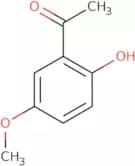
CAS:<p>2'-Hydroxy-5'-methoxyacetophenone is a molecule that has been shown to have anticancer activity. It inhibits the production of molecules in cancer cells, such as carbonic anhydrase and nitric oxide synthase. This molecule also binds to DNA and prevents the transcription of genes involved in cell proliferation, including NF-κB DNA. 2'-Hydroxy-5'-methoxyacetophenone also has inhibitory properties on the growth of cancer cells, including MCF-7 cells.</p>Formula:C9H10O3Purity:Min. 95%Color and Shape:Off-White PowderMolecular weight:166.17 g/mol3',4'-Dichloroacetophenone
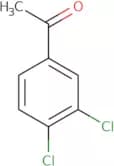
CAS:<p>3',4'-Dichloroacetophenone is a tetranuclear compound that is used in the synthesis of chromatographic assays. It has been shown to inhibit the growth of infectious diseases, cancer, and bacteria. 3',4'-Dichloroacetophenone inhibits trichomonas vaginalis and chlamydia by binding to imine nitrogen, which prevents the formation of an enzyme (NAD-dependent), which is required for bacterial DNA synthesis. 3',4'-Dichloroacetophenone also inhibits p. aeruginosa by binding with phosphane groups on this organism's cell wall, preventing bacterial cell division.</p>Formula:C8H6Cl2OPurity:Min. 95%Color and Shape:Off-White PowderMolecular weight:189.04 g/molN-Boc-endo-3-aminotropane
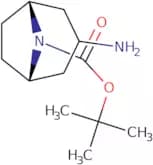
CAS:<p>N-Boc-endo-3-aminotropane is a useful building block for the synthesis of a variety of chemical compounds. It is a versatile intermediate for the synthesis of diverse chemical compounds and is also used in research as a reagent. N-Boc-endo-3-aminotropane has been shown to be highly reactive and to undergo many reactions, including nucleophilic substitution and addition reactions. The compound can be reacted with alkyl halides to form amines, or with nitroalkanes to form oximes. N-Boc-endo-3-aminotropane can also react with anhydrides or acid chlorides to form carboxylic acids, or with sulfonyl chlorides to form sulfonamides. This compound also reacts with thiols or alcohols to form thioethers and ethers respectively.</p>Formula:C12H22N2O2Purity:Min. 95%Color and Shape:White PowderMolecular weight:226.32 g/mol3,3'-Dipropylthiadicarbocyanine iodide
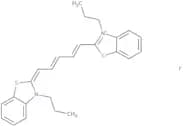
CAS:<p>3,3'-Dipropylthiadicarbocyanine iodide (3DTI) is a proton-carrying compound that has been used extensively as a probe for measuring the cytosolic calcium concentration ([Ca2+]c). This agent binds to the cyclic lipopeptide cation channel in the bacterial cell membrane, inhibiting the uptake of organic anions. 3DTI can also be used to measure mitochondrial membrane potential by monitoring changes in its fluorescence intensity. The antimicrobial activity of 3DTI is due to its ability to inhibit bacteria that are resistant to antibiotics and other antimicrobial peptides. 3DTI binds to DNA at specific sites in the genome and targets intracellular targets such as mitochondria.</p>Formula:C25H27IN2S2Purity:Min. 97 Area-%Color and Shape:PowderMolecular weight:546.53 g/mol4-Aminosalicylic acid sodium salt dihydrate
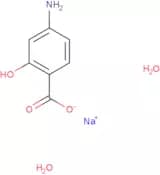
CAS:<p>4-Aminosalicylic acid sodium salt dihydrate is a molecule that has been shown to be useful for the diagnosis of viral, autoimmune, and cancerous diseases. It is a diagnostic agent that can be used in both the diagnosis and treatment of bowel disease. 4-Aminosalicylic acid sodium salt dihydrate can also be used to treat cavity formation in teeth. It binds to fatty acids in the target tissue, which leads to cell death by apoptosis. This drug has been shown to be effective against inflammatory bowel disease (IBD) as well as other types of bowel disease. This drug has been shown to have no adverse effects on healthy cells or tissues, but it may cause kidney toxicity when taken orally or injected intravenously.</p>Formula:C7H6NNaO3·2H2OPurity:Min. 95%Color and Shape:White PowderMolecular weight:211.15 g/molZ-L-pyroglutamic acid 4-nitrophenyl ester
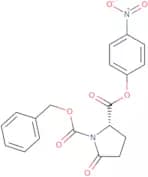
CAS:<p>Please enquire for more information about Z-L-pyroglutamic acid 4-nitrophenyl ester including the price, delivery time and more detailed product information at the technical inquiry form on this page</p>Formula:C19H16N2O7Purity:Min. 95%Molecular weight:384.34 g/molN-Cbz-L-tyrosine
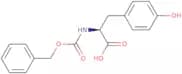
CAS:<p>N-Cbz-L-tyrosine is a covalently modified amino acid that has been shown to be an effective protease inhibitor. The compound binds to the active site of enzymes, blocking their ability to hydrolyze proteins. In addition, N-Cbz-L-tyrosine has been shown to inhibit aminopeptidases and carboxypeptidases with IC50 values of 0.5 mM and 1 mM, respectively. This protein stabilizer has been shown to have a solubility data of 0.4 g/100 mL in water and 0.3 g/100 mL in methanol. It also has a molecular weight of 184.2 g/mol and a pH optimum of 7.0 (±0.2).</p>Formula:C17H17NO5Purity:Min. 95%Color and Shape:White PowderMolecular weight:315.32 g/mol2,2'-Biphenyldicarboxylic acid
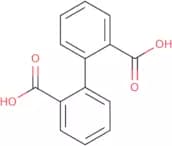
CAS:<p>2,2'-Biphenyldicarboxylic acid belongs to the group of diphenic compounds and is synthesized by the reaction of 2-bromobenzene and sodium carbonate. It has a molecular formula of C12H10O4 with an empirical formula of C8H6O4. The compound is an intramolecular hydrogen bond acceptor and an intermolecular hydrogen bond donor. 2,2'-Biphenyldicarboxylic acid has been shown to have analytical chemistry properties for measuring nitrogen content in organic compounds, as well as being used in the synthesis of p-hydroxybenzoic acid. This compound also has metabolic disorders such as cancer, diabetes mellitus, and Alzheimer's disease because it is a hydrogen bond acceptor that can be oxidized into p-hydroxybenzoic acid.</p>Formula:C14H10O4Purity:Min. 95%Color and Shape:PowderMolecular weight:242.23 g/mol1,4-Naphthoquinone
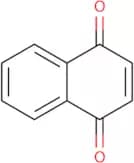
CAS:<p>1,4-Naphthoquinone is a phenolic compound that has been shown to have antimicrobial activity. It has been used in vitro as an antifungal agent for the treatment of dermatophyte infections and has also shown significant cytotoxicity against certain cancer cell lines. 1,4-Naphthoquinone is a redox active compound with a redox potential of -0.6 V vs NHE. This redox potential may be responsible for its potent antimicrobial activity. 1,4-Naphthoquinone also exhibits significant transfer reactions that may contribute to its biological properties. It is classified as group P2 and reacts with sodium salts to form naphthoquinones and sodium salts. This reaction may be responsible for its antimicrobial properties, as these compounds are known to inhibit microbial growth by binding to bacterial DNA gyrase or topoisomerases I and II.</p>Formula:C10H6O2Purity:Min. 95%Color and Shape:Yellow PowderMolecular weight:158.15 g/mol3-(5-Iodo-4-hydroxy-3-methoxy)cinnamic acid
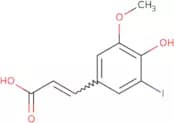
CAS:<p>3-(5-Iodo-4-hydroxy-3-methoxy)cinnamic acid is a chemical compound that can be used as a starting material for synthesis of complex compounds. It is a white solid with a melting point of about 100°C, and it is soluble in water. This product is an excellent reagent for the synthesis of new chemicals, and it has been widely used as a reaction component in organic syntheses. 3-(5-Iodo-4-hydroxy-3-methoxy)cinnamic acid also has antibacterial properties.</p>Formula:C10H9IO4Purity:Min. 95%Molecular weight:320.08 g/mol1,3-Dicyclohexylthiourea
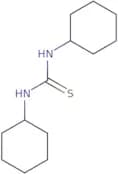
CAS:<p>Dicyclohexylthiourea is a corrosion inhibitor that inhibits the corrosion of metals in acidic media. It is an amphoteric compound and can act as both a base or an acid depending on the pH of the solution. It has been used as a corrosion inhibitor in hydrochloric acid and sodium sulfide solutions. Dicyclohexylthiourea reacts with chloride ion to form hydrochloric acid, which reduces corrosion by preventing the formation of chlorides at metal surfaces. This agent also has anti-inflammatory properties that are due to its ability to inhibit prostaglandin synthesis. Dicyclohexylthiourea is readily soluble in water and can be synthesized by reacting dicyclohexylurea with hydrogen chloride gas at room temperature.</p>Formula:C13H24N2SPurity:Min. 95%Molecular weight:240.41 g/molα-Naphthoylhydrazine
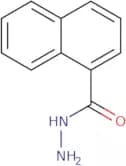
CAS:<p>Alpha-naphthoylhydrazine is a nitrogen-containing heterocyclic compound with a carbonyl group at the alpha position. It has been shown to be an effective enhancer of 5-HT1A and 5-HT2C receptors, as well as having other pharmacological effects (e.g., bone cancer). Alpha-Naphthoylhydrazine is acidic, which means it has a low pH. It can also form hydrogen bonds with water molecules. Alpha-Naphthoylhydrazine is rapidly absorbed and metabolized in humans, with very little excreted unchanged in the urine. The half life of alpha-Naphthoylhydrazine is 4 hours, meaning that after 4 hours 50% of the drug will have been eliminated from the body. Alpha-Naphthoylhydrazine also has protonated carbonyls and aromatic rings which are susceptible to photophysical processes such as electron transfer</p>Formula:C11H10N2OPurity:Min. 95%Color and Shape:PowderMolecular weight:186.21 g/mol3-Iodobenzoic acid methyl ester
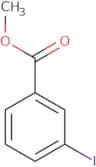
CAS:<p>3-Iodobenzoic acid methyl ester is a synthetic selenium compound that is used in the synthesis of fatty acids. It is also used as a radionuclide in the diagnosis of cancer and other diseases. 3-Iodobenzoic acid methyl ester can be taken orally or injected, but it should not be taken by pregnant women or those who are allergic to iodine. This product has been shown to have anti-cancer properties when given orally, although there are some potential side effects associated with usage. These side effects include nausea, vomiting, diarrhea, and an increase in urine production. 3-Iodobenzoic acid methyl ester is metabolized into toxic products such as biphenyl, which may cause an escalation of symptoms. The structural formula for this product is C8H7INOS2O2.</p>Formula:C8H7IO2Purity:Min. 95%Color and Shape:PowderMolecular weight:262.04 g/mol4-Methoxy-3-nitropyridine
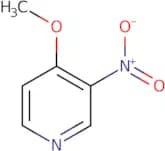
CAS:<p>4-Methoxy-3-nitropyridine (4MNOP) is an organic compound that is a white solid at room temperature. 4MNOP has been shown to interact with alkali metals and can be used in the preparation of emulsifying agents. It also has been found to have pharmacokinetic properties, including a low molecular weight, good solubility in water, and a high degree of absorption. The imidazopyridine ring system is susceptible to reductive amination reactions, which may lead to the formation of amine or surfactant residues.</p>Formula:C6H6N2O3Purity:Min. 95%Color and Shape:PowderMolecular weight:154.13 g/molPhenylazosalicylic acid
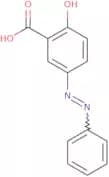
CAS:<p>Phenylazosalicylic acid is a crystalline solid that belongs to the group of phenylacetic acids. It is synthesized by the reaction of nitric acid with salicylic acid, which is produced from the distillation of wood. Phenylazosalicylic acid has a molecular weight of 150.09 g/mol and a melting point of 123°C. The molecule is unionized in water and can be found in wastewater effluent at concentrations as high as 3 ppm. This compound has acidic properties and reacts with picric acid to form phenylazosalicylic picrate, which is used for the treatment of anthrax. Phenylazosalicylic acid also shows proton-pumping activity, which may be due to its ability to bind to anionic sites on proteins such as carbonic anhydrase II and H+/K+ ATPase.</p>Formula:C13H10N2O3Purity:Min. 95%Color and Shape:Orange PowderMolecular weight:242.23 g/mol2,3-Dichloro-5,8-dihydroxy-1,4-naphthalenedione
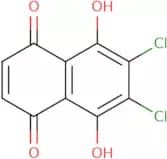
CAS:<p>2,3-Dichloro-5,8-dihydroxy-1,4-naphthalenedione (DDD) is a chemical inhibitor of the proton response pathway. It is an analog of 2,3,7,8-tetrachlorodibenzo-p-dioxin (TCDD). DDD has been shown to enhance the induction of apoptosis in human macrophages and leishmania parasites. This agent also inhibits the growth of some tumor cell lines and enhances the cytotoxicity of other chemotherapeutic drugs. DDD has low bioavailability due to its high lipophilicity and rapid metabolism by esterases and glucuronidases.</p>Formula:C10H4Cl2O4Purity:Min. 95%Color and Shape:Red PowderMolecular weight:259.04 g/molN-(2-Chloro-5-Nitrophenyl)Benzamide
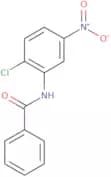
CAS:<p>Please enquire for more information about N-(2-Chloro-5-Nitrophenyl)Benzamide including the price, delivery time and more detailed product information at the technical inquiry form on this page</p>Formula:C13H9ClN2O3Purity:Min. 95%Color and Shape:PowderMolecular weight:276.67 g/mol4,6-Bis(octylthiomethyl)-o-cresol
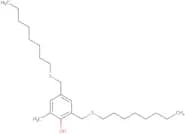
CAS:<p>4,6-Bis(octylthiomethyl)-o-cresol is a synthetic, long-acting, and developable plasticizer. It is used to make polystyrene more flexible and improve its impact resistance. This chemical has been shown to be compatible with a wide range of polymers, including polycarbonate and polyethylene. 4,6-Bis(octylthiomethyl)-o-cresol is used in the manufacture of plastics that are exposed to organic acids and phosphites for extended periods of time in order to optimize their properties. The use of this chemical can lead to improved processability and reduced costs.</p>Formula:C25H44OS2Purity:Min. 98 Area-%Color and Shape:White Solidified MassMolecular weight:424.75 g/molHoechst 33342
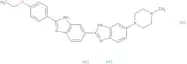
CAS:<p>2'-(4-Ethoxyphenyl)-5-(4-methyl-1-piperazinyl)-2,5'-bi-1H-benzimidazole trihydrochloride (EPMB) is a DNA binding agent that is used in tumor detection and research into apoptosis. It has been shown to inhibit the activity of p-glycoprotein, which is an efflux pump protein, and Bcl-2 protein. EPMB has also been shown to cause apoptosis in human squamous cell carcinoma cells in a concentration dependent manner. This compound has shown potential as a treatment for cancer because it inhibits the ability of cancer cells to proliferate by binding to the NMDA receptor.</p>Formula:C27H28N6O·3HCl·xH2OPurity:Min. 95%Color and Shape:Yellow PowderMolecular weight:561.93 g/mol