Pharmaceutical Standards
Pharmaceutical standards are a comprehensive set of reference materials essential for ensuring the safety, efficacy, and quality of pharmaceutical products. This category includes standards for active pharmaceutical ingredients (APIs), which are the core components responsible for therapeutic effects. Additionally, it covers compounds and metabolites relevant to both the pharmaceutical and veterinary industries, providing benchmarks for the accurate measurement and analysis of these substances. Nitrosamine control standards are crucial for detecting and mitigating potentially harmful nitrosamines in drug formulations. Toxicology standards help assess the safety and potential adverse effects of pharmaceutical compounds. Furthermore, enzyme activators and inhibitors standards are vital for research and development, enabling precise studies of biochemical pathways and drug mechanisms. These pharmaceutical standards are indispensable tools for regulatory compliance, quality control, and research, ensuring that pharmaceutical products meet stringent safety and effectiveness criteria.
Subcategories of "Pharmaceutical Standards"
- APIs for research and impurities(274,687 products)
- Enzyme Activators and Inhibitors(2,827 products)
- Nitrosamines(2,606 products)
- Pharmaceutical and Veterinary Compounds and Metabolites(2,776 products)
- Toxicology(13,652 products)
Found 7836 products of "Pharmaceutical Standards"
Sort by
Purity (%)
0
100
|
0
|
50
|
90
|
95
|
100
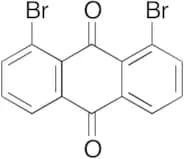
1,8-dibromo-9,10-Anthracenedione
CAS:Controlled ProductFormula:C14H6Br2O2Color and Shape:NeatMolecular weight:366.0042,6-Dichloro-9-(2’,3’,5’-tri-O-acetyl-β-D-ribofuranosyl)purine
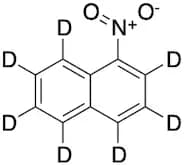
CAS:Controlled Product<p>Applications Protected nucleoside.<br>References Elzein, E., et al.: Bioorg. Med. Chem. Lett., 17, 161 (2007), Franchetti, P., et al.: J. Med. Chem., 52, 2393 (2009),<br></p>Formula:C16H16Cl2N4O7Color and Shape:NeatMolecular weight:447.231-Nitronaphthalene-d7
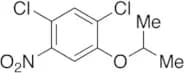
CAS:Controlled Product<p>Applications 1-Nitronaphthalene-d7 is a useful labeled compound in the regioselective preparation of naphtho[1,8-bc]pyridines.<br>References Yan, K., et al.: Advanced Synthesis & Catalysis, 361, 1570 (2019)<br></p>Formula:C10D7NO2Color and Shape:NeatMolecular weight:180.212,4-Dichloro-5-nitrophenyl Isopropyl Ether
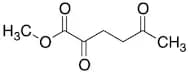
CAS:Controlled Product<p>Applications A 2,4-disubstituted-5-nitrophenol used in the synthesis of the herbicide Oxadiazon.<br></p>Formula:C9H9Cl2NO3Color and Shape:NeatMolecular weight:250.082,5-Dioxohexanoic Acid Methyl Ester
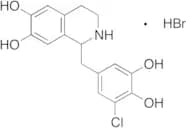
CAS:Controlled ProductFormula:C7H10O4Color and Shape:NeatMolecular weight:158.1525’-Chloro-norlaudanosoline
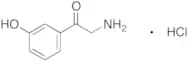
Controlled ProductFormula:C16H16ClNO4·HBrColor and Shape:NeatMolecular weight:402.6682-Amino-3’-hydroxy-acetophenone Hydrochloride
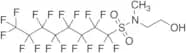
CAS:Controlled Product<p>Applications 2-Amino-3’-hydroxy-acetophenone Hydrochloride is a reactant in the synthesis of TRPM8 modulators.<br>References PCT Int. Appl. (2014), WO 2014130582 A2 20140828;<br></p>Formula:C8H9NO2•(HCl)Color and Shape:NeatMolecular weight:151.163646N-Methylperfluorooctanesulfonamidoethanol (50μg/mL in Methanol)
CAS:Controlled ProductFormula:C11H8F17NO3SColor and Shape:Single SolutionMolecular weight:557.22γ-Valerolactone-d3
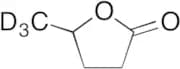
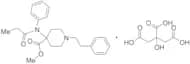
CAS:Controlled Product<p>Applications γ-Valerolactone-d3 is the isotope labelled analog of γ-Valerolactone. γ-Valerolactone is a naturally occurring chemical found in fruits and is frequently used as a food additive. It can be converted to liquid alkenes which can be used as transportation fuels.<br>References Horvath, I.T., et al.: Green Chem., 10, 238 (2008); Bond, J.Q., et al.: Science, 327, 1110 (2010)<br></p>Formula:C5D3H5O2Color and Shape:NeatMolecular weight:103.134Carfentanil Citrate (1 mg/ml in Acetonitrile)
CAS:Controlled ProductFormula:C30H38N2O10Color and Shape:Single SolutionMolecular weight:586.63N’-[2-[2,4-Dimethylphenyl)thio]phenyl] Vortioxetine-d8
Controlled ProductFormula:C32H26D8N2S2Color and Shape:NeatMolecular weight:651.5465-Hydroxy-2-[1-methyl-1-[[benzylcarbamoyl]amino]ethyl]-6-methoxypyrimidine-4-carboxylic Acid Methyl Ester-d3
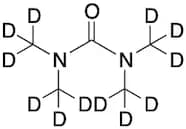
CAS:Controlled Product<p>Applications An labelled impurity of the commercial synthesis of labelled Raltegravir<br></p>Formula:C18H18D3N3O6Color and Shape:NeatMolecular weight:378.39Tetramethyl-d12-urea
CAS:Controlled Product<p>Applications Tetramethyl-d12-urea (CAS# 51219-89-7) is a useful isotopically labeled research compound.<br></p>Formula:C5D12N2OColor and Shape:NeatMolecular weight:128.24(alphaS,5R)-α,2-Diamino-4,5-dihydro-1H-imidazole-5 Propanoic Acid
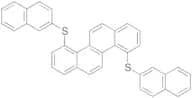
CAS:Controlled ProductFormula:C6H12N4O2Color and Shape:NeatMolecular weight:172.1854,10-Bis(2-naphthalenylthio)-chrysene
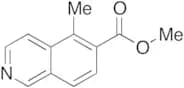
CAS:Controlled ProductFormula:C38H24S2Color and Shape:NeatMolecular weight:544.7275-Methylisoquinoline-6-carboxylic Acid Methyl Ester
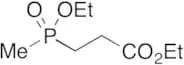
Controlled ProductFormula:C12H11NO2Color and Shape:NeatMolecular weight:201.2213-Methylphosphinicopropionic Acid Diethyl Ester
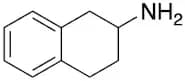
CAS:Controlled Product<p>Applications 3-Methylphosphinicopropionic Acid Diethyl Ester is a derivative of 3-Methylphosphinicopropionic Acid Sodium Salt (M326160), a metabolite of Glufosinate (G596950). 3-Methylphosphinicopropionic Acid Diethyl Ester is used in the preparation of the naturally occurring amino acid, Phosphinothricin.<br>References Zeiss, H.: J. Org. Chem., 56, 1783 (1991)<br></p>Formula:C8H17O4PColor and Shape:NeatMolecular weight:208.191,2,3,4-Tetrahydronaphthalen-2-amine (>80%)
CAS:Controlled Product<p>Applications 1,2,3,4-tetrahydronaphthalen-2-amine (cas# 2954-50-9) is a useful research chemical.<br></p>Formula:C10H13NPurity:>80%Color and Shape:NeatMolecular weight:147.22


![N’-[2-[2,4-Dimethylphenyl)thio]phenyl] Vortioxetine-d8](/_next/image/?url=https%3A%2Fstatic.cymitquimica.com%2Fproducts%2FTR%2Fthumb-webp%2FD477792.webp&w=3840&q=75)
![5-Hydroxy-2-[1-methyl-1-[[benzylcarbamoyl]amino]ethyl]-6-methoxypyrimidine-4-carboxylic Acid Methy…](/_next/image/?url=https%3A%2Fstatic.cymitquimica.com%2Fproducts%2FTR%2Fthumb-webp%2FH948242.webp&w=3840&q=75)