Pharmaceutical Standards
Pharmaceutical standards are a comprehensive set of reference materials essential for ensuring the safety, efficacy, and quality of pharmaceutical products. This category includes standards for active pharmaceutical ingredients (APIs), which are the core components responsible for therapeutic effects. Additionally, it covers compounds and metabolites relevant to both the pharmaceutical and veterinary industries, providing benchmarks for the accurate measurement and analysis of these substances. Nitrosamine control standards are crucial for detecting and mitigating potentially harmful nitrosamines in drug formulations. Toxicology standards help assess the safety and potential adverse effects of pharmaceutical compounds. Furthermore, enzyme activators and inhibitors standards are vital for research and development, enabling precise studies of biochemical pathways and drug mechanisms. These pharmaceutical standards are indispensable tools for regulatory compliance, quality control, and research, ensuring that pharmaceutical products meet stringent safety and effectiveness criteria.
Subcategories of "Pharmaceutical Standards"
- APIs for research and impurities(273,766 products)
- Enzyme Activators and Inhibitors(2,827 products)
- Nitrosamines(2,605 products)
- Pharmaceutical and Veterinary Compounds and Metabolites(2,608 products)
- Toxicology(13,652 products)
Found 7836 products of "Pharmaceutical Standards"
Sort by
Purity (%)
0
100
|
0
|
50
|
90
|
95
|
100
4-tert-Butyl-2-nitrophenol
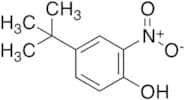
CAS:Controlled Product<p>Applications 4-tert-Butyl-2-nitrophenol (cas# 3279-07-0) is a useful research chemical.<br></p>Formula:C10H13NO3Color and Shape:NeatMolecular weight:195.22Adenosine 5’-[γ-thio]triphosphate Tetralithium Salt (85%)
CAS:Controlled ProductFormula:C10H12N5O12P3S·4LiPurity:85%Color and Shape:NeatMolecular weight:546.979(3S)-3-[[(1,1-Dimethylethoxy)carbonyl]amino]-4-hydroxy-butanoic Acid Methyl Ester
CAS:Controlled ProductFormula:C10H19NO5Color and Shape:NeatMolecular weight:233.262Uridine 5’-Diphospho-N-Acetylquinovosamine Disodium Salt
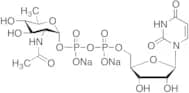
CAS:Controlled Product<p>Applications Uridine 5’-Diphospho-N-Acetylquinovosamine is an analogue of FlaA1, a bifunctional UDP-GlcNAc C6 dehydratase/C4 reductase from Helicobacter pylori.<br>References Creuzenet, C., et al.: J. Biol. Chem., 275, 34873 (2000)<br></p>Formula:C17H25N3Na2O16P2Color and Shape:NeatMolecular weight:635.32(9Z,11E)-9,11-Tetradecadienol Acetate
CAS:Controlled Product<p>Applications The sex pheromone of the currant shoot borer Lampronia capitella.<br>References Ochiai, M., et al.: Chem. Pharm. Bull., 31, 1641 (1983), Ando, T., et al.: Agric. Biol. Chem., 52, 1415 (1988), Kozlov, M., et al.: J. Chem. Ecol., 22, 431 (1996),<br></p>Formula:C16H28O2Color and Shape:NeatMolecular weight:252.392N-Methyl-N-1-naphthalenylacetamide
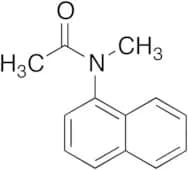
CAS:Controlled Product<p>Applications N-Methyl-N-1-naphthalenylacetamide is a useful compound for organic synthesis.<br></p>Formula:C13H13NOColor and Shape:NeatMolecular weight:199.25Morphine 3-Acetate 6-β-D-Glucuronide 2,3,4-Triacetate Methyl Ester
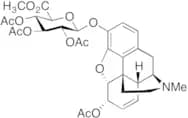
CAS:Controlled Product<p>Applications Morphine 3-Acetate 6-β-D-Glucuronide 2,3,4-Triacetate Methyl Ester is an intermediate in the synthesis of Morphine 6-β-D-Glucuronide (M652310), a major metabolite of Morphine that is a potent opioid receptor agonist. Analgesic (narcotic).<br>References Frances, B., et al.: J. Pharmacol. Exp. Ther, 262, 25 (1992); Wu, D., et al.: Drug Metab. Dispos., 25, 768 (1997); Krzanowska, E.K., et al.: Brain Res., 799, 329 (1998)<br></p>Formula:C32H37NO13Color and Shape:NeatMolecular weight:643.643-(Methoxymethylphosphinyl)propanoic Acid Methyl Ester
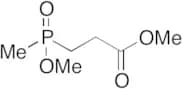
CAS:Controlled ProductFormula:C6H13O4PColor and Shape:NeatMolecular weight:180.13913-cis-Retinoic Acid-d5
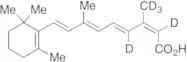
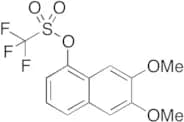
CAS:Controlled Product<p>Applications 13-cis-Retinoic Acid-d5, is the labeled analogue of 13-cis-Retinoic Acid (R250000) used as a treatment for severe acne. Presently being studied in conjuction with the treatment of photoaged skin.<br>References Lerche, C., et al.: Exp. Dermatol., 17, 972 (2008), Sato, T., et al.: J. Med. Chem., 51, 7705 (2008), Gan, J., et al.: Chem. Res. Toxicol., 22, 690 (2009), Macejova, D., et al.: Toxicol. Lett., 184, 114 (2009), Chen, P., et al.: Toxicol. App. Pharmacol., 234, 143 (2009),<br></p>Formula:C20H23D5O2Color and Shape:NeatMolecular weight:305.4666,7-Dimethoxynaphth-1-yl Trifluoromethanesulfonate
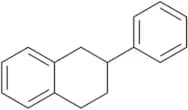
CAS:Controlled Product<p>Applications 6,7-Dimethoxynaphth-1-yl Trifluoromethanesulfonate is used as a reagent in the synthesis of tripeptide Grb2-SH2 domain inhibitors containing 4-(phosphonomethyl)phenylalanine and naphthalene.<br>References Schoepfer, J., et al.: Bioorg. Med. Chem. Lett., 11, 1201 (2001)<br></p>Formula:C13H11F3O5SColor and Shape:NeatMolecular weight:336.282-Phenyl-1,2,3,4-tetrahydronaphthalene
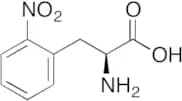
CAS:Controlled ProductFormula:C16H16Color and Shape:NeatMolecular weight:208.298L-2-Nitrophenylalanine
CAS:Controlled Product<p>Applications L-2-Nitrophenylalanine is a derivative of L-phenylalanine (P319415), and is used in the photocleavage of polypeptide backbones. L-Phenylalanine is an essential amino acid. L-Phenylalanine is biologically converted into L-tyrosine, another one of the DNA-encoded amino acids, which in turn is converted to L-DOPA and further converted into dopamine, norepinephrine, and epinephrine.<br>References Peters, F. et al.: Chem. Biol., 16, 148 (2009); Hollunger, G. et al.: Acta Pharmacol. Toxicol., 34, 391 (1974); Bagchi, S.P. et al.: Biochem. Pharmacol., 26, 900 (1977);<br></p>Formula:C9H10N2O4Color and Shape:NeatMolecular weight:210.19b-Elemene
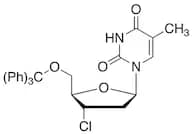
CAS:<p>Applications β-Elemene is an active constituent of Delonix regia and an anti-inflammatory agent. β-Elemene is a useful compound for investigating the toll-like receptor 4 signaling pathway and the inhibition of TNF-a, IL-1b, IL-6 and IL-12 expressions.<br>References Satajit, P., et al.: Int Immunopharmacol 34, 199 (2016);<br></p>Formula:C15H24Color and Shape:NeatMolecular weight:204.353’-Chloro-3'-deoxy-5’-O-tritylthymidine
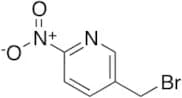
CAS:Controlled Product<p>Applications 3’-Chloro-3'-deoxy-5’-O-tritylthymidine (cas# 34627-62-8) is a compound useful in organic synthesis.<br></p>Formula:C29H27ClN2O4Color and Shape:NeatMolecular weight:502.175-(Bromomethyl)-2-nitropyridine
CAS:Controlled Product<p>Applications 5-(BROMOMETHYL)-2-NITROPYRIDINE (cas# 448968-52-3) is a useful research chemical.<br></p>Formula:C6H5BrN2O2Color and Shape:NeatMolecular weight:217.022',4',6'-Trihydroxyacetophenone Monohydrate
CAS:Controlled Product<p>Applications 2',4',6'-Trihydroxyacetophenone monohydrate (cas# 249278-28-2) is a useful research chemical.<br></p>Formula:C8H8O4·H2OColor and Shape:NeatMolecular weight:168.15 + (18.02)5,6-Dihydro-4H-benzo[b]thieno[2,3-d]azepine-2-carboxylic Acid
CAS:Controlled Product<p>Applications 5,6-Dihydro-4H-benzo[b]thieno[2,3-d]azepine-2-carboxylic Acid is an intermediate used to prepare benzothienoazepine compounds as respiratory syncytial virus (RSV) RNA polymerase inhibitors.<br>References Xiong, H., et al.: Bioorg. Med. Chem. Lett., 23, 6789 (2013)<br></p>Formula:C13H11NO2SColor and Shape:NeatMolecular weight:245.3Malvidin Chloride-d6
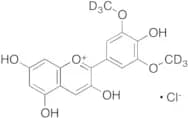
CAS:Controlled ProductFormula:C17H9D6O7·ClColor and Shape:NeatMolecular weight:372.782-Methoxycarbonyl Loratadine
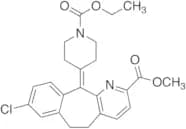
CAS:Controlled Product<p>Applications Intermediate for the synthesis of 2-Hydroxymethyl Loratadine.<br>References Cerrada, V., et al.: ARKIVOC, 9, 200 (2005).<br></p>Formula:C24H25ClN2O4Color and Shape:NeatMolecular weight:440.92

![Adenosine 5’-[γ-thio]triphosphate Tetralithium Salt (85%)](/_next/image/?url=https%3A%2Fstatic.cymitquimica.com%2Fproducts%2FTR%2Fthumb-webp%2FA281820.webp&w=3840&q=75)
![(3S)-3-[[(1,1-Dimethylethoxy)carbonyl]amino]-4-hydroxy-butanoic Acid Methyl Ester](/_next/image/?url=https%3A%2Fstatic.cymitquimica.com%2Fproducts%2FTR%2Fthumb-webp%2FD472440.webp&w=3840&q=75)



![5,6-Dihydro-4H-benzo[b]thieno[2,3-d]azepine-2-carboxylic Acid](/_next/image/?url=https%3A%2Fstatic.cymitquimica.com%2Fproducts%2FTR%2Fthumb-webp%2FD445330.webp&w=3840&q=75)