Pharmaceutical Standards
Pharmaceutical standards are a comprehensive set of reference materials essential for ensuring the safety, efficacy, and quality of pharmaceutical products. This category includes standards for active pharmaceutical ingredients (APIs), which are the core components responsible for therapeutic effects. Additionally, it covers compounds and metabolites relevant to both the pharmaceutical and veterinary industries, providing benchmarks for the accurate measurement and analysis of these substances. Nitrosamine control standards are crucial for detecting and mitigating potentially harmful nitrosamines in drug formulations. Toxicology standards help assess the safety and potential adverse effects of pharmaceutical compounds. Furthermore, enzyme activators and inhibitors standards are vital for research and development, enabling precise studies of biochemical pathways and drug mechanisms. These pharmaceutical standards are indispensable tools for regulatory compliance, quality control, and research, ensuring that pharmaceutical products meet stringent safety and effectiveness criteria.
Subcategories of "Pharmaceutical Standards"
- APIs for research and impurities(273,753 products)
- Enzyme Activators and Inhibitors(2,827 products)
- Nitrosamines(2,606 products)
- Pharmaceutical and Veterinary Compounds and Metabolites(2,603 products)
- Toxicology(13,652 products)
Found 7836 products of "Pharmaceutical Standards"
Sort by
Purity (%)
0
100
|
0
|
50
|
90
|
95
|
100
2,2'-Dipyridylamine
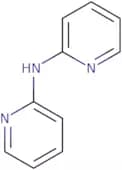
CAS:<p>2,2'-Dipyridylamine is a compound that belongs to the group of low-energy compounds. It has been shown to have antimicrobial activity against bacteria and fungi and has been demonstrated to be effective in treating cancer cells. 2,2'-Dipyridylamine is a molecule with two nitrogen atoms, which are bound by hydrogen bonds. This compound also contains methoxy groups that are coordinated by the nitrogen atoms. The structural analysis shows that there are three open coordination sites for metal ions that can bind with the nitrogen atoms. The x-ray diffraction data show that 2,2'-dipyridylamine crystallizes in a monoclinic system with an orthorhombic unit cell.</p>Formula:C10H9N3Purity:Min. 95%Molecular weight:171.2 g/mol4-Methoxy retinoic acid
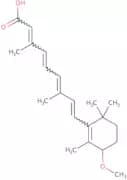
CAS:<p>Please enquire for more information about 4-Methoxy retinoic acid including the price, delivery time and more detailed product information at the technical inquiry form on this page</p>Formula:C21H30O3Purity:Min. 95%Molecular weight:330.46 g/mol2-(2-Sulfoethyl)pseudourea
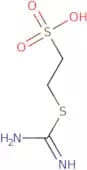
CAS:<p>2-(2-Sulfoethyl)pseudourea is a substance that is found in the body as an intermediate product of the urea cycle. It is also used as a protective agent for beet sugar and other food products. 2-(2-Sulfoethyl)pseudourea has been shown to be effective against malonic acid, tricine, and arginine. The reaction with malonic acid yields 2-sulfoethylmalonic acid, which can then be oxidized by tricine to yield 2-sulfoethylglyoxal. This substance also reacts with arginine to produce 2-sulfoethylaminoadipic semialdehyde.</p>Formula:C3H8N2O3S2Purity:Min. 95%Molecular weight:184.24 g/mol3,4’-O-dimethylellagic acid
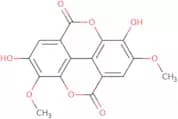
CAS:<p>3,4’-O-dimethylellagic acid is a phenolic compound, which is a type of ellagic acid derivative. It is derived from natural sources, typically found in various fruits, nuts, and vegetables, particularly in certain berries and pomegranates. The compound is formed through the methylation of ellagic acid, which amplifies its lipophilicity and enhances its bioavailability.</p>Purity:Min. 95%1-(2-Naphthylsulfonyl)piperidine-4-carboxylic acid
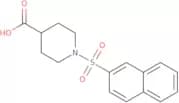
CAS:<p>Please enquire for more information about 1-(2-Naphthylsulfonyl)piperidine-4-carboxylic acid including the price, delivery time and more detailed product information at the technical inquiry form on this page</p>Formula:C16H17NO4SPurity:Min. 95%Molecular weight:319.38 g/mola,O-Dimethyl serotonin
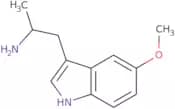
CAS:Controlled Product<p>a,O-Dimethyl serotonin is a monoamine compound that is synthesized by the enzymatic decarboxylation of 5-hydroxytryptophan. It has been shown to increase dopamine levels and inhibit the enzyme activity of serotonin in mice. This drug also binds to 5-ht2 receptors and induces the release of serotonin from nerve cells. A linear calibration curve was obtained using bufotenin as a standard. This drug has been used in analytical toxicology for determining the uptake of serotonin into human lung tissue and its effect on 5-ht1a receptors. In addition, a study was conducted with perennial ryegrass to determine whether this drug inhibits plant toxin synthesis. The results showed that it did not have an inhibitory effect on plant toxins and may even promote their synthesis.</p>Formula:C12H16N2OPurity:Min. 95%Molecular weight:204.27 g/molO-tert-Butyl-D-tyrosine
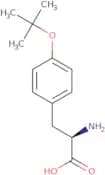
CAS:<p>O-tert-Butyl-D-tyrosine is an organogelator. It is a low molecular weight organic liquid that can form a gel when mixed with a solvent. O-tert-Butyl-D-tyrosine is soluble in hydrophobic solvents such as butanol, and insoluble in water. The gelation properties of this substance are due to its ability to interact with the surface of the solvent droplet and form a network that holds other solute molecules in place. This interaction is called physisorption, which means that it does not need any chemical bonds to form the gel. Gels formed by O-tert-Butyl-D-tyrosine are stable at room temperature, but will melt when heated or exposed to pH extremes.</p>Formula:C13H19NO3Purity:Min. 95%Molecular weight:237.29 g/molall-trans 5,6-Epoxy retinoic acid
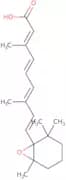
CAS:<p>5,6-Epoxy retinoic acid is a synthetic retinoid that has been shown to have biological properties in tissue culture and rat liver microsomes. It is an agonist of the retinoic acid receptor (RAR) and binds to DNA at the same site as all-trans retinoic acid. 5,6-Epoxyretinoic acid also has effects on gene expression in human serum and inhibits the proliferation of cancer cells by inducing apoptosis. The synthetic retinoid can be used as a novel chemotherapeutic agent for breast cancer or leukemia.</p>Formula:C20H28O3Purity:Min. 95 Area-%Color and Shape:Yellow PowderMolecular weight:316.43 g/mol3-Nitropropionic acid
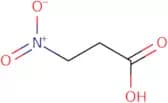
CAS:<p>3-Nitropropionic acid (3NPA) is a mitochondrial toxin that causes neuronal death by inhibiting complex enzyme activities and inducing reactive oxygen species production. 3NPA also alters mitochondrial membrane potential and induces pro-apoptotic protein expression, leading to neuronal cell death. 3NPA has been shown to be effective in the treatment of experimental models of infectious diseases, such as rat sepsis and human HIV infection, by reducing the number of activated T cells and CD4+ T cells. 3NPA also exhibits anti-inflammatory properties by inhibiting the inflammatory responses of monocytes/macrophages and neutrophils.</p>Formula:C3H5NO4Purity:Min. 95%Color and Shape:PowderMolecular weight:119.08 g/molO-tert-Butyl-L-threonine 2-chlorotrityl resin
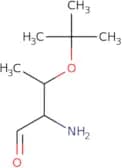
<p>Please enquire for more information about O-tert-Butyl-L-threonine 2-chlorotrityl resin including the price, delivery time and more detailed product information at the technical inquiry form on this page</p>Purity:Min. 95%Cholesterol Isobutyl Carbonate
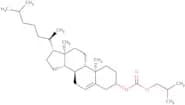
CAS:Controlled Product<p>Cholesterol Isobutyl Carbonate is a high melting organic solvent that has been used to prepare microcapsules. It can be used as a coating material for the preparation of inorganic particles, and it has been shown to have the ability to modify molecules by attaching functional groups. The diameter of cholesterol iso butyl carbonate particles is around 100 nm.</p>Purity:Min. 95%1-Testosteronetetrahydropyran
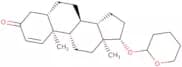
CAS:Controlled Product<p>Please enquire for more information about 1-Testosteronetetrahydropyran including the price, delivery time and more detailed product information at the technical inquiry form on this page</p>Formula:C24H36O3Purity:Min. 95%Molecular weight:372.54 g/mol1-Nitronaphthalene
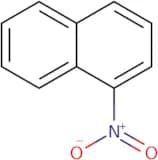
CAS:<p>1-Nitronaphthalene is a nitrobenzene derivative that has been used as an intermediate in the synthesis of pharmaceuticals, dyes, and other organic compounds. 1-Nitronaphthalene is classified as a hazardous substance due to its carcinogenicity and toxicity. In particular, it can cause irritation and burns on skin contact and may be fatal if swallowed. The toxicity profile of 1-nitronaphthalene has been studied in rats, mice, guinea pigs, rabbits, hamsters, and dogs. It was found to have moderate acute oral toxicity in rats but no significant acute toxicity in mice or dogs. 1-Nitronaphthalene also had little effect on p450 activity or enzyme activities in rats.</p>Formula:C10H7NO2Purity:Min. 95%Color and Shape:Yellow Clear LiquidMolecular weight:173.17 g/mol(1'S,2'S)-Nicotine 1'-oxide
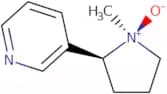
CAS:<p>Nicotine 1'-oxide is a metabolite of nicotine which is a naturally occurring alkaloid. Nicotine 1'-oxide is produced by the oxidation of nicotine and can be found in tobacco smoke, as well as in the urine of humans. Nicotine 1'-oxide has been shown to have enzyme inhibiting properties, and has been shown to decrease insulin-stimulated glucose transport rate in human liver cells. This product also has potential use as a stabilizer for pharmaceuticals or other organic substances, and can inhibit demethylation reactions that may lead to carcinogenesis. Nicotine 1'-oxide may also play a role in the transport of chemicals across membranes.</p>Formula:C10H14N2OPurity:Min. 95%Color and Shape:PowderMolecular weight:178.23 g/mol6-Amino-5,6,7,8-tetrahydronaphthalene-2,3-diol
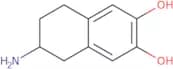
CAS:Controlled Product<p>6-Amino-5,6,7,8-tetrahydronaphthalene-2,3-diol is a potent dopamine D2 receptor antagonist. It has been shown to inhibit the light emission of dopamine in vitro. This compound also has a high affinity for 5-HT receptors and has been shown to be a potent agonist at these sites. 6-Amino-5,6,7,8-tetrahydronaphthalene-2,3-diol has been found to induce pluripotent stem cells from human fibroblasts. These cells can differentiate into virtually any cell type in the body and may be used to study diseases such as Parkinson's disease and cancer.</p>Formula:C10H13NO2Purity:Min. 95%Molecular weight:179.22 g/molSalbutamol sulphate impurity B
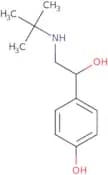
CAS:<p>Salbutamol sulphate impurity B is a substance that is an impurity in salbutamol sulfate. It is a white crystalline powder and is soluble in organic solvents. Salbutamol sulfate impurity B can be detected by liquid chromatography, which separates the substances based on their solubility in different phases. The substances are detected at a specific wavelength, and it is possible to identify peaks of the substances on the chromatogram synchronously. Salbutamol sulfate impurity B can be found as a part of other medicines or substances by using this detection method.</p>Formula:C12H19NO2Purity:Min. 95%Molecular weight:209.28 g/mol3-Nitropyridine
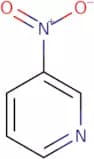
CAS:<p>3-Nitropyridine is a nitro compound that is used in the preparation of pharmaceuticals. It has been shown to have an inhibitory effect on HIV and other viruses, which may be due to its ability to react with nucleophilic groups. 3-Nitropyridine has also been shown to have an inhibitory effect on the human immunodeficiency virus (HIV) by reacting with the acidic group of the virus. This reaction prevents the virus from binding to cells and entering them. 3-Nitropyridine is also used as a solvent for organic reactions.</p>Formula:C5H4N2O2Purity:Min. 95%Color and Shape:PowderMolecular weight:124.1 g/molN-Nitrososarcosine
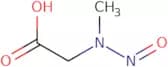
CAS:<p>N-Nitrososarcosine is a nonsteroidal anti-inflammatory drug (NSAID) that belongs to the group of ester hydrochloride. It inhibits the synthesis of prostaglandins, which are chemical mediators of inflammation and pain. N-Nitrososarcosine has been shown to be effective for the treatment of arthritis in animal models. In vitro studies have shown that this drug inhibits polymerase chain reaction and can be used for genotyping bacterial DNA. N-Nitrososarcosine has been found in urine samples from patients with autoimmune diseases, as well as in pharmaceutical preparations. The use of this drug as a model system for studying enzyme hydrolysis has also been studied.</p>Formula:C3H6N2O3Purity:Min. 95%Color and Shape:Off-White PowderMolecular weight:118.09 g/molD,L-Threo-b-hydroxy aspartic acid
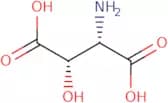
CAS:<p>D,L-Threo-b-hydroxy aspartic acid is a stereoselective synthetic amino acid that has been used to study the uptake and hydrolysis of D,L-threo-b-hydroxy aspartic acid by rat brain synaptosomes. It has also been used in the synthesis of an L-alanine analogue with the same stereochemistry at the chiral center. The stereoselective synthesis of this compound is achieved by epimerization reaction using d-alanine as a starting material. Threo bhda has been shown to inhibit glutamate release from neurons and stimulate GABA release in synaptosomes, which may be due to its ability to bind to ion channels. Threo bhda has also been found to inhibit the binding of radioactive thymidine to calf thymus DNA with a high degree of stereoselectivity.</p>Formula:C4H7NO5Purity:Min. 95%Molecular weight:149.1 g/mol2,6-Dibromo-3-nitropyridine
CAS:<p>2,6-Dibromo-3-nitropyridine is a chemical compound that has been shown to inhibit serine protease activity. The compound was shown to be an inhibitor of the enzyme trypsin, and showed some activity against a number of other proteases. 2,6-Dibromo-3-nitropyridine has also been shown to inhibit nucleophilic alkylation of DNA bases by 2,6-dichloroquinoxaline. 2,6-Dibromo-3-nitropyridine is a targeted inhibitor that binds to the active site of the enzyme and prevents the formation of an enzyme-substrate complex. This inhibition leads to a decrease in the production of proteins essential for cell division.</p>Formula:C5H2Br2N2O2Purity:Min. 95%Molecular weight:281.89 g/mol