Pharmaceutical Standards
Pharmaceutical standards are a comprehensive set of reference materials essential for ensuring the safety, efficacy, and quality of pharmaceutical products. This category includes standards for active pharmaceutical ingredients (APIs), which are the core components responsible for therapeutic effects. Additionally, it covers compounds and metabolites relevant to both the pharmaceutical and veterinary industries, providing benchmarks for the accurate measurement and analysis of these substances. Nitrosamine control standards are crucial for detecting and mitigating potentially harmful nitrosamines in drug formulations. Toxicology standards help assess the safety and potential adverse effects of pharmaceutical compounds. Furthermore, enzyme activators and inhibitors standards are vital for research and development, enabling precise studies of biochemical pathways and drug mechanisms. These pharmaceutical standards are indispensable tools for regulatory compliance, quality control, and research, ensuring that pharmaceutical products meet stringent safety and effectiveness criteria.
Subcategories of "Pharmaceutical Standards"
- APIs for research and impurities(273,766 products)
- Enzyme Activators and Inhibitors(2,827 products)
- Nitrosamines(2,605 products)
- Pharmaceutical and Veterinary Compounds and Metabolites(2,608 products)
- Toxicology(13,652 products)
Found 7836 products of "Pharmaceutical Standards"
Sort by
Purity (%)
0
100
|
0
|
50
|
90
|
95
|
100
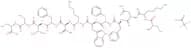
Somatostatin-14 (3-14) trifluoroacetate salt
CAS:<p>Please enquire for more information about Somatostatin-14 (3-14) trifluoroacetate salt including the price, delivery time and more detailed product information at the technical inquiry form on this page</p>Formula:C71H96N16O17S2Purity:Min. 95%Molecular weight:1,509.75 g/mol1,1'-Dioctadecyl-3,3,3',3'-tetramethylindotricarbocyanine iodide
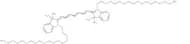
CAS:<p>1,1'-Dioctadecyl-3,3,3',3'-tetramethylindotricarbocyanine iodide (DiI) is a fluorescent dye that exhibits resonance fluorescence. It is used in cell biology to track the movement of lipoprotein and lipid-rich particles in cells. DiI has been shown to activate tumor cells by damaging their DNA and can be used for the treatment of cancer. DiI is also used as an absorber molecule during fluorescence microscopy imaging. The dye's ability to bind to lipoproteins makes it ideal for tracking cholesterol transport through the bloodstream. DiI binds to resolvin D1 and other lipids found in plasma, which can be useful for imaging lipid-rich tumors or atherosclerotic plaques.</p>Formula:C63H101IN2Purity:Min. 95%Color and Shape:Blue PowderMolecular weight:1,013.39 g/molSecretin (5-27) (porcine)
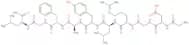
CAS:<p>Please enquire for more information about Secretin (5-27) (porcine) including the price, delivery time and more detailed product information at the technical inquiry form on this page</p>Formula:C115H200N38O34Purity:Min. 95%Molecular weight:2,659.05 g/molNeuronostatin-19 (mouse, rat) trifluoroacetate salt
<p>Please enquire for more information about Neuronostatin-19 (mouse, rat) trifluoroacetate salt including the price, delivery time and more detailed product information at the technical inquiry form on this page</p>Formula:C91H153N29O26Purity:Min. 95%Molecular weight:2,069.37 g/mol3,5-Dibromobenzoic acid methyl ester
CAS:<p>3,5-Dibromobenzoic acid methyl ester is an organic compound that has isomers. It is a synthetic substance with the chemical formula CHBrO. This substance can be obtained by reacting benzoic acid with bromine in the presence of aluminium chloride. The nature of this substance is not known due to its multifold structure. 3,5-Dibromobenzoic acid methyl ester has been shown to absorb light and transfer it to another molecule. This molecule can then emit light of a different wavelength or energy level. The dipole moment of the substance interacts with other molecules in close proximity, leading to the transfer of electrons and photons from one molecule to another.</p>Formula:C8H6Br2O2Purity:Min. 95%Color and Shape:PowderMolecular weight:293.94 g/mol3,3'-Dichlorobenzidine dihydrochloride
CAS:<p>3,3'-Dichlorobenzidine dihydrochloride is a chemical compound that is used in the manufacture of industrial chemicals. 3,3'-Dichlorobenzidine dihydrochloride is also used as a biochemical to detect copper and chloride ions in urine samples. This chemical has shown binding activities with receptor α, which is responsible for the transmission of nerve impulses. 3,3'-Dichlorobenzidine dihydrochloride has been shown to have a high affinity for receptor α and can be used as an antagonist for this receptor in binding studies.</p>Formula:C12H12Cl4N2Purity:Min. 95%Molecular weight:326.05 g/molCinchonine Hydrochloride Hydrate
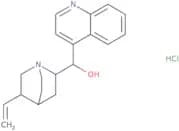
CAS:<p>Cinchonine hydrochloride hydrate is a compound that belongs to the class of amines. It is used as an anti-malarial drug, an anti-arrhythmic agent, and a vasodilator. Cinchonine hydrochloride hydrate has been shown to be heat resistant and can be used in pharmaceutical preparations such as gel permeation chromatography. This compound also has a catalytic effect on reactions with glycerin and piperidone, which are used in the production of various dyes. Cinchonine hydrochloride hydrate can also be used as a solid catalyst for viscosity measurements in wastewater treatment plants.</p>Formula:C19H22N2O·HCl·xH2OPurity:Min. 95%Molecular weight:330.85 g/molAtorvastatin acetonide tert-butyl ester
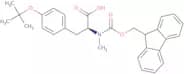
CAS:<p>Atorvastatin intermediate</p>Formula:C40H47FN2O5Purity:Min. 95%Molecular weight:654.81 g/molFmoc-N-methyl-O-tert-butyl-L-tyrosine
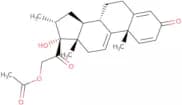
CAS:<p>Fmoc-N-methyl-O-tert-butyl-L-tyrosine is a peptide that mimics the natural substrate serine protease. It has been used to study protein-protein interactions in proteases and their cleavage specificity. This peptide was designed as a peptidomimetic, which is an analog of a protein or peptide. The systematic synthesis of this molecule has been studied extensively and it has been shown that the maximum number of modifications occurs at the N terminus and the minimal number at the C terminus. The residue of this molecule is modified by proteolytic modification, which is a chemical modification that changes the amino acid sequence. Fmoc-N-methyl-O-tert-butyl-L-tyrosine has minimal quantified stability, which means that it can be quantified but not stable for long periods of time.</p>Formula:C29H31NO5Purity:Min. 95%Molecular weight:473.56 g/mol17-α,21-Dihydroxy-16-a-methylpregna-1,4,9(11)-triene-3,20-dione 21-acetate
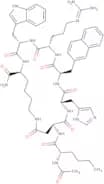
CAS:Controlled Product<p>Please enquire for more information about 17-alpha,21-Dihydroxy-16-a-methylpregna-1,4,9(11)-triene-3,20-dione 21-acetate including the price, delivery time and more detailed product information at the technical inquiry form on this page</p>Formula:C24H30O5Purity:Min. 95%Molecular weight:398.49 g/molN-Acetyl-L-norleucyl-L-a-aspartyl-L-histidyl-3-(2-naphthalenyl)-D-alanyl-L-arginyl-L-tryptophyl-L-lysinamide-(2,7) -lactam
CAS:<p>Please enquire for more information about N-Acetyl-L-norleucyl-L-a-aspartyl-L-histidyl-3-(2-naphthalenyl)-D-alanyl-L-arginyl-L-tryptophyl-L-lysinamide-(2,7) -lactam including the price, delivery time and more detailed product information at the technical inquiry form on this page</p>Formula:C54H71N15O9Purity:Min. 95%Molecular weight:1,074.24 g/mol2,2'-Azanediylbis(propan-1-ol)
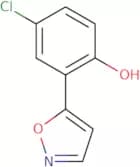
CAS:<p>Please enquire for more information about 2,2'-Azanediylbis(propan-1-ol) including the price, delivery time and more detailed product information at the technical inquiry form on this page</p>Formula:C6H15NO2Purity:Min. 95%Molecular weight:133.19 g/mol5-(5'-Chloro-2'-hydroxyphenyl)-isoxazole
CAS:<p>5-(5'-Chloro-2'-hydroxyphenyl)-isoxazole is a fine chemical that can be used as a versatile building block in organic synthesis. It is also a useful intermediate and research chemical. 5-(5'-Chloro-2'-hydroxyphenyl)-isoxazole has been shown to react with various reagents and has been used as an intermediate for the synthesis of other compounds. This compound can be used as a speciality chemical or as a reagent in laboratory reactions.</p>Formula:C9H6ClNO2Purity:Min. 95%Color and Shape:SolidMolecular weight:195.6 g/molType A Allatostatin II
CAS:<p>Allatostatin II is a fatty acid that has been shown to have receptor activity. It is an analog of the glycopeptide antibiotic gramicidin S and has been shown to inhibit the growth of bacteria and fungi. Allatostatin II also has diagnostic properties, which are used in biochemical tests for inflammatory diseases. The molecule is conjugated with various agents to form diagnostic agents or antibiotics, such as stenotrophomonas maltophilia and erythromycin. Allatostatin II is found in the human plasma, but its function is unknown.</p>Formula:C49H74N14O13Purity:Min. 95%Molecular weight:1,067.2 g/molPancreastatin (33-48) (human) trifluoroacetate salt
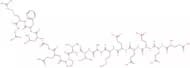
CAS:<p>Pancreastatin (33-48) is a synthetic, acidic, sulfated peptide that has been shown to have high activity against pancreatic cancer cells. Pancreastatin (33-48) has been synthesized by reacting an oligopeptide with glutamic acid and aspartic acid. The N-terminal of this peptide is amidated and contains a sulfate group. This molecule has been purified by SDS-polyacrylamide gel electrophoresis and the sulfate fractionation method. Pancreastatin (33-48) is able to inhibit the proliferation of pancreatic tumor cells in vitro, but it does not appear to be cytotoxic to normal pancreatic cells. In addition, pancreastatin (33-48) has also been shown to decrease tumor growth in vivo in mice bearing a transplanted human pancreatic tumor.</p>Formula:C78H123N21O27SPurity:Min. 95%Molecular weight:1,819 g/mol2',3'-Difluoroacetophenone
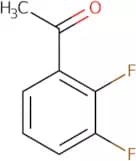
CAS:<p>2',3'-Difluoroacetophenone is a polymerized, salicylic acid that can be used as a deformation treatment method for silicon. It has been shown to reduce the resistance of transistors and improve the performance of esters. 2',3'-Difluoroacetophenone is also used in the manufacture of polyolefins and polycarboxylic acids. It is also used in skin care products because it can reduce sebum production and inhibit the formation of acne-causing bacteria.</p>Formula:C8H6F2OPurity:Min. 95%Molecular weight:156.13 g/molThymosin α1 acetate
CAS:<p>Thymalfasin is a peptide that belongs to the thymosin family. It is a biocompatible polymer with a number of biomedical applications, including as a component in wound dressings and anti-adhesive agents. Thymalfasin has been shown to be effective at inhibiting the replication of influenza A virus, which may be due to its ability to bind to toll-like receptor 4 (TLR4). This drug also has antitumor properties and has been shown to stimulate the production of IL-2 receptor in human monocytes. Thymalfasin also inhibits the growth of cancer cells, such as HL60 cells, by blocking DNA synthesis. The molecular weight of this compound is approximately 20-30 kDa.</p>Formula:C129H215N33O55•(C2H4O2)xPurity:Min. 95%Molecular weight:3,108.28 g/molα-Ketoglutaric acid potassium
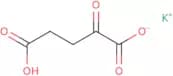
CAS:<p>Intermediate in the Krebs cycle; nitrogen transporter</p>Formula:C5H5O5KPurity:Min. 98 Area-%Color and Shape:PowderMolecular weight:184.19 g/molNaphthalene-1,8-diol
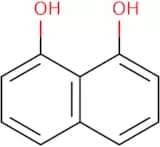
CAS:<p>Naphthalene-1,8-diol is a compound that belongs to the class of polycyclic aromatic hydrocarbons. It has been shown to inhibit polymerase chain reactions (PCR) in a nuclear DNA template. Naphthalene-1,8-diol also inhibits the production of melanin and reduces the number of skin lesions in the wild-type strain of Galleria mellonella. Naphthalene-1,8-diol is an antioxidant compound that has been shown to protect against radiation and dermatitis. This molecule contains a hydroxyl group that can form hydrogen bonds with other molecules. This property may account for its anti-inflammatory effects.</p>Formula:C10H8O2Purity:Min. 95%Color and Shape:Slightly Brown PowderMolecular weight:160.17 g/molAcenaphthylene
CAS:<p>Acenaphthylene is a hydroxylated aromatic compound with the chemical formula C10H8. Acenaphthylene is a natural compound that can be found in coal tar and petroleum. It is used as a solid catalyst for cationic polymerization and as a photochemical reagent in analytical chemistry. Acenaphthylene also has been shown to have antimicrobial properties against bacterial strains, including Escherichia coli and Staphylococcus aureus, with sublethal doses. This compound has been shown to be effective for wastewater treatment and for sample preparation for polymers, due to its insoluble nature. The mechanism of acenaphthylene's antimicrobial activity is not well understood. It may inhibit bacterial growth by inhibiting DNA synthesis or by forming an adduct with bacterial DNA that inhibits replication.</p>Formula:C12H8Purity:Min. 95%Color and Shape:Yellow SolidMolecular weight:152.19 g/mol