Pharmaceutical Standards
Pharmaceutical standards are a comprehensive set of reference materials essential for ensuring the safety, efficacy, and quality of pharmaceutical products. This category includes standards for active pharmaceutical ingredients (APIs), which are the core components responsible for therapeutic effects. Additionally, it covers compounds and metabolites relevant to both the pharmaceutical and veterinary industries, providing benchmarks for the accurate measurement and analysis of these substances. Nitrosamine control standards are crucial for detecting and mitigating potentially harmful nitrosamines in drug formulations. Toxicology standards help assess the safety and potential adverse effects of pharmaceutical compounds. Furthermore, enzyme activators and inhibitors standards are vital for research and development, enabling precise studies of biochemical pathways and drug mechanisms. These pharmaceutical standards are indispensable tools for regulatory compliance, quality control, and research, ensuring that pharmaceutical products meet stringent safety and effectiveness criteria.
Subcategories of "Pharmaceutical Standards"
- APIs for research and impurities(273,123 products)
- Enzyme Activators and Inhibitors(2,827 products)
- Nitrosamines(2,606 products)
- Pharmaceutical and Veterinary Compounds and Metabolites(2,577 products)
- Toxicology(13,654 products)
Found 7836 products of "Pharmaceutical Standards"
Sort by
Purity (%)
0
100
|
0
|
50
|
90
|
95
|
100
2,2,3,3,4,4,5,5,6,6,7,7,8,8,8-Pentadecafluorooctanoic acid
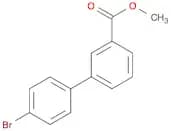
CAS:Formula:C8HF15O2Purity:96%Color and Shape:SolidMolecular weight:414.0684Methyl 3-(4-bromophenyl)benzoate, 4-Bromo-3'-(methoxycarbonyl)biphenyl
CAS:Formula:C14H11BrO2Purity:95+%Color and Shape:SolidMolecular weight:291.1399Ref: IN-DA008SZW
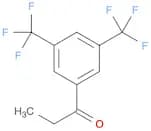
Discontinued product3',5'-BIS(TRIFLUOROMETHYL)PROPIOPHENONE
CAS:Formula:C11H8F6OPurity:97%Color and Shape:LiquidMolecular weight:270.171Ref: IN-DA008GOT
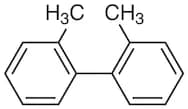
Discontinued product2,2'-Dimethylbiphenyl
CAS:Formula:C14H14Purity:>95.0%(GC)Color and Shape:Colorless to Light yellow to Light red clear liquidMolecular weight:182.27DL-Methionine Methylsulfonium Chloride
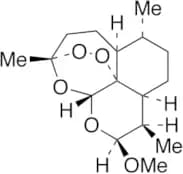
CAS:Controlled Product<p>Applications DL-Methionine methylsulfonium chloride (cas# 3493-12-07) is a useful research chemical.<br></p>Formula:C6H14ClNO2SColor and Shape:NeatMolecular weight:199.7Artemether
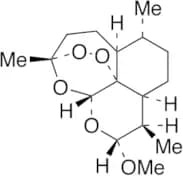
CAS:<p>Applications Derivative of Artemisinin (A777500). Antimalarial, used to treat strains of malaria which are multi-drug resistant.<br>References Hombhanje, F., et al.: Pharma., 3, 3581 (2010), Michael, O., et al.: Malaria J., 9, 335 (2010), Cesar, I., et al.: J. Pharm. Biomed. Anal., 54, 114 (2011),<br></p>Formula:C16H26O5Color and Shape:White to Off-White SolidMolecular weight:298.37α-Artemether
CAS:<p>Impurity Artemether USP Related Compound B<br>Applications Derivative of Artemisinin (A777500). Shows antimalarial and antifungal activity.<br>References Michael, O., et al.: Malaria J., 9, 335 (2010), Cesar, I., et al.: J. Pharm. Biomed. Anal., 54, 114 (2011), Galal, A. et al.: J. Nat. Prod. 68, 1274 (2005)<br></p>Formula:C16H26O5Color and Shape:Off-WhiteMolecular weight:298.37Dihydro Artemisinin Dimer
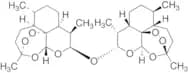
CAS:<p>Applications Dihydro Artemisinin (D448360) dimer with anticancer and antiprotozoal activity.<br>References Galal, A. et al.: Bioorg. Med. Chem., 17, 741 (2009); Beekman, A. et al.: Phytother. Res., 10, 140 (1996)<br></p>Formula:C30H46O9Color and Shape:White to Off-White SolidMolecular weight:550.68Vanillin-13C6
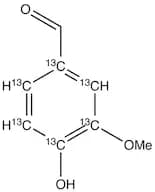
CAS:<p>Applications Labelled Vanillin. Occurs naturally in a wide variety of foods and plants such as orchids; major commercial source of natural vanillin is from vanilla bean extract. Synthetically produced in-bulk from lignin-based byproduct of paper processes or from guaicol.<br>References Jenner, P.M., et al.: Food Cosmet. Toxicol., 2, 327 (1964), Clark, G.S., et al.: Perfum. Flavor., 15, 45 (1990),<br></p>Formula:C6C2H8O3Color and Shape:NeatMolecular weight:158.10Chloroacetyl Chloride
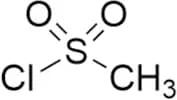
CAS:Formula:C2H2Cl2OColor and Shape:Clear Colourless OilMolecular weight:112.94Methanesulfonyl Chloride
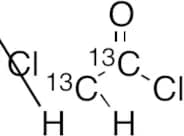
CAS:Formula:CH3ClO2SColor and Shape:Colourless to Pale Yellow OilMolecular weight:114.55Chloroacetyl Chloride-13C2
CAS:Formula:C2H2Cl2OColor and Shape:Clear Colourless OilMolecular weight:114.933,3',4',5,5',8-Hexahydroxyflavone
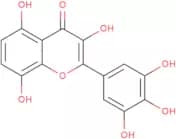
CAS:<p>3,3',4',5,5',8-Hexahydroxyflavone is a naturally occurring flavonoid, which is a type of polyphenolic compound. It is derived from various plant sources, including fruits, vegetables, and certain medicinal herbs. The compound is characterized by its chemical structure, which includes multiple hydroxyl groups, contributing to its biological activity.<br><br>The mode of action of 3,3',4',5,5',8-Hexahydroxyflavone involves its interaction with various cellular pathways and enzymes. Primarily, it is known for its antioxidant properties, where it scavenges free radicals and reactive oxygen species, thereby reducing oxidative stress. Additionally, it may exhibit anti-inflammatory effects by modulating signaling pathways involved in inflammation.<br><br>In terms of uses and applications, 3,3',4',5,5',8-Hexahydroxyflavone is primarily explored in scientific research focusing on its potential health benefits. Studies investigate its role in disease prevention, particularly conditions associated with oxidative stress and inflammation, such as cardiovascular diseases and neurodegenerative disorders. While it holds promise in these areas, further research is necessary to fully understand its mechanisms and therapeutic potential.</p>Formula:C15H10O8Purity:Min. 95%Molecular weight:318.24 g/mol1-(3,4-Methylenedioxyphenyl) 2-nitropropene
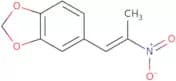
CAS:<p>1-(3,4-Methylenedioxyphenyl) 2-nitropropene (1-MPNP) is a phosphatase inhibitor that is active against gram-negative bacteria by inhibiting enterotoxins and chlamydia. 1-MPNP inhibits the activity of tyrosine phosphatases, which are enzymes that play a major role in bacterial virulence. 1-MPNP competitively inhibits the activity of tyrosine phosphatases and prevents them from catalyzing the hydrolysis of polyphosphate substrates. This inhibition leads to an accumulation of polyphosphates in the bacterial cell membrane, which disrupts its permeability and leads to cell death.</p>Formula:C10H9NO4Purity:Min. 97.5 Area-%Color and Shape:Yellow PowderMolecular weight:207.18 g/molRef: 3D-FM67977
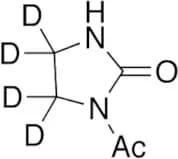
Discontinued productN-Acetylethylene Urea-d4
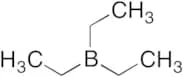
CAS:Controlled Product<p>Applications N-Acetylethylene Urea-d4 (cas# 1189701-94-7) is a compound useful in organic synthesis.<br></p>Formula:C5H4H4N2O2Color and Shape:NeatMolecular weight:132.15Triethylborane (1.0 M in THF)
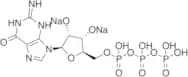
CAS:Controlled Product<p>Applications Triethylborane reacted with 8-hydroxyquinoline to synthesize three 8--hydroxyquinolato (q) boron compounds B(C2H5)2q (1), BPh2q (2), and B(2-naph)2q (3).<br>References Wu, Q., et al.: Chem. Mater., 12, 79 (2000).<br></p>Formula:C6H15BColor and Shape:Single SolutionMolecular weight:97.99Guanosine-5'-triphosphate Disodium Salt (~85%)
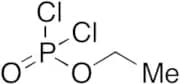
CAS:Controlled Product<p>Applications Guanosine-5'-triphosphate disodium salt (CAS# 56001-37-7) is a nucleotide used in the preparation of photoreactive GTP affinity probes, and in inhibitors of eukaryotic initiation factor eIF-4E.<br>References George Cisar, E. A.; J. Am. Chem. Soc., 135, 4676 (2013); Ghosh, P.; et al.: Bioorg. Med. Chem. Lett., 16, 750 (2006).<br></p>Formula:C10H14N5O14P3Na2Purity:~85%Color and Shape:NeatMolecular weight:567.14Ethyl Dichlorophosphate
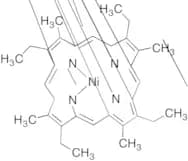
CAS:Controlled ProductFormula:C2H5Cl2O2PColor and Shape:White to Off-White SolidMolecular weight:162.94Etioporphyrin I Nickel
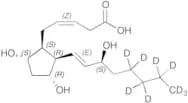
CAS:Controlled ProductFormula:C32H36N4NiColor and Shape:NeatMolecular weight:535.3482,3-Dinor iPF2α-III-d9
CAS:Controlled ProductFormula:C18D9H21O5Color and Shape:NeatMolecular weight:335.483p-Cresol-(methyl-13C)
CAS:Controlled Product<p>Applications The formation of p-Cresol-(methyl-13C) via phenol methylation at higher temperature from the deactivation of basic catalyst.<br> Not a dangerous good if item is equal to or less than 1g/ml and there is less than 100g/ml in the package<br>References Borodina, I. B., et al.: Russ. J. Phys. Chem., 80, 892-898 (2006)<br></p>Formula:CC6H8OColor and Shape:NeatMolecular weight:109.13(-)-γ-Cadinene
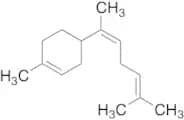
CAS:Controlled ProductFormula:C15H24Color and Shape:ColourlessMolecular weight:204.351α-Ketobutyric Acid-d2 Sodium
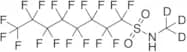
CAS:Controlled ProductFormula:C4D2H3O3·NaColor and Shape:NeatMolecular weight:126.083N-Methylperfluorooctanesulfonamide-d3 (50μg/mL in Methanol)
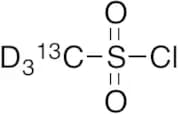
CAS:Controlled ProductFormula:C9HD3F17NO2SColor and Shape:Single SolutionMolecular weight:516.19Methanesulfonyl Chloride-d3,13C
CAS:Formula:C2H3ClO2SColor and Shape:Colourless OilMolecular weight:118.56[4S-(4a,7b,7aa)]-7,7a-Dihydro-7-hydroxy-4-methoxy-4H-furo[3,2-c]pyran-2(6H)-one-13C3
CAS:Controlled Product<p>Applications [4S-(4α,7β,7aα)]-7,7a-Dihydro-7-hydroxy-4-methoxy-4H-furo[3,2-c]pyran-2(6H)-one-13C3 is an intermediate used in the synthesis of Patulin-13C3 (P206502), which is a labelled Patulin (PAT), a mycotoxin produced by certain species of Penicillium, Aspergillus, and Byssochlamys, is mainly found in ripe apple and apple products. Patulin-induced genotoxicity and modulation of glutathione in Hep G2 cells. Antibiotic.<br>References Scott, P., et al.: J. Agric. Food Chem., 20, 450 (1972), Aden, D., et al.: Nature, 282, 615 (1979), Surralles, J., et al.: Mutat. Res., 341, 169 (1995), Alves, I., et al.: Mutagenesis, 15, 229 (2000), Liu, B., et al.: Toxicol. Appl. Pharmacol., 191, 255 (2003)<br></p>Formula:C5C3H10O5Color and Shape:NeatMolecular weight:189.14N,N-Bis(carboxymethyl-13C)-L-alanine
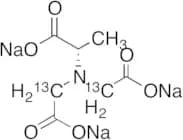
CAS:Controlled ProductFormula:C513C2H11NO6Color and Shape:Off White SolidMolecular weight:273.10Methyl (2E)-2-Deoxy-2-(2-ethoxy-2-oxoethylidene)-3,4-O-isopropylidene-β-L-erythro-pentopyranoside-13C3
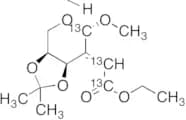
Controlled ProductFormula:C3C10H20O6Color and Shape:NeatMolecular weight:275.272Naphthalene
CAS:<p>Naphthalene is a chemical that is used for wastewater treatment and as a pesticide. It is also used in the manufacturing of polymers, resins, and plastics. Naphthalene has antimicrobial properties due to its hydrophobic effect. Naphthalene's antimicrobial activity is based on its ability to react with the skeleton of bacterial cells and disrupt the integrity of their outer membrane. Naphthalene also interacts with proteins and DNA, causing cell death. The molecular mechanisms of naphthalene's antibacterial activity are not well understood but have been studied using Hl-60 cells, which are immortalized human monocytic leukemia cells. This study showed that naphthalene affects the cell cycle by inhibiting protein synthesis in bacteria through binding to ribosomes or by disrupting the dna replication process.</p>Formula:C10H8Purity:Min. 95%Molecular weight:128.17 g/molRef: 3D-FN10260
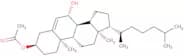
Discontinued product7b-Hydroxy cholesterol 3b-acetate
CAS:Controlled Product<p>7b-Hydroxy cholesterol 3b-acetate is an allylic compound that is catalyzed by molybdenum, which eliminates the acetyl group at position 7 to form a double bond with the 3-position. The reaction temperature of 7b-hydroxy cholesterol 3b-acetate can be increased to high temperatures (i.e., >100°C) for the elimination process, and allylic acetates are obtained as products. The reaction starts with the addition of hexacarbonyl, which leads to a diene intermediate. This is then eliminated by adding acetamide in presence of high concentration of acetic acid and catalytic amounts of molybdenum. The low yield and efficiency, however, are major drawbacks of this process.</p>Formula:C29H48O3Purity:Min. 95%Molecular weight:444.69 g/molRef: 3D-FH23948
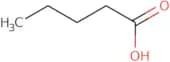
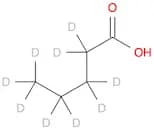
Discontinued productValeric acid
CAS:<p>Valeric acid is a fatty acid that is used in the manufacture of polymers. Valeric acid can be synthesized from caproic acid, which is found in palm oil and coconut oil. Valeric acid has been shown to inhibit the activity of nicotinic acetylcholine receptors at low concentrations and to have an inhibitory effect on the ryanodine receptor at high concentrations. Valeric acid also has a matrix effect on analytical methods such as gas-liquid chromatography, which has been modeled using polymer compositions.</p>Formula:C5H10O2Purity:Min. 95%Molecular weight:102.13 g/molRef: 3D-FV34914
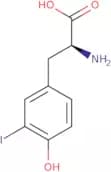
Discontinued product3-Iodo-L-tyrosine
CAS:<p>Please enquire for more information about 3-Iodo-L-tyrosine including the price, delivery time and more detailed product information at the technical inquiry form on this page</p>Formula:C9H10INO3Purity:Min. 96.0 Area-%Color and Shape:PowderMolecular weight:307.09 g/molRef: 3D-FI12110
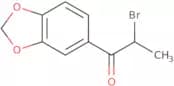
Discontinued product2-Bromo-3',4'-(methylenedioxy)propiophenone
CAS:Controlled Product<p>Please enquire for more information about 2-Bromo-3',4'-(methylenedioxy)propiophenone including the price, delivery time and more detailed product information at the technical inquiry form on this page</p>Formula:C10H9BrO3Purity:Min. 95%Color and Shape:PowderMolecular weight:257.08 g/mol









![[4S-(4a,7b,7aa)]-7,7a-Dihydro-7-hydroxy-4-methoxy-4H-furo[3,2-c]pyran-2(6H)-one-13C3](/_next/image/?url=https%3A%2Fstatic.cymitquimica.com%2Fproducts%2FTR%2Fthumb-webp%2FD449413.webp&w=3840&q=75)