Pharmaceutical Standards
Pharmaceutical standards are a comprehensive set of reference materials essential for ensuring the safety, efficacy, and quality of pharmaceutical products. This category includes standards for active pharmaceutical ingredients (APIs), which are the core components responsible for therapeutic effects. Additionally, it covers compounds and metabolites relevant to both the pharmaceutical and veterinary industries, providing benchmarks for the accurate measurement and analysis of these substances. Nitrosamine control standards are crucial for detecting and mitigating potentially harmful nitrosamines in drug formulations. Toxicology standards help assess the safety and potential adverse effects of pharmaceutical compounds. Furthermore, enzyme activators and inhibitors standards are vital for research and development, enabling precise studies of biochemical pathways and drug mechanisms. These pharmaceutical standards are indispensable tools for regulatory compliance, quality control, and research, ensuring that pharmaceutical products meet stringent safety and effectiveness criteria.
Subcategories of "Pharmaceutical Standards"
- APIs for research and impurities(273,486 products)
- Enzyme Activators and Inhibitors(2,827 products)
- Nitrosamines(2,606 products)
- Pharmaceutical and Veterinary Compounds and Metabolites(2,602 products)
- Toxicology(13,652 products)
Found 7836 products of "Pharmaceutical Standards"
Sort by
Purity (%)
0
100
|
0
|
50
|
90
|
95
|
100
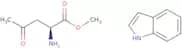
Indole-3-acetyl-L-alanine acid methyl ester
CAS:<p>Please enquire for more information about Indole-3-acetyl-L-alanine acid methyl ester including the price, delivery time and more detailed product information at the technical inquiry form on this page</p>Formula:C14H16N2O3Purity:Min. 95%Molecular weight:260.29 g/mol5-Methyl salicylic acid
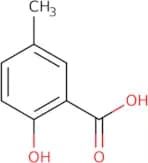
CAS:<p>5-Methyl salicylic acid is a molecule that is used in analytical chemistry to identify the presence of p-hydroxybenzoic acid in urine samples. It has a phase transition temperature of around 198 degrees Celsius, and reacts with hydroxyl groups. 5-Methyl salicylic acid has been shown to have protocatechuic acid, hydrochloric acid, and cationic surfactant properties. It also has diphenolase activity and can be used as an antioxidant. 5-Methyl salicylic acid is synthesized from phenolic acids such as nepeta cataria or protocatechuic acid and is a metabolite of benzoic acid.<br>5-Methyl salicylic acid can be found in plants such as nepeta cataria or sephadex g-100.</p>Formula:C8H8O3Purity:Min. 95%Color and Shape:PowderMolecular weight:152.15 g/mol1'H-Spiro[cyclopentane-1,2'-quinazolin]-4'(3'H)-one
CAS:<p>1'H-Spiro[cyclopentane-1,2'-quinazolin]-4'(3'H)-one is a pyrimidine with two conformations. The first conformation is a chair, which has an axial bond and four equatorial bonds. The second conformation is a boat, which has two axial bonds and three equatorial bonds. This molecule can form hydrogen bonds with other molecules in the same class. The systematic name of this molecule is (1-methyl-2-(2-(pyridin-2-yl)ethyl)-1H-benzimidazol-5-yl)methanol and it has six membered ring and five membered ring.</p>Formula:C12H14N2OPurity:Min. 95%Color and Shape:PowderMolecular weight:202.25 g/mol2-(4-Toluenesulphonyl)acetophenone
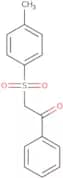
CAS:<p>Please enquire for more information about 2-(4-Toluenesulphonyl)acetophenone including the price, delivery time and more detailed product information at the technical inquiry form on this page</p>Purity:Min. 95%N-(4-Nitrophenyl)-2-thienylformamide
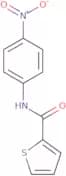
CAS:<p>Please enquire for more information about N-(4-Nitrophenyl)-2-thienylformamide including the price, delivery time and more detailed product information at the technical inquiry form on this page</p>Formula:C11H8N2O3SPurity:Min. 95%Color and Shape:PowderMolecular weight:248.26 g/mol5-Nitro-2-(2'-pyridinethio)benzaldehyde
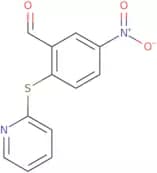
CAS:<p>Please enquire for more information about 5-Nitro-2-(2'-pyridinethio)benzaldehyde including the price, delivery time and more detailed product information at the technical inquiry form on this page</p>Purity:Min. 95%2-Methoxy-5-(trifluoromethyl)phenylthiourea
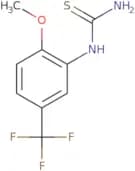
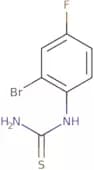
CAS:<p>Please enquire for more information about 2-Methoxy-5-(trifluoromethyl)phenylthiourea including the price, delivery time and more detailed product information at the technical inquiry form on this page</p>Purity:Min. 95%N-(2-bromo-4-fluorophenyl)thiourea
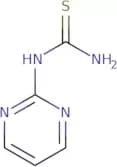
CAS:<p>Please enquire for more information about N-(2-bromo-4-fluorophenyl)thiourea including the price, delivery time and more detailed product information at the technical inquiry form on this page</p>Purity:Min. 95%1-(Pyrimidin-2-yl)thiourea
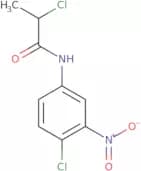
CAS:<p>1-(Pyrimidin-2-yl)thiourea (1PTU) is a sulfur-containing compound with coordination properties. It is an allylamine derivative that contains a thiourea group. 1PTU has been shown to be able to form a crystalline solid in the presence of sulfur, and its spectra can be used as a probe for sulfur content. The thermal analysis of 1PTU reveals that it has two main decomposition peaks at 280°C and 500°C, which are attributed to the elimination of H 2 S and SO 2 respectively. The kinetic parameters for 1PTU have been determined by calorimetry experiments, yielding values of k = 0.0013 s−1 and K = 6×10⁻⁴ M−1s−1. The electron density distribution for the molecule is given by:</p>Formula:C5H6N4SPurity:Min. 95%Color and Shape:PowderMolecular weight:154.19 g/mol2-Chloro-N-(4-chloro-3-nitrophenyl)propanamide
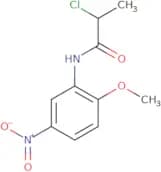
CAS:<p>Please enquire for more information about 2-Chloro-N-(4-chloro-3-nitrophenyl)propanamide including the price, delivery time and more detailed product information at the technical inquiry form on this page</p>Formula:C9H8Cl2N2O3Purity:Min. 95%Molecular weight:263.08 g/molN-(2-Methoxy-5-nitrophenyl)-2-chloropropanamide
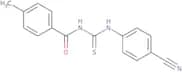
CAS:<p>Please enquire for more information about N-(2-Methoxy-5-nitrophenyl)-2-chloropropanamide including the price, delivery time and more detailed product information at the technical inquiry form on this page</p>Purity:Min. 95%1-(4-Nitrilophenyl)-3-(4-methylbenzoyl)thiourea
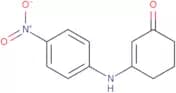
CAS:<p>Please enquire for more information about 1-(4-Nitrilophenyl)-3-(4-methylbenzoyl)thiourea including the price, delivery time and more detailed product information at the technical inquiry form on this page</p>Formula:C16H13N3OSPurity:Min. 95%Color and Shape:PowderMolecular weight:295.36 g/mol3-((4-nitrophenyl)amino)cyclohex-2-en-1-one
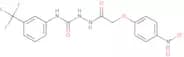
CAS:<p>Please enquire for more information about 3-((4-nitrophenyl)amino)cyclohex-2-en-1-one including the price, delivery time and more detailed product information at the technical inquiry form on this page</p>Formula:C12H12N2O3Purity:Min. 95%Color and Shape:PowderMolecular weight:232.24 g/mol1-(2-(4-Nitrophenoxy)acetyl)-4-(3-(trifluoromethyl)phenyl)semicarbazide
CAS:<p>Please enquire for more information about 1-(2-(4-Nitrophenoxy)acetyl)-4-(3-(trifluoromethyl)phenyl)semicarbazide including the price, delivery time and more detailed product information at the technical inquiry form on this page</p>Purity:Min. 95%2-(((2-methoxy-4-nitrophenyl)amino)methylene)-5,5-dimethylcyclohexane-1,3-dione
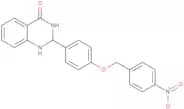
CAS:<p>Please enquire for more information about 2-(((2-methoxy-4-nitrophenyl)amino)methylene)-5,5-dimethylcyclohexane-1,3-dione including the price, delivery time and more detailed product information at the technical inquiry form on this page</p>Purity:Min. 95%2-(4-((4-Nitrophenyl)methoxy)phenyl)-1,2,3-trihydroquinazolin-4-one
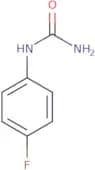
CAS:<p>Please enquire for more information about 2-(4-((4-Nitrophenyl)methoxy)phenyl)-1,2,3-trihydroquinazolin-4-one including the price, delivery time and more detailed product information at the technical inquiry form on this page</p>Formula:C21H17N3O4Purity:Min. 95%Color and Shape:PowderMolecular weight:375.38 g/mol(4-Fluorophenyl)urea
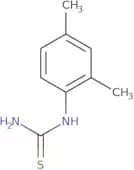
CAS:<p>The descriptors for (4-Fluorophenyl)urea are correlating with the parameters, coefficients, and constants of the regression equation. The topological optimality is obtained by using the values of the coefficients and constants. The hydrolysis of (4-Fluorophenyl)urea is correlated with the phenylureas and molecular structures. The pesticides have a correlation with both (4-Fluorophenyl)urea and phenylureas. This product can be used as an insecticide or herbicide.</p>Formula:C7H7FN2OPurity:Min. 95%Color and Shape:PowderMolecular weight:154.14 g/mol2,4-Dimethylphenylthiourea
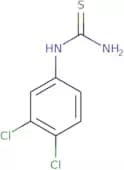
CAS:<p>2,4-Dimethylphenylthiourea (2,4-DMPT) is a lead compound that activates the μ-opioid receptor. It has been shown to be an effective analgesic in animal models of pain and has been used in screening for potential analgesics. 2,4-DMPT appears to activate the μ-opioid receptors by a structural modification rather than a conformational change. It is also an antagonist of the μ-opioid receptor and can reverse the effects of morphine in animal studies. 2,4-DMPT also has antinociceptive properties in mice and exhibits naloxone-reversible effects on tail flick latency.</p>Formula:C9H12N2SPurity:Min. 95%Color and Shape:PowderMolecular weight:180.27 g/mol3,4-Dichlorophenylthiourea
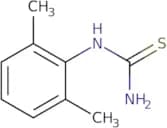
CAS:<p>3,4-Dichlorophenylthiourea is a membrane transport inhibitor that reduces the transport of chloride ions across the cell membrane. It has been shown to be effective in preventing the damage caused by glutamate and other excitotoxins. 3,4-Dichlorophenylthiourea has been shown to cause neurological damage in rats and mice. This chemical also showed an inhibitory effect on glutamate dehydrogenase from rat red cells and human erythrocytes. 3,4-Dichlorophenylthiourea has been shown to cause toxicity in humans, including bladder cancer and blood group incompatibility.</p>Purity:Min. 95%2,6-Dimethylphenylthiourea
CAS:<p>2,6-Dimethylphenylthiourea (DMPT) is a chemical that is used in the preparation of chromatographic and spectrometric standards. It is also used as an affinity reagent for the determination of microsomal cytochrome P450 content in horse and rat liver microsomes. DMPT can be monitored by reaction monitoring with a gas chromatograph or mass spectrometer. The flow rate of the mobile phase is used to monitor its concentration. DMPT reacts with acetonitrile to form 2,6-dimethylphenylthioacetic acid (DMPA), which can be detected by electron ionization or chemical ionization. DMPT has been shown to mediate the formation of covalent adducts with glutathione, protein sulfhydryls, and thiolated nucleosides.</p>Formula:C9H12N2SPurity:Min. 95%Color and Shape:PowderMolecular weight:180.27 g/mol

![1'H-Spiro[cyclopentane-1,2'-quinazolin]-4'(3'H)-one](/_next/image/?url=https%3A%2Fstatic.cymitquimica.com%2Fproducts%2F3D%2Fthumb-webp%2FFS125569.webp&w=3840&q=75)