Pharmaceutical Standards
Pharmaceutical standards are a comprehensive set of reference materials essential for ensuring the safety, efficacy, and quality of pharmaceutical products. This category includes standards for active pharmaceutical ingredients (APIs), which are the core components responsible for therapeutic effects. Additionally, it covers compounds and metabolites relevant to both the pharmaceutical and veterinary industries, providing benchmarks for the accurate measurement and analysis of these substances. Nitrosamine control standards are crucial for detecting and mitigating potentially harmful nitrosamines in drug formulations. Toxicology standards help assess the safety and potential adverse effects of pharmaceutical compounds. Furthermore, enzyme activators and inhibitors standards are vital for research and development, enabling precise studies of biochemical pathways and drug mechanisms. These pharmaceutical standards are indispensable tools for regulatory compliance, quality control, and research, ensuring that pharmaceutical products meet stringent safety and effectiveness criteria.
Subcategories of "Pharmaceutical Standards"
- APIs for research and impurities(273,463 products)
- Enzyme Activators and Inhibitors(2,827 products)
- Nitrosamines(2,605 products)
- Pharmaceutical and Veterinary Compounds and Metabolites(2,577 products)
- Toxicology(13,652 products)
Found 7836 products of "Pharmaceutical Standards"
Sort by
Purity (%)
0
100
|
0
|
50
|
90
|
95
|
100
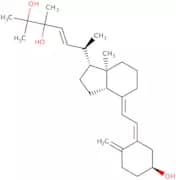
24,25-Dihydroxy vitamin D2
CAS:<p>24,25-Dihydroxy vitamin D2 is a form of vitamin D that has been shown to be effective in the treatment of biliary cirrhosis and neonatal cirrhosis. It is synthesized from 25-hydroxyvitamin D3 by the enzyme 24-hydroxylase. The assay sensitivity for this compound is 10 ng/mL. This form of vitamin D has been shown to have an effect on serum bilirubin levels in patients with biliary cirrhosis. 24,25-Dihydroxy vitamin D2 can also be used to treat patients with chronic renal failure who are deficient in vitamin D3. The plasma concentration of 24,25-dihydroxyvitamin D2 is lower than that of 25-hydroxyvitamin D2 and 1,25-dihydroxyvitamin D2 because it is more rapidly metabolized by the liver.</p>Formula:C28H44O3Purity:Min. 98 Area-%Color and Shape:PowderMolecular weight:428.65 g/mol4-Nitrophenol
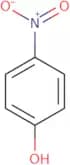
CAS:<p>4-Nitrophenol is a chemical compound that is used in wastewater treatment to remove iron and copper ions. 4-Nitrophenol has been shown to catalyze the oxidation of picolinic acid by copper chloride, forming oxalic acid. The redox potential of 4-nitrophenol is -0.53 V, which makes it a suitable electron acceptor for the reaction. The reaction mechanism of this process involves the formation of a nitroso radical intermediate, which reacts with copper ions to form copper nitroso complexes and then reacts with oxygen to form hydroxylamine radicals. This reaction can also be followed using fluorescence probe measurements or electrochemical impedance spectroscopy (EIS).</p>Formula:C6H5NO3Purity:Min. 95%Color and Shape:PowderMolecular weight:139.11 g/molδ9,11-Dehydro-17b-estradiol 17-valerate
CAS:Controlled Product<p>Please enquire for more information about Delta9,11-Dehydro-17b-estradiol 17-valerate including the price, delivery time and more detailed product information at the technical inquiry form on this page</p>Formula:C23H30O3Purity:Min. 96 Area-%Molecular weight:354.48 g/molAmoxicillin dimer tri-sodium salt (penicilloic acid form) - mixture of diastereomers
<p>Please enquire for more information about Amoxicillin dimer tri-sodium salt (penicilloic acid form) - mixture of diastereomers including the price, delivery time and more detailed product information at the technical inquiry form on this page</p>Formula:C32H27N6Na3O11S2Purity:Min. 95%Molecular weight:804.69 g/mol3-O-Methyl norbuprenorphine
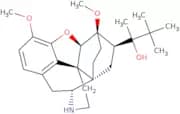
CAS:Controlled Product<p>Please enquire for more information about 3-O-Methyl norbuprenorphine including the price, delivery time and more detailed product information at the technical inquiry form on this page</p>Formula:C26H37NO4Purity:Min. 95%Molecular weight:427.58 g/molMethyl-1-naphthalenemethylamine
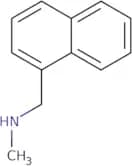
CAS:<p>Methyl-1-naphthalenemethylamine is a synthetic drug that is used as an anti-fungal agent. It is used to treat dermatophytosis and onychomycosis caused by Trichophyton mentagrophytes. Methyl-1-naphthalenemethylamine has been shown to have a clinical response in patients with the skin condition tinea pedis. This drug inhibits the growth of fungi by inhibiting cell membrane synthesis, which leads to cell death. Methyl-1-naphthalenemethylamine has been shown to be effective against Trichophyton mentagrophytes in plasma samples from patients with tinea pedis who were treated with this drug. The effectiveness of this drug may be due to its ability to inhibit the synthesis of polysaccharides, proteins, and lipids in the fungal cell membrane, or its ability to inhibit protein synthesis by binding with ribos</p>Formula:C12H13NPurity:Min. 95%Color and Shape:Clear LiquidMolecular weight:171.24 g/molFluorescein-sp-biotin
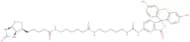
CAS:<p>Fluorescein-sp-biotin is a biotinylated derivative of fluorescein. The conjugate is used to measure the amount of free d-biotin in samples. Fluorescein-sp-biotin binds to streptavidin, which has a high affinity for biotin, and then emits light at an excitation wavelength of 488 nm when excited with a laser. The intensity of the emitted light is proportional to the concentration of free d-biotin in the sample. The following product descriptions have been generated from this information: Rifapentine Rifapentine is an anti-tuberculosis drug that belongs to the class of rifamycins. It is the most active of the rifamycins for the treatment of tuberculosis. Rifapentine inhibits bacterial growth by binding to DNA-dependent RNA polymerase, thereby preventing transcription and replication.</p>Formula:C42H50N6O8S2Purity:Min. 95%Molecular weight:831.01 g/molTriethyl Orthovalerate
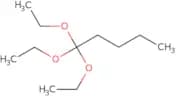
CAS:<p>Triethyl orthovalerate is an amide with a cyclic structure. It is used as a model protein for the study of the effects of structural modifications on protein stability and function. Triethyl orthovalerate has been shown to be an inhibitor of prostaglandin synthesis in human cells, which may be due to its ability to inhibit the enzyme amidase.</p>Formula:C11H24O3Purity:Min. 95%Molecular weight:204.31 g/molall-trans-Retro retinol
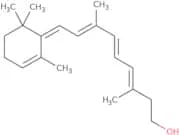
CAS:<p>All-trans-retinol is a form of vitamin A that is found in many animal tissues and some plant oils. It acts as a hormone, binding to the retinoic acid receptors (RARs) in the nucleus and activating gene transcription. All-trans-retinol has been shown to be effective against hyperproliferative diseases such as cancer, both by inducing apoptosis and by inhibiting cell growth. All-trans-retinol may also have therapeutic potential for other diseases, such as intestinal cancers and prostatic hypertrophy. This compound has been shown to induce messenger RNA (mRNA) production in cells that express RARs.</p>Formula:C20H30OPurity:Min. 95%Molecular weight:286.45 g/molCholesterol Isobutyl Carbonate
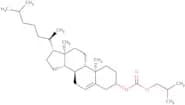
CAS:Controlled Product<p>Cholesterol Isobutyl Carbonate is a high melting organic solvent that has been used to prepare microcapsules. It can be used as a coating material for the preparation of inorganic particles, and it has been shown to have the ability to modify molecules by attaching functional groups. The diameter of cholesterol iso butyl carbonate particles is around 100 nm.</p>Purity:Min. 95%rec Human Growth Hormone (expressed in E.coli)
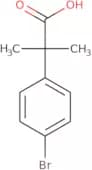
<p>Please enquire for more information about rec Human Growth Hormone (expressed in E.coli) including the price, delivery time and more detailed product information at the technical inquiry form on this page</p>Purity:Min. 95%2-(4-Bromophenyl)-2,2'-dimethylacetic acid
CAS:<p>2-Bromo-2-(4-bromophenyl)-2,2'-dimethylacetic acid (2bpd) is the sodium salt of 2-(4-bromophenyl)-2,2'-dimethylacetic acid. It is a metabolite of terfenadine and thionyl chloride. 2bpd has been shown to be an inhibitor of the histamine H1 receptor. This drug is also a brominated derivative of 2-amino-2-methyl-1-propanol, which has been shown to be an inhibitor of the histamine H1 receptor.</p>Formula:C10H11BrO2Purity:Min. 95%Molecular weight:243.1 g/mol3-Cyanopropionic acid methyl ester
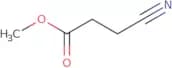
CAS:<p>3-Cyanopropionic acid methyl ester is a compound that belongs to the class of aliphatic carboxylic acids. It is an intermediate in the production of adiponitrile and acrylonitrile. This compound is used as a feedstock for the manufacture of vinylene, which can be used to produce c1-6 alkyl. 3-Cyanopropionic acid methyl ester can be produced from propylene and hydrogen cyanide in a high salt, activated reaction system. It has been shown that this compound may have metabolic disorders due to its ability to inhibit fatty acid oxidation and increase viscosity. 3-Cyanopropionic acid methyl ester is a colorless liquid at room temperature with a boiling point of 154°C and a molecular weight of 98.14 g/mol.</p>Formula:C5H7NO2Purity:Min. 95%Color and Shape:Clear LiquidMolecular weight:113.11 g/mol2,6-Dichloro-5-nitropyrimidin-4-amine
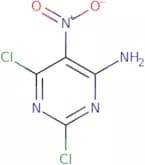
CAS:<p>2,6-Dichloro-5-nitropyrimidin-4-amine is a chlorinating agent that reacts with aliphatic and aromatic amines to form substituted pyrimidines. The substitution pattern of the product depends on the regioselectivity of the reaction. 2,6-Dichloro-5-nitropyrimidin-4-amine is one of the few chlorinating agents that react with propylamine. Substitution at position 2 of the purine ring has been found to be more selective than substitution at position 6. The 2,6-dichloropyrimidine can also be used as a nitro group source in chemical synthesis or as an intermediate in production of other compounds.</p>Formula:C4H2Cl2N4O2Purity:Min. 95%Color and Shape:SolidMolecular weight:208.99 g/molTetramethylurea
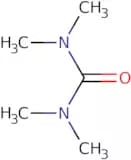
CAS:<p>Tetramethylurea is a versatile compound that has various applications in different fields. It is commonly used as a monophosphate donor in biochemical reactions and as a reagent for the synthesis of L-sorbose and histidine. In addition, tetramethylurea is employed in the production of herbicides, as well as in the synthesis of zirconium oxide nanoparticles.</p>Formula:C5H12N2OPurity:Min. 95%Molecular weight:116.16 g/mol4b-Hydroxy cholesterol
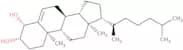
CAS:Controlled Product<p>4b-Hydroxy cholesterol is a sterol that is found in human serum and rat liver microsomes. It has been shown to be a potent inducer of CYP3A4, which is an important enzyme in the metabolism of many drugs. 4b-Hydroxy cholesterol has also been shown to induce transcriptional regulation by binding to the sterol regulatory element binding protein (SREBP) and activating it. This activation results in the increased production of cholesterol and other sterols by upregulating transcription of genes that are involved in cholesterol synthesis. 4b-Hydoxy cholesterol has been shown to have anti-inflammatory properties due to its inhibition of triclosan and clinical studies show that it can reduce serum levels of total cholesterol and low density lipoprotein (LDL) cholesterol in women.</p>Formula:C27H46O2Purity:Min. 95%Molecular weight:402.65 g/mol4,5-Dihydro-19-nortestosterone-17b-decanoate
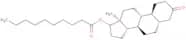
CAS:Controlled Product<p>Please enquire for more information about 4,5-Dihydro-19-nortestosterone-17b-decanoate including the price, delivery time and more detailed product information at the technical inquiry form on this page</p>Formula:C28H46O3Purity:Min. 95%Molecular weight:430.66 g/mol5α-Pregnan-20β-Ol-3-one
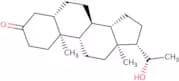
CAS:Controlled Product<p>Please enquire for more information about 5alpha-Pregnan-20beta-Ol-3-one including the price, delivery time and more detailed product information at the technical inquiry form on this page</p>Purity:Min. 95%1-Hexyl-3-(1-naphthoyl)pyrrole
CAS:Controlled Product<p>Please enquire for more information about 1-Hexyl-3-(1-naphthoyl)pyrrole including the price, delivery time and more detailed product information at the technical inquiry form on this page</p>Formula:C21H23NOPurity:Min. 95%Molecular weight:305.41 g/molEstrone 3-valerate
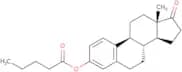
CAS:Controlled Product<p>Please enquire for more information about Estrone 3-valerate including the price, delivery time and more detailed product information at the technical inquiry form on this page</p>Formula:C23H30O3Purity:Min. 95%Molecular weight:354.48 g/mol