Pharmaceutical Standards
Pharmaceutical standards are a comprehensive set of reference materials essential for ensuring the safety, efficacy, and quality of pharmaceutical products. This category includes standards for active pharmaceutical ingredients (APIs), which are the core components responsible for therapeutic effects. Additionally, it covers compounds and metabolites relevant to both the pharmaceutical and veterinary industries, providing benchmarks for the accurate measurement and analysis of these substances. Nitrosamine control standards are crucial for detecting and mitigating potentially harmful nitrosamines in drug formulations. Toxicology standards help assess the safety and potential adverse effects of pharmaceutical compounds. Furthermore, enzyme activators and inhibitors standards are vital for research and development, enabling precise studies of biochemical pathways and drug mechanisms. These pharmaceutical standards are indispensable tools for regulatory compliance, quality control, and research, ensuring that pharmaceutical products meet stringent safety and effectiveness criteria.
Subcategories of "Pharmaceutical Standards"
- APIs for research and impurities(273,463 products)
- Enzyme Activators and Inhibitors(2,827 products)
- Nitrosamines(2,605 products)
- Pharmaceutical and Veterinary Compounds and Metabolites(2,577 products)
- Toxicology(13,652 products)
Found 7836 products of "Pharmaceutical Standards"
Sort by
Purity (%)
0
100
|
0
|
50
|
90
|
95
|
100
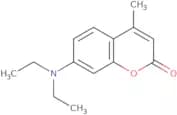
7-Diethylamino-4-methylcoumarin
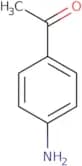
CAS:<p>7-Diethylamino-4-methylcoumarin is a fluorescence probe that can be used in applications such as the study of hydrogen bonding interactions. It is excited by laser light and emits a red-shifted fluorescent light. 7-Diethylamino-4-methylcoumarin is a hydroxyl group analogue of coumarin, which has been shown to have physiological effects on the liver cells. The absorption spectrum of 7-Diethylamino-4-methylcoumarin is sensitive to changes in pH and chemical stability. A decrease in pH increases the intensity of the emission while an increase in pH decreases the intensity of the emission. This compound can also be used to label nucleic acids during polymerase chain reactions (PCR) or for sample preparation before analysis using nuclear magnetic resonance spectroscopy (NMR).</p>Formula:C14H17NO2Purity:Min. 98 Area-%Color and Shape:PowderMolecular weight:231.29 g/mol4-Aminoacetophenone
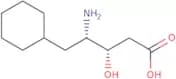
CAS:<p>4-Aminoacetophenone is an inhibitor of the enzyme acetylcholinesterase and it is used as an insecticide. It inhibits the enzyme by forming hydrogen bonding interactions with the active site. The inhibition of this enzyme leads to paralysis and death in insects. 4-Aminoacetophenone has been shown to have anti-cancer effects in vitro, which may be due to its ability to inhibit glycoside hydrolases and amine oxidases that are involved in cancer development. The compound also has a thermal expansion coefficient that is comparable to other polymers used in drug delivery systems.</p>Formula:C8H9NOColor and Shape:Slightly Yellow PowderMolecular weight:135.16 g/molCyclohexylstatine
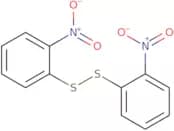
CAS:<p>Cyclohexylstatine is a glycopeptide antibiotic that inhibits the synthesis of collagen in animals and humans. It also has been shown to have anticancer activity. Cyclohexylstatine works by inhibiting the biosynthesis of collagen, which is an important component of skin, ligaments, and tendons. The molecule was synthesized in 1975 and has been used as a pharmaceutical agent since 1980. Cyclohexylstatine is the first anti-collagen drug to be developed for use in humans. It has been shown to be effective against autoimmune diseases such as rheumatoid arthritis but not against cancer cells or bacteria. Cyclohexylstatine binds to the zymogen form of collagenase and inhibits its activity. This inhibition leads to an accumulation of polysaccharides in the extracellular matrix that are converted into oligosaccharides by glycosidases present in tissue fluids. These oligosaccharides inhibit collagen synthesis by binding to</p>Formula:C11H21NO3Purity:Min. 95%Molecular weight:215.29 g/molBis(2-nitrophenyl) disulfide
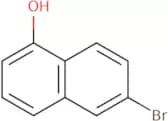
CAS:<p>Bis(2-nitrophenyl) disulfide is an organic solvent that has a wide range of potential uses. It is a useful reagent for the synthesis of amines, solutes, and other compounds in organic chemistry. Bis(2-nitrophenyl) disulfide can be used to form stable bonds between two different organic molecules by reacting with an electron-rich molecule such as amine or alkyne. This reaction forms a covalent bond between two molecules through the formation of a new bond between the sulfur atom and the carbon of one molecule and an electron-deficient molecule such as nitro or acetonitrile. Bis(2-nitrophenyl) disulfide reacts with chloride ions to form bis(chlorosulfonyl)disulfide, which can be used to synthesize chloroalkanes and fluorinated alkenes. Disulfides are also useful in metathesis reactions, which are reactions that involve the</p>Formula:C12H8N2O4S2Purity:Min. 95%Molecular weight:308.34 g/mol6-Bromonaphthalen-1-ol
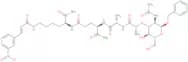
CAS:<p>6-Bromonaphthalen-1-ol is a compound that has shown antimicrobial and antifungal activity. It is the most potent of the naphthoxazines tested to date, with an MIC of 0.04 µg/ml against Escherichia coli. 6-Bromonaphthalen-1-ol was synthesized by reacting 1,2,4-trihydroxybenzene with bromine gas in the presence of mercuric chloride catalyst. The compound was hydrolyzed for elemental analysis and found to be C7H4BrO. Elemental analysis yielded a weight percentage of 71% carbon, 13% hydrogen, 3% bromine, and 12% oxygen. The x-ray diffraction pattern showed peaks at 2θ values of 22.3° (100), 26.5° (101), 33.7° (102), 40° (104), 44° (105) and 62°</p>Formula:C10H7BrOPurity:Min. 95%Molecular weight:223.07 g/molAc-α-benzyl-muramyl-Ala-D-Glu(Lys(trans-(3-nitrocinnamoyl))-NH2)-NH2
CAS:<p>Please enquire for more information about Ac-alpha-benzyl-muramyl-Ala-D-Glu(Lys(trans-(3-nitrocinnamoyl))-NH2)-NH2 including the price, delivery time and more detailed product information at the technical inquiry form on this page</p>Formula:C41H56N8O14Purity:Min. 95%Molecular weight:884.93 g/molD-Aspartic acid
CAS:<p>D-Aspartic acid is a basic protein that binds to glutamate. It has been shown to be effective in the prevention and treatment of bone cancer in mice. D-Aspartic acid also has an inhibitory effect on the production of estradiol benzoate, which is an enzyme responsible for bone resorption. D-Aspartic acid may also be used as a dietary supplement for bowel disease and bowel motility.<br>D-Aspartic acid has been shown to have receptor activity in humans and to have physiological effects on the locomotor activity of rats. The complex enzyme d-aspartate oxidase can be inhibited by d-aspartic acid.</p>Formula:C4H7NO4Purity:Min. 95%Color and Shape:White PowderMolecular weight:133.1 g/molN-Acetyl-[Cys4,10, D-Phe7]-α-Melanocyte Stimulating Hormone Fragment 4-13
CAS:<p>Please enquire for more information about N-Acetyl-[Cys4,10, D-Phe7]-alpha-Melanocyte Stimulating Hormone Fragment 4-13 including the price, delivery time and more detailed product information at the technical inquiry form on this page</p>Formula:C61H86N18O13S2Purity:Min. 95%Molecular weight:1,343.58 g/molAdipokinetic Hormone G (Gryllus bimaculatus)
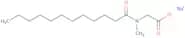
CAS:<p>Adipokinetic hormone G is a peptide found in the hemolymph of Gryllus bimaculatus, a species of cricket. It has been shown to have anti-lipemic and antilipaemic effects in animal models. Adipokinetic hormone G can be detected by bioassay and matrix-assisted laser desorption/ionization (MALDI) mass spectrometry.</p>Formula:C43H57N11O12Purity:Min. 95%Molecular weight:919.98 g/molSodium N-Lauroylsarcosinate - 30% solution
CAS:<p>Sodium N-lauroylsarcosinate is a chemical compound that is used in the production of sodium salts. It has high resistance to biological samples and is soluble in water, organic solvents, and other chemicals. It can be used to measure biochemical properties, such as reaction solution polymerase chain reaction (PCR) or electrochemical impedance spectroscopy (EIS). Sodium N-lauroylsarcosinate can also be used for wastewater treatment and water permeability. It has been used as an analytical method for proteins, peptides, amino acids, and carbohydrates. It has been shown to have biological properties on human serum.</p>Formula:C15H28NNaO3Color and Shape:Clear LiquidMolecular weight:293.38 g/molPalmitoleic acid methyl ester
CAS:<p>Palmitoleic acid methyl ester is a bio-based chemical that can be used in wastewater treatment. It has been shown to inhibit the activity of lipase, an enzyme that catalyzes the hydrolysis of triglycerides, and may be useful for the removal of fatty acids from wastewater. Palmitoleic acid methyl ester has a phase transition temperature of about 120°C and a thermal expansion coefficient similar to polyethylene. This product was found to be a good solid catalyst for the production of nitric oxide from nitrogen atoms. The antioxidant vitamins C and E were found to have synergistic effects with palmitoleic acid methyl ester. This product also has antimicrobial properties against infectious diseases such as tuberculosis, which may be due to its ability to inhibit protein synthesis by disrupting ribosomal function.</p>Formula:C17H32O2Purity:Min. 95%Molecular weight:268.43 g/molBenzoylmesaconine
CAS:<p>Benzoylmesaconine is an alkaloid that is extracted from the roots of aconite plants. It has been shown to have a broad spectrum of antimicrobial activity against Gram-positive and Gram-negative bacteria, fungi, and viruses. Benzoylmesaconine has also been shown to be effective against infectious diseases in mice when used at low doses. The mechanism of action for benzoylmesaconine is not well understood but may involve inhibition of DNA synthesis or cell division.</p>Formula:C31H43NO10Purity:Min. 98 Area-%Color and Shape:PowderMolecular weight:589.67 g/molPolycaprolactone
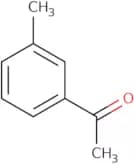
CAS:<p>Polycaprolactone is a biodegradable synthetic polymer that has been shown to have antimicrobial properties. Polycaprolactone has been used in wastewater treatment and has shown to inhibit the growth of histological analysis, vivo model, vitro assays, polyvinyl, collagen, carcinoma cell lines, tissue culture, ethylene diamine, water vapor, cell culture and hydrogen bond. In studies with wild-type strains of bacteria such as Escherichia coli and Staphylococcus aureus, it showed activity against both Gram-positive and Gram-negative bacteria. It also showed activity against the bacterium that causes tuberculosis (M. tuberculosis).</p>Formula:(C6H10O2)nPurity:Min. 95%3'-Methylacetophenone
CAS:<p>3'-Methylacetophenone is an organic compound that belongs to the class of phenols. It has a number of reactions with other chemicals, including hydrogen chloride. The reaction between 3'-methylacetophenone and hydrogen chloride is an example of a nucleophilic substitution reaction. The rate of this reaction increases as the temperature rises, but slows down when the concentration of chloride ions increases. Kinetic studies have shown that the activation energy for this process is 12 kcal/mol, which is in agreement with previous results obtained from analytical methods and preparative experiments.</p>Formula:C9H10OPurity:Min. 95%Molecular weight:134.18 g/molTyrosinase (206-214) (human) acetate salt
CAS:<p>H-AFLPWHRLF-OH peptide, corresponding to amino acids 206-214 of human Tyrosinase. The peptide is supplied as an acetate salt.</p>Formula:C61H83N15O10Purity:Min. 95%Molecular weight:1,186.41 g/mol3,3'-Dichlorodiphenylacetylene
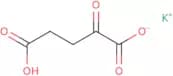
CAS:<p>3,3'-Dichlorodiphenylacetylene is a versatile building block that is used in the synthesis of complex compounds. It has been used as a reagent and as a speciality chemical for research purposes. This chemical can be used as a useful building block for the synthesis of other compounds, or it can be reacted with other compounds to form new compounds. 3,3'-Dichlorodiphenylacetylene is also an intermediate in organic syntheses and has been shown to react with many different types of molecules.</p>Formula:C14H8Cl2Purity:Min. 95%Color and Shape:PowderMolecular weight:247.12 g/molα-Ketoglutaric acid potassium
CAS:<p>Intermediate in the Krebs cycle; nitrogen transporter</p>Formula:C5H5O5KPurity:Min. 98 Area-%Color and Shape:PowderMolecular weight:184.19 g/mol2,2'-Biphenyldicarboxylic acid anhydride - 70%
CAS:<p>2,2'-Biphenyldicarboxylic acid anhydride is a diphenic anhydride that has a carboxylate group on one end and a phenyl group on the other. The nitrogen atoms in this molecule are part of the intramolecular hydrogen bonds that stabilize the molecule. 2,2'-Biphenyldicarboxylic acid anhydride is used in wastewater treatment as it reacts with amines to form ammonium salts. This process also releases hydrogen, which can be used for fuel cells or light emission. It is also used to produce other compounds such as malonic acid and phenylacetic acid.</p>Formula:C14H8O3Purity:(%) Min. 70%Color and Shape:Brown Beige PowderMolecular weight:224.21 g/molAMCA-Glu-Glu-Lys-Pro-Ile-Ser-Phe-Phe-Arg-Leu-Gly-Lys(biotinyl)-NH2
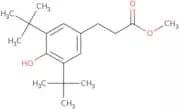
CAS:<p>Please enquire for more information about AMCA-Glu-Glu-Lys-Pro-Ile-Ser-Phe-Phe-Arg-Leu-Gly-Lys(biotinyl)-NH2 including the price, delivery time and more detailed product information at the technical inquiry form on this page</p>Formula:C90H131N21O22SPurity:Min. 95%Molecular weight:1,891.2 g/mol3,5-di-tert-Butyl-4-hydroxyphenylpropionic acid methyl ester
CAS:<p>3,5-di-tert-butyl-4-hydroxyphenylpropionic acid methyl ester is a compound that has been used as an analytical reagent and as a precursor to other chemicals. It is a white solid with a melting point of about 40°C. 3,5-di-tert-butyl-4-hydroxyphenylpropionic acid methyl ester is soluble in hexane, benzene, and diethylether. It also reacts with fatty acids to produce polymers. 3,5-di-tert-butyl-4-hydroxyphenylpropionic acid methyl ester has been shown to be an effective antibacterial agent against Gram negative bacteria such as Escherichia coli and Pseudomonas aeruginosa.</p>Formula:C18H28O3Purity:90%Color and Shape:Off-White PowderMolecular weight:292.41 g/mol


![N-Acetyl-[Cys4,10, D-Phe7]-α-Melanocyte Stimulating Hormone Fragment 4-13](/_next/image/?url=https%3A%2Fstatic.cymitquimica.com%2Fproducts%2F3D%2Fthumb-webp%2FFA110402.webp&w=3840&q=75)