Pharmaceutical Standards
Pharmaceutical standards are a comprehensive set of reference materials essential for ensuring the safety, efficacy, and quality of pharmaceutical products. This category includes standards for active pharmaceutical ingredients (APIs), which are the core components responsible for therapeutic effects. Additionally, it covers compounds and metabolites relevant to both the pharmaceutical and veterinary industries, providing benchmarks for the accurate measurement and analysis of these substances. Nitrosamine control standards are crucial for detecting and mitigating potentially harmful nitrosamines in drug formulations. Toxicology standards help assess the safety and potential adverse effects of pharmaceutical compounds. Furthermore, enzyme activators and inhibitors standards are vital for research and development, enabling precise studies of biochemical pathways and drug mechanisms. These pharmaceutical standards are indispensable tools for regulatory compliance, quality control, and research, ensuring that pharmaceutical products meet stringent safety and effectiveness criteria.
Subcategories of "Pharmaceutical Standards"
- APIs for research and impurities(273,125 products)
- Enzyme Activators and Inhibitors(2,827 products)
- Nitrosamines(2,608 products)
- Pharmaceutical and Veterinary Compounds and Metabolites(2,577 products)
- Toxicology(13,654 products)
Found 7836 products of "Pharmaceutical Standards"
Sort by
Purity (%)
0
100
|
0
|
50
|
90
|
95
|
100
L-Buthionine-(S,R)-sulfoximine
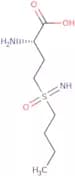
CAS:<p>L-Buthionine-(S,R)-sulfoximine (BSO) is a glutathione-depleting agent that causes cell death by interrupting mitochondrial functions. BSO has been shown to be reactive with covalent linkages in polymer compositions and enzyme activities, which results in the inhibition of human osteosarcoma cells. It also has pro-apoptotic properties that have been demonstrated using multivariate logistic regression on taxol toxicity studies. Resistance to BSO is rare, but has been observed in breast cancer cells. The synergistic effect of BSO and other drugs, such as chemotherapeutic agents, is not well understood.</p>Formula:C8H18N2O3SPurity:Min. 97 Area-%Color and Shape:White PowderMolecular weight:222.31 g/molThymosin α1 trifluoroacetate salt
CAS:<p>Please enquire for more information about Thymosin alpha1 trifluoroacetate salt including the price, delivery time and more detailed product information at the technical inquiry form on this page</p>Formula:C129H215N33O55·xC2HF3O2Purity:Min. 95%Molecular weight:3,108.28 g/mol(S,S)-2,2'-Isopropylidenebis(4-phenyl-2-oxazoline)
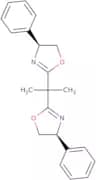
CAS:<p>(S,S)-2,2'-Isopropylidenebis(4-phenyl-2-oxazoline) is an asymmetric ligand that is chiral and has been shown to be useful in the preparation of enantiopure alcohols. The compound has been used as a catalyst to prepare aldehydes and ketones. It also has been used in reactions involving dehydration or alkylation. (S,S)-2,2'-Isopropylidenebis(4-phenyl-2-oxazoline) can be synthesized by reacting molybdenum with an alcohol and adding a base. This reaction produces the desired product with high selectivity, which is due to its chirality.</p>Formula:C21H22N2O2Purity:Min. 95%Color and Shape:Colourless Or White To Yellow Solid Or Liquid (May Vary)Molecular weight:334.41 g/molAcetyl-Pepstatin Ac-Val-Val-Sta-Ala-Sta-OH
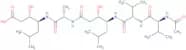
CAS:<p>Acetyl-Pepstatin is a protein data inhibitor that binds to the active site of enzymes, inhibiting their function. Acetyl-pepstatin has been shown to inhibit cathepsin D, chymotrypsin, and trypsin. It also inhibits the activity of proteases in the stomach and intestinal tract. Acetyl-Pepstatin is used as an anti-inflammatory drug for the treatment of chronic obstructive pulmonary disease (COPD) and congestive heart failure (CHF). The inhibition of these enzymes reduces inflammation by preventing the activation of inflammatory cytokines. It also prevents collagen from being degraded by proteases, which leads to decreased degradation of cartilage by chondrocytes. This drug's mechanism is similar to that of acetylsalicylic acid (aspirin), in that it inhibits prostaglandin synthesis.br></p>Formula:C31H57N5O9Purity:Min. 95%Molecular weight:643.81 g/mol1-(2,4-Dichlorobenzoyl)-2-(1-naphthoyl)hydrazine
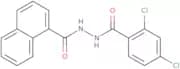
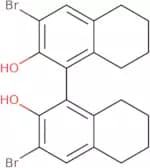
CAS:<p>Please enquire for more information about 1-(2,4-Dichlorobenzoyl)-2-(1-naphthoyl)hydrazine including the price, delivery time and more detailed product information at the technical inquiry form on this page</p>Formula:C18H12Cl2N2O2Purity:Min. 95%Molecular weight:359.21 g/mol(S)-3,3'-Dibromo-5,5',6,6',7,7',8,8'-octahydro-1,1'-binaphthalene-2,2'-diol
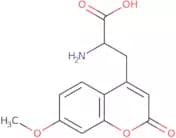
CAS:<p>(S)-3,3'-Dibromo-5,5',6,6',7,7',8,8'-octahydro-1,1'-binaphthalene-2,2'-diol is a synthetic compound that has been prepared by a Diels-Alder reaction. It is used as an asymmetric synthesis catalyst for the production of optically active compounds. The ligands are catalysts for the reaction and can be easily replaced with different ligands to produce different products. This compound has been researched for its potential use in the production of pharmaceuticals and other chemicals.</p>Formula:C20H20Br2O2Purity:Min. 95%Color and Shape:White To Yellow SolidMolecular weight:452.18 g/molH-β-(7-Methoxycoumarin-4-yl)-Ala-OH
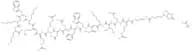
CAS:<p>Please enquire for more information about H-beta-(7-Methoxycoumarin-4-yl)-Ala-OH including the price, delivery time and more detailed product information at the technical inquiry form on this page</p>Formula:C13H13NO5Purity:Min. 95%Molecular weight:263.25 g/molBiotinyl-5-aminopentanoyl-Antennapedia Homeobox (43-58) amide trifluoroacetate salt
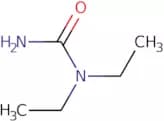
CAS:<p>Please enquire for more information about Biotinyl-5-aminopentanoyl-Antennapedia Homeobox (43-58) amide trifluoroacetate salt including the price, delivery time and more detailed product information at the technical inquiry form on this page</p>Formula:C119H192N38O22S2Purity:Min. 95%Molecular weight:2,571.17 g/mol1,1-Diethylurea
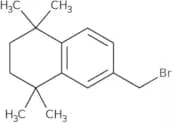
CAS:<p>1,1-Diethylurea is a 5-nitrosalicylic acid amide derivative. It is used as a reagent to synthesize other chemicals, such as 3,5-dinitrosalicylic acid and N-acetyl-2,6-diaminopurine. The reaction intermediates of this compound are chloride and liquid chromatograph with azides and quinoline derivatives. The molecular modeling and reaction products of 1,1-diethylurea are organic solution and pharmaceutical preparations. Fatty acids can be used to manufacture this product.</p>Formula:C5H12N2OPurity:Min. 95%Molecular weight:116.16 g/mol6-(Bromomethyl)-1,1,4,4-tetramethyl-1,2,3,4-tetrahydronaphthalene
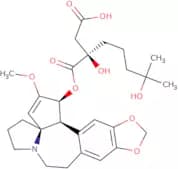
CAS:<p>Please enquire for more information about 6-(Bromomethyl)-1,1,4,4-tetramethyl-1,2,3,4-tetrahydronaphthalene including the price, delivery time and more detailed product information at the technical inquiry form on this page</p>Formula:C15H21BrPurity:Min. 80 Area-%Color and Shape:Clear LiquidMolecular weight:281.23 g/mol4'-Demethyl homoharringtonine
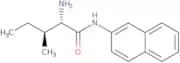
CAS:<p>Homoharringtonine is a natural drug that has been used for the treatment of cancer and other diseases. It is an antitumor agent that inhibits cell growth by affecting DNA synthesis, RNA synthesis, protein synthesis, and the activity of enzymes. Homoharringtonine also has antineoplastic effects and can be used to treat leukemia. Homoharringtonine binds to DNA in a ring-opening reaction with yields of up to 20%. This compound can be synthesized from phenylalanine and substituted with a trisubstituted benzene ring. It also catalyzes the conversion of an enamine into an iminium ion, which reacts with a second molecule of enamine to form a keto-enamine.</p>Formula:C28H37NO9Purity:Min. 95%Molecular weight:531.59 g/molL-Isoleucine β-naphthylamide
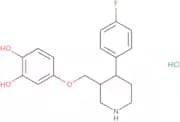
CAS:<p>L-Isoleucine beta-naphthylamide is an amide derivative of L-isoleucine and 2-naphthylamine, which are carboxylic acid derivatives. The condensation of these two substances leads to the formation of a new compound with a carboxy group and an amino group.</p>Formula:C16H20N2OPurity:Min. 95%Molecular weight:256.34 g/molDesmethylene paroxetine hydrochloride salt
CAS:<p>Please enquire for more information about Desmethylene paroxetine hydrochloride salt including the price, delivery time and more detailed product information at the technical inquiry form on this page</p>Formula:C18H21ClFNO3Purity:Min. 95%Molecular weight:353.82 g/mol(+/-)-Perillaldehyde
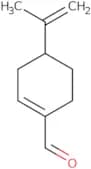
CAS:<p>Perillaldehyde is a natural compound that has been used in food and medicine for centuries. It is an antimicrobial agent with dextran sulfate, which is a sugar polymer that inhibits the growth of fungi and bacteria. Perillaldehyde also has been shown to inhibit the energy metabolism of microorganisms by decreasing ATP production. Perillaldehyde has also been shown to have genotoxic activity, as it can cause DNA strand breaks. This compound also causes oxidative stress in cells by reducing mitochondrial membrane potential and inducing reactive oxygen species (ROS). Perillaldehyde has acute toxicities, as it causes electrochemical impedance spectroscopy changes that indicate cell death.</p>Formula:C10H14OPurity:Min. 95%Color and Shape:PowderMolecular weight:150.22 g/mol3'-O-Benzyl-2'-Deoxy-5-Trifluoromethyluridine
CAS:<p>3'-O-Benzyl-2'-Deoxy-5-Trifluoromethyluridine (BDBMU) is a pyrimidine derivative that can be used as an antiviral drug. It inhibits the synthesis of DNA and RNA by inhibiting viral polymerase. BDBMU is a prodrug of uracil, which is converted to the active compound in tissues. The benzoylation reaction produces a fluorine atom at C5, which increases its potency. This drug has been shown to have minimal toxicity in tumor cells and has been used for the treatment of leukemia and other cancers.</p>Formula:C17H17F3N2O5Purity:Min. 95%Molecular weight:386.32 g/molTerflavin B
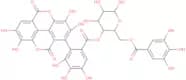
CAS:Controlled Product<p>Terflavin B is a natural product that has been shown to have autophagy-inducing properties. Terflavin B induces autophagy by increasing the metabolic rate and inhibiting the synthesis of proteins. This product has been shown to increase the cancer cell's sensitivity to chemotherapy, which may be due to its ability to induce reactive oxygen species. In addition, terflavin B can protect against drug interactions by inhibiting the activity of cytochrome P450 enzymes. It also inhibits the growth of resistant microorganisms such as chronic kidney and bladder infections. Terflavin B contains tannins and ellagitannins, which have antimicrobial activities that are effective against bacteria, yeast, and fungi.</p>Formula:C34H24O22Purity:Min 90%Color and Shape:PowderMolecular weight:784.54 g/molcis-Vitamin K1
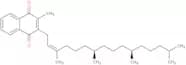
CAS:<p>Vitamin K is a fat-soluble vitamin that is required for blood coagulation. The major form of vitamin K in the body is the chemically similar menaquinone. Vitamin K1, also known as phylloquinone, is synthesized by plants and bacteria and can be found in green leafy vegetables, broccoli, cabbage, Brussels sprouts, kale, spinach, soybean oil and margarine. It has been shown to be an effective supplement for treating hypoprothrombinemia (low levels of prothrombin) in infants and tissues. The terminal half-life of vitamin K1 is about 20 days.</p>Formula:C31H46O2Purity:Min. 95%Molecular weight:450.7 g/mol1,7-Dimethylnaphthalene
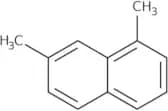
CAS:<p>1,7-Dimethylnaphthalene is a molecule that can be found in various aromatic hydrocarbons. It has been shown to have an inhibitory effect on the growth of cancer cells. 1,7-Dimethylnaphthalene is also used as a biological treatment in industrial chemicals. It is known to increase the rate of fatty acid biosynthesis and inhibits the production of certain enzymes that are involved in cancer development.</p>Formula:C12H12Purity:Min. 95%Molecular weight:156.22 g/moltrans,cis-2,6-Nonadienal
CAS:<p>Trans,cis-2,6-Nonadienal is a fatty acid derivative with an unsaturated 2,6-nonadiene structure. It is an inhibitor of the enzyme fatty acid synthase, which catalyzes the formation of long-chain polyunsaturated fatty acids. Trans,cis-2,6-Nonadienal has been shown to inhibit v79 cells and ester compounds that are used in analytical methods for measuring fatty acids. It is also able to inhibit lysine residues and it can be used as a reactive antioxidant system in mammalian cells. Trans,cis-2,6-Nonadienal has shown a profile of activities that includes inhibition at multiple endpoints involving noncompetitive inhibition as well as antioxidant activity.</p>Formula:C9H14OPurity:Min. 95%Color and Shape:Clear LiquidMolecular weight:138.21 g/mol4-Methyl-3-nitrophenyl isocyanate
CAS:<p>4-Methyl-3-nitrophenyl isocyanate (4MPN) is a chiral diisocyanate that can be used as an activated diisocyanate. 4MPN is prepared by the carbonylation of 3-nitrobenzaldehyde and xylene with hydrogen chloride in the presence of a catalyst. Impurities, such as chlorides or sulfurs, can be detected using surface methodology techniques. The feedstock for this compound is usually xylene, which has a high boiling point. This product contains reactive functional groups that can be used to modify surfaces and create polyurethane products.</p>Formula:C8H6N2O3Purity:Min. 95%Color and Shape:PowderMolecular weight:178.14 g/mol