Pharmaceutical Standards
Pharmaceutical standards are a comprehensive set of reference materials essential for ensuring the safety, efficacy, and quality of pharmaceutical products. This category includes standards for active pharmaceutical ingredients (APIs), which are the core components responsible for therapeutic effects. Additionally, it covers compounds and metabolites relevant to both the pharmaceutical and veterinary industries, providing benchmarks for the accurate measurement and analysis of these substances. Nitrosamine control standards are crucial for detecting and mitigating potentially harmful nitrosamines in drug formulations. Toxicology standards help assess the safety and potential adverse effects of pharmaceutical compounds. Furthermore, enzyme activators and inhibitors standards are vital for research and development, enabling precise studies of biochemical pathways and drug mechanisms. These pharmaceutical standards are indispensable tools for regulatory compliance, quality control, and research, ensuring that pharmaceutical products meet stringent safety and effectiveness criteria.
Subcategories of "Pharmaceutical Standards"
- APIs for research and impurities(274,823 products)
- Enzyme Activators and Inhibitors(2,827 products)
- Nitrosamines(2,605 products)
- Pharmaceutical and Veterinary Compounds and Metabolites(2,869 products)
- Toxicology(13,652 products)
Found 7836 products of "Pharmaceutical Standards"
Sort by
Purity (%)
0
100
|
0
|
50
|
90
|
95
|
100
Guanyl Urea-15N4 Hydrochloride
CAS:Controlled Product<p>Applications Labelled Guanylurea. It is used for detecting and determining Ni and its separation from Co and other metals.<br>References Jacob, K.D., et al.: J. Agric. Res., 28, 37 (1924),<br></p>Formula:C2H7ClN4OColor and Shape:NeatMolecular weight:142.53(-)-Citronellal
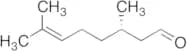
CAS:Controlled Product<p>Applications (-)-Citronellal is the s-isomer of (R)-Citronellal (C525025), a natural insect repellant. (-)-Citronellal (a monoterpene) was found to activate human olfactory receptor OR1A2 at the mRNA and protein levels resulting in reduced cell proliferation and reduced hepatocellular carcinoma progression.<br>References Massberg, D., et al.: Arch. Biochem. Biophys., 566, 100 (2015);<br></p>Formula:C10H18OColor and Shape:NeatMolecular weight:154.25Bis(2-chloroethyl)ether-4,4'-dihydroxydiphenyl Sulfone Copolymer
CAS:<p>Applications Bis(2-chloroethyl)ether-4,4'-dihydroxydiphenyl Sulfone Copolymer is used as a colour developer.<br></p>Formula:(C16H16O5S)nC12H10O4SColor and Shape:NeatMolecular weight:337.37Glycyl-L-tyrosine
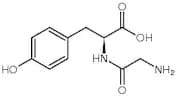
CAS:Controlled Product<p>Applications Glycyl-L-tyrosine<br></p>Formula:C11H14N2O4Color and Shape:NeatMolecular weight:238.24Triacetin-d9
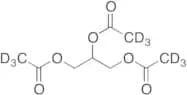
CAS:Controlled Product<p>Applications Triacetin-d5 is the isotope labelled analog of Triacetin (T720850); a compound used as a food additive and flavoring. Triacetin can be used as an excipient in pharmaceutical products where it is used as a humectant, a plasticizer, and as a solvent. Triacetin can also be used as a fuel additive as an antiknock agent.<br>References Mouret, A., et al.: Green Chem., 16 (1), 269 (2014); Snejdrova, E., et al.: Inter. J. Pharma., 458, 282 (2013)<br></p>Formula:C9D9H5O6Color and Shape:NeatMolecular weight:227.262,6-Dichlorophenylacetic Acid Methyl Ester
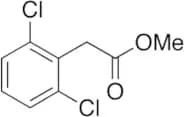
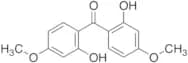
CAS:Controlled Product<p>Applications Intermediate in the preparation of Guanfacine<br></p>Formula:C9H8Cl2O2Color and Shape:NeatMolecular weight:219.062,2'-Dihydroxy-4,4'-dimethoxybenzophenone
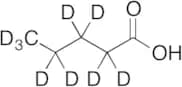
CAS:Controlled Product<p>Applications 2,2'-Dihydroxy-4,4'-dimethoxybenzophenone (cas# 131-54-4) is a useful research chemical.<br></p>Formula:C15H14O5Color and Shape:NeatMolecular weight:274.27Valeric Acid-d9
CAS:Controlled Product<p>Applications Valeric Acid-d9 is the isotope labelled analog of Valeric Acid which is used in biological studies of (D)-β-hydroxybutyrate which inhibits adipocyte lipolysis via the nicotinic acid receptor PUMA-G.<br> Not a dangerous good if item is equal to or less than 1g/ml and there is less than 100g/ml in the package<br>References Taggart, A.K.P., et al.: J. Bio. Chem., 280, 26649 (2005);<br></p>Formula:C5D9HO2Color and Shape:NeatMolecular weight:111.19Adenosine-15N
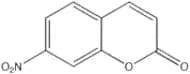
CAS:Controlled Product<p>Applications Nitrogen 15 labelled analogue of Adenosine (A280400), a purine nucleoside that plays an important role in various biochemical processes.<br>References Long, X., et al.: J. Pharmacol. Exper. Ther., 335, 781 (2010); Ham, M., et al.: J. Pharmacol. Exper. Ther., 335, 607 (2010)<br></p>Formula:C10H1315NN4O4Color and Shape:NeatMolecular weight:268.2357-Nitrocoumarin
CAS:Controlled Product<p>Applications Coumarin derivatives were made for trial as bacteriostats.<br></p>Formula:C9H5NO4Color and Shape:NeatMolecular weight:191.142'-Deoxyadenosine-15N1
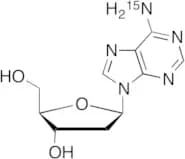
CAS:Controlled Product<p>Applications 2'-Deoxyadenosine-15N1 is an intermediate in the synthesis of 8-Oxo-2’-deoxyguanosine-13C,15N2 (O850252). A marker compound indicative of DNA damage associated with mutagenesis and carcinogenesis. Can induce differentiation of Friend murine erythroleukemia cells in vitro.<br>References Ueda, T., et al.: Chem. Pharm. Bull., 26, 2122 (1978), Jiang, F., et al.: Nature, 183, 382 (1996),<br></p>Formula:C10H1315NN4O3Color and Shape:NeatMolecular weight:252.2351, N2-Etheno-2'-deoxyguanosine-13C5
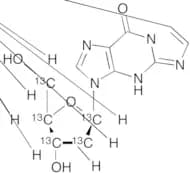
CAS:Controlled Product<p>Applications 1, N2-Etheno-2’-deoxyguanosine-13C5 is caused by exposure to pollutants. It is an isotopically labeled analog of the 2’-Deoxyguanosine adduct.<br></p>Formula:C713C5H13N5O4Color and Shape:NeatMolecular weight:296.232-Acetyl-6-(dimethylamino)naphthalene
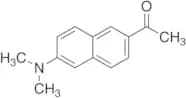
CAS:Controlled Product<p>Applications Naphthalene derivative.<br></p>Formula:C14H15NOColor and Shape:NeatMolecular weight:213.282'-Hydroxyflavone
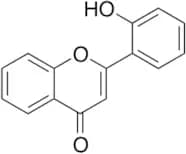
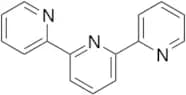
CAS:Controlled Product<p>Applications 2'-Hydroxyflavone (cas# 35244-11-2) is a useful research chemical.<br></p>Formula:C15H10O3Color and Shape:NeatMolecular weight:238.2382,2':6',2''-Terpyridine
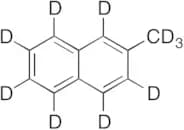
CAS:Controlled Product<p>Applications 2,2':6',2''-Terpyridine (cas# 1148-79-4) is a useful research chemical.<br></p>Formula:C15H11N3Color and Shape:Beige To Light BrownMolecular weight:233.272-Methylnaphthalene-D10
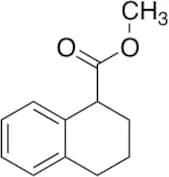
CAS:Controlled Product<p>Applications 2-Methylnaphthalene-D10 is a labelled analogue of 2-Methylnaphthalene (M323130). 2-Methylnaphthalene is a polycyclic aromatic hydrocarbon (PAH) that has been used as an indicator of smoke exposure in food and packaging materials.<br> Not a dangerous good if item is equal to or less than 1g/ml and there is less than 100g/ml in the package<br>References Johnston, J.J., et. al.: J. Agr. Food Chem., 42, 1954 (1994)<br></p>Formula:C112H10Color and Shape:NeatMolecular weight:152.26methyl 1,2,3,4-tetrahydronaphthalene-1-carboxylate
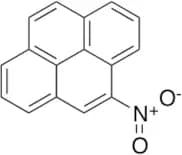
CAS:Controlled Product<p>Applications methyl 1,2,3,4-tetrahydronaphthalene-1-carboxylate (cas# 17502-86-2) is a useful research chemical.<br></p>Formula:C12H14O2Color and Shape:ColourlessMolecular weight:190.244-Nitropyrene
CAS:Controlled Product<p>Applications 4-NITROPYRENE (cas# 57835-92-4) is a useful research chemical.<br></p>Formula:C16H9NO2Color and Shape:NeatMolecular weight:247.253-(4-Chlorophenyl)-4-hydroxybutyric Acid Sodium Salt
CAS:Controlled Product<p>Applications A metabolite of Baclofen (c).<br>References Ault, B., et al.: Eur. J. Pharmacol., 71, 357 (1981),<br></p>Formula:C10H10ClNaO3Color and Shape:NeatMolecular weight:236.63