Pharmaceutical Standards
Pharmaceutical standards are a comprehensive set of reference materials essential for ensuring the safety, efficacy, and quality of pharmaceutical products. This category includes standards for active pharmaceutical ingredients (APIs), which are the core components responsible for therapeutic effects. Additionally, it covers compounds and metabolites relevant to both the pharmaceutical and veterinary industries, providing benchmarks for the accurate measurement and analysis of these substances. Nitrosamine control standards are crucial for detecting and mitigating potentially harmful nitrosamines in drug formulations. Toxicology standards help assess the safety and potential adverse effects of pharmaceutical compounds. Furthermore, enzyme activators and inhibitors standards are vital for research and development, enabling precise studies of biochemical pathways and drug mechanisms. These pharmaceutical standards are indispensable tools for regulatory compliance, quality control, and research, ensuring that pharmaceutical products meet stringent safety and effectiveness criteria.
Subcategories of "Pharmaceutical Standards"
- APIs for research and impurities(274,823 products)
- Enzyme Activators and Inhibitors(2,827 products)
- Nitrosamines(2,605 products)
- Pharmaceutical and Veterinary Compounds and Metabolites(2,867 products)
- Toxicology(13,652 products)
Found 7836 products of "Pharmaceutical Standards"
Sort by
Purity (%)
0
100
|
0
|
50
|
90
|
95
|
100
Droxicam
CAS:Controlled Product<p>Applications Droxicam is a non-steroidal anti-inflammatory drug.<br>References Lapeyre-Mestre, M., et. al.: Fundam. Clin. Pharm., 20, 391 (2006)<br></p>Formula:C16H11N3O5SColor and Shape:Off-White To Light YellowMolecular weight:357.34(4-Bromophenyl)urea
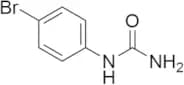
CAS:<p>Applications (4-Bromophenyl)urea (cas# 1967-25-5) is a useful research chemical.<br> Not a dangerous good if item is equal to or less than 1g/ml and there is less than 100g/ml in the package<br></p>Formula:C7H7N2OBrColor and Shape:Off-White To PurpleMolecular weight:215.05o-tert-Butyl-p-cresol
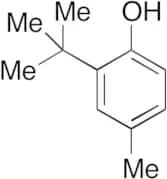
CAS:Controlled Product<p>Applications o-tert-Butyl-p-cresol, is a versatile buidling bloch used in the various chemical synthesis. It is used in the synthesis of 2-t-butyl-p-cresol amide derivatives, having the antibacterial and antifouling properties.<br> Not a dangerous good if item is equal to or less than 1g/ml and there is less than 100g/ml in the package<br>References Zhang, Z. et al.: Tuliao Gongye, 42, 20 (2012);<br></p>Formula:C11H16OColor and Shape:NeatMolecular weight:164.242,3-Dihydroxy-1,4-naphthoquinone
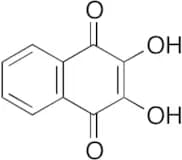
CAS:Controlled Product<p>Applications 2,3-dihydroxynaphthoquinone (cas# 605-37-8) is a useful research chemical.<br></p>Formula:C10H6O4Color and Shape:NeatMolecular weight:190.15Desloratadine N-Hydroxypiperidine
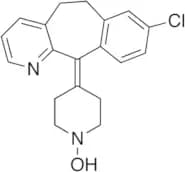
CAS:<p>Applications A related compound of Desloratadine (D290250).<br>References Krishna, K., et al.: J. Pharm. Biomed. Anal., 32, 29 (2003), Qi, M., et al.: J. Pharm. Biomed. Anal., 38, 355 (2005),<br></p>Formula:C19H19ClN2OColor and Shape:NeatMolecular weight:326.82Testosterone Hexanoate
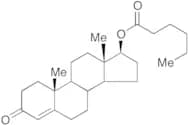
CAS:Controlled ProductFormula:C25H38O3Color and Shape:NeatMolecular weight:386.57Rosuvastatin Ethyl Ester
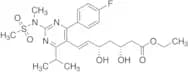
CAS:<p>Applications Rosuvastatin ethyl ester (CAS# 851443-04-4) is an intermediate formed during the synthetic preparation of rosuvastatin, a pharmaceutical used to manage LDL cholesterol.<br>References Sterk, D.; et al.: Tetrahedron Lett., 57, 1338 (2016); Olsson, A. G.; et al.: Am. Heart J., 144, 1044 (2002).<br></p>Formula:C24H32FN3O6SColor and Shape:Off-White To Light BeigeMolecular weight:509.593-(4-Chlorophenyl)-4-hydroxybutyric Acid Sodium Salt
CAS:Controlled Product<p>Applications A metabolite of Baclofen (c).<br>References Ault, B., et al.: Eur. J. Pharmacol., 71, 357 (1981),<br></p>Formula:C10H10ClNaO3Color and Shape:NeatMolecular weight:236.63Guanosine 5'-Diphosphate Disodium Salt
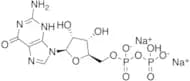
CAS:Controlled Product<p>Applications Guanosine 5'-diphosphate disodium salt (cas# 7415-69-2) is a useful research chemical.<br></p>Formula:C10H13N5Na2O11P2Purity:>85%Color and Shape:NeatMolecular weight:487.16N-Nitrosodimethylamine-d6 (1 mg/mL in Methanol)
CAS:Controlled Product<p>Applications N-Nitrosodimethylamine-d6 (1.0 mg/mL in Methanol) is a highly toxic semi-volatile organic compound and a suspected human carcinogen. It induces liver tumors in rats after chronic exposure to low doses (1,2). Drinking water contaminant candidate list 3 (CCL 3) compound as per United States Environmental Protection Agency (EPA). Environmental contaminants; Food contaminants.<br>References Chem. and Eng. News, p.5, Feb. 25, 2019<br></p>Formula:C2D6N2OColor and Shape:Single SolutionMolecular weight:80.12Tetramethylurea
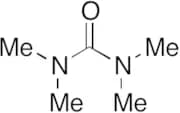
CAS:<p>Applications Tetramethylurea is an excellent solvent for organic substances, in particular aromatic compounds.<br>References Lüttringhaus, A., et al.: Angew. Chem. Int. Ed. Engl., 3, 260 (1964)<br></p>Formula:C5H12N2OColor and Shape:NeatMolecular weight:116.16Betaine-d3 Hydrochloride
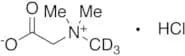
CAS:Controlled Product<p>Applications Betaine-d3 Hydrochloride is a useful gastric acidifier.<br>References Wilcken, D.E., et al.: N. Engl. J. Med., 309, 448 (1983),<br></p>Formula:C52H3H9NO2·ClColor and Shape:White To Off-WhiteMolecular weight:156.63(+)-Isomenthone-d3
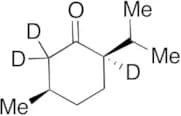
CAS:Controlled Product<p>Applications Isotope labelled (+)-Isomenthone is an isomer of (-)-Menthone. (-)-Menthone is a constituent of the essential oils of pennyroyal, peppermint, Pelargonium geraniums, and others. It is also a naturally occurring pesticide.<br>References Zhang, Q., et al.: Pest Management Science, 69, 542 (2013); Weimin, Y., Shijie Nongyao, 30, 33 (2008);<br></p>Formula:C10H15D3OColor and Shape:NeatMolecular weight:157.272-Acetyl-6-(dimethylamino)naphthalene
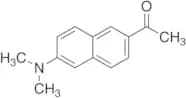
CAS:Controlled Product<p>Applications Naphthalene derivative.<br></p>Formula:C14H15NOColor and Shape:NeatMolecular weight:213.28(4R)-5-(3',4'-Dihydroxyphenyl)-γ-valerolactone ((-)-Epicatechin Metabolite)
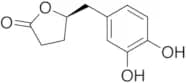
CAS:Controlled Product<p>Applications A metabolite of (-)-Epicatechin (E582260).<br>References Li, C. et al.: Chem. Res. Tox., 14, 702 (2001);<br></p>Formula:C11H12O4Color and Shape:NeatMolecular weight:208.21(S)-(-)-Verapamil-d3 Hydrochloride
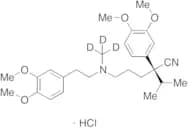
CAS:Controlled Product<p>Applications (S)-(-)-Verapamil-d3 hydrochloride is deuterium labelled S-Verapamil (V124991). Both isomers inhibit the p-glycoprotein efflux pump in multidrug resistant tumor cells.<br> Not a dangerous good if item is equal to or less than 1g/ml and there is less than 100g/ml in the package<br>References Peroutka, S., et al.: J. Ann. Neurol, 23, 500 (1988); Eliason, J.F., et al.: Int. J. Cancer, 46, 113 (1990)<br></p>Formula:C27H36D3ClN2O4Color and Shape:NeatMolecular weight:494.08trans,trans-2,4-Nonadienal (>90%)
CAS:<p>Applications trans,trans-2,4-Nonadienal is an unsaturated aldehyde that is responsible for the bean odour of soymilk. trans,trans-2,4-Nonadienal has also been identified as a potentially mutagenic substance by inducing oxidative DNA damage.<br>References Sjaastad, A. & Svendsen, K.: Ann. Occ. Hyg., 52, 739 (2008); Vara-Ubol, S., et al.: J. Sens. Stud., 19, 15 (2004); Yang, C., et al.: Chin. J. Physiol., 52, 151 (2009)<br></p>Formula:C9H14OPurity:>90%Color and Shape:YellowMolecular weight:138.21Potassium Bromide
CAS:<p>Applications Potassium bromide is an ionic compound that is commonly used in chemistry to form a pellet that can be used to analyze a number of compounds by means of infrared spectroscopy. Potassium bromide is also used as an anticonvulsant to treat refractory seizures in humans and dogs.<br>References Kirkland, J.: Anal. Chem., 27, 1537 (1955); Korinthenberg, R., et al.: J. Child Neuro., 22, 414 (2007); Wilberley, S., et al.: Anal. Chem., 29, 210 (1957); Yohn, S., et al.: J. Am. Vet. Med. Ass., 201, 468 (1992)<br></p>Formula:BrKColor and Shape:White To Off-WhiteMolecular weight:119.001-Naphthol-4-sulfonic Acid Sodium Salt
CAS:Controlled Product<p>Applications 1-NAPHTHOL-4-SULFONIC ACID SODIUM SALT (cas# 6099-57-6) is a useful research chemical.<br></p>Formula:C10H7NaO4SColor and Shape:NeatMolecular weight:246.21(E)-4-Formylcinnamic Acid Methyl Ester
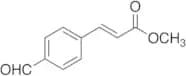
CAS:Controlled Product<p>Applications Cinnamic Acid derivative<br>References Sato, M., et al.: Chem. Pharm. Bull., 42, 521 (1994), Remiszewski, S., et al.: J. Med. Chem., 46, 4609 (2003),<br></p>Formula:C11H10O3Color and Shape:NeatMolecular weight:190.2