Pharmaceutical Standards
Pharmaceutical standards are a comprehensive set of reference materials essential for ensuring the safety, efficacy, and quality of pharmaceutical products. This category includes standards for active pharmaceutical ingredients (APIs), which are the core components responsible for therapeutic effects. Additionally, it covers compounds and metabolites relevant to both the pharmaceutical and veterinary industries, providing benchmarks for the accurate measurement and analysis of these substances. Nitrosamine control standards are crucial for detecting and mitigating potentially harmful nitrosamines in drug formulations. Toxicology standards help assess the safety and potential adverse effects of pharmaceutical compounds. Furthermore, enzyme activators and inhibitors standards are vital for research and development, enabling precise studies of biochemical pathways and drug mechanisms. These pharmaceutical standards are indispensable tools for regulatory compliance, quality control, and research, ensuring that pharmaceutical products meet stringent safety and effectiveness criteria.
Subcategories of "Pharmaceutical Standards"
- APIs for research and impurities(274,905 products)
- Enzyme Activators and Inhibitors(2,827 products)
- Nitrosamines(2,605 products)
- Pharmaceutical and Veterinary Compounds and Metabolites(2,871 products)
- Toxicology(13,652 products)
Found 7836 products of "Pharmaceutical Standards"
Sort by
Purity (%)
0
100
|
0
|
50
|
90
|
95
|
100
p-Azidoacetophenone
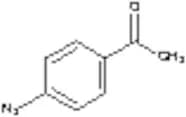
CAS:Controlled Product<p>Applications p-Azidoacetophenone (cas# 20062-24-2) is a compound useful in organic synthesis.<br>References Zarghi, A., et al.: Bioorg. Med. Chem., 14, 7044 (2006), Cline, M., et al.: Biochem., 46, 1981 (2007),<br></p>Formula:C8H7N3OColor and Shape:NeatMolecular weight:161.16Coproporphyrin III Dihydrochloride
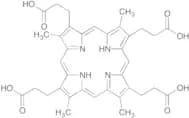
CAS:<p>Applications Coproporphyrin III can be used as a biomarker for environmental toxicity and susceptibility in autism.<br>References Geier, D. A., et al.: J. of the Neuro. Sci., 280(1-2), 101-108 (2009)<br></p>Formula:C36H38N4O8·2Cl2HColor and Shape:NeatMolecular weight:727.63ASM-DNT
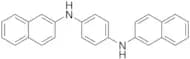
CAS:<p>Applications N,N'-Di-2-naphthyl-1,4-phenylenediamine (cas# 93-46-9) is a useful research chemical.<br></p>Formula:C26H20N2Color and Shape:NeatMolecular weight:360.4504N-Dechloroethyl Cyclophosphamide
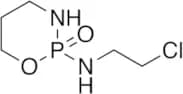
CAS:<p>Stability Reacts with DMSO<br>Applications A metabolite of Cyclophosphamide (C988580).<br> Not a dangerous good if item is equal to or less than 1g/ml and there is less than 100g/ml in the package<br>References Bohnenstengel, F., et al.: Eur. J. Clin. Pharmacol., 51, 297 (1996), Busse, D., et al.: J. Clin. Oncol., 15, 188 (1997), Roy, P., et al.: Drug Metab. Dispos., 27, 655 (1999),<br></p>Formula:C5H12ClN2O2PColor and Shape:NeatMolecular weight:198.592-Naphthylacetonitrile
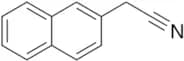
CAS:Controlled Product<p>Applications 2-Naphthylacetonitrile (cas# 7498-57-9) is a useful research chemical.<br></p>Formula:C12H9NColor and Shape:NeatMolecular weight:167.21N-Nitrososarcosine-d3
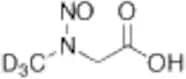
CAS:Controlled Product<p>Applications N-Nitrososarcosine-d3 is a labelled carcinogen compound.<br>References Lu, S., et al.: Cancer Res., 46, 1485 (1986), Tricker, A., et al.: Eur. J. Cancer Prev., 6, 226 (1997),<br></p>Formula:C32H3H3N2O3Color and Shape:Light YellowMolecular weight:121.11Carboxymethyl Cellulose Ether Sodium Salt
CAS:Controlled Product<p>Applications Carboxymethyl Cellulose Ether is used as a thickener to enhance rigidity and composition of pharmaceutical compounds as well as the stability of electrode slurries in composite electrodes. Also provides ion-exchange for chromotography media.<br>References Salerno, C. et al.: AAPS PharmSciTech., 11, 986 (2010); Porcher, W. et al. J. Electrochem. Soc., 156, A133 (2009); Wang, H. et al.: Biochem. Biophys. Res. Comm., 342, 349 (2006);<br></p>Formula:C2H4O3•xUnspecified•xNaColor and Shape:NeatN-Desmethyl Azelastine
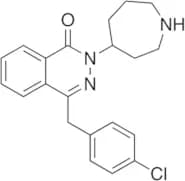
CAS:Controlled Product<p>Applications The main phase I metabolites of Azelastine.<br>References Adusumalli, V., et al.: Drug Metab. Dispos, 20, 530 (1992), Mano, N., et al.: J. Pharm. Biomed. Anal., 12, 557 (1994), Baldwin, S., et al.: Xenobiotica, 25, 261 (1995), Kobayashi, K., et al.: J. Pharmacol. Exp. Ther., 280, 927 (1997),<br></p>Formula:C21H22ClN3OColor and Shape:NeatMolecular weight:367.87Psilocin-d4 (1 mg/mL in Acetonitrile)
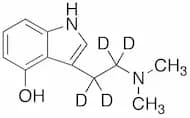
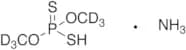
CAS:Controlled ProductFormula:C12D4H12N2OColor and Shape:ColourlessMolecular weight:208.29O,O-Dimethyl-d6 Dithiophosphate Ammonium Salt
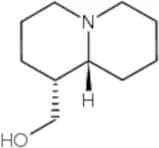
CAS:Controlled Product<p>Applications O,O-Dimethyl-d6 Dithiophosphate is the isotope labelled analog of O,O-Dimethyl Dithiophosphate (3, an dimethyl phosphorodithiolate derivatives used as insecticides.<br></p>Formula:C2H4D6NO2PS2Color and Shape:Off-White To Light YellowMolecular weight:181.25(-)-Lupinine
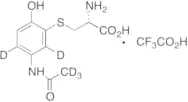
CAS:<p>Applications (-)-Lupinine is an alkaloid capable of counteracting ethanol anesthesia.<br></p>Formula:C10H19NOColor and Shape:NeatMolecular weight:169.263-Cysteinylacetaminophen-D5 (major), Trifluoroacetic Acid Salt
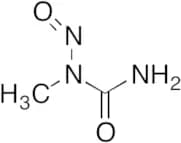
CAS:Controlled Product<p>Applications 3-Cysteinylacetaminophen-D5 (major), Trifluoroacetic Acid Salt is deuterium labeled 3-Cysteinylacetaminophen Trifluoroacetic Acid Salt (C994750), which is a metabolite of Acetaminophen (A161220), an analgesic and antipyretic agent used as a pain reliever to treat headache, muscle aches, and arthritis (1,2,3).Minimum isotopic incorporation d-3, no d-0 present. A representative lot has 64% isotopic incorporation at the 6-position, 89% at the 4-position.<br>References (1) McGill, M. R. and Jaeschke, H. Pharm Res. 30, 2174 (2013)(2) Fairbrother, J.E., et al.: Anal. Profiles Drug Subs., 3, 1 (1974) (3) Hinson, J.A., et al.: Rev. Biochem. Toxicol., 2, 103 (1980)<br></p>Formula:C11H9D5N2O4S•C2HF3O2Color and Shape:NeatMolecular weight:389.36N-Methyl-N-nitroso Urea (Wetted with water >20%)
CAS:Controlled Product<p>Stability Temperature Sensitive<br>Applications Precursor of Diazomethane. It has a cytotoxicity effect.This product contains an undetermined amount of water.<br> Not a dangerous good if item is equal to or less than 1g/ml and there is less than 100g/ml in the package<br>References Huggins, C., et al.: J. Exp. Med., 131, 321 (1970), Gullino, P.M., et al.: J. Natl. Cancer Inst., 54, 401 (1975),<br></p>Formula:C2H5N3O2Color and Shape:Off-White To Light BeigeMolecular weight:103.08Guanosine-13C5 5'-Monophosphate
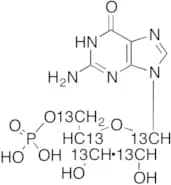
CAS:Controlled Product<p>Applications Guanosine-13C5 5’-Monophosphate is an isotope labelled version of Guanosine 5’-Monophosphate (G844708), a nucleotide with an umami taste.<br>References Charve, Josephine, et al.: J. of Agric. and Food Chem., 66(8), 1863-1871 (2018)<br></p>Formula:C513C5H14N5O8PColor and Shape:White To Light YellowMolecular weight:368.18N6-Isopentenyladenosine
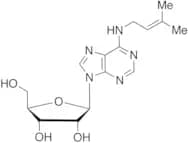
CAS:<p>Applications N6-Isopentenyladenosine has antiproliferative activity on MCF-7 breast cancer cells.<br>References Rajabi, M. et al.; DNA Cell Biol.; 29, 687 (2010)<br></p>Formula:C15H21N5O4Color and Shape:NeatMolecular weight:335.36Mevastatin Hydroxy Acid Sodium Salt
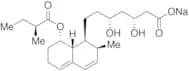
CAS:Controlled Product<p>Stability Hygroscopic<br>Applications An active carboxylate of Mevastatin (M340500). It is a competitive inhibitor of 3-hydroxy-3-methylglutaryl coenzyme A reductase with hypocholesterolemic activity. It has been shown to be effective in reducing cholesterol synthesis in vivo, and thereby in lowering cholesterol levels in blood.<br>References Endo, A. et al.: Atheroscler. Supp., 5, 39 (2004); Hosobuchi, M. et al.: J. Ferm. Bioeng., 76, 470 (1993);<br></p>Formula:C23H35O6·NaColor and Shape:NeatMolecular weight:430.512-Hydroxy Oleic Acid
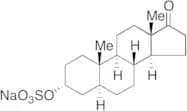
CAS:Controlled Product<p>Applications An oleic acid synthetic analog that is an effective non-toxic anticancer drug with a wide spectrum against different types of cancer. An antihypertensive.<br>References Llado, V. et al.: J. Cell. Molec. Med., 14, 659 (2010); Alemany, R. et al.: J. Lip. Res., 47, 1762 (2006); Martinez, J. et al.: J. Pharmacol. Exp. Therap., 315, 466 (2005);<br></p>Formula:C18H34O3Color and Shape:Off White SolidMolecular weight:298.46Androsterone Sulfate Sodium Salt
CAS:Controlled ProductFormula:C19H29O5S·NaColor and Shape:White To Off-WhiteMolecular weight:392.40Betamethasone Tripropionate
CAS:<p>Impurity Betamethasone Dipropionate EP Impurity G<br>Applications Betamethasone Tripropionate (Betamethasone Dipropionate EP Impurity G) is a Betamethasone (B327000) related compound.<br>References Grootveld, M., et al.: Biochem. Pharmacol., 37, 271 (1988), Chen, B., et al.: Steriods, 74, 30 (2009), Mikami, E., et al.: J. Pharm. Biomed. Anal., 28, 261 (2002),<br></p>Formula:C31H41FO8Color and Shape:NeatMolecular weight:560.65