Pharmaceutical Standards
Subcategories of "Pharmaceutical Standards"
- APIs for research and impurities(276,378 products)
- Enzyme Activators and Inhibitors(2,829 products)
- Nitrosamines(2,627 products)
- Pharmaceutical and Veterinary Compounds and Metabolites(2,901 products)
- Toxicology(13,531 products)
Found 7963 products of "Pharmaceutical Standards"
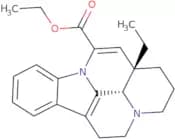
Vinpocetin
CAS:Sodium channel blockerFormula:C22H26N2O2Purity:Min. 95%Color and Shape:White PowderMolecular weight:350.45 g/molTestosterone benzoate
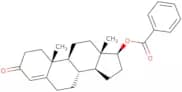
CAS:Controlled ProductTestosterone benzoate is a steroid that is used to produce testosterone. It is prepared by treating the sodium salt of testosterone with trifluoroacetic acid and then reacting it with benzoic acid. Testosterone benzoate has been used as an analytical marker for the presence of testosterone in biological samples. The use of this substance as an analytical reagent was first reported in 1955, when it was found to be more sensitive than the traditional means of detection (i.e., thin-layer chromatography). The matrix effect can significantly affect the results obtained using this test, so care must be taken to ensure that it is not present when testing for testosterone. Testosterone benzoate reacts with oestradiol or estradiol benzoate under acidic conditions to form anhydrous sodium carbonate and water. This reaction may be used to assay for oestradiol or estradiol benzoate in biological samples containing testosterone benzoate.Formula:C26H32O3Purity:Min. 95%Color and Shape:PowderMolecular weight:392.53 g/mol2-Nitro-3,4,5-trimethoxybenzoic acid methyl ester
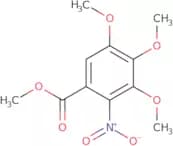
CAS:2-Nitro-3,4,5-trimethoxybenzoic acid methyl ester is a potential anticancer agent. It has been shown to inhibit the growth of cancer cells in vitro and demonstrates anticancer activity against human tumor xenografts in mice. This compound binds to the epidermal growth factor receptor (EGFR) and inhibits its activity. This binding causes downstream signalling pathways to be suppressed, which ultimately prevents tumor cells from proliferating. 2-Nitro-3,4,5-trimethoxybenzoic acid methyl ester also has directional properties that may allow for selective targeting of cancerous cells. 2-Nitro-3,4,5-trimethoxybenzoic acid methyl ester is a white crystalline powder with an orthorhombic crystal system and an amine group on each end of the molecule.Formula:C11H13NO7Purity:Min. 95%Color and Shape:PowderMolecular weight:271.22 g/mol1,5-Dinitronaphthalene
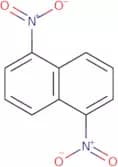
CAS:1,5-Dinitronaphthalene is a test compound that has been used in the analytical method to determine the presence of basophilic leukemia cells. This reaction mechanism involves hydrogen bonding interactions with naphthalene, which is a test sample. The results are then read by chromatographic science and solubility data are collected. The 1,5-dinitronaphthalene can be used as a test compound for steric interactions with other compounds. It can also be used to measure the solubility of other compounds in different solvents.
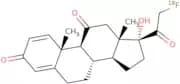
Formula:C10H6N2O4Purity:Min. 97.0 Area-%Molecular weight:218.17 g/mol21-(Fluoro-18F)-17-Hydroxypregna-1,4-Diene-3,11,20-Trione
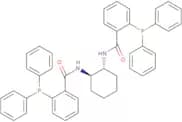
Controlled ProductF-18-fluorohydroxypregna-1,4-diene-3,11,20-trione (FHP) is a positron emission tomography (PET) radiopharmaceutical that binds to estrogen receptors. It is used in the diagnosis of cancer and other diseases. FHP is synthesized by reduction of its carbonyl group with sodium borohydride and then converted to the desired radiolabeled form. The synthesis of FHP can be accomplished in a variety of ways, depending on the desired radionuclide and labeling technique. One such method uses an unlabeled precursor estrone or 17β-estradiol as the starting material. This precursor undergoes enzymatic conversion by testosterone 17β hydroxylase to yield FHP.Formula:C21H25FO4Purity:Min. 95%Molecular weight:360.42 g/mol(1R,2R)-(+)-1,2-Diaminocyclohexane-N,N'-bis(2'-diphenylphosphinobenzoyl)
CAS:(+)-1,2-Diaminocyclohexane-N,N'-bis(2'-diphenylphosphinobenzoyl) is an important chemical building block and intermediate that can be used in a wide range of organic synthesis. This compound is a versatile building block with high quality and has been shown to be useful for the synthesis of complex compounds. (+)-1,2-Diaminocyclohexane-N,N'-bis(2'-diphenylphosphinobenzoyl) can be used as a reagent in many reactions. CAS No. 138517-61-0 is a fine chemical that has been widely used in research laboratories around the world.Formula:C44H40N2O2P2Purity:Min. 95%Color and Shape:White PowderMolecular weight:690.75 g/molMertansine
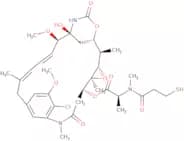
CAS:N2'-Deacetyl-N2'-(3-mercapto-1-oxopropyl)-maytansine is a thiol-containing derivative of maytansine. Maytansine and its derivatives kill cells by interfering with the formation of microtubules, and causing the depolymerisation of already formed microtubules. Antibody conjugates of N2'-Deacetyl-N2'-(3-mercapto-1-oxopropyl)-maytansine and the murine monoclonal antibody TA. 1, using linkers containing either a disulfide bond or a thioether bond, have been synthesised. These antibody conjugates bind to the HER-2/new oncogene protein that is expressed on human breast tumor cells.Formula:C35H48ClN3O10SPurity:Min. 95%Color and Shape:White Off-White Yellow PowderMolecular weight:738.29 g/molTestosterone enanthate
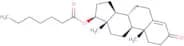
CAS:Controlled ProductTestosterone enanthate is a long-acting ester of the natural hormone testosterone. It is used to treat male hypogonadism, as well as for female infertility. Testosterone enanthate has been found to be effective in maintaining physiological levels of testosterone in the blood and in increasing follicular growth, body mass index, and bone density. The pharmacokinetic properties of testosterone enanthate are similar to other long-acting esters of testosterone, such as testosterone cypionate and testosterone propionate. These agents are absorbed slowly from the injection site into the bloodstream, with a prolonged duration of action that can last for weeks or months. Sodium citrate is commonly used with these agents to help prevent blood clots from forming at the injection site.Formula:C26H40O3Purity:Min. 95%Color and Shape:PowderMolecular weight:400.59 g/molHydroxy naphthol blue
CAS:Hydroxy naphtol blue is a synthetic azo dye, a chemical compound containing the functional group RN=N-R. The hydroxy naphtol blue trisodium and disodium salts are used as indicators to determine the content of alkaline earth and lanthanides spectrophotometrically, showing at maximum a wavelength of ~650 nm (λmax = 647.6 nm). An example of a common use of hydroxy naphtol blue sodium salt is to determine the hardness of water by measuring the concentration of calcium and magnesium. At alkaline or basic pH, the hydroxy naphtol blue forms a pink/red complex with the metal ions and, after titration with EDTA, hydroxy naphtol blue is liberated, turning the solution blue, indicating the endpoint.
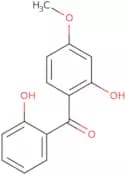
Formula:C20H11N2O11S3·3NaColor and Shape:Black Blue PowderMolecular weight:620.48 g/mol2,2'-Dihydroxy-4-methoxybenzophenone
CAS:2,2'-Dihydroxy-4-methoxybenzophenone (DHMB) is a chemical compound used in the manufacturing of sunscreens. It is also used as an antioxidant and antiinflammatory agent in topical preparations. The genotoxic effects of DHMB are well documented, but it is unclear whether these effects are due to UV radiation or other mechanisms. DHMB has been shown to be toxic to cells in vivo and in vitro. There have been reports of skin cancer developing on the ears of rats following chronic exposure to this chemical. DHMB binds to the estrogen receptor, which may be responsible for its genotoxic activity. This chemical has also been shown to inhibit the growth of bacteria such as Pseudomonas aeruginosa and Escherichia coli by binding with fatty acids on the cell membrane surface. DHMB is used for wastewater treatment because it can bind with heavy metals and remove them from water sources.Formula:C14H12O4Purity:Min. 95%Color and Shape:Yellow To Dark Yellow SolidMolecular weight:244.24 g/mol4-Nitrocinnamaldehyde
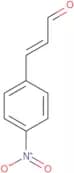
CAS:4-Nitrocinnamaldehyde is a diazonium salt that is used as an efficient method for the synthesis of nitro compounds. Nitro compounds are used in the production of explosives, insecticides, and herbicides. 4-Nitrocinnamaldehyde reacts with hydrochloric acid to produce trifluoroacetic acid, which is then reacted with an organic compound to produce a nitro compound. This reaction has been shown to be irreversible and not sensitive to functional groups. 4-Nitrocinnamaldehyde binds to the enzyme cytochrome P450 reductase, inhibiting its function. The binding of 4-nitrocinnamaldehyde to enzymes such as pyruvate kinase and acetylcholinesterase has also been observed in binding experiments.
Formula:C9H7NO3Purity:Min. 95%Color and Shape:PowderMolecular weight:177.16 g/mol3,3'-Dimethylazoxybenzene
CAS:3,3'-Dimethylazoxybenzene is a methylating agent that reacts with an amine to form a triflate. The reactivity of the methylating agent is determined by the electron-donating ability of the methyl group. 3,3'-Dimethylazoxybenzene reacts with electron-poor amines such as aromatic amines to form alkyltriflates. This reaction is not reversible and can lead to DNA damage in cells, which may contribute to cancer formation.
Formula:C14H14N2OPurity:Min. 95%Molecular weight:226.27 g/mol5-Chlorovanillic acid
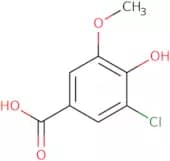
CAS:5-Chlorovanillic acid is a weight compound that belongs to the group of methoxylated compounds. It is a precursor in the catabolic pathway of vanillic acid, which is synthesized from p-hydroxybenzoic acid. This compound can be found as one of the major phenolic acids in many plants and fruits, such as strawberries and apples. 5-Chlorovanillic acid has been shown to be an inhibitor for the growth of bacterial strains in culture, including C. perfringens. It has also been shown to have anti-inflammatory properties by inhibiting prostaglandin synthesis.
Formula:C8H7ClO4Purity:80%Color and Shape:PowderMolecular weight:202.59 g/mol(1R)-Chrysanthemolactone
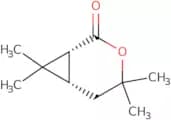
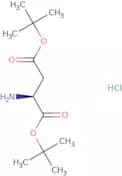
CAS:(1R)-Chrysanthemolactone is a saponin that has been shown to exhibit an inhibitory effect on α-pinene metabolism in humans. This compound also has a protective effect against metabolic disorders and proton radiation. (1R)-Chrysanthemolactone has been shown to have insecticidal properties, although it is not effective against mosquitoes. This compound has been shown to have synergistic effects with piperonyl butoxide and electrothermal vaporization in the treatment of d-xylose-induced colitis in animals. It also inhibits the growth of some strains of bacteria by inhibiting protein synthesis, including Mycobacterium tuberculosis and Mycobacterium avium.Formula:C10H16O2Purity:Min. 95%Molecular weight:168.23 g/molL-Aspartic acid di-tert-butyl ester HCl
CAS:L-Aspartic acid di-tert-butyl ester HCl is a water-soluble drug with an acidic pH. It is used in the form of its hydrochloride, tartrate, and L-aspartic acid derivative. The drug is used to treat bone tumor diseases and has been shown to inhibit the production of necrosis factor.Formula:C12H23NO4·HClPurity:Min. 95%Color and Shape:White PowderMolecular weight:281.78 g/molCefprozil EP impurity C
CAS:Cefprozil EP impurity C is a fine chemical and research chemical. It is a versatile building block that can be used in the synthesis of various compounds, such as novel antibiotics, anti-cancer agents, and other pharmaceuticals. This compound is a useful intermediate that may be used to produce speciality chemicals such as pharmaceuticals, agrochemicals, or polymers. Cefprozil EP impurity C has been shown to react with amines to form ureas.
Formula:C11H11N3O3Purity:Min. 95%Color and Shape:Yellow PowderMolecular weight:233.22 g/mol7a-Hydroxy cholesterol
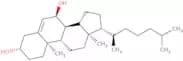
CAS:Controlled Product7a-Hydroxycholesterol is a cholesterol metabolite that has been shown to inhibit the proliferation of 3T3-L1 preadipocytes and HL-60 cells. This compound also inhibits the growth of tumor cells by inhibiting the enzyme activities necessary for cell division and synthesis. 7a-Hydoxycholesterol has been found to be a potent inducer of cholesterol biosynthesis in cultured liver cells, which may be due to its ability to inhibit the conversion of cholesterol into bile acids. 7a-hydroxycholesterol has also been shown to inhibit viral replication in vitro. It binds to mitochondrial DNA and inhibits ATP production, leading to inhibition of mitochondrial membrane potential and cell death. 7a-hydroxycholesterol is also known as an oxysterol because it can be made from 25(OH)D3 or 2,5(OH)2D3. A high level of this metabolite is associated with atherosclerosis or formation of cholesterol deposits on artery wallsFormula:C27H46O2Purity:Min. 95%Color and Shape:White PowderMolecular weight:402.65 g/molHomatropine methyl bromide
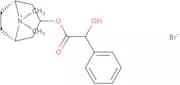
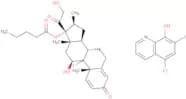
CAS:Homatropine methyl bromide is a drug that belongs to the class of anticholinergic drugs. It is used as a pharmaceutical preparation and is used in the treatment of glaucoma, diagnosis of myasthenia gravis, and as an antidote for organophosphate poisoning. Homatropine methyl bromide can be used to control diastolic pressure. This drug binds to acetylcholine receptors and increases the time needed for hydrochloric acid to break down propranolol hydrochloride. The binding constants for this drug are high, which means it has a strong affinity for acetylcholine receptors. Homatropine methyl bromide is chemically stable and does not react with fatty acids or other chemicals.Formula:C17H24NO3•BrPurity:Min. 95%Molecular weight:370.28 g/mol(11β,16β)-9-Fluoro-11,21-dihydroxy-16-methyl-17-((1-oxopentyl)oxy)-Pregna-1,4-diene-3,20-dione mixt. with 5-chloro-7-iodo-8-qu inolinol
CAS:Controlled ProductClioquinol is a topical corticosteroid that is used to treat skin disorders such as pemphigoid, psoriasis, and eczema. It is also used to treat the inflammation associated with acne. Clioquinol has been shown to be effective in treating bacterial infections of the skin by inhibiting the growth of bacteria. This drug also has anti-inflammatory properties and can be used for the treatment of various inflammatory skin conditions. Clioquinol is not absorbed through the skin and does not affect the blood's ability to clot.
Formula:C36H42ClFINO7Purity:Min. 95%Molecular weight:782.08 g/mol4-Hydroxy duloxetine
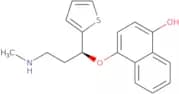
CAS:Duloxetine is a potent inhibitor of cytochrome P450, which is an enzyme that metabolizes many drugs. Duloxetine inhibits the glucuronidation of 4-hydroxy duloxetine, leading to increased levels in the blood. Duloxetine has been shown to be effective in the treatment of diabetic neuropathy, with statistically significant improvements in symptoms and nerve conduction velocity. The pharmacokinetics of duloxetine has been studied in both rats and humans. In rats, duloxetine was found to have a large volume of distribution and a long half-life, suggesting that it is not well absorbed into the blood stream. In humans, duloxetine is metabolized by CYP2D6 and CYP3A4 enzymes. It has been shown to interact with other drugs such as warfarin, tizanidine, tramadol, and fluconazole.Formula:C18H19NO2SPurity:Min. 95%Color and Shape:Beige To Light Brown SolidMolecular weight:313.42 g/mol