Pharmaceutical Standards
Pharmaceutical standards are a comprehensive set of reference materials essential for ensuring the safety, efficacy, and quality of pharmaceutical products. This category includes standards for active pharmaceutical ingredients (APIs), which are the core components responsible for therapeutic effects. Additionally, it covers compounds and metabolites relevant to both the pharmaceutical and veterinary industries, providing benchmarks for the accurate measurement and analysis of these substances. Nitrosamine control standards are crucial for detecting and mitigating potentially harmful nitrosamines in drug formulations. Toxicology standards help assess the safety and potential adverse effects of pharmaceutical compounds. Furthermore, enzyme activators and inhibitors standards are vital for research and development, enabling precise studies of biochemical pathways and drug mechanisms. These pharmaceutical standards are indispensable tools for regulatory compliance, quality control, and research, ensuring that pharmaceutical products meet stringent safety and effectiveness criteria.
Subcategories of "Pharmaceutical Standards"
- APIs for research and impurities(275,009 products)
- Enzyme Activators and Inhibitors(2,827 products)
- Nitrosamines(2,605 products)
- Pharmaceutical and Veterinary Compounds and Metabolites(2,880 products)
- Toxicology(13,652 products)
Found 7836 products of "Pharmaceutical Standards"
Sort by
Purity (%)
0
100
|
0
|
50
|
90
|
95
|
100
1,3,5-Naphthalene trisulfonic acid
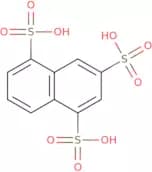
CAS:<p>1,3,5-Naphthalene trisulfonic acid is an organic compound that is the product of the sulfonation of naphthalene. It has been shown to inhibit the activity of 3β-hydroxysteroid dehydrogenase and 17β-hydroxysteroid dehydrogenase, enzymes involved in steroidogenesis. The maximal response was observed at a concentration of 500 μM with a detection time of 30 minutes. Xenopus oocytes were used for expression and chloride currents were recorded as an indicator for enzyme activity. Concentration-response curves were generated with organic solvents such as methanol and dimethyl sulfoxide (DMSO). 1,3,5-Naphthalene trisulfonic acid also inhibits the oxidative activities of some enzymes such as lipoxygenase and cyclooxygenase.</p>Formula:C10H8O9S3Purity:Min. 95%Molecular weight:368.36 g/mol(S)-N-Fmoc-2-(3'-butenyl)glycine
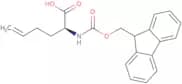
CAS:<p>Please enquire for more information about (S)-N-Fmoc-2-(3'-butenyl)glycine including the price, delivery time and more detailed product information at the technical inquiry form on this page</p>Formula:C21H21NO4Purity:Min. 95%Color and Shape:White PowderMolecular weight:351.4 g/mol(+)-(8,8-Dichlorocamphorylsulfonyl)oxaziridine
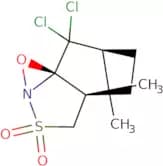
CAS:<p>Please enquire for more information about (+)-(8,8-Dichlorocamphorylsulfonyl)oxaziridine including the price, delivery time and more detailed product information at the technical inquiry form on this page</p>Formula:C10H13Cl2NO3SPurity:Min. 95%Molecular weight:298.19 g/molThymosin beta10 (human, rat)
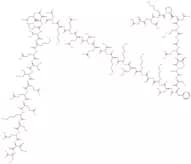
CAS:<p>Please enquire for more information about Thymosin beta10 (human, rat) including the price, delivery time and more detailed product information at the technical inquiry form on this page</p>Formula:C211H353N57O76SPurity:Min. 95%Molecular weight:4,936.47 g/mol3-Chloro-2-nitropyridine
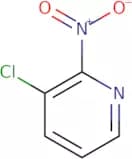
CAS:3-Chloro-2-nitropyridine is a chemical compound that has been shown to have anticancer activity. It is a structural analog of the nucleophilic piperazine, which can react with hydrogen fluoride in an electrophilic substitution reaction to form 3-chloro-2-nitropyridine oxide. The anticancer activity of this compound may be due to its ability to inhibit the growth of tumor cells by binding to the d4 receptor, inhibiting the production of inflammatory cytokines and growth factors. 3-Chloro-2-nitropyridine has also been shown to have antiinflammatory activities, which may be due to its inhibition of nitric oxide synthesis and 5'-lipoxygenase.Formula:C5H3N2O2ClPurity:Min. 95%Color and Shape:PowderMolecular weight:158.54 g/mol9,10-Diphenylanthracene - 99%
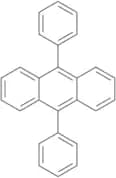
CAS:<p>9,10-Diphenylanthracene is an aromatic hydrocarbon that is used as a reagent in the Suzuki coupling reaction. This reaction is used to form carbon-carbon bonds by reacting an alkyl halide with an aryl boronic acid to form an ester or amine. The carbonyl group of 9,10-diphenylanthracene reacts with the carbonyl group of the boronate ester or amine to form the desired product. 9,10-Diphenylanthracene has been used in polymer films for analytical methods and has also been shown to be effective in DNA sequencing. 9,10-Diphenylanthracene also has high values for light emission and maximal response under analytical conditions. In addition, its dihydro derivatives show high values for nmr spectra and unsaturated alkyl groups have been shown to react efficiently under analytical conditions.</p>Formula:C26H18Purity:Min. 95%Color and Shape:SolidMolecular weight:330.42 g/molCholesterol Heptanoate
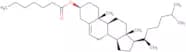
CAS:Controlled Product<p>Cholesterol Heptanoate is a liquid crystal composition that is used to coat tablets. It is also used for the diagnosis of fatty acid metabolism and atherosclerotic lesion formation by measuring the fatty acid composition of body tissues. Cholesterol Heptanoate can be used to form polymeric matrices for use in drug delivery systems. These matrices are composed of ionizable, film-forming polymers with excipients that have phase transition temperatures near 37°C.</p>Purity:Min. 95%Color and Shape:PowderMolecular weight:498.82 g/molNaphthalen-2-ethanol
CAS:<p>Naphthalen-2-ethanol is a primary alcohol that has been synthesized and immobilized onto boron nitride. It can be used as a synthetic reaction rate indicator. Naphthalen-2-ethanol is soluble in organic solvents such as methanol, which can be used to determine the concentration of methanol in solution by observing the change in absorbance at 230 nm. This compound has functional groups such as carbinols, which are characterized by their high reactivity and ability to form esters, ethers, amides, or nitriles. Naphthalen-2-ethanol also reacts with lipases to produce polyamines and with chromatography to produce substitutive nomenclature.</p>Formula:C12H12OPurity:Min. 95%Molecular weight:172.22 g/mol5,8-Dihydro-1-naphthol
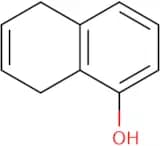
CAS:<p>5,8-Dihydro-1-naphthol is a chromatographic impurity of a β-blocker drug. It can be purified by alkali metal extraction, or by reaction with hydrochloric acid, followed by treatment with an adsorbent material such as silica gel, alumina, or activated carbon. Optimal conditions for the reaction are at a temperature of ˚C and a pressure of 100 kPa. The reaction time can vary from 10 minutes to 60 hours. Purification methods include chromatography and microscopy. 5,8-Dihydro-1-naphthol exhibits isomerization reactions in which it isomerizes to 1-(2'-hydroxyethyl)naphthalene and 1-(2'-methoxyethyl)naphthalene, which are both colorless compounds. These isomers may be separated using chromatographic methods that have been optimized for the separation of these compounds.</p>Formula:C10H10OPurity:Min. 95%Color and Shape:Grey White To Tan To Brown SolidMolecular weight:146.19 g/molSevoflurane related compound A
CAS:<p>Sevoflurane related compound A is a chemical that is used as a model for sevoflurane. It has been shown to inhibit the activity of proximal tubules and to increase blood pressure in rats and humans. The cytosolic reactive oxygen species (ROS) production has been shown to be involved in the mechanism of action. This compound was tested on animals, but was found not to be clinically useful due to its effects on urea nitrogen levels and other metabolic profiles. Sevoflurane related compound A has also been found to be reactive with herpes simplex virus.</p>Formula:C4H2F6OPurity:Min. 95%Color and Shape:Clear LiquidMolecular weight:180.05 g/molS-(-)-Nicotine-δ1’-(5’)-iminium diperchlorate salt
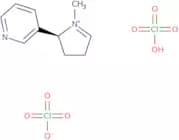
CAS:<p>Please enquire for more information about S-(-)-Nicotine-delta1’-(5’)-iminium diperchlorate salt including the price, delivery time and more detailed product information at the technical inquiry form on this page</p>Formula:C10H14Cl2N2O8Purity:Min. 95%Molecular weight:361.13 g/molDL-Aspartic acid dimethyl ester hydrochloride
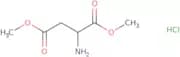
CAS:Please enquire for more information about DL-Aspartic acid dimethyl ester hydrochloride including the price, delivery time and more detailed product information at the technical inquiry form on this pageFormula:C6H11NO4·HClPurity:Min. 95%Color and Shape:White PowderMolecular weight:197.62 g/molL-Tyrosine hydrochloride
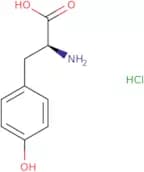
CAS:<p>L-Tyrosine hydrochloride is a pharmaceutical preparation that has been used clinically in the treatment of infectious diseases, cancer, and autoimmune diseases. Tyrosine is an amino acid with a hydroxyl group on its side chain. Tyrosine can be synthesized from phenylalanine by hydroxylation of the phenolic group and decarboxylation of the carboxylic acid group. It is also a precursor to catecholamines and other important biological molecules. L-Tyrosine hydrochloride is used as an intermediate in the production of monoclonal antibodies for use in cancer research. In addition, it has been shown to be an effective inhibitor of virus replication when combined with ester hydrochloride, which prevents the release of progeny virus particles from infected cells.</p>Formula:C9H11NO3·HClPurity:Min. 95%Molecular weight:217.65 g/mol4-Fluorotropacocaine
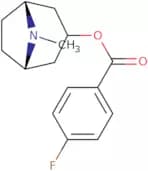
CAS:Controlled Product4-Fluorotropacocaine is a synthetic, serotonergic compound that has been shown to have similar effects in the brain as diazepam. 4-Fluorotropacocaine has been postulated to be a supplement and is thought to have neuroprotective properties. It binds to serotonin receptors and inhibits the reuptake of serotonin by neurons. This inhibition causes an increase in the level of serotonin in the synaptic cleft, which can lead to symptoms such as nausea, vomiting, and headache. 4-Fluorotropacocaine may also inhibit dopamine reuptake leading to symptoms such as hallucinations, delusions, and confusion. Structural analogs of 4-fluorotropacocaine are often used in research studies because they can be synthesized with various substitutions on the benzene ring.Formula:C15H18FNO2Purity:Min. 95%Molecular weight:263.31 g/mol(17a)-13-Ethyl-3-methoxy-18,19-dinorpregna-3,5-dien-20-yn-17-ol
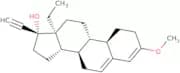
CAS:Controlled ProductPlease enquire for more information about (17a)-13-Ethyl-3-methoxy-18,19-dinorpregna-3,5-dien-20-yn-17-ol including the price, delivery time and more detailed product information at the technical inquiry form on this pageFormula:C22H30O2Purity:Min. 95%Molecular weight:326.47 g/mol4,17a-Dimethyltestosterone
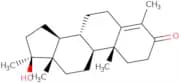
CAS:Controlled ProductPlease enquire for more information about 4,17a-Dimethyltestosterone including the price, delivery time and more detailed product information at the technical inquiry form on this pageFormula:C21H32O2Purity:Min. 95%Molecular weight:316.48 g/mol1,2,3,4-Tetrahydronaphthalen-2-amine hydrobromide
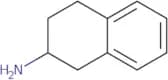
CAS:Controlled Product<p>1,2,3,4-Tetrahydronaphthalen-2-amine hydrobromide (THNA) is an amine that inhibits the enzyme tyrosine hydroxylase. This inhibition leads to a decrease in the synthesis of dopamine and norepinephrine. THNA has been shown to have inhibitory properties on locomotor activity, acid complex formation, and aminotransferases. It also exhibits receptor binding and agonist binding site activity. One study found that THNA had no effect on rat striatal tissue. The drug has been shown to be effective in metabolic disorders such as obesity.</p>Formula:C10H13NPurity:Min. 95%Molecular weight:147.22 g/molNelfinavir hydroxy-tert-butylamide
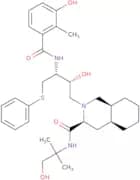
CAS:<p>Nelfinavir is an antiviral agent that is used to treat HIV/AIDS. It is a protease inhibitor that inhibits the action of the virus in cells by binding to specific enzymes, thus preventing the destruction of human cells by the virus. Nelfinavir also prevents cancer cell growth and has shown anticancer activity in animal models and humans. This drug binds to fatty acids, making it more difficult for the body to eliminate this substance. The half-life of nelfinavir is prolonged in patients with hepatic failure or renal failure. Nelfinavir can be used as a chemotherapeutic agent in infants because it does not cross the blood-brain barrier.</p>Formula:C32H45N3O5SPurity:Min. 95%Molecular weight:583.78 g/mol3,3'4,4'5,5'-Hexabromobiphenyl
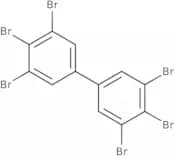
CAS:Controlled Product3,3',4,4',5,5'-Hexabromobiphenyl is a brominated flame retardant that is used in the production of polymers and textiles. It has been detected in human adipose tissue at concentrations of up to 1.2 ng/g dry weight. 3,3',4,4',5,5'-hexabromobiphenyl has been shown to inhibit the production of uridine in mammalian cells. This inhibition may be due to its ability to form a complex with the enzyme uridine phosphorylase or it may be due to an indirect effect on cellular energy metabolism as it has been shown to enhance depression-like behavior in Sprague-Dawley rats and to inhibit liver cell proliferation. 3,3',4,4',5,5'-Hexabromobiphenyl also inhibits the growth of V79 cells and biphenyl uptake into these cells.Formula:C12H4Br6Purity:Min. 95%Molecular weight:627.58 g/molDomperidone impurity E
CAS:<p>Please enquire for more information about Domperidone impurity E including the price, delivery time and more detailed product information at the technical inquiry form on this page</p>Formula:C32H34ClN7O3Purity:Min. 95%Molecular weight:600.11 g/mol