Pharmaceutical Standards
Pharmaceutical standards are a comprehensive set of reference materials essential for ensuring the safety, efficacy, and quality of pharmaceutical products. This category includes standards for active pharmaceutical ingredients (APIs), which are the core components responsible for therapeutic effects. Additionally, it covers compounds and metabolites relevant to both the pharmaceutical and veterinary industries, providing benchmarks for the accurate measurement and analysis of these substances. Nitrosamine control standards are crucial for detecting and mitigating potentially harmful nitrosamines in drug formulations. Toxicology standards help assess the safety and potential adverse effects of pharmaceutical compounds. Furthermore, enzyme activators and inhibitors standards are vital for research and development, enabling precise studies of biochemical pathways and drug mechanisms. These pharmaceutical standards are indispensable tools for regulatory compliance, quality control, and research, ensuring that pharmaceutical products meet stringent safety and effectiveness criteria.
Subcategories of "Pharmaceutical Standards"
- APIs for research and impurities(274,923 products)
- Enzyme Activators and Inhibitors(2,827 products)
- Nitrosamines(2,606 products)
- Pharmaceutical and Veterinary Compounds and Metabolites(2,873 products)
- Toxicology(13,652 products)
Found 7836 products of "Pharmaceutical Standards"
Sort by
Purity (%)
0
100
|
0
|
50
|
90
|
95
|
100
L-Phenylalanine b-naphthylamide
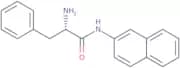
CAS:L-Phenylalanine b-naphthylamide is a phenylalanine derivative that can be used as an indicator for the detection of Clostridium, 2-naphthylamine, and other anaerobes. This compound is a chromogenic substrate that reacts with amino groups in amino acids and amides in peptides to form a variety of color products. The condensation of phenylalanine with 2-naphthylamine is catalyzed by enzymes found in clostridia. When L-phenylalanine b-naphthylamide is incubated with tissue from animals or humans, it produces a pink coloration that indicates the presence of clostridia. The aerobic conditions necessary for this reaction are also found in the environment and within the body.Formula:C19H18N2OPurity:Min. 95%Molecular weight:290.36 g/mol4-Nitrophenol
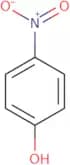
CAS:4-Nitrophenol is a chemical compound that is used in wastewater treatment to remove iron and copper ions. 4-Nitrophenol has been shown to catalyze the oxidation of picolinic acid by copper chloride, forming oxalic acid. The redox potential of 4-nitrophenol is -0.53 V, which makes it a suitable electron acceptor for the reaction. The reaction mechanism of this process involves the formation of a nitroso radical intermediate, which reacts with copper ions to form copper nitroso complexes and then reacts with oxygen to form hydroxylamine radicals. This reaction can also be followed using fluorescence probe measurements or electrochemical impedance spectroscopy (EIS).Formula:C6H5NO3Purity:Min. 95%Color and Shape:PowderMolecular weight:139.11 g/molCalcitonin N-Terminal Flanking Peptide (human)
CAS:Please enquire for more information about Calcitonin N-Terminal Flanking Peptide (human) including the price, delivery time and more detailed product information at the technical inquiry form on this pageFormula:C264H426N74O97SPurity:Min. 95%Molecular weight:6,220.71 g/molAmoxicillin dimer tri-sodium salt (penicilloic acid form) - mixture of diastereomers
<p>Please enquire for more information about Amoxicillin dimer tri-sodium salt (penicilloic acid form) - mixture of diastereomers including the price, delivery time and more detailed product information at the technical inquiry form on this page</p>Formula:C32H27N6Na3O11S2Purity:Min. 95%Molecular weight:804.69 g/mol4-Nitrophenylhydrazine hydrochloride
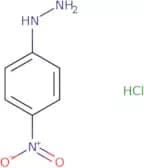
CAS:<p>4-Nitrophenylhydrazine hydrochloride is an organic compound that belongs to the class of hydrazines. It is a colorless solid that has a melting point of 202-204 °C. 4-Nitrophenylhydrazine hydrochloride is used in the synthesis of other compounds, such as trifluoroacetic acid and nucleophilic compounds. The chemical structure can be analyzed using nuclear magnetic resonance (NMR) spectroscopy, which shows that this compound contains amines and nitro groups. 4-Nitrophenylhydrazine hydrochloride is also soluble in water due to its acidic nature. This compound reacts with bases and alcohols to form salts, such as monosodium salt.</p>Formula:C6H7N3O2·HClPurity:Min. 95%Color and Shape:PowderMolecular weight:189.6 g/mol(-)-Ecgonine hydrochloride
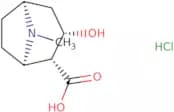
CAS:Controlled Product<p>(-)-Ecgonine hydrochloride is a benzoyl ester that is used as an analytical reagent. It is a precursor in the synthesis of cocaine and other drugs. Ecgonine hydrochloride can be extracted from plant sources, such as coca leaves or khat leaves, by acid-base extraction. It has been shown to have toxic effects on human serum and the liver, which may be due to its structural similarity to cocaine.</p>Formula:C9H16ClNO3Purity:Min. 95%Molecular weight:221.68 g/molSenecionine
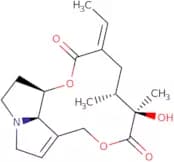
CAS:<p>Senecionine is a n-oxide that is found in the plant Senecio jacobaea. It has been shown to have insecticidal, antiparasitic, and anticancer activity. The mechanism of senecionine's cytotoxicity is not well understood, but it may be due to its ability to cause mitochondrial dysfunction and cell lysis. Senecionine also binds to p2y receptors, which are a family of G protein-coupled receptors that are involved in inflammation and immunity. The binding of senecionine to these receptors leads to the activation of phospholipase C and inhibition of adenylate cyclase. This results in an increase in intracellular calcium levels and subsequent cell lysis.</p>Formula:C18H25NO5Purity:Min. 95%Color and Shape:PowderMolecular weight:335.39 g/mol2-Naphthol
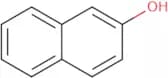
CAS:<p>2-Naphthol is an organic compound with the chemical formula C10H7O. It is a derivative of naphthalene, and is produced by the condensation of two molecules of malonic acid in the presence of a reducing agent such as sodium borohydride. 2-Naphthol is used as a pesticide and as a chemical intermediate in the production of other chemicals. 2-Naphthol has been shown to be toxic to humans and animals; it may cause liver damage, kidney damage, and skin irritation. The acute oral LD50 for rats is 690 mg/kg body weight. 2-Naphthol binds to cell receptors that are involved in a variety of physiological processes including heme transport, phagocytosis, oxidative burst, chemotaxis, and respiratory burst. This binding inhibits these functions leading to cell death.</p>Formula:C10H8OPurity:Min. 95%Color and Shape:White To Yellow To Pink To Light Brown SolidMolecular weight:144.17 g/mol4'-Hydroxy atomoxetine
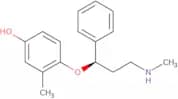
CAS:4'-Hydroxyatomoxetine is a metabolite of atomoxetine, which is a drug that is used to treat attention deficit hyperactivity disorder and narcolepsy. 4'-Hydroxyatomoxetine has been shown to have pharmacological properties similar to those of atomoxetine. However, it does not bind to the κ-opioid receptors, unlike its parent drug. The analytical method for this metabolite has been developed using liquid chromatography with tandem mass spectrometry. The major limitation with the analytical method is that it can be affected by matrix effects and hepatic impairment. This metabolite is glucuronidated and then conjugated with trifluoroacetic acid (TFA) before excretion in urine or bile. It also binds to kappa-opioid receptors, but at a lower affinity than its parent compound.Formula:C17H21NO2Purity:Min. 95%Color and Shape:PowderMolecular weight:271.35 g/mol5-Nitropyridin-3-ol
CAS:Please enquire for more information about 5-Nitropyridin-3-ol including the price, delivery time and more detailed product information at the technical inquiry form on this pageFormula:C5H4N2O3Purity:Min. 95%Molecular weight:140.1 g/molO-tert-Butyl-L-threonine tert-butyl ester
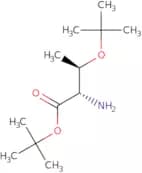
CAS:O-tert-Butyl-L-threonine tert-butyl ester is a bactericidal antibiotic that belongs to the class of galacturonic acid. It inhibits bacterial growth by binding to the enzyme transpeptidase, which is crucial in crosslinking peptidoglycan chains. This antibiotic has been shown to have antibacterial activity against bacteria such as Staphylococcus aureus and Streptococcus pyogenes. O-tert-Butyl-L-threonine tert-butyl ester has been used for the production of lactic acid from glucose in bioreactors. The lactic acid can be used for the production of polymers, and the fermentation process can be done using either yeast or bacteria, such as pastoris or trifluoroacetic acid. The reaction time is typically between 4 and 6 hours, at a temperature of 25 °C with an acid catalyst such as hydrochloric acidFormula:C12H25NO3Purity:Min. 98%Color and Shape:Slightly Yellow Clear LiquidMolecular weight:231.33 g/mol19-Hydroxy cholesterol
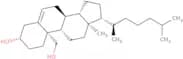
CAS:Controlled Product19-Hydroxy cholesterol is a sterol that is one of the primary products of cholesterol synthesis. It is a secondary bile acid and an oxysterol, which are produced in the liver during cholesterol metabolism. 19-Hydoxycholesterol has been shown to induce apoptosis in leukemia cells, as well as inhibit tumor cell growth. This compound can also inhibit the production of fatty acids by inhibiting β-unsaturated ketones, which are intermediates in the biosynthesis of fatty acids. The inhibition of these ketones leads to an increase in the production of n-3 fatty acids, which have been shown to have beneficial effects on human health. 19-Hydroxycholesterol can be detected using a chemical ionization method with gas chromatography and mass spectroscopy detection.Formula:C27H46O2Purity:Min. 95%Color and Shape:White/Off-White SolidMolecular weight:402.65 g/molDiethyl[2-(4-nitrophenoxy)ethyl]amine
CAS:Controlled ProductPlease enquire for more information about Diethyl[2-(4-nitrophenoxy)ethyl]amine including the price, delivery time and more detailed product information at the technical inquiry form on this pageFormula:C12H18N2O3Purity:Min. 95%Molecular weight:238.28 g/molTestosterone 3-(O-carboxymethyl)oxime
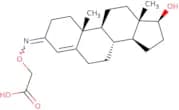
CAS:Controlled Product<p>Testosterone 3-(O-carboxymethyl)oxime is an inactive prodrug of testosterone. It is a potent and selective inhibitor of angiotensin II that causes vasodilation by blocking the conversion of angiotensin I to angiotensin II. Testosterone 3-(O-carboxymethyl)oxime has been shown to be effective in lowering blood pressure in patients with congestive heart failure, although it may cause side effects such as dizziness, headache, and nausea. This drug can also be used to treat prostate cancer because it inhibits the production of testosterone and reduces serum levels of luteinizing hormone. Testosterone 3-(O-carboxymethyl)oxime can also be used for diagnostic purposes as a marker for polycystic ovary syndrome (PCOS).</p>Formula:C21H31NO4Purity:Min. 95%Molecular weight:361.48 g/molValeric acid hydrazide
CAS:Valeric acid hydrazide (VAH) is a monoclonal antibody that binds to the receptor molecule. The binding of VAH to the receptor molecule leads to a change in the reaction mechanism and prevents the initiation of an immune response. This drug has been shown to have therapeutic properties in a number of autoimmune diseases, such as rheumatoid arthritis and multiple sclerosis, by blocking the production of TNF-α and other inflammatory cytokines. Valeric acid hydrazide also shows biological properties against cancerous cells. It inhibits the growth factor activity, which is believed to be responsible for tumor formation and growth. This agent may also inhibit angiogenesis by preventing endothelial cell proliferation and migration.Formula:C5H12N2OPurity:Min. 95%Molecular weight:116.16 g/mol(+)-(8,8-Dichlorocamphorylsulfonyl)oxaziridine
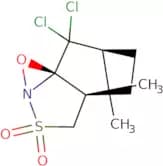
CAS:<p>Please enquire for more information about (+)-(8,8-Dichlorocamphorylsulfonyl)oxaziridine including the price, delivery time and more detailed product information at the technical inquiry form on this page</p>Formula:C10H13Cl2NO3SPurity:Min. 95%Molecular weight:298.19 g/mol(R)-3-Amino-butyric acid methyl ester
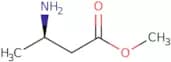
CAS:<p>Please enquire for more information about (R)-3-Amino-butyric acid methyl ester including the price, delivery time and more detailed product information at the technical inquiry form on this page</p>Formula:C5H11NO2Purity:Min. 95%Molecular weight:117.15 g/mol(NZ)-4-chloro-N-[1-[2-(4-nitrophenyl)ethyl]piperidin-2-ylidene]benzenesulfonamide
CAS:Controlled Product<p>Please enquire for more information about (NZ)-4-chloro-N-[1-[2-(4-nitrophenyl)ethyl]piperidin-2-ylidene]benzenesulfonamide including the price, delivery time and more detailed product information at the technical inquiry form on this page</p>Formula:C19H20ClN3O4SPurity:Min. 95%Molecular weight:421.9 g/mol14,15-Dehydro budesonide
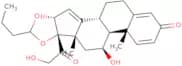
CAS:Please enquire for more information about 14,15-Dehydro budesonide including the price, delivery time and more detailed product information at the technical inquiry form on this pageFormula:C25H32O6Purity:Min. 95%Molecular weight:428.52 g/molEthyl isovalerate
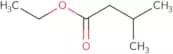
CAS:Ethyl isovalerate is a chemical with the formula CH3CH2CH2C(O)CH=CH2. It is an ester of acetic acid and valeric acid. It has a boiling point of 114°C and a density of 0.8994 g/mL at 20°C. Ethyl isovalerate has been shown to be thermally unstable, with significant expansion occurring when heated to 100°C. This chemical has been shown to have antibacterial properties against bacterial strains that are resistant to carvacrol, thymol, and cinnamaldehyde. Ethyl isovalerate also produces propionic acid when mixed with benzoic acid in liquid phase microextraction (LPME). The production of propionic acid may be due to the reaction between ethyl isovalerate and hydrogen fluoride on the surface of activated carbon particles in LPME. Ethyl decanoate can also be produced from this reaction by adding ethyl decFormula:C7H14O2Purity:Min. 95%Color and Shape:Clear LiquidMolecular weight:130.18 g/mol



![Diethyl[2-(4-nitrophenoxy)ethyl]amine](/_next/image/?url=https%3A%2Fstatic.cymitquimica.com%2Fproducts%2F3D%2Fthumb-webp%2FFD21808.webp&w=3840&q=75)

![(NZ)-4-chloro-N-[1-[2-(4-nitrophenyl)ethyl]piperidin-2-ylidene]benzenesulfonamide](/_next/image/?url=https%3A%2Fstatic.cymitquimica.com%2Fproducts%2F3D%2Fthumb-webp%2FFN154024.webp&w=3840&q=75)