Pharmaceutical Standards
Pharmaceutical standards are a comprehensive set of reference materials essential for ensuring the safety, efficacy, and quality of pharmaceutical products. This category includes standards for active pharmaceutical ingredients (APIs), which are the core components responsible for therapeutic effects. Additionally, it covers compounds and metabolites relevant to both the pharmaceutical and veterinary industries, providing benchmarks for the accurate measurement and analysis of these substances. Nitrosamine control standards are crucial for detecting and mitigating potentially harmful nitrosamines in drug formulations. Toxicology standards help assess the safety and potential adverse effects of pharmaceutical compounds. Furthermore, enzyme activators and inhibitors standards are vital for research and development, enabling precise studies of biochemical pathways and drug mechanisms. These pharmaceutical standards are indispensable tools for regulatory compliance, quality control, and research, ensuring that pharmaceutical products meet stringent safety and effectiveness criteria.
Subcategories of "Pharmaceutical Standards"
- APIs for research and impurities(274,920 products)
- Enzyme Activators and Inhibitors(2,827 products)
- Nitrosamines(2,606 products)
- Pharmaceutical and Veterinary Compounds and Metabolites(2,871 products)
- Toxicology(13,652 products)
Found 7836 products of "Pharmaceutical Standards"
Sort by
Purity (%)
0
100
|
0
|
50
|
90
|
95
|
100
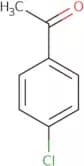
4'-Chloroacetophenone
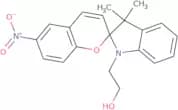
CAS:<p>4'-Chloroacetophenone is a chemical substance that is used in the synthesis of other substances. It has been shown to be an effective tool for cell-specific reactions, such as methyl ketones and benzaldehyde. 4'-Chloroacetophenone reacts with hydrochloric acid and palladium complexes to produce electron reduction, which leads to the activation of methyl ketones. This reaction provides a method for synthesizing molecules with a carbonyl group. The isolated yield of this reaction is dependent on the reaction solution temperature and concentration. The mechanism of this reaction appears to be Suzuki coupling reaction.</p>Formula:C8H7ClOPurity:Min. 95%Color and Shape:Clear Colourless To Pale Yellow LiquidMolecular weight:154.59 g/mol1-(2-Hydroxyethyl)-3,3-dimethylindolino-6'-nitrobenzopyrylospiran
CAS:<p>Please enquire for more information about 1-(2-Hydroxyethyl)-3,3-dimethylindolino-6'-nitrobenzopyrylospiran including the price, delivery time and more detailed product information at the technical inquiry form on this page</p>Purity:Min. 95%N-(1,2,3,4-Tetrahydro-7-methoxy-1-oxo-2-naphthalenyl)propanamide
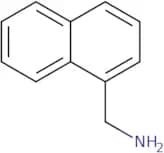
CAS:Controlled ProductPlease enquire for more information about N-(1,2,3,4-Tetrahydro-7-methoxy-1-oxo-2-naphthalenyl)propanamide including the price, delivery time and more detailed product information at the technical inquiry form on this pageFormula:C14H17NO3Purity:Min. 95%Molecular weight:247.29 g/mol1-(Aminomethyl)naphthalene
CAS:<p>1-(Aminomethyl)naphthalene is a hydrogen bond-forming molecule that has high values of hydrochloric acid. This compound reacts with sodium carbonate to form glycoside derivatives, which have been shown to display light emission. 1-(Aminomethyl)naphthalene can be used in the synthesis of oxytocin and toll-like receptor ligands, as well as other chemical reactions. The carbonyl group found in this molecule is responsible for the reactivity and stability of this compound.</p>Formula:C10H7CH2NH2Purity:Min. 95%Color and Shape:Clear Colourless To Yellow LiquidMolecular weight:157.21 g/mol[3-(1-Naphthyl)propyl]amine
CAS:3-(1-Naphthyl)propyl]amine is an organic compound that is a colorless solid with a melting point of -118°C. It is soluble in water, methanol, and acetone. 3-(1-Naphthyl)propyl]amine forms acid when heated with concentrated hydrochloric acid. The reaction produces hydrogen chloride gas and benzoic acid as a byproduct. 3-(1-Naphthyl)propyl]amine also reacts with pyridine to produce carbamic acid and ammonia gas as a byproduct. This can be rationalized systematically by the loss of the amine group from the nitrogen atom of the amine molecule. Carbamic acid has two acidic protons on it which are stabilized by the carbonyl group on the other side of the molecule. 3-(1-Naphthyl)propyl]amine can also react with anions such as carbonate ions to form carbamate salts,Formula:C13H15NPurity:Min. 95%Color and Shape:Clear LiquidMolecular weight:185.26 g/molAcetyl-D-methionine
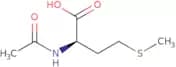
CAS:Acetyl-D-methionine is a type strain that belongs to the class of amino acids. It is necessary for protein synthesis and can be found in dietary concentrations. Acetyl-D-methionine has been shown to have enzyme activities, such as malonic acid formation and racemase activity, which are dependent on the bacterial strain. Acetyl-D-methionine has been demonstrated to be able to form a chelate with copper ions, which may contribute to its antimicrobial properties. Acetyl-D-methionine has been shown to inhibit the growth of Stenotrophomonas maltophilia in vitro and in vivo. Acetyl-D-methionine also inhibits the growth of Sprague Dawley rats infected with S. maltophilia when administered intravenously or orally.Formula:C7H13NO3SPurity:Min. 95%Molecular weight:191.25 g/molDomperidone impurity E
CAS:<p>Please enquire for more information about Domperidone impurity E including the price, delivery time and more detailed product information at the technical inquiry form on this page</p>Formula:C32H34ClN7O3Purity:Min. 95%Molecular weight:600.11 g/mol1,2,3,4-Tetrahydronaphthalen-2-amine hydrobromide
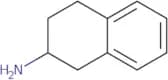
CAS:Controlled Product<p>1,2,3,4-Tetrahydronaphthalen-2-amine hydrobromide (THNA) is an amine that inhibits the enzyme tyrosine hydroxylase. This inhibition leads to a decrease in the synthesis of dopamine and norepinephrine. THNA has been shown to have inhibitory properties on locomotor activity, acid complex formation, and aminotransferases. It also exhibits receptor binding and agonist binding site activity. One study found that THNA had no effect on rat striatal tissue. The drug has been shown to be effective in metabolic disorders such as obesity.</p>Formula:C10H13NPurity:Min. 95%Molecular weight:147.22 g/molN-Cyano-N',S-dimethylisothiourea
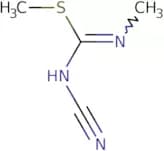
CAS:Please enquire for more information about N-Cyano-N',S-dimethylisothiourea including the price, delivery time and more detailed product information at the technical inquiry form on this pageFormula:C4H7N3SPurity:Min. 95%Molecular weight:129.18 g/mol3,3'-Diaminodiphenylmethane
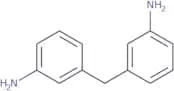
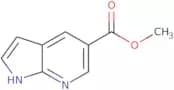
CAS:3,3'-Diaminodiphenylmethane is a diamine that is used in organic synthesis as an electron-deficient ligand. It is used to prepare metal complexes and as a catalyst for the preparation of various organic compounds. 3,3'-Diaminodiphenylmethane has been used as an imprinting agent to generate fluorescent labels on proteins, nucleotides, and peptides. 3,3'-Diaminodiphenylmethane also emits fluorescence when irradiated with ultraviolet light. This compound can be used to identify amines in urine samples by reacting with them under acidic conditions.Formula:C13H14N2Purity:Min. 95%Color and Shape:White To Tan To Orange SolidMolecular weight:198.26 g/mol7-Azaindole-5-carboxylic acid methyl ester
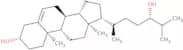
CAS:<p>7-Azaindole-5-carboxylic acid methyl ester is an ester derivative that can be synthesized from the reaction of acetyl chloride and diazotization. 7-Azaindole-5-carboxylic acid methyl ester has been used in research for its biological activity, specifically as a cytotoxic agent. It has also been shown to inhibit the growth of cancer cells by alkylation reactions and cyclization reactions. 7-Azaindole-5-carboxylic acid methyl ester has been shown to have antitumor properties with a mechanism that is not yet fully understood.</p>Formula:C9H8N2O2Purity:Min. 95%Molecular weight:176.17 g/mol24(S)-Hydroxycholesterol
CAS:Controlled Product<p>24(S)-Hydroxycholesterol is a cholesterol metabolite that is synthesized by the liver and can be found in human serum. It has been shown to be an important inducer of transcriptional regulation, as it regulates the expression of genes involved in lipid metabolism and inflammatory response. 24(S)-Hydoxycholesterol is also an activator of the peroxisome proliferator-activated receptor (PPAR) and may cause hepatic steatosis. This molecule has potent activity in inducing polymerase chain reaction (PCR) and protein synthesis in neuronal cells, leading to neuronal death. The molecule also induces apoptosis by caspase-independent cell death, which is mediated by mitochondrial membrane potential. 24(S)-Hydoxycholesterol may serve as a biomarker for nonsteroidal anti-inflammatory drugs (NSAIDs), with low potency against these drugs.br></p>Formula:C27H46O2Purity:Min. 95%Color and Shape:PowderMolecular weight:402.65 g/mol2N-Boc-2',2''-triaminotriethylamine
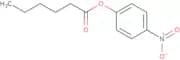
CAS:Please enquire for more information about 2N-Boc-2',2''-triaminotriethylamine including the price, delivery time and more detailed product information at the technical inquiry form on this pageFormula:C11H26N4O2Purity:Min. 95%Color and Shape:Yellow PowderMolecular weight:246.35 g/mol4-Nitrophenyl hexanoate
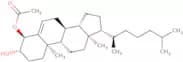
CAS:4-Nitrophenyl hexanoate is an acyl phosphate monoclonal antibody (aMAb) that binds to the enzyme hydroxylase, which converts 4-nitrophenol to p-nitrophenol. This aMAb has been shown to inhibit the activity of this enzyme and its conversion of 4-nitrophenol to p-nitrophenol, leading to its use in biochemical studies as a model for monooxygenase enzymes. The reaction mechanism for this aMAb is believed to be that it reacts with the acyl chain of hydroxylase and hinders the active site from binding 4-nitrophenol. 4-Nitrophenyl hexanoate also has a cationic surfactant that can bind or react with proteins or nucleic acids by electrostatic interactions or hydrogen bonding. It is also able to form polymers with other monoclonal antibodies and has been used in protein purification processesFormula:C12H15NO4Purity:Min. 98 Area-%Color and Shape:Colorless Clear LiquidMolecular weight:237.25 g/mol4β-Hydroxy cholesterol 4-acetate
CAS:Controlled Product<p>4b-Hydoxy cholesterol 4-acetate is a pleiotropic drug with a wide range of pharmacological activities. It is an inhibitor of the sirtuin family of proteins and may have anti-cancer effects. It has also been shown to be effective in the treatment of depression and myelodysplastic syndrome. The mechanism of action for this agent is not well understood, but it may be due to its ability to inhibit DNA methyltransferases, which would lead to a change in DNA methylation patterns. 4b-Hydroxy cholesterol 4-acetate has also been shown to decrease lipid levels in the blood and increase the activity of liver enzymes that metabolize fatty acids. This drug can also modify lamellar bodies and short-chain fatty acids by inhibiting the enzyme ATP citrate lyase, which catalyzes citrate cleavage into acetyl CoA and oxaloacetate.</p>Formula:C29H48O3Purity:Min. 95%Molecular weight:444.69 g/molL-Methionine sulfoxide
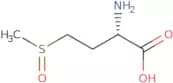
CAS:<p>Methionine sulfoxide is a methionine that has been oxidized to methionine sulfoxide. Methionine sulfoxides are produced through protein oxidation, which is the chemical process of reacting with oxygen in the air or other compounds to form an organic peroxide and superoxide radical. Methionine sulfoxides are found in proteins and are formed as a result of oxidative stress on cells and tissues. The rate constant for the conversion of methionine to methionine sulfoxide is 0.01983 min-1 at pH 7, 25°C. There are two methods of detection: chemiluminescence method and chromatographic analysis. In addition, methionine sulfoxides have natural antioxidant properties that can be used to treat diseases such as Alzheimer's disease and Parkinson's disease, as well as cancer treatments. Methionine sulfoxides have been shown to have a significant effect on wild-type strains of bacteria, reducing their growth rates</p>Formula:C5H11NO3SPurity:Min. 98 Area-%Color and Shape:White PowderMolecular weight:165.21 g/molR-(-)-Apocodeine hydrochloride
CAS:Controlled Product<p>Apocodeine hydrochloride is a natural product that is used in the treatment of cancer. It has been shown to have antiproliferative effects on cho-k1 cells, which are human colon carcinoma cells. Apocodeine hydrochloride also inhibits the production of dopamine in rat brain and has been shown to inhibit bromocriptine-induced prolactin release from rat pituitary cells in vitro. Apocodeine hydrochloride has been extensively studied in epidemiological studies and has been found to be effective against cancer, with no adverse side effects.</p>Formula:C18H20ClNO2Purity:Min. 95%Color and Shape:PowderMolecular weight:317.81 g/mol2-Bromo-3-methylbutenoic acid methyl ester
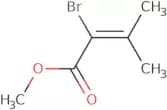
CAS:<p>Please enquire for more information about 2-Bromo-3-methylbutenoic acid methyl ester including the price, delivery time and more detailed product information at the technical inquiry form on this page</p>Formula:C6H9BrO2Purity:Min. 95%Molecular weight:193.04 g/mol1-(2-Amino-5-nitrophenyl)ethanone
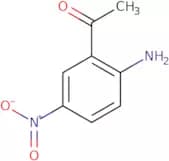
CAS:Please enquire for more information about 1-(2-Amino-5-nitrophenyl)ethanone including the price, delivery time and more detailed product information at the technical inquiry form on this pageFormula:C8H8N2O3Purity:Min. 95%Molecular weight:180.16 g/mol4’-Hydroxy diclofenac-13C6
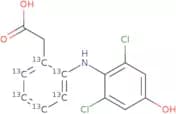
CAS:Please enquire for more information about 4’-Hydroxy diclofenac-13C6 including the price, delivery time and more detailed product information at the technical inquiry form on this pageFormula:C6C8H11Cl2NO3Purity:Min. 95%Color and Shape:PowderMolecular weight:318.15 g/mol


![[3-(1-Naphthyl)propyl]amine](/_next/image/?url=https%3A%2Fstatic.cymitquimica.com%2Fproducts%2F3D%2Fthumb-webp%2FFN134365.webp&w=3840&q=75)