Pharmaceutical Standards
Pharmaceutical standards are a comprehensive set of reference materials essential for ensuring the safety, efficacy, and quality of pharmaceutical products. This category includes standards for active pharmaceutical ingredients (APIs), which are the core components responsible for therapeutic effects. Additionally, it covers compounds and metabolites relevant to both the pharmaceutical and veterinary industries, providing benchmarks for the accurate measurement and analysis of these substances. Nitrosamine control standards are crucial for detecting and mitigating potentially harmful nitrosamines in drug formulations. Toxicology standards help assess the safety and potential adverse effects of pharmaceutical compounds. Furthermore, enzyme activators and inhibitors standards are vital for research and development, enabling precise studies of biochemical pathways and drug mechanisms. These pharmaceutical standards are indispensable tools for regulatory compliance, quality control, and research, ensuring that pharmaceutical products meet stringent safety and effectiveness criteria.
Subcategories of "Pharmaceutical Standards"
- APIs for research and impurities(274,905 products)
- Enzyme Activators and Inhibitors(2,827 products)
- Nitrosamines(2,605 products)
- Pharmaceutical and Veterinary Compounds and Metabolites(2,871 products)
- Toxicology(13,652 products)
Found 7836 products of "Pharmaceutical Standards"
Sort by
Purity (%)
0
100
|
0
|
50
|
90
|
95
|
100
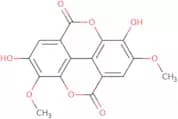
3,4’-O-dimethylellagic acid
CAS:<p>3,4’-O-dimethylellagic acid is a phenolic compound, which is a type of ellagic acid derivative. It is derived from natural sources, typically found in various fruits, nuts, and vegetables, particularly in certain berries and pomegranates. The compound is formed through the methylation of ellagic acid, which amplifies its lipophilicity and enhances its bioavailability.</p>Purity:Min. 95%3-(4'-Methoxy-3'-sulfonamidophenyl)-2-propylamine, hydrochloride
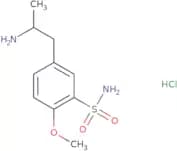
CAS:Controlled ProductPlease enquire for more information about 3-(4'-Methoxy-3'-sulfonamidophenyl)-2-propylamine, hydrochloride including the price, delivery time and more detailed product information at the technical inquiry form on this pageFormula:C10H16N2O3S•HClPurity:Min. 95%Color and Shape:PowderMolecular weight:280.77 g/molEnt-paroxetine hydrochloride
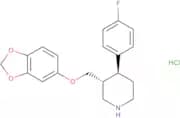
CAS:Controlled Product<p>Please enquire for more information about Ent-paroxetine hydrochloride including the price, delivery time and more detailed product information at the technical inquiry form on this page</p>Formula:C19H21ClFNO3Purity:Min. 95%Color and Shape:PowderMolecular weight:365.83 g/mol(R)-(-)-3-Hydroxybutyric acid methyl ester
CAS:<p>(R)-(-)-3-Hydroxybutyric acid methyl ester is a monocarboxylic acid that is metabolized by phosphofructokinase and other enzymes to produce the corresponding 3-hydroxybutyrate. This compound is synthesized from tiglic acid, which can be obtained from corynebacterium. The production of (R)-(-)-3-Hydroxybutyric acid methyl ester can be optimized by using a biotransformation process. This process includes enzymatic reactions and chemical transformations, such as hydroxylation, carbonylation, and stereoselective synthesis. The metabolic pathway for this compound has been studied using a DNA microarray analysis.</p>Formula:C5H10O3Purity:Min. 95%Molecular weight:118.13 g/molBoc-D-aspartic acid β-9-fluorenylmethyl ester
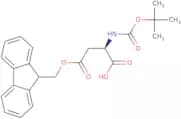
CAS:<p>Please enquire for more information about Boc-D-aspartic acid beta-9-fluorenylmethyl ester including the price, delivery time and more detailed product information at the technical inquiry form on this page</p>Formula:C23H25NO6Purity:Min. 95%Molecular weight:411.45 g/mol1-Tosy-3-(1-naphthoyl)pyrrole
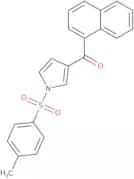
CAS:Controlled ProductPlease enquire for more information about 1-Tosy-3-(1-naphthoyl)pyrrole including the price, delivery time and more detailed product information at the technical inquiry form on this pageFormula:C22H17NO3SPurity:Min. 95%Molecular weight:375.44 g/mol3,4-Dinitrophenol
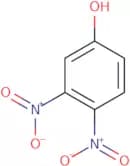
CAS:Controlled Product<p>3,4-Dinitrophenol is a yellow solid that is chemically synthesized from 2,4-dinitrobenzene and morpholine. 3,4-Dinitrophenol is a high energy compound with an activation energy of about 28 kcal/mol. The endpoints for the reaction are oligosaccharides and the acceptor is an ionisation mass. This molecule has a pyrazole ring and can be classified as belonging to group P2 on the periodic table of elements. 3,4-Dinitrophenol has been found to have biological functions in organic solvents such as acetone or benzene.</p>Formula:C6H4N2O5Purity:Min. 95%Color and Shape:PowderMolecular weight:184.11 g/molL-Tyrosine 4-nitroanilide
CAS:<p>Please enquire for more information about L-Tyrosine 4-nitroanilide including the price, delivery time and more detailed product information at the technical inquiry form on this page</p>Formula:C15H15N3O4Purity:Min. 95%Molecular weight:301.3 g/molgamma-Butyrobetaine hydrochloride
CAS:<p>Gamma-butyrobetaine hydrochloride (GBB) is a metabolite of gamma-butyrobetaine, which is found in the human body. GBB is synthesized from lysine and methionine through an enzymatic pathway that starts with the conversion of lysine to homocysteine. GBB is then converted to gamma-butyrobetaine by methylating the hydroxyl group on its terminal carbon. GBB can be found in urine samples as well as in carnitine and fatty acid metabolism. It has been shown to have an inhibitory effect on creatine kinase and can be used to diagnose metabolic disorders such as carnitine deficiency or prognosis following a heart attack.</p>Formula:C7H16ClNO2Purity:Min. 95%Color and Shape:PowderMolecular weight:181.66 g/molMexiletine
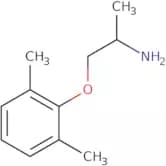
CAS:Mexiletine is a drug that belongs to the class of drugs called antiarrhythmics. It is used for the treatment of ventricular arrhythmias and for removing cardiac conduction abnormalities. Mexiletine acts by inhibiting the release of calcium ions from the sarcoplasmic reticulum, which leads to a reduction in excitability of the heart muscle. Mexiletine has been shown to have a matrix effect on bacterial DNA, which may be due to its ability to bind with dinucleotide phosphate or its inhibitory effects on hypersensitivity syndrome. Mexiletine also has an effect on cardiac tissue, leading to decreased contractility and increased relaxation time. The mechanism by which mexiletine leads to these effects is not well understood but may be related to its ability to interact with ion channels in myocardial cells or alter protein function in these cells. Mexiletine has been shown to have some drug interactions, such as with other drugs that are metabolized through cyFormula:C11H17NOPurity:Min. 95%Color and Shape:Yellow Clear LiquidMolecular weight:179.26 g/molNorfluoxetine HCl
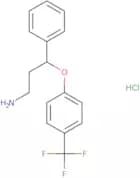
CAS:Fluoxetine is a selective serotonin reuptake inhibitor that belongs to the group of drugs known as antidepressants. Fluoxetine inhibits the uptake of serotonin by neurons, which increases serotonin levels in the synaptic cleft and allows it to bind to postsynaptic receptors. Norfluoxetine is a metabolite of fluoxetine and its pharmacological effects are similar to those of fluoxetine. It has been shown that norfluoxetine inhibits the binding of 5-hydroxytryptamine (5-HT) to 5-HT1A receptors. Norfluoxetine is also used as an analytical method for quantifying 5-HT concentrations in cells and tissues.Formula:C16H17ClF3NOPurity:Min. 95%Color and Shape:SolidMolecular weight:331.76 g/mol3,4'-Dihexyl-2,2'-bithiophene
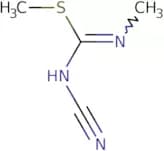
CAS:<p>Please enquire for more information about 3,4'-Dihexyl-2,2'-bithiophene including the price, delivery time and more detailed product information at the technical inquiry form on this page</p>Purity:Min. 95%N-Cyano-N',S-dimethylisothiourea
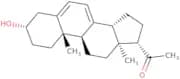
CAS:<p>Please enquire for more information about N-Cyano-N',S-dimethylisothiourea including the price, delivery time and more detailed product information at the technical inquiry form on this page</p>Formula:C4H7N3SPurity:Min. 95%Molecular weight:129.18 g/mol(3b,9b,10a)-3-Hydroxy-pregna-5,7-dien-20-one
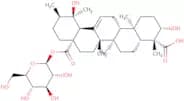
CAS:Controlled Product<p>Please enquire for more information about (3b,9b,10a)-3-Hydroxy-pregna-5,7-dien-20-one including the price, delivery time and more detailed product information at the technical inquiry form on this page</p>Formula:C21H30O2Purity:Min. 95%Molecular weight:314.46 g/molIlexsaponin A1
CAS:Ilexsaponin A1 is a natural saponin compound, which is derived from the plant Ilex pubescens. As a bioactive compound, it possesses a characteristic glycoside structure that facilitates its interaction with biological membranes. The mode of action of Ilexsaponin A1 involves modulating inflammatory pathways, likely through the inhibition of pro-inflammatory cytokine production and the suppression of related signaling cascades.Purity:Min. 95%2-Phenyl-2-(p-toluenesulfonyloxy)acetophenone
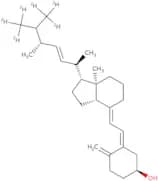
CAS:2-Phenyl-2-(p-toluenesulfonyloxy)acetophenone is a diphenyl ether that is used in the production of polymers as an antireflection agent and an acid catalyst. It can be used to modify polymer properties such as optical properties or cross-linking. The compound has been shown to have a particle size of 2 to 10 nm in diameter, which can be adjusted by changing the reaction conditions.Formula:C21H18O4SPurity:Min. 95%Color and Shape:PowderMolecular weight:366.43 g/molVitamin D2-d6
CAS:Controlled ProductVitamin D2-D6 is a dietary supplement that comes in the form of an oil. It is an ionizable vitamin and is structurally similar to Vitamin D3. The most common form of this vitamin is cholecalciferol, which is found in fish oils and dairy products. Vitamin D2-D6 has been shown to be efficacious at increasing mineralization in skin cells, as well as preventing symptoms of rickets. This nutrient also assists with calcium metabolism and the absorption of dietary calcium. It can be taken by infants or adults who may have low levels of Vitamin D due to a lack of exposure to sunlight or ingestion of a poor diet.Formula:C28H38D6OPurity:Min. 99.0 Area-%Color and Shape:PowderMolecular weight:402.68 g/molBenzoyl ecgonine isopropyl ester
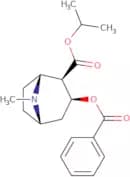
CAS:Controlled ProductBenzoyl ecgonine isopropyl ester is an analytical toxicology procedure that is used to identify the presence of cocaine in biological samples. The sample preparation involves homogenizing the sample, extracting it with solvents, and evaporating the solvent. Benzoyl ecgonine isopropyl ester is then incubated at room temperature for 15 minutes before adding a solution of hydrochloric acid and potassium dichromate. A color change from yellow to orange indicates the presence of cocaine. This test can be performed on either whole blood or plasma samples and can also be used to detect other drugs such as amphetamines, barbiturates, benzodiazepines, and opiates.Formula:C19H25NO4Purity:Min. 95%Molecular weight:331.41 g/mol3a-Hydroxy tibolone
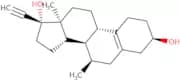
CAS:Controlled Product<p>Tibolone is a synthetic hormone that is used in the treatment of menopausal symptoms and breast cancer. Tibolone has been shown to be an effective treatment for menopausal symptoms, such as hot flashes and vaginal dryness, by providing relief from these symptoms. Tibolone has also been shown to have anti-cancer effects. This drug may be useful for treating breast cancer because it can inhibit the growth of cancer cells by binding to estrogen receptors and blocking estrogen-induced cell proliferation. Tibolone also stimulates angiogenesis, which is the formation of new blood vessels in order to provide nutrients and oxygen to growing tissue. It has been shown that this drug inhibits the synthesis of hepg2 cells in vitro, which are involved in the production of angiogenic factors. Tibolone may also have clinical relevance as a chemopreventive agent against prostate cancer.BR> Tibolone has also been shown to stimulate sulphatase activity in vitro, which may contribute to</p>Formula:C21H30O2Purity:Min. 95%Molecular weight:314.46 g/mol(3β,5β,17α)-19-Norpregnane-3,17-diol
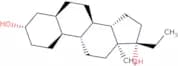
CAS:Controlled Product<p>Please enquire for more information about (3β,5β,17α)-19-Norpregnane-3,17-diol including the price, delivery time and more detailed product information at the technical inquiry form on this page</p>Formula:C20H34O2Purity:Min. 95%Color and Shape:PowderMolecular weight:306.48 g/mol