Pharmaceutical Standards
Pharmaceutical standards are a comprehensive set of reference materials essential for ensuring the safety, efficacy, and quality of pharmaceutical products. This category includes standards for active pharmaceutical ingredients (APIs), which are the core components responsible for therapeutic effects. Additionally, it covers compounds and metabolites relevant to both the pharmaceutical and veterinary industries, providing benchmarks for the accurate measurement and analysis of these substances. Nitrosamine control standards are crucial for detecting and mitigating potentially harmful nitrosamines in drug formulations. Toxicology standards help assess the safety and potential adverse effects of pharmaceutical compounds. Furthermore, enzyme activators and inhibitors standards are vital for research and development, enabling precise studies of biochemical pathways and drug mechanisms. These pharmaceutical standards are indispensable tools for regulatory compliance, quality control, and research, ensuring that pharmaceutical products meet stringent safety and effectiveness criteria.
Subcategories of "Pharmaceutical Standards"
- APIs for research and impurities(274,845 products)
- Enzyme Activators and Inhibitors(2,827 products)
- Nitrosamines(2,605 products)
- Pharmaceutical and Veterinary Compounds and Metabolites(2,869 products)
- Toxicology(13,652 products)
Found 7836 products of "Pharmaceutical Standards"
Sort by
Purity (%)
0
100
|
0
|
50
|
90
|
95
|
100
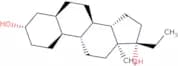
(3β,5β,17α)-19-Norpregnane-3,17-diol
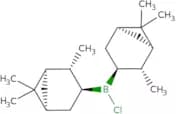
CAS:Controlled Product<p>Please enquire for more information about (3β,5β,17α)-19-Norpregnane-3,17-diol including the price, delivery time and more detailed product information at the technical inquiry form on this page</p>Formula:C20H34O2Purity:Min. 95%Color and Shape:PowderMolecular weight:306.48 g/mol(+)-B-Chlorodiisopinocampheylborane - 60-65% in Hexane
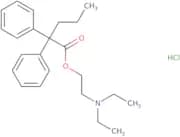
CAS:(+)-B-Chlorodiisopinocampheylborane is a chiral organoboron reagent that can be used for the enantioselective synthesis of amines. It is prepared from the reaction of chlorodiphenyl borane with (+)-diaminobenzene in hexane. The product can be purified by column chromatography or recrystallization. (+)-B-Chlorodiisopinocampheylborane can also be used in the synthesis of other compounds, such as pyrroles and pantolactones. It is an excellent catalyst for the dehydration of primary amines to give unsymmetrical ketones. This reagent has been shown to be effective in asymmetric hydrogenation reactions, such as the reduction of chiral secondary alcohols, and is also capable of catalyzing aldol reactions.Formula:C20H34BClPurity:Min. 95%Color and Shape:Clear LiquidMolecular weight:320.75 g/molN,N-Diethylaminoethyl 2,2-diphenylvalerate hydrochloride
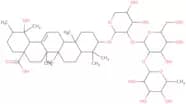
CAS:Controlled Product<p>N,N-Diethylaminoethyl 2,2-diphenylvalerate hydrochloride is a depressant drug that inhibits the growth of bacteria by inhibiting fatty acid synthesis. It has been shown to inhibit group P2 enzymes that are involved in the production of fatty acids. In this way, it inhibits the formation and release of ATP, which is essential for bacterial growth. N,N-Diethylaminoethyl 2,2-diphenylvalerate hydrochloride also has inhibitory properties against bacteria that cause infectious diseases. This drug is effective against Hl-60 cells and can be used as a diagnostic tool for detection sensitivity and detection time.</p>Formula:C23H32ClNO2Purity:Min. 95%Molecular weight:389.96 g/molIlexsaponin B2
CAS:<p>Ilexsaponin B2 is a triterpenoid saponin, which is a bioactive compound extracted from plants in the Ilex genus, such as Ilex pubescens. These saponins are characterized by their glycosidic linkages to sapogenins, typically influencing membrane permeability and exhibiting diverse biological activities.</p>Purity:Min. 95%2,6-Dibromoanthracene
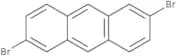
CAS:<p>2,6-Dibromoanthracene is an aromatic hydrocarbon that can be synthesized in a cross-coupling reaction. It has been shown to have a high electron mobility and good thermal stability. The compound was prepared by the Suzuki coupling reaction of 2,6-dibromobenzene with phenylboronic acid. This product has no commercial use but has been tested for its transport properties and has been found to be activated by heat.</p>Purity:Min. 95%5,5'-Thiodisalicylic Acid
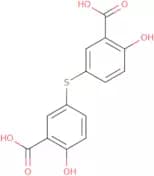
CAS:<p>5,5'-Thiodisalicylic Acid is a reactive functional group with a silver ion. This compound has a hydrochloric acid and hydroxy group that react to form a hydroxyl group with the proton. It also has a nitrogen atom, which can be found in the reactive acidic hydroxyl group of 5,5'-thiodisalicylic acid. The fatty acids are viscosity and carbonyl groups. 5,5'-Thiodisalicylic Acid is an organic compound that reacts with chloride to form patterns.</p>Purity:Min. 95%2,2'-Methylenebis(6-tert-butyl-p-cresol)
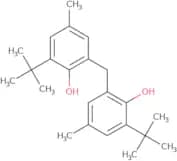
CAS:<p>2,2'-Methylenebis(6-tert-butyl-p-cresol) is a phenolic compound that is used as a chemical stabilizer in the production of polyvinyl chloride and polystyrene. It has also been shown to be an effective antioxidant for polypropylene. 2,2'-Methylenebis(6-tert-butyl-p-cresol) has been shown to inhibit skin cancer, bladder cancer, and hemolytic activity in vitro. This product can cause mild skin irritation, but it does not appear to be toxic when ingested orally or applied topically.</p>Formula:C23H32O2Purity:Min. 95%Molecular weight:340.5 g/mol5,5'-Dinitro-2H,2'H-3,3'-bi-1,2,4-triazole
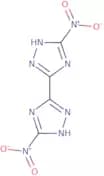
CAS:Controlled Product<p>Please enquire for more information about 5,5'-Dinitro-2H,2'H-3,3'-bi-1,2,4-triazole including the price, delivery time and more detailed product information at the technical inquiry form on this page</p>Formula:C4H2N8O4Purity:Min. 95%Molecular weight:226.11 g/molrac 8-Hydroxy efavirenz
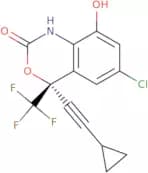
CAS:<p>Efavirenz is a non-nucleoside reverse transcriptase inhibitor (NNRTI) used in the treatment of HIV. It has been shown to be reactive with sodium carbonate, forming a stable complex that can be measured by LC-MS/MS. The formation rate of this complex may be influenced by the presence of other drugs, such as rifampin, which inhibits cytochrome P450 activity and reduces efavirenz metabolism. This drug has been shown to inhibit human Cytochrome P450 3A4 (CYP3A4) and may have increased plasma concentrations when administered with CYP3A4 inhibitors such as ketoconazole or erythromycin. Efavirenz is also metabolized in the liver by cytochrome P450 enzymes, mainly CYP3A4. Pharmacokinetic modeling has been used to study the drug's effects on hepatic clearance and plasma concentrations in humans.</p>Formula:C14H9ClF3NO3Purity:Min. 95%Color and Shape:White PowderMolecular weight:331.67 g/mol3-O-Acetyl-26-hydroxy cholesterol
CAS:Controlled ProductPlease enquire for more information about 3-O-Acetyl-26-hydroxy cholesterol including the price, delivery time and more detailed product information at the technical inquiry form on this pageFormula:C29H48O3Purity:Min. 95%Molecular weight:444.69 g/mol2,2'-Dichlorodiethyl ether
CAS:Controlled Product2,2'-Dichlorodiethyl ether (2,2-DDE) is a cationic surfactant that is used in the production of fluorocarbons and other chemicals. It is also used in wastewater treatment as an oxidizing agent. 2,2'-DDE is toxic to humans, with a blood group toxicity profile similar to that of ethylene glycol and diethylene glycol. 2,2'-DDE can be found in the environment due to its use as a component in products and its presence in wastewaters. 2,2'-DDE has been shown to be reactive with hydrogen fluoride and oxidation catalyst, which may cause interactive effects when it is present at high concentrations. This chemical has been shown to induce cell death through histological analysis on cell cultures. Reaction mechanism for this chemical is not known.Formula:C4H8Cl2OPurity:Min. 95%Color and Shape:Clear LiquidMolecular weight:143.01 g/mol3',5'-Dibromo-2'-hydroxyacetophenone
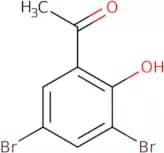
CAS:<p>Please enquire for more information about 3',5'-Dibromo-2'-hydroxyacetophenone including the price, delivery time and more detailed product information at the technical inquiry form on this page</p>Formula:C8H6Br2O2Purity:Min. 95%Molecular weight:293.94 g/mol3a-Hydroxy tibolone
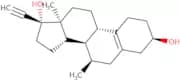
CAS:Controlled Product<p>Tibolone is a synthetic hormone that is used in the treatment of menopausal symptoms and breast cancer. Tibolone has been shown to be an effective treatment for menopausal symptoms, such as hot flashes and vaginal dryness, by providing relief from these symptoms. Tibolone has also been shown to have anti-cancer effects. This drug may be useful for treating breast cancer because it can inhibit the growth of cancer cells by binding to estrogen receptors and blocking estrogen-induced cell proliferation. Tibolone also stimulates angiogenesis, which is the formation of new blood vessels in order to provide nutrients and oxygen to growing tissue. It has been shown that this drug inhibits the synthesis of hepg2 cells in vitro, which are involved in the production of angiogenic factors. Tibolone may also have clinical relevance as a chemopreventive agent against prostate cancer.BR> Tibolone has also been shown to stimulate sulphatase activity in vitro, which may contribute to</p>Formula:C21H30O2Purity:Min. 95%Molecular weight:314.46 g/molN-Cyano-N',S-dimethylisothiourea
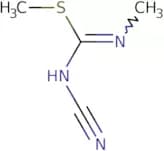
CAS:<p>Please enquire for more information about N-Cyano-N',S-dimethylisothiourea including the price, delivery time and more detailed product information at the technical inquiry form on this page</p>Formula:C4H7N3SPurity:Min. 95%Molecular weight:129.18 g/molS-Ethylisothio urea, hydrobromide
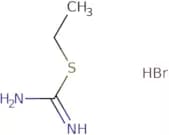
CAS:S-Ethylisothio urea, hydrobromide is a nitric oxide (NO) synthase inhibitor that prevents the conversion of arginine to NO. It has been shown to inhibit protein synthesis in cells, which may be due to its ability to inhibit guanylate cyclase and intracellular calcium concentrations. S-Ethylisothio urea, hydrobromide has been used in experimental models as an anti-inflammatory drug for the treatment of autoimmune diseases like rheumatoid arthritis. This compound also blocks the production of NO by inhibiting the oxygen transport system in the lungs, which is required for redox potential. S-Ethylisothio urea, hydrobromide is a cyclase inhibitor that prevents the conversion of dehydroascorbic acid to ascorbic acid. It can be used as an antioxidant by scavenging reactive oxygen species and preventing oxidative damage.Formula:C3H9BrN2SPurity:Min. 95%Molecular weight:185.09 g/mol2-(Morophlin-4-yl)-1,2,3,4-tetrahydronaphthalene
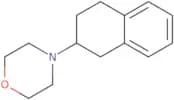
CAS:Controlled Product<p>Please enquire for more information about 2-(Morophlin-4-yl)-1,2,3,4-tetrahydronaphthalene including the price, delivery time and more detailed product information at the technical inquiry form on this page</p>Formula:C14H19NOPurity:Min. 95%Molecular weight:217.31 g/mol9-cisRetinol
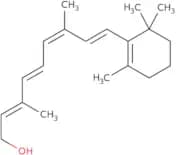
CAS:<p>9-cisRetinol is a form of vitamin A that plays an important role in the synthesis of lipids and proteins. It has been shown to inhibit acid formation in the liver and to stimulate growth in some types of cancer cells. 9-cisRetinol is converted to all-trans retinoic acid, which is a nuclear hormone receptor that regulates gene expression. It also has been shown to be effective in clinical studies for the treatment of congenital amaurosis and cancer. 9-cisRetinol can inhibit phospholipase A2, which prevents the release of arachidonic acid from membrane phospholipids, as well as inhibit prostaglandin synthesis. The optimum pH for 9-cisRetinol activity is between 7 and 8.</p>Formula:C20H30OPurity:Min. 95%Molecular weight:286.45 g/mol2,6-Diisopropylnaphthalene
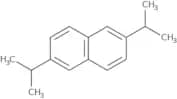
CAS:<p>Epidermal growth factor (EGF) is a polypeptide hormone that stimulates mitosis and cell growth. In some cases, it can act as an autocrine or paracrine hormone. Epidermal growth factor is used to stimulate the renewal of cells in the skin and mucous membranes. It also has been shown to have anti-inflammatory properties, which may be due to its ability to inhibit the release of inflammatory mediators such as prostaglandins and leukotrienes. 2,6-Diisopropylnaphthalene (2,6-DNP) is an antimicrobial agent that binds to the cell nucleus and inhibits transcription and translation of DNA into RNA by binding to RNA polymerase II. This binding prevents formation of transcription complexes with the cell factor necessary for transcription. 2,6-DNP has been shown to reduce disease activity in patients with inflammatory bowel disease in a clinical trial when used alone or in combination with other agents. The</p>Formula:C16H20Purity:Min. 95%Molecular weight:212.33 g/molL-Aspartic acid alpha-tert-butyl ester
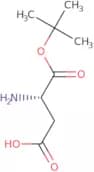
CAS:<p>L-Aspartic acid alpha-tert-butyl ester is a synthetic amino acid that can be used as a substrate for the synthesis of L-cysteine in the presence of selenomethionine. This compound is an auxotroph and cannot be synthesized by the body, so it must be obtained through diet or supplementation. It has been shown to have anti-cancer properties, which may be due to its role in regulating cell proliferation, apoptosis, and angiogenesis. L-Aspartic acid alpha-tert-butyl ester may also inhibit colon cancer cells by preventing them from recycling proteins. This compound was shown to inhibit HCT116 human colon cancer cells in both experimentally and computationally studies. Additionally, this molecule was seen to induce tumor regression in mice with colitis by inhibiting eukaryotic protein synthesis. This inhibition was found to be mediated through a trifluoromethyl group on the molecule's</p>Formula:C8H15NO4Purity:Min. 95%Color and Shape:PowderMolecular weight:189.21 g/molrac-cis despropionyl mefentanyl N-trifluoroacetate
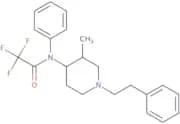
CAS:Controlled Product<p>Please enquire for more information about rac-cis despropionyl mefentanyl N-trifluoroacetate including the price, delivery time and more detailed product information at the technical inquiry form on this page</p>Formula:C22H25F3N2OPurity:Min. 95%Molecular weight:390.44 g/mol