Pharmaceutical Standards
Pharmaceutical standards are a comprehensive set of reference materials essential for ensuring the safety, efficacy, and quality of pharmaceutical products. This category includes standards for active pharmaceutical ingredients (APIs), which are the core components responsible for therapeutic effects. Additionally, it covers compounds and metabolites relevant to both the pharmaceutical and veterinary industries, providing benchmarks for the accurate measurement and analysis of these substances. Nitrosamine control standards are crucial for detecting and mitigating potentially harmful nitrosamines in drug formulations. Toxicology standards help assess the safety and potential adverse effects of pharmaceutical compounds. Furthermore, enzyme activators and inhibitors standards are vital for research and development, enabling precise studies of biochemical pathways and drug mechanisms. These pharmaceutical standards are indispensable tools for regulatory compliance, quality control, and research, ensuring that pharmaceutical products meet stringent safety and effectiveness criteria.
Subcategories of "Pharmaceutical Standards"
- APIs for research and impurities(274,823 products)
- Enzyme Activators and Inhibitors(2,827 products)
- Nitrosamines(2,605 products)
- Pharmaceutical and Veterinary Compounds and Metabolites(2,869 products)
- Toxicology(13,652 products)
Found 7836 products of "Pharmaceutical Standards"
Sort by
Purity (%)
0
100
|
0
|
50
|
90
|
95
|
100
Luteinizing Hormone-Releasing Hormone Antagonist trifluoroacetate salt
CAS:<p>Luteinizing Hormone-Releasing Hormone Antagonist trifluoroacetate salt is a potent antagonist of the luteinizing hormone-releasing hormone (LHRH) receptor. It is used specifically to treat platinum-resistant ovarian cancer, where it has been shown to be effective in reducing tumor size and volume. This drug has minimal toxicity and can be administered by injection or as a microcapsule. LHRH Antagonist trifluoroacetate salt is an analog of LHRH that has been modified so that it cannot cross the blood-brain barrier. It also binds to epidermal growth factor receptors, which are involved in cell proliferation, differentiation, and survival. Symptoms of overdose may include nausea, vomiting, headache, dizziness, seizures, and coma.</p>Formula:C48H59ClN12O8Purity:Min. 95%Molecular weight:967.51 g/mol5'-Fluoro-2'-hydroxyacetophenone
CAS:<p>5'-Fluoro-2'-hydroxyacetophenone is a synthetic compound that has been shown to inhibit the growth of human pathogens. It is an antimicrobial agent that can be used as an alternative to antibiotics for the treatment of bacterial infections. 5'-Fluoro-2'-hydroxyacetophenone was synthesized by means of an asymmetric synthesis from 5-fluoro-2-methoxybenzaldehyde, which had been obtained through a chemical study. The functional group that this compound belongs to is amide and it has acidic, sulphonate, and vibrational properties. Hydrochloric acid can demethylate this compound to produce 2-hydroxyacetophenone, which can be converted into 2-methylpropionaldehyde by methylation.</p>Formula:C8H7FO2Purity:Min. 95%Molecular weight:154.14 g/mol1-Phenyl 1H-5-(2'-hydroxyphenyl)pyrazole
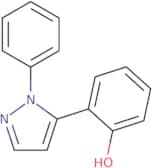
CAS:<p>1-Phenyl 1H-5-(2'-hydroxyphenyl)pyrazole (1PHPP) is a fine chemical that has been used in research and as a reagent. It is also a useful building block for the synthesis of other compounds. 1PHPP can be used to prepare complex compounds with versatile building blocks or scaffolds, which can serve as reaction components in organic syntheses. This compound has been shown to react with various functional groups.</p>Formula:C15H12N2OPurity:Min. 95%Color and Shape:PowderMolecular weight:236.27 g/mol4'-Bromo-2'-fluoroacetophenone
CAS:<p>4'-Bromo-2'-fluoroacetophenone is a bifunctional reagent that reacts with nucleophiles to form conjugates. It is used in the preparation of fluorinated DNA and RNA, as well as in electron-transfer reactions. The selectivity of 4'-bromo-2'-fluoroacetophenone can be attributed to the presence of fluorine atoms on both ends of the molecule.</p>Formula:C8H6BrFOPurity:Min. 95%Molecular weight:217.04 g/molOctreotide trifluoroacetate salt (Dimer, Antiparallel) (
Please enquire for more information about Octreotide trifluoroacetate salt (Dimer, Antiparallel) ( including the price, delivery time and more detailed product information at the technical inquiry form on this pageFormula:C98H132N20O20S4Purity:Min. 95%Molecular weight:2,038.48 g/molLinustatin
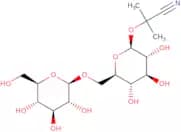
CAS:<p>Please enquire for more information about Linustatin including the price, delivery time and more detailed product information at the technical inquiry form on this page</p>Formula:C16H27NO11Purity:Min. 95 Area-%Molecular weight:409.39 g/molL-threo-(+)-2-Amino-1-(4-nitrophenyl)-1,3-propanediol
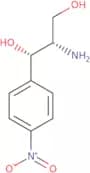
CAS:L-threo-(+)-2-amino-1-(4-nitrophenyl)-1,3-propanediol is a functional group that is composed of a fatty acid and an amino acid. It has been shown to inhibit the growth of corynebacterium glutamicum bacteria by hydrolyzing their cell wall. This compound also inhibits the activity of bacterial enzymes that are involved in the synthesis of proteins. This functional group may be useful for the treatment of chronic lymphocytic leukemia and HIV infection.Formula:C9H12N2O4Purity:Min. 95%Color and Shape:PowderMolecular weight:212.2 g/molAtorvastatin sodium
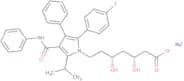
CAS:<p>HMG-CoA reductase antagonist</p>Formula:C33H35FN2O5•NaPurity:Min. 95%Color and Shape:PowderMolecular weight:581.63 g/molNeuronostatin-13 (human, canine, porcine) trifluoroacetate salt
CAS:Please enquire for more information about Neuronostatin-13 (human, canine, porcine) trifluoroacetate salt including the price, delivery time and more detailed product information at the technical inquiry form on this pageFormula:C64H110N20O16Purity:Min. 95%Molecular weight:1,415.68 g/mol1-(2-Hydroxyphenyl)-2-nitropropene
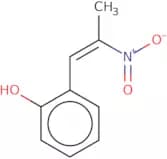
CAS:Please enquire for more information about 1-(2-Hydroxyphenyl)-2-nitropropene including the price, delivery time and more detailed product information at the technical inquiry form on this pageFormula:C9H9NO3Purity:Min. 95%Color and Shape:PowderMolecular weight:179.17 g/molSecretin (porcine) acetate salt
CAS:Controlled Product<p>Secretin acetate salt H-His-Ser-Asp-Gly-Thr-Phe-Thr-Ser-Glu-Leu-Ser-Arg-Leu-Arg-Asp-Ser-Ala is a peptide that is secreted by the pancreas in response to the ingestion of food. Secretin stimulates the release of water and bicarbonate from the pancreas, as well as stimulating the gallbladder to contract, which results in increased flow of bile. Secretin also inhibits gastric acid secretion, slows intestinal motility, and stimulates pancreatic enzyme secretion. The amino acid sequence of this peptide is identical to that of leuprolide acetate (Lupron) and goserelin acetate (Zoladex), which are synthetic analogs with similar biological activity. This peptide can be synthesized on a solid phase or in solution phase. Solid phase synthesis involves attaching amino acids</p>Formula:C130H220N44O41Purity:Min. 95%Molecular weight:3,055.41 g/mol5,8-Dihydroxy-1,4-naphthoquinone
CAS:<p>5,8-Dihydroxy-1,4-naphthoquinone is a natural compound that is found in the bark of "Nothofagus" species. It has been shown to inhibit the transcriptional activity of NF-κB and AP-1 through its ability to bind to the response element in these promoters. 5,8-Dihydroxy-1,4-naphthoquinone has been shown to be cytotoxic against HL60 cells in vitro. This cytotoxicity may be due to its ability to cause an increase in cytosolic Ca2+ levels by inhibiting the mitochondrial ATPase enzyme. 5,8-Dihydroxy-1,4-naphthoquinone has also been shown to induce apoptosis in fetal bovine retinal cells and neuronal death in rat cortical neurons. It is thought that this drug may have anticancer properties because it triggers DNA damage and inhibits cell proliferation.</p>Formula:C10H6O4Purity:Min 85%Molecular weight:190.15 g/molBenzoylhypaconine
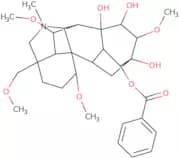
CAS:<p>Benzoylhypaconine is an alkaloid compound, which is a secondary metabolite typically found in certain plant species. It is primarily derived from Aconitum species, a group of plants known for their complex alkaloidal chemistry. The mode of action of benzoylhypaconine involves interactions with various receptors and enzymes in biological systems, reflecting its potential to influence neurotransmission and enzymatic activity.</p>Formula:C31H43NO9Purity:Min. 98 Area-%Color and Shape:Orange PowderMolecular weight:573.67 g/molAc-Ala-alpha-naphthyl ester
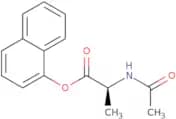
CAS:<p>Ac-Ala-alpha-naphthyl ester is a chemical compound that belongs to the class of aromatic esters. It is used as a research and benchmarking agent in the measurement of skin penetration potential. Ac-Ala-alpha-naphthyl ester has been shown to have good skin penetration properties, with no adverse effects on the skin.</p>Formula:C15H15NO3Purity:Min. 95%Molecular weight:257.28 g/molFosfomycin Impurity B
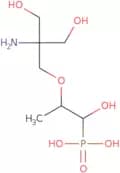
CAS:Fosfomycin impurity B is an impurity of fosfomycin. It has a molecular weight of 204.9 and a molar mass of 245.4 grams per mole. Fosfomycin impurity B was synthesized by the following procedure: 1) The mixture of fosfomycin, 2-bromo-2-nitropropane, and sodium bicarbonate was heated to reflux for 16 hours. 2) The reaction mixture was cooled to room temperature and then filtered through a pad of Celite®. 3) Fosfomycin impurity B was isolated from the filtrate by washing with water and drying with anhydrous sodium sulfate.Formula:C7H18NO7PPurity:Min. 95%Color and Shape:Off-White PowderMolecular weight:259.19 g/molBoc-Asn-o-nitrophenyl ester
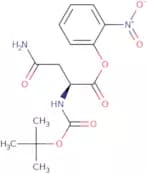
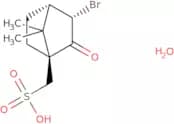
CAS:<p>Please enquire for more information about Boc-Asn-o-nitrophenyl ester including the price, delivery time and more detailed product information at the technical inquiry form on this page</p>Formula:C15H19N3O7Purity:Min. 95%Molecular weight:353.33 g/mol(+)-3-Bromo-10-camphorsulfonic acid monohydate
CAS:<p>Please enquire for more information about (+)-3-Bromo-10-camphorsulfonic acid monohydate including the price, delivery time and more detailed product information at the technical inquiry form on this page</p>Formula:C10H15BrO4S•H2OPurity:Min. 95%Color and Shape:PowderMolecular weight:329.21 g/molLumisterol 3
CAS:Controlled Product<p>Lumisterol 3 is a provitamin compound that is produced by the human body through the conversion of vitamin D into lumisterol. It is used as a dietary supplement and can be found in the human serum, cellular, and skin cells. Lumisterol 3 has been shown to increase cholesterol synthesis, which may be due to its ability to activate enzymes involved in this process. Lumisterol 3 has also been shown to have physiological effects on humans. These effects include an increase in energy expenditure and a decrease in blood pressure and heart rate. The molecular modeling of lumisterol 3 shows that it has a similar structure to vitamin D, but with three instead of two side chains.</p>Formula:C27H44OPurity:90%NmrColor and Shape:PowderMolecular weight:384.64 g/molTyrosinase (243-251) (human) acetate salt
CAS:H-KCDICTDEY-OH peptide, corresponding to amino acids 243-251 of human Tyrosinase. The peptide is supplied as an acetate salt.Formula:C44H68N10O18S2Purity:Min. 95%Molecular weight:1,089.2 g/molBiotinyl-epsilonAhx-ω-Conotoxin GVIA trifluoroacetate salt
CAS:Controlled ProductPlease enquire for more information about Biotinyl-epsilonAhx-omega-Conotoxin GVIA trifluoroacetate salt including the price, delivery time and more detailed product information at the technical inquiry form on this pageFormula:C136H207N41O46S7Purity:Min. 95%Molecular weight:3,376.81 g/mol