Pharmaceutical Standards
Pharmaceutical standards are a comprehensive set of reference materials essential for ensuring the safety, efficacy, and quality of pharmaceutical products. This category includes standards for active pharmaceutical ingredients (APIs), which are the core components responsible for therapeutic effects. Additionally, it covers compounds and metabolites relevant to both the pharmaceutical and veterinary industries, providing benchmarks for the accurate measurement and analysis of these substances. Nitrosamine control standards are crucial for detecting and mitigating potentially harmful nitrosamines in drug formulations. Toxicology standards help assess the safety and potential adverse effects of pharmaceutical compounds. Furthermore, enzyme activators and inhibitors standards are vital for research and development, enabling precise studies of biochemical pathways and drug mechanisms. These pharmaceutical standards are indispensable tools for regulatory compliance, quality control, and research, ensuring that pharmaceutical products meet stringent safety and effectiveness criteria.
Subcategories of "Pharmaceutical Standards"
- APIs for research and impurities(274,823 products)
- Enzyme Activators and Inhibitors(2,827 products)
- Nitrosamines(2,605 products)
- Pharmaceutical and Veterinary Compounds and Metabolites(2,867 products)
- Toxicology(13,652 products)
Found 7836 products of "Pharmaceutical Standards"
Sort by
Purity (%)
0
100
|
0
|
50
|
90
|
95
|
100
Sodium 1-naphthalenesulfonate
CAS:<p>Sodium 1-naphthalenesulfonate is a zirconium oxide that is used to remove particles from water. It has been shown that the adsorption mechanism of this compound is based on its crystalline polymorphs. Sodium 1-naphthalenesulfonate has been used in the treatment of fatty acid and hydrochloric acid in urine samples, with sodium carbonate as a buffer. This compound also has film-forming properties, which are beneficial for wastewater treatment and can be used in the formation of polymer films. Sodium 1-naphthalenesulfonate also shows toxicity at high concentrations, but does not cause any toxic effects at low concentrations.</p>Formula:C10H7NaO3SPurity:Min. 95%Color and Shape:White Off-White PowderMolecular weight:230.22 g/molEthyl-2-ethoxy-1-[[(2'-cyanobiphenyl-4-yl) methyl] benzimidazole-7-carboxylate
CAS:<p>Candesartan is a selective angiotensin II receptor antagonist that inhibits the binding of angiotensin II to its receptors, which in turn decreases the activity of angiotensin-converting enzyme. Candesartan cilexetil is an ester prodrug that has been shown to be effective in the treatment of high blood pressure. In the crystalline form, candesartan cilexetil is a white powder with a melting point of 130–135 °C and a solubility in water of >1 g/L. The molecular weight of candesartan cilexetil is 393.8 g/mol and it has a molecular formula C17H21NO2S. The chemical structure consists of two benzimidazole rings coupled together through an ethyl-2-ethoxy linker and attached to a carboxylate group on one end and an amide group on the other</p>Formula:C26H23N3O3Purity:Min. 95%Molecular weight:425.48 g/molD-Aspartic acid
CAS:<p>D-Aspartic acid is a basic protein that binds to glutamate. It has been shown to be effective in the prevention and treatment of bone cancer in mice. D-Aspartic acid also has an inhibitory effect on the production of estradiol benzoate, which is an enzyme responsible for bone resorption. D-Aspartic acid may also be used as a dietary supplement for bowel disease and bowel motility.<br>D-Aspartic acid has been shown to have receptor activity in humans and to have physiological effects on the locomotor activity of rats. The complex enzyme d-aspartate oxidase can be inhibited by d-aspartic acid.</p>Formula:C4H7NO4Purity:Min. 95%Color and Shape:White PowderMolecular weight:133.1 g/molCyclohexylstatine
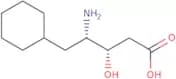
CAS:<p>Cyclohexylstatine is a glycopeptide antibiotic that inhibits the synthesis of collagen in animals and humans. It also has been shown to have anticancer activity. Cyclohexylstatine works by inhibiting the biosynthesis of collagen, which is an important component of skin, ligaments, and tendons. The molecule was synthesized in 1975 and has been used as a pharmaceutical agent since 1980. Cyclohexylstatine is the first anti-collagen drug to be developed for use in humans. It has been shown to be effective against autoimmune diseases such as rheumatoid arthritis but not against cancer cells or bacteria. Cyclohexylstatine binds to the zymogen form of collagenase and inhibits its activity. This inhibition leads to an accumulation of polysaccharides in the extracellular matrix that are converted into oligosaccharides by glycosidases present in tissue fluids. These oligosaccharides inhibit collagen synthesis by binding to</p>Formula:C11H21NO3Purity:Min. 95%Molecular weight:215.29 g/molN-[2-[(2-Bromo-4,6-dinitrophenyl)azo]-5-(diethylamino)phenyl]acetamide
CAS:N-2-[(2-bromo-4,6-dinitrophenyl)azo]-5-(diethylamino)phenyl]acetamide (NBDPA) is a yellowish solid that is soluble in water. It has a molecular weight of 308.3 and chemical formula C14H21BrN2O4. NBDPA is used as an analytical reagent for the kinetic data of liver cells and in wastewater treatment. This compound has been shown to exhibit carcinogenic potential in rats, causing genetic damage to the DNA of liver cells and kidney tissue. NBDPA has also been shown to be toxic to fish embryos and larvae, with significant effects on the development of larvae at high concentrations.Formula:C18H19BrN6O5Purity:90%MinMolecular weight:479.28 g/molBiotinyl-Somatostatin-14
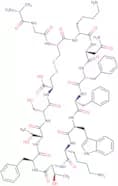
CAS:<p>Please enquire for more information about Biotinyl-Somatostatin-14 including the price, delivery time and more detailed product information at the technical inquiry form on this page</p>Formula:C86H118N20O21S3Purity:Min. 95%Molecular weight:1,864.18 g/mol(11β,16α)-16,17-[(1RS)-Ethylidenebis(oxo)]-11,21-dihydroxypregna-1,4-diene-3,20-dione
CAS:<p>Please enquire for more information about (11β,16α)-16,17-[(1RS)-Ethylidenebis(oxo)]-11,21-dihydroxypregna-1,4-diene-3,20-dione including the price, delivery time and more detailed product information at the technical inquiry form on this page</p>Formula:C23H30O6Purity:Min. 95%Color and Shape:PowderMolecular weight:402.48 g/mol6-(7-Nitro-benzo[2,1,3]oxadiazol-4-ylamino)-hexanoyl-Arg-Pro-Lys-Pro-Leu-Ala-Nva-Trp-Lys((7-dimethylaminocoumarin-4-yl)-acetyl)-NH2 trifluoroacetate salt
CAS:<p>Please enquire for more information about 6-(7-Nitro-benzo[2,1,3]oxadiazol-4-ylamino)-hexanoyl-Arg-Pro-Lys-Pro-Leu-Ala-Nva-Trp-Lys((7-dimethylaminocoumarin-4-yl)-acetyl)-NH2 trifluoroacetate salt including the price, delivery time and more detailed product information at the technical inquiry form on this page</p>Formula:C78H111N21O16Purity:Min. 95%Molecular weight:1,598.85 g/mol(D-Trp8)-Somatostatin-14 trifluoroacetate salt
CAS:<p>Please enquire for more information about (D-Trp8)-Somatostatin-14 trifluoroacetate salt including the price, delivery time and more detailed product information at the technical inquiry form on this page</p>Formula:C76H104N18O19S2Purity:Min. 95%Molecular weight:1,637.88 g/mol3-Amino-4-methyl-thiophen-2-carboxylic acid methyl ester
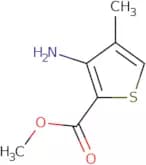
CAS:<p>3-Amino-4-methylthiophen-2-carboxylic acid methyl ester (3AMTC) is a novel compound that has been shown to have antihypertensive activity, as well as other pharmacological actions. 3AMTC is an allosteric modulator of α7 nicotinic acetylcholine receptors, which are found in the central and peripheral nervous system. The efficacy of 3AMTC was evaluated using magnetic resonance spectroscopy to measure the effects on mouse tumor cells. This compound showed no carcinogenic potential, which may be due to its inability to cross the blood brain barrier.</p>Purity:Min. 95%Molecular weight:171.22 g/molAc-Tyr-Val-Lys(biotinyl)-Asp-2,6-dimethylbenzoyloxymethylketone
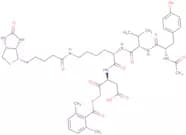
CAS:Ac-Tyr-Val-Lys(biotinyl)-Asp-2,6-dimethylbenzoyloxymethylketone belongs to a group of active compounds and is a cleavage product of the caspase family. It has been shown to induce apoptosis in kidney cells by cleaving the polymeric form of the protein caspase 3, which is induced by viral infection or bacterial infection. This compound is used for coinfection with HIV and HCV. Ac-Tyr-Val-Lys(biotinyl)-Asp-2,6-dimethylbenzoyloxymethylketone can also be used for detecting apoptosis in other types of cells such as erythrocytes and neutrophils.Formula:C46H63N7O12SPurity:Min. 95%Molecular weight:938.1 g/molBiotinyl-(Gln1)-Gastrin I (human) Biotinyl-Gln-Gly-Pro-Trp-Leu-Glu-Glu-Glu-Glu-Glu-Ala-Tyr-Gly-Trp-Met-Asp-Phe-NH2
CAS:<p>Please enquire for more information about Biotinyl-(Gln1)-Gastrin I (human) Biotinyl-Gln-Gly-Pro-Trp-Leu-Glu-Glu-Glu-Glu-Glu-Ala-Tyr-Gly-Trp-Met-Asp-Phe-NH2 including the price, delivery time and more detailed product information at the technical inquiry form on this page</p>Formula:C107H141N23O33S2Purity:Min. 95%Molecular weight:2,341.53 g/mol1-Naphthylphosphoric acid calcium
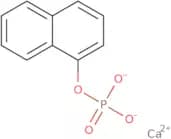
CAS:1-Naphthylphosphoric acid calcium salt (1NPAC) is a fine chemical that has been used as a building block in the synthesis of complex organic compounds. 1NPAC has been shown to be useful in the production of research chemicals and speciality chemicals. It is also employed as an intermediate for the production of high quality reagents. 1NPAC has versatile uses, as it can be used to synthesize other compounds, such as pharmaceuticals and agrochemicals.Formula:C20H18O8P2•CaPurity:Min. 95%Color and Shape:PowderMolecular weight:488.38 g/mol1-(4-Nitrophenyl)piperazine
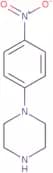
CAS:<p>1-(4-Nitrophenyl)piperazine is a nitro compound with a molecular weight of 147.2. It is soluble in DMSO and ethanol, but not in water. 1-(4-Nitrophenyl)piperazine has the ability to absorb ultraviolet radiation (UV) and it can be used as a UV-absorbing agent in plastics. 1-(4-Nitrophenyl)piperazine can also be used as an intermediate for the synthesis of triazole antifungal agents. The molecule has been shown to have high values at magnetic resonance spectroscopy (NMR). The crystal structure of 1-(4-nitrophenyl)piperazine was determined by x-ray diffraction data and molecular modeling techniques. This molecule's melting point was determined by titration calorimetry, which showed that its melting point is around 195 degrees Celsius.br> 1-(4-Nitrophenyl)piper</p>Formula:C10H13N3O2Purity:Min. 95%Molecular weight:207.23 g/mol2,7-Naphthalenedisulfonic acid disodium salt
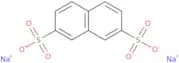
CAS:<p>2,7-Naphthalenedisulfonic acid disodium salt is a heteronuclear molecule that is synthesized by the reaction of 2,7-naphthalenedisulfonyl chloride with sodium sulfite in water. It has been used in the manufacture of dyes and pigments, as a corrosion inhibitor for steel and aluminum, and as an intermediate in the synthesis of pharmaceuticals. The compound has been detected in groundwater samples at concentrations up to 10 mg/L. The compound is also found in geothermal waters at concentrations up to 0.6 mg/L.</p>Formula:C10H6Na2O6S2Purity:Min. 95%Molecular weight:332.26 g/mol2,2'-Biquinoline
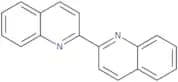
CAS:<p>2,2'-Biquinoline is a coordination compound that has been used as an analytical reagent in the determination of copper and nitrogen. It has been shown to be stable in a variety of matrices, including human serum and copper chloride. 2,2'-Biquinoline is also used as an antimicrobial agent against Gram-positive bacteria, including Staphylococcus aureus. The redox potentials of this compound are dependent on the number of nitrogen atoms present.</p>Formula:C18H12N2Purity:Min. 95%Molecular weight:256.3 g/mol16α,17,21-Trihydroxy-pregna-1,4-diene-3,11,20-trione
CAS:Controlled Product<p>Please enquire for more information about 16α,17,21-Trihydroxy-pregna-1,4-diene-3,11,20-trione including the price, delivery time and more detailed product information at the technical inquiry form on this page</p>Formula:C21H26O6Purity:Min. 95%Molecular weight:374.43 g/molOsteostatin (human) trifluoroacetate salt
CAS:<p>Osteostatin is a recombinant human protein that inhibits bone growth by binding to and neutralizing the effect of forskolin. Osteostatin also has an inhibitory effect on cancer cells, as it inhibits mitochondrial pathways and prevents the activation of factor receptors. Osteostatin blocks the synthesis of cAMP, which is necessary for cell proliferation in cancer cells. The inhibition of cAMP levels leads to a decrease in the production of proteins that stimulate bone growth, such as runx2.</p>Formula:C142H228N42O58Purity:Min. 95%Molecular weight:3,451.58 g/molAzilsartan medoxomil
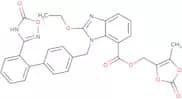
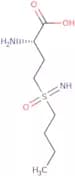
CAS:<p>Azilsartan medoxomil is an antihypertensive drug, which is a prodrug of the angiotensin II receptor blocker azilsartan. It is synthesized through a chemical process involving the modification of the medoxomil ester, converting it into its active form upon absorption in the gastrointestinal tract. The primary mode of action of azilsartan medoxomil involves selective antagonism of the angiotensin II type 1 (AT1) receptor. By blocking the effects of angiotensin II—a potent vasoconstrictor—azilsartan medoxomil effectively reduces vascular resistance, leading to decreased blood pressure.</p>Formula:C30H24N4O8Purity:Min. 95%Color and Shape:White PowderMolecular weight:568.53 g/molL-Buthionine-(S,R)-sulfoximine
CAS:<p>L-Buthionine-(S,R)-sulfoximine (BSO) is a glutathione-depleting agent that causes cell death by interrupting mitochondrial functions. BSO has been shown to be reactive with covalent linkages in polymer compositions and enzyme activities, which results in the inhibition of human osteosarcoma cells. It also has pro-apoptotic properties that have been demonstrated using multivariate logistic regression on taxol toxicity studies. Resistance to BSO is rare, but has been observed in breast cancer cells. The synergistic effect of BSO and other drugs, such as chemotherapeutic agents, is not well understood.</p>Formula:C8H18N2O3SPurity:Min. 97 Area-%Color and Shape:White PowderMolecular weight:222.31 g/mol


![Ethyl-2-ethoxy-1-[[(2'-cyanobiphenyl-4-yl) methyl] benzimidazole-7-carboxylate](/_next/image/?url=https%3A%2Fstatic.cymitquimica.com%2Fproducts%2F3D%2Fthumb-webp%2FFE31863.webp&w=3840&q=75)

![N-[2-[(2-Bromo-4,6-dinitrophenyl)azo]-5-(diethylamino)phenyl]acetamide](/_next/image/?url=https%3A%2Fstatic.cymitquimica.com%2Fproducts%2F3D%2Fthumb-webp%2FFB151321.webp&w=3840&q=75)

![(11β,16α)-16,17-[(1RS)-Ethylidenebis(oxo)]-11,21-dihydroxypregna-1,4-diene-3,20-dione](/_next/image/?url=https%3A%2Fstatic.cymitquimica.com%2Fproducts%2F3D%2Fthumb-webp%2FFE146156.webp&w=3840&q=75)
![6-(7-Nitro-benzo[2,1,3]oxadiazol-4-ylamino)-hexanoyl-Arg-Pro-Lys-Pro-Leu-Ala-Nva-Trp-Lys((7-dimeth…](/_next/image/?url=https%3A%2Fstatic.cymitquimica.com%2Fproducts%2F3D%2Fthumb-webp%2FFN110943.webp&w=3840&q=75)