Pharmaceutical Standards
Pharmaceutical standards are a comprehensive set of reference materials essential for ensuring the safety, efficacy, and quality of pharmaceutical products. This category includes standards for active pharmaceutical ingredients (APIs), which are the core components responsible for therapeutic effects. Additionally, it covers compounds and metabolites relevant to both the pharmaceutical and veterinary industries, providing benchmarks for the accurate measurement and analysis of these substances. Nitrosamine control standards are crucial for detecting and mitigating potentially harmful nitrosamines in drug formulations. Toxicology standards help assess the safety and potential adverse effects of pharmaceutical compounds. Furthermore, enzyme activators and inhibitors standards are vital for research and development, enabling precise studies of biochemical pathways and drug mechanisms. These pharmaceutical standards are indispensable tools for regulatory compliance, quality control, and research, ensuring that pharmaceutical products meet stringent safety and effectiveness criteria.
Subcategories of "Pharmaceutical Standards"
- APIs for research and impurities(274,845 products)
- Enzyme Activators and Inhibitors(2,827 products)
- Nitrosamines(2,605 products)
- Pharmaceutical and Veterinary Compounds and Metabolites(2,869 products)
- Toxicology(13,652 products)
Found 7836 products of "Pharmaceutical Standards"
Sort by
Purity (%)
0
100
|
0
|
50
|
90
|
95
|
100
Hymenistatin I Cyclo(-Pro-Pro-Tyr-Val-Pro-Leu-Ile-Ile)
CAS:<p>Hymenistatin I is a cyclic peptide that is synthesized from the natural amino acid L-proline. It has been shown to inhibit tumor growth and is used in the treatment of bladder cancer. The synthesis of Hymenistatin I begins with the protection of proline as an N-tert-butyloxycarbonyl derivative, followed by a sequence of coupling reactions. This synthetic process involves the use of a linker, such as tetrazole or succinimidyl ester, for example. The final product can then be purified by HPLC analysis. Hymenistatin I inhibits calcineurin inhibitor, which are immunosuppressive agents that are used to treat lymphocytic leukemia and other autoimmune diseases.</p>Formula:C47H72N8O9Purity:Min. 95%Molecular weight:893.12 g/molCamphor
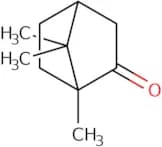
CAS:<p>Camphor is a natural compound that has been shown to be an effective antimicrobial agent. Camphor has been shown to inhibit the growth of bacteria by binding to the bacterial membrane, inhibiting electron transport and leading to a decrease in mitochondrial membrane potential. Camphor also inhibits the growth of cancer cells in experimental models. Camphor can be used as an antimicrobial in wastewater treatment and as an insect repellent for skin protection. Camphor is also used in x-ray crystallography to determine structures of proteins and other organic molecules with high electron density such as benzalkonium chloride.</p>Formula:C10H16OPurity:Min. 95%Color and Shape:Colorless Clear LiquidMolecular weight:152.23 g/mol2-[3-(S)-[3-(2-(7-Chloro-2-quinolinyl)ethenyl)phenyl]-3-hydroxypropyl]benzoic acid methyl ester
CAS:<p>2-[3-(S)-[3-(2-(7-Chloro-2-quinolinyl)ethenyl)phenyl]-3-hydroxypropyl]benzoic acid methyl ester is a synthetic compound that can be used as a reagent in the synthesis of polynucleotides and polypeptides. It can also be used as an inhibitor of ketoreductase, which is an enzyme involved in the synthesis of fatty acids and ketones. 2-[3-(S)-[3-(2-(7-Chloro-2-quinolinyl)ethenyl)phenyl]-3-hydroxypropyl]benzoic acid methyl ester has been shown to inhibit the growth of wild type and mutant strains of E. coli. The molecular weight of this compound is 439.</p>Formula:C28H24ClNO3Purity:Min. 95%Molecular weight:457.95 g/molBiotinyl-Atrial Natriuretic Factor (1-28) (human) trifluoroacetate salt
CAS:<p>Please enquire for more information about Biotinyl-Atrial Natriuretic Factor (1-28) (human) trifluoroacetate salt including the price, delivery time and more detailed product information at the technical inquiry form on this page</p>Formula:C137H217N47O41S4Purity:Min. 95%Molecular weight:3,306.75 g/molMethylprednisolone EP impurity E
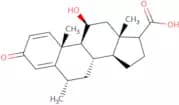
CAS:Controlled Product<p>Please enquire for more information about Methylprednisolone EP impurity E including the price, delivery time and more detailed product information at the technical inquiry form on this page</p>Formula:C21H28O4Purity:Min. 95%Color and Shape:PowderMolecular weight:344.44 g/mol5-Nitropseudocumene
CAS:<p>5-Nitropseudocumene (5NPC) is a molecule that belongs to the group of methylbenzenes. It is a precursor to dyes such as nitrobenzene, which are used in the production of nylon. 5NPC is also an intermediate in the synthesis of trifluoroacetic acid, which is used as an industrial solvent and chemical reagent. The acetoxylation of 5NPC with acetic acid yields methylbenzoate. This reaction requires two molecules of acetic acid for each molecule of 5NPC. Desorption from the catalyst can be achieved by treatment with methyl groups or nitrous acid. Naphthalene reacts with 5NPC to form biphenyl and nitric oxide gas, which are released into the atmosphere. The inorganic residue can be removed by filtration.</p>Formula:C9H11NO2Purity:Min. 95%Color and Shape:PowderMolecular weight:165.19 g/mol2-Hydroxysuccinic acid methyl ester
CAS:<p>2-Hydroxysuccinic acid methyl ester is an organic compound that has a carbonyl group, a hydroxyl group, and two carboxylic esters. It is a colorless liquid with a sweet taste. 2-Hydroxysuccinic acid methyl ester is classified as a dicarboxylic acid. It can be found in nature as malic acid, which is found in apples and other fruits. 2-Hydroxysuccinic acid methyl ester can also be synthesized from citric acid and formaldehyde.</p>Formula:C5H8O5Purity:90% MinMolecular weight:148.11 g/molIsobutylurea
CAS:<p>Isobutylurea is a chemical compound with a hydroxyl group and a phosphodiesterase inhibitor. It is used in the treatment of inflammatory diseases, infectious diseases, and autoimmune diseases. Isobutylurea has been found to denature proteins by reacting with the carbonyl group of amino acids. The reaction intermediates formed are then hydrolyzed by phosphodiesterase activity. Isobutylurea was also shown to have an inhibitory effect on cyclic nucleotide phosphodiesterase activity in the calf-thymus DNA system.</p>Formula:C5H12N2OPurity:Min. 95%Molecular weight:116.16 g/molThymosin α1 trifluoroacetate salt
CAS:Please enquire for more information about Thymosin alpha1 trifluoroacetate salt including the price, delivery time and more detailed product information at the technical inquiry form on this pageFormula:C129H215N33O55·xC2HF3O2Purity:Min. 95%Molecular weight:3,108.28 g/molAdipokinetic Hormone (Apis mellifera ligustica) TFA salt
CAS:<p>Adipokinetic hormone is a peptide hormone that has been shown to stimulate the metabolism of fat cells in laboratory animals. This peptide is produced by the gland cells of honeybees and is used to regulate the energy metabolism of honeybees and other insects. Adipokinetic hormone has been shown to increase locomotor activity, inhibit the growth of human pathogens, activate transfer reactions, and inhibit receptor activity. The biological properties of this hormone have not yet been fully elucidated.</p>Formula:C47H65N11O14•C2HF3O2Purity:Min. 95 Area-%Color and Shape:PowderMolecular weight:1,122.10 g/mol(S)-β-methyl-γ-butyrolactone
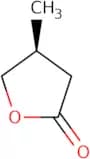
CAS:(S)-Beta-methyl-gamma-butyrolactone is a synthetic vitamin D2 that is used in the synthesis of calciferol. It is also used for the stereospecific synthesis of 25-hydroxyvitamin D3, which is an active metabolite of vitamin D2. The compound has been found to be effective against rickets, hypocalcemia, and osteomalacia. (S)-beta-methyl-gamma-butyrolactone has shown optical activity and can be used as a chiral auxiliary in the syntheses of vitamin A, retinoids, and other drugs that require optically pure starting materials.Formula:C5H8O2Purity:Min. 95%Color and Shape:Clear LiquidMolecular weight:100.12 g/molBiotinyl-BNP-32 (human) trifluoroacetate salt
CAS:<p>Please enquire for more information about Biotinyl-BNP-32 (human) trifluoroacetate salt including the price, delivery time and more detailed product information at the technical inquiry form on this page</p>Formula:C153H258N52O44S5Purity:Min. 95%Molecular weight:3,690.34 g/molBiotinyl-epsilonAhx-ω-Conotoxin GVIA trifluoroacetate salt
CAS:Controlled ProductPlease enquire for more information about Biotinyl-epsilonAhx-omega-Conotoxin GVIA trifluoroacetate salt including the price, delivery time and more detailed product information at the technical inquiry form on this pageFormula:C136H207N41O46S7Purity:Min. 95%Molecular weight:3,376.81 g/molVitamin A palmitate
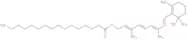
CAS:<p>Vitamin A palmitate is a fat-soluble vitamin that has antioxidant properties. It is available as a supplement in the form of retinol and retinyl palmitate. Vitamin A palmitate is an inactive form of vitamin A that can be converted to retinol in vivo by esterases and other enzymes. The conversion of vitamin A palmitate to retinol may be inhibited by various substances, such as estradiol benzoate. This conversion leads to the formation of free radicals, which cause oxidative injury to cells. Studies have shown that vitamin A palmitate can be toxic for humans because it interferes with the synthesis of mucin, an important constituent of human lungs and airways. Vitamin A palmitate also alters gene expression in some experimental models, leading to changes in cell growth or death.</p>Formula:C36H60O2Color and Shape:Yellow PowderMolecular weight:524.86 g/molErythropoietin Mimetic Peptide Sequence 20 trifluoroacetate salt
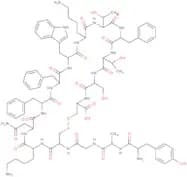
CAS:<p>Please enquire for more information about Erythropoietin Mimetic Peptide Sequence 20 trifluoroacetate salt including the price, delivery time and more detailed product information at the technical inquiry form on this page</p>Formula:C72H99N17O17S2Purity:Min. 95%Molecular weight:1,538.79 g/molTyr-Somatostatin-14
CAS:<p>Please enquire for more information about Tyr-Somatostatin-14 including the price, delivery time and more detailed product information at the technical inquiry form on this page</p>Formula:C85H113N19O21S2Purity:Min. 95%Molecular weight:1,801.05 g/molAcetyl-(D-Lys2, Sar 3)-Melanotropin-Potentiating Factor acetate salt
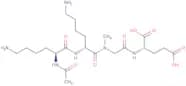
CAS:<p>Acetyl-(D-Lys2, Sar 3)-Melanotropin-Potentiating Factor acetate salt Ac-Lys-D-Lys-Sar-Glu-OH acetate salt is synthesized from a tetrapeptide. It has been shown to be neurotrophic and to stimulate the uptake of dopamine. Acetyl-(D-Lys2, Sar 3)-Melanotropin-Potentiating Factor acetate salt Ac-Lys-D-Lys-Sar-Glu-OH acetate salt has also been shown to be an analog of the growth factor nerve growth factor (NGF) and have similar effects on muscle tissue.</p>Formula:C22H40N6O8Purity:Min. 95%Molecular weight:516.59 g/molTetrabromophenyl-porphyrin
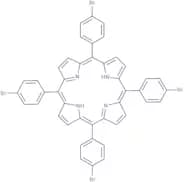
CAS:<p>Tetrabromophenyl-porphyrin (TBP) is a synthetic molecule that interacts with aldehydes in the presence of light. This interaction results in the formation of a phenyl radical and an excited state, which leads to the production of carbon dioxide and water. TBP is used as a catalyst for these reactions because it is more stable than other molecules that are typically used. The catalytic effect of TBP can be studied by means of spectroscopies and microscopy techniques. The crystal x-ray diffraction technique was used to analyze the molecular structure of TBP by determining the distances between atoms in its molecules. It was discovered that TBP has two phenyl groups and four bromine atoms per porphyrin ring. Diffraction techniques were also used to study how light interacts with TBP molecules, showing that they have strong optical properties when adsorbed on surfaces.</p>Formula:C44H26N4Br4Purity:Min. 95%Molecular weight:930.32 g/mol1-(4-Nitrophenyl)piperazine
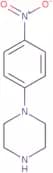
CAS:<p>1-(4-Nitrophenyl)piperazine is a nitro compound with a molecular weight of 147.2. It is soluble in DMSO and ethanol, but not in water. 1-(4-Nitrophenyl)piperazine has the ability to absorb ultraviolet radiation (UV) and it can be used as a UV-absorbing agent in plastics. 1-(4-Nitrophenyl)piperazine can also be used as an intermediate for the synthesis of triazole antifungal agents. The molecule has been shown to have high values at magnetic resonance spectroscopy (NMR). The crystal structure of 1-(4-nitrophenyl)piperazine was determined by x-ray diffraction data and molecular modeling techniques. This molecule's melting point was determined by titration calorimetry, which showed that its melting point is around 195 degrees Celsius.br> 1-(4-Nitrophenyl)piper</p>Formula:C10H13N3O2Purity:Min. 95%Molecular weight:207.23 g/mol(D-Trp8)-Somatostatin-14 trifluoroacetate salt
CAS:<p>Please enquire for more information about (D-Trp8)-Somatostatin-14 trifluoroacetate salt including the price, delivery time and more detailed product information at the technical inquiry form on this page</p>Formula:C76H104N18O19S2Purity:Min. 95%Molecular weight:1,637.88 g/mol


![2-[3-(S)-[3-(2-(7-Chloro-2-quinolinyl)ethenyl)phenyl]-3-hydroxypropyl]benzoic acid methyl ester](/_next/image/?url=https%3A%2Fstatic.cymitquimica.com%2Fproducts%2F3D%2Fthumb-webp%2FFC20038.webp&w=3840&q=75)