Pharmaceutical Standards
Pharmaceutical standards are a comprehensive set of reference materials essential for ensuring the safety, efficacy, and quality of pharmaceutical products. This category includes standards for active pharmaceutical ingredients (APIs), which are the core components responsible for therapeutic effects. Additionally, it covers compounds and metabolites relevant to both the pharmaceutical and veterinary industries, providing benchmarks for the accurate measurement and analysis of these substances. Nitrosamine control standards are crucial for detecting and mitigating potentially harmful nitrosamines in drug formulations. Toxicology standards help assess the safety and potential adverse effects of pharmaceutical compounds. Furthermore, enzyme activators and inhibitors standards are vital for research and development, enabling precise studies of biochemical pathways and drug mechanisms. These pharmaceutical standards are indispensable tools for regulatory compliance, quality control, and research, ensuring that pharmaceutical products meet stringent safety and effectiveness criteria.
Subcategories of "Pharmaceutical Standards"
- APIs for research and impurities(274,845 products)
- Enzyme Activators and Inhibitors(2,827 products)
- Nitrosamines(2,605 products)
- Pharmaceutical and Veterinary Compounds and Metabolites(2,869 products)
- Toxicology(13,652 products)
Found 7836 products of "Pharmaceutical Standards"
Sort by
Purity (%)
0
100
|
0
|
50
|
90
|
95
|
100
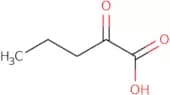
2-Oxovaleric acid
CAS:<p>2-Oxovaleric acid is a monocarboxylic acid that is produced by the oxidation of 2-oxopentanoic acid. It was first discovered as an inhibitory compound for glutamate dehydrogenase, which catalyzes the conversion of glutamate to alpha-ketoglutarate. This inhibition leads to a buildup of glutamate in the cell, which can cause metabolic disorders. The importance of 2-oxovaleric acid was demonstrated using a chromatographic method on type strain cells. The electron microscopic images showed that 2-oxovaleric acid inhibited the growth of bacteria by binding to extracellular Ca2+, carbon source, and animals.</p>Formula:C5H8O3Purity:Min. 95%Molecular weight:116.12 g/mol3'-Chloro-biphenyl-4-carboxylic acid
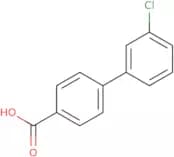
CAS:<p>Please enquire for more information about 3'-Chloro-biphenyl-4-carboxylic acid including the price, delivery time and more detailed product information at the technical inquiry form on this page</p>Purity:Min. 95%3'-(2-Propylamine)benzoic acid methyl ester
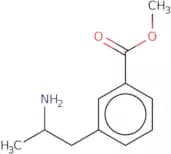
CAS:<p>3'-(2-Propylamine)benzoic acid methyl ester is a high quality, complex compound that can be used as a reagent, speciality chemical, or reaction component. It has a wide range of applications in the synthesis of pharmaceuticals, agrochemicals, and other biologically active compounds. 3'-(2-Propylamine)benzoic acid methyl ester is also a versatile building block and useful intermediate in organic synthesis.</p>Formula:C11H15NO2Purity:Min. 95%Molecular weight:193.24 g/molThymosin α1 trifluoroacetate salt
CAS:Please enquire for more information about Thymosin alpha1 trifluoroacetate salt including the price, delivery time and more detailed product information at the technical inquiry form on this pageFormula:C129H215N33O55·xC2HF3O2Purity:Min. 95%Molecular weight:3,108.28 g/mol(Asp371)-Tyrosinase (369-377) (human) trifluoroacetate salt
CAS:<p>Trifluoroacetate salt</p>Formula:C42H66N10O16S2Purity:Min. 95%Molecular weight:1,031.16 g/molCamphor
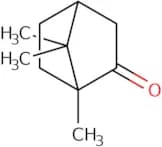
CAS:<p>Camphor is a natural compound that has been shown to be an effective antimicrobial agent. Camphor has been shown to inhibit the growth of bacteria by binding to the bacterial membrane, inhibiting electron transport and leading to a decrease in mitochondrial membrane potential. Camphor also inhibits the growth of cancer cells in experimental models. Camphor can be used as an antimicrobial in wastewater treatment and as an insect repellent for skin protection. Camphor is also used in x-ray crystallography to determine structures of proteins and other organic molecules with high electron density such as benzalkonium chloride.</p>Formula:C10H16OPurity:Min. 95%Color and Shape:Colorless Clear LiquidMolecular weight:152.23 g/molSaposin C (15-32) (rat)
CAS:<p>Please enquire for more information about Saposin C (15-32) (rat) including the price, delivery time and more detailed product information at the technical inquiry form on this page</p>Formula:C89H155N21O29Purity:Min. 95%Molecular weight:1,983.31 g/molBenzoylmesaconine
CAS:<p>Benzoylmesaconine is an alkaloid that is extracted from the roots of aconite plants. It has been shown to have a broad spectrum of antimicrobial activity against Gram-positive and Gram-negative bacteria, fungi, and viruses. Benzoylmesaconine has also been shown to be effective against infectious diseases in mice when used at low doses. The mechanism of action for benzoylmesaconine is not well understood but may involve inhibition of DNA synthesis or cell division.</p>Formula:C31H43NO10Purity:Min. 98 Area-%Color and Shape:PowderMolecular weight:589.67 g/mol4-Nitrophenyl Salicylate
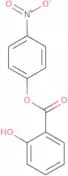
CAS:<p>4-Nitrophenyl salicylate is an organic compound that is a derivative of phenol. This colourless solid has been shown to be a good catalyst for amine oxidation reactions. It also stabilizes organic compounds and prevents their oxidation by oxygen and other reactive species, such as free radicals, peroxides, and heavy metals. 4-Nitrophenyl salicylate reacts with amines to produce alicyclic nitrosoamines, which are more stable than the parent amine. The reaction mechanism of 4-nitrophenyl salicylate is not yet fully understood; however, it may involve nucleophilic attack on the aromatic ring followed by resonance stabilization of the resulting product.</p>Purity:Min. 95%Color and Shape:PowderMolecular weight:259.21 g/mol3,3'-Diiodo-L-thyronine
CAS:<p>3,3'-Diiodo-L-thyronine (T2) is a thyroid hormone that binds to the DNA response element in the promoter region of its target genes. It has been shown to decrease the transcription of genes encoding for proteins involved in energy metabolism and thus may play a role in weight loss. T2 also inhibits the production of hydrochloric acid by human gastric cells, which may lead to a reduction of stomach acidity. T2 is detectable in serum within 3 hours following ingestion and can be quantified using high performance liquid chromatography with electrochemical detection. The matrix effect is a phenomenon that occurs when samples are analyzed using different analytical methods and this must be taken into account when interpreting results. T2 has been shown to have pharmacological effects on experimental animals, including the stimulation of liver cell growth and an increase in metabolic rate.</p>Formula:C15H13I2NO4Purity:Min. 95%Color and Shape:PowderMolecular weight:525.08 g/molBiotinyl-Amyloid b-Protein (1-42) ammonium salt
CAS:<p>Please enquire for more information about Biotinyl-Amyloid b-Protein (1-42) ammonium salt including the price, delivery time and more detailed product information at the technical inquiry form on this page</p>Formula:C213H325N57O62S2Purity:Min. 95%Molecular weight:4,740.34 g/molBiotinyl-Substance P trifluoroacetate salt
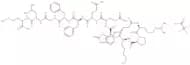
CAS:<p>Biotinyl-Substance P trifluoroacetate salt Biotinyl-Arg-Pro-Lys-Pro-Gln-Gln-Phe-Phe-Gly-Leu-Met-NH2 trifluoroacetate salt is a biotin conjugated Substance P analog. It is designed to bind to the amino acid sequences in the brain that are responsible for controlling and regulating pain. The drug's amino acid sequence was designed by accessing databases of amino acid sequences from all known organisms. The drug is administered as a sequence of cassettes, each containing an acid molecule that can be transferred to cells through nucleotide transfer.</p>Formula:C73H112N20O15S2Purity:Min. 95%Molecular weight:1,573.93 g/molEdoxaban impurity G
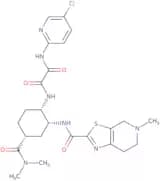
CAS:<p>Please enquire for more information about Edoxaban impurity G including the price, delivery time and more detailed product information at the technical inquiry form on this page</p>Formula:C24H30ClN7O4SPurity:Min. 95%Molecular weight:548.06 g/molPolycaprolactone
CAS:<p>Polycaprolactone is a biodegradable synthetic polymer that has been shown to have antimicrobial properties. Polycaprolactone has been used in wastewater treatment and has shown to inhibit the growth of histological analysis, vivo model, vitro assays, polyvinyl, collagen, carcinoma cell lines, tissue culture, ethylene diamine, water vapor, cell culture and hydrogen bond. In studies with wild-type strains of bacteria such as Escherichia coli and Staphylococcus aureus, it showed activity against both Gram-positive and Gram-negative bacteria. It also showed activity against the bacterium that causes tuberculosis (M. tuberculosis).</p>Formula:(C6H10O2)nPurity:Min. 95%Acetyl-Pepstatin Ac-Val-Val-Sta-Ala-Sta-OH
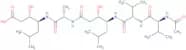
CAS:<p>Acetyl-Pepstatin is a protein data inhibitor that binds to the active site of enzymes, inhibiting their function. Acetyl-pepstatin has been shown to inhibit cathepsin D, chymotrypsin, and trypsin. It also inhibits the activity of proteases in the stomach and intestinal tract. Acetyl-Pepstatin is used as an anti-inflammatory drug for the treatment of chronic obstructive pulmonary disease (COPD) and congestive heart failure (CHF). The inhibition of these enzymes reduces inflammation by preventing the activation of inflammatory cytokines. It also prevents collagen from being degraded by proteases, which leads to decreased degradation of cartilage by chondrocytes. This drug's mechanism is similar to that of acetylsalicylic acid (aspirin), in that it inhibits prostaglandin synthesis.br></p>Formula:C31H57N5O9Purity:Min. 95%Molecular weight:643.81 g/mol1-(2,4-Dichlorobenzoyl)-2-(1-naphthoyl)hydrazine
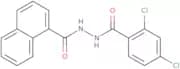
CAS:<p>Please enquire for more information about 1-(2,4-Dichlorobenzoyl)-2-(1-naphthoyl)hydrazine including the price, delivery time and more detailed product information at the technical inquiry form on this page</p>Formula:C18H12Cl2N2O2Purity:Min. 95%Molecular weight:359.21 g/molEnterostatin (human, mouse, rat) acetate salt
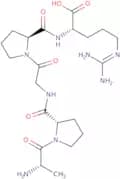
CAS:<p>Enterostatin is a peptide hormone that inhibits the release of insulin, gastric acid and pancreatic juices. Enterostatin has been shown to have a number of biological properties, including an anti-obesity effect in humans. In mice, enterostatin has been shown to decrease food intake, increase energy expenditure and weight loss. Enterostatin also decreases the levels of serum cholesterol and triglycerides in rats. This drug has a number of pharmacological activities including inhibition of platelet aggregation and vasodilation. Enterostatin is related to peptide hormones such as ghrelin, which stimulates appetite, and cholecystokinin (CCK), which reduces appetite. It may be used as an alternative treatment for obesity or metabolic disorders like diabetes mellitus type 2 or hyperlipidaemia.</p>Formula:C21H36N8O6Purity:Min. 95%Molecular weight:496.56 g/molBiotinyl-Obestatin (rat) trifluoroacetate salt
CAS:Please enquire for more information about Biotinyl-Obestatin (rat) trifluoroacetate salt including the price, delivery time and more detailed product information at the technical inquiry form on this pageFormula:C124H188N36O33SPurity:Min. 95%Molecular weight:2,743.11 g/molBis(2-nitrophenyl) disulfide
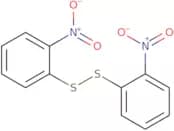
CAS:<p>Bis(2-nitrophenyl) disulfide is an organic solvent that has a wide range of potential uses. It is a useful reagent for the synthesis of amines, solutes, and other compounds in organic chemistry. Bis(2-nitrophenyl) disulfide can be used to form stable bonds between two different organic molecules by reacting with an electron-rich molecule such as amine or alkyne. This reaction forms a covalent bond between two molecules through the formation of a new bond between the sulfur atom and the carbon of one molecule and an electron-deficient molecule such as nitro or acetonitrile. Bis(2-nitrophenyl) disulfide reacts with chloride ions to form bis(chlorosulfonyl)disulfide, which can be used to synthesize chloroalkanes and fluorinated alkenes. Disulfides are also useful in metathesis reactions, which are reactions that involve the</p>Formula:C12H8N2O4S2Purity:Min. 95%Molecular weight:308.34 g/molAdipokinetic Hormone G (Gryllus bimaculatus)
CAS:Adipokinetic hormone G is a peptide found in the hemolymph of Gryllus bimaculatus, a species of cricket. It has been shown to have anti-lipemic and antilipaemic effects in animal models. Adipokinetic hormone G can be detected by bioassay and matrix-assisted laser desorption/ionization (MALDI) mass spectrometry.Formula:C43H57N11O12Purity:Min. 95%Molecular weight:919.98 g/mol