Pharmaceutical Standards
Pharmaceutical standards are a comprehensive set of reference materials essential for ensuring the safety, efficacy, and quality of pharmaceutical products. This category includes standards for active pharmaceutical ingredients (APIs), which are the core components responsible for therapeutic effects. Additionally, it covers compounds and metabolites relevant to both the pharmaceutical and veterinary industries, providing benchmarks for the accurate measurement and analysis of these substances. Nitrosamine control standards are crucial for detecting and mitigating potentially harmful nitrosamines in drug formulations. Toxicology standards help assess the safety and potential adverse effects of pharmaceutical compounds. Furthermore, enzyme activators and inhibitors standards are vital for research and development, enabling precise studies of biochemical pathways and drug mechanisms. These pharmaceutical standards are indispensable tools for regulatory compliance, quality control, and research, ensuring that pharmaceutical products meet stringent safety and effectiveness criteria.
Subcategories of "Pharmaceutical Standards"
- APIs for research and impurities(274,777 products)
- Enzyme Activators and Inhibitors(2,827 products)
- Nitrosamines(2,605 products)
- Pharmaceutical and Veterinary Compounds and Metabolites(2,833 products)
- Toxicology(13,652 products)
Found 7836 products of "Pharmaceutical Standards"
Sort by
Purity (%)
0
100
|
0
|
50
|
90
|
95
|
100
DL-α-Methyl-m-tyrosine
CAS:DL-alpha-Methyl-m-tyrosine (AMT) is a drug that is used to treat Parkinson's disease. It is an inhibitor of the uptake of dopamine and norepinephrine, which are neurotransmitters in the central nervous system. AMT blocks the action of a specific enzyme called aromatic L-amino acid decarboxylase, preventing the conversion of these neurotransmitters into their inactive metabolites. AMT also has been shown to be an antidepressant drug with stimulant properties. This may be due to its ability to inhibit uptake and release of monoamines in brain tissue.Formula:C10H13NO3Purity:Min. 95%Color and Shape:PowderMolecular weight:195.22 g/molFutalosine
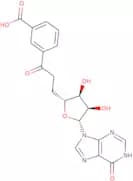
CAS:<p>Futalosine is a fatty acid that inhibits the reaction mechanism of certain enzymes. It binds to the enzyme and prevents its activity by binding to an allosteric site on the enzyme, thereby blocking the active site. This inhibition can be reversed by adding an activator molecule, such as chorismate. Futalosine has been shown to inhibit papilloma virus and human pathogens but not bacterial species. It is also a natural compound that is found in plants and other organisms. The type species for futalosine is Choristoma mexicanum.END></p>Formula:C19H18N4O7Purity:Min. 95%Molecular weight:414.37 g/mol1-Vinylnaphthalene, stab. with 4-tert-butylcatechol
CAS:1-Vinylnaphthalene is a monomer that has been shown to polymerize through cationic polymerization. It is reported to have high resistance, as well as fluorescence properties. The magnetic resonance spectroscopy of 1-vinylnaphthalene showed the presence of a hydroxyl group and a fatty acid side chain. The kinetic data for 1-vinylnaphthalene shows an increase in the dry weight with increasing concentration, which can be attributed to the hydroxyl group and the fatty acid side chain. Patterning experiments have also been conducted on 1-vinylnaphthalene films using hydrogen fluoride, showing that it can be used for patterning purposes.Formula:C12H10Purity:Min. 95%Color and Shape:Clear Colourless To Yellow LiquidMolecular weight:154.21 g/molOxychelidonine
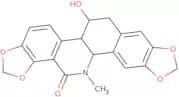
CAS:<p>Oxychelidonine is a chemical compound that is extracted from the leaves of the Oxycoccus vernus plant. Studies have shown that oxychelidonine has significant cytotoxicity against various cancer cells, including those of the breast, prostate, and colon. It is believed to induce apoptotic cell death by inhibiting DNA synthesis and by blocking protein synthesis in cancer cells. Oxychelidonine also inhibits bacterial growth. The extract shows significant cytotoxicity against gram-negative bacteria such as Escherichia coli and Salmonella typhimurium. It has been shown to inhibit the growth of Aspergillus fumigatus, which is a fungus that causes aspergillosis, a type of lung infection. Oxychelidonine can be used in moxibustion treatments for certain conditions such as bronchitis or asthma. Moxibustion involves burning an herb called mugwort (Artemisia vulgaris) on or</p>Formula:C20H17NO6Purity:Min. 95%Color and Shape:PowderMolecular weight:367.35 g/molGly-arg-4-methoxy-β-naphthylamide dihydrochloride
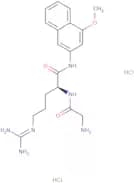
CAS:Please enquire for more information about Gly-arg-4-methoxy-beta-naphthylamide dihydrochloride including the price, delivery time and more detailed product information at the technical inquiry form on this pageFormula:C19H26N6O3·2ClHPurity:Min. 95%Molecular weight:459.37 g/molEosine-5-isothiocyanate
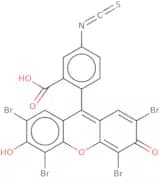
CAS:<p>Eosine-5-isothiocyanate is a fluorescent probe that has affinity for the interstitium of the kidney. This compound inhibits the transport of organic compounds across the renal tubular epithelium, and it is used as a marker for renal function. Eosine-5-isothiocyanate binds to molybdate with high affinity and can be used to measure its concentration in blood plasma. The inhibitory potency of eosine-5-isothiocyanate on carboxylates was tested by perfusing phenolphthalein through a rat's kidneys. Phenoxy dicarboxylates were found to be more potent inhibitors than phenoxy monocarboxylates, but not as potent as eosine-5-isothiocyanate itself. The spectrum of eosine-5-isothiocyanate is in the visible range, so this compound can be detected using</p>Formula:C21H7Br4NO5SPurity:85% MinColor and Shape:PowderMolecular weight:704.97 g/molUroporphyrin I dihydrochloride
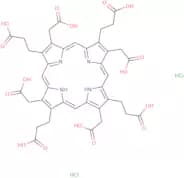
CAS:<p>Uroporphyrin I dihydrochloride is a facilitator of carbohydrate metabolism. It is a cofactor for the enzyme dehydrogenase and changes the optical properties of certain compounds. Uroporphyrin I dihydrochloride has been shown to modulate the redox potential in lung cells and inhibit human immunodeficiency virus (HIV) replication by inhibiting coproporphyrin production. This drug has also been shown to have an anticancer effect against both leukemia and colon cancer cell lines. Uroporphyrin I dihydrochloride reacts with oxygen, giving it a luminescent property that can be used to assay for its presence in biological systems.</p>Formula:C40H38N4O16•(HCl)2Purity:Min. 95%Molecular weight:903.67 g/mol6'-Hydroxy doxazosin
CAS:<p>6'-Hydroxy doxazosin is a drug that belongs to the group of alpha-blockers. It is a potent inhibitor of lipoprotein oxidation, which may contribute to its antiplatelet and hypotensive activities. The effects of 6'-hydroxy doxazosin on cholesterol metabolism are not yet known. Although the drug has been shown to be effective in vivo, it has not been studied in humans.</p>Formula:C23H25N5O6Purity:Min. 95%Molecular weight:467.47 g/molMethyl 6-nitropyrido[1,2-a]benzimidazole-8-carboxylate
CAS:<p>Please enquire for more information about Methyl 6-nitropyrido[1,2-a]benzimidazole-8-carboxylate including the price, delivery time and more detailed product information at the technical inquiry form on this page</p>Formula:C13H9N3O4Purity:Min. 95%Molecular weight:271.23 g/mol20a-Dihydro pregnenolone 3-sulfate sodium salt
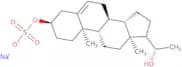
CAS:<p>Please enquire for more information about 20a-Dihydro pregnenolone 3-sulfate sodium salt including the price, delivery time and more detailed product information at the technical inquiry form on this page</p>Formula:C21H33NaO5SPurity:Min. 95%Molecular weight:420.54 g/mol7-Hydroxy doxazosin
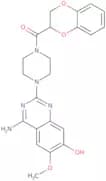
CAS:<p>Please enquire for more information about 7-Hydroxy doxazosin including the price, delivery time and more detailed product information at the technical inquiry form on this page</p>Formula:C22H23N5O5Purity:Min. 95%Molecular weight:437.45 g/molCodeine Impurity D
CAS:Controlled ProductPlease enquire for more information about Codeine Impurity D including the price, delivery time and more detailed product information at the technical inquiry form on this pageFormula:C35H38N2O6Purity:Min. 95%Propanoic acid, 3,3'-(1,3-dioxo-1,3-digermoxanediyl)bis-
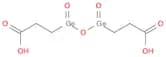
CAS:Formula:C6H10Ge2O7Purity:99.95%Color and Shape:SolidMolecular weight:339.4194Ref: IN-DA00BD30
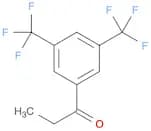
Discontinued product3',5'-BIS(TRIFLUOROMETHYL)PROPIOPHENONE
CAS:Formula:C11H8F6OPurity:97%Color and Shape:LiquidMolecular weight:270.171Ref: IN-DA008GOT
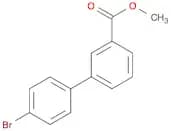
Discontinued productMethyl 3-(4-bromophenyl)benzoate, 4-Bromo-3'-(methoxycarbonyl)biphenyl
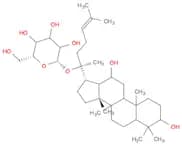
CAS:Formula:C14H11BrO2Purity:95+%Color and Shape:SolidMolecular weight:291.1399(20S)-20-(β-D-Glucopyranosyloxy)dammara-24-ene-3β,12β-diol
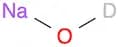
CAS:Formula:C36H62O8Purity:96%Color and Shape:SolidMolecular weight:622.8727Sodium hydroxide (Na(OD)) (6CI,7CI,8CI,9CI)
CAS:Formula:DNaOPurity:99.5%Color and Shape:LiquidMolecular weight:41.00332,2,3,3,4,4,5,5,6,6,7,7,8,8,8-Pentadecafluorooctanoic acid
CAS:Formula:C8HF15O2Purity:96%Color and Shape:SolidMolecular weight:414.0684




![Methyl 6-nitropyrido[1,2-a]benzimidazole-8-carboxylate](/_next/image/?url=https%3A%2Fstatic.cymitquimica.com%2Fproducts%2F3D%2Fthumb-webp%2FFM132139.webp&w=3840&q=75)