Glycoscience
Glycoscience is the study of carbohydrates and their derivatives, as well as the interactions and biological functions they participate in. This field of research is crucial for understanding a wide variety of biological processes, including cell recognition, signaling, immune response, and disease development. Glycoscience has important applications in biotechnology, medicine, and the development of new drugs and therapies. At CymitQuimica, we offer a wide selection of high-quality, high-purity products for glycoscience research. Our catalog includes monosaccharides, oligosaccharides, polysaccharides, glycoconjugates, and specific reagents, designed to support researchers in their studies on the structure, function, and applications of carbohydrates in biological systems. These resources are intended to facilitate scientific discoveries and practical applications in various areas of bioscience and medicine.
Subcategories of "Glycoscience"
- Aminosugars(108 products)
- Glyco-Related Antibodies(282 products)
- Glycolipids(46 products)
- Glycosaminoglycans (GAGs)(55 products)
- Glycosides(419 products)
- Monosaccharides(6,624 products)
- Oligosaccharides(3,682 products)
- Polysaccharides(503 products)
Found 11046 products of "Glycoscience"
Sort by
Purity (%)
0
100
|
0
|
50
|
90
|
95
|
100
2,3-O-Isopropylidene-1,1,4,4-tetraphenyl-L-threitol
CAS:<p>2,3-O-Isopropylidene-1,1,4,4-tetraphenyl-L-threitol is an organic compound that has been synthesized in a reaction mechanism that involves a β-amino acid and enantiomerically pure (S)-succinic anhydride. The molecular weight of this compound is 266.2 g/mol. It has a stable complex with the hydrogen bond between two molecules in a p2 group. This compound can be used as an optical sensor for the detection of β-amino acids and its enantiomers. The asymmetric synthesis of this molecule is steric interactions.</p>Formula:C31H30O4Purity:Min. 95%Color and Shape:White PowderMolecular weight:466.57 g/mol1-Deoxy-L-altronojirimycin hydrochloride
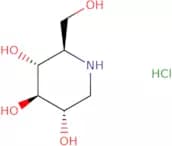
CAS:<p>L-altronojirimycin is a diterpene glycoside that belongs to the group of natural products that have inhibitory properties against lipid peroxidation. It has been shown to decrease the concentration of 1,2-dipalmitoylglycerophosphocholine (DPPC) in primary cells and reduce the rate of lipid peroxidation in a concentration-dependent manner. L-altronojirimycin inhibits the activity of enzymes such as acetylcholinesterase and phospholipase A2, which are involved in inflammation. This drug has also been shown to have cardioprotective effects and inhibit mutations in cardiac muscle cells. L-altronojirimycin has been tested for its long-term efficacy and shown to be effective against both bowel disease and cardiac effects.</p>Formula:C6H13NO4•HClPurity:Min. 95%Color and Shape:PowderMolecular weight:199.63 g/mol1-Deoxy-L-ribose
CAS:<p>1-Deoxy-L-ribose is a metabolite of acetone. It is a monosaccharide that contains one less oxygen atom than its parent compound. 1-Deoxy-L-ribose is found in the urine and blood of humans and animals. In animals, it can be synthesized from glucose by the enzyme ribose 1-phosphate reductase. This reaction requires an energy source such as ATP or NADH to reduce ribose 1,5-bisphosphate to 1,4-dihydroxyacetone phosphate, which then undergoes spontaneous dehydration to form 1-deoxy-D-ribose.</p>Formula:C5H10O4Purity:Min. 95%Molecular weight:134.13 g/mol2-Azidoethyl 2-O-benzoyl-4,6-O-benzylidene-3-O-(4-methoxybenzyl)-a-D-mannopyranoside
<p>2-Azidoethyl 2-O-benzoyl-4,6-O-benzylidene-3-O-(4-methoxybenzyl)-a-D-mannopyranoside is a synthetic sugar that has been modified with fluorination and glycosylation. The carbohydrate is made of a complex chain of monosaccharides and saccharides. It is the CAS number for this chemical agent.</p>Purity:Min. 95%1,4-Dideoxy-1,4-imino-D-xylitol HCl
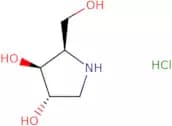
CAS:<p>1,4-Dideoxy-1,4-imino-D-xylitol HCl (DDX) is a potent inhibitor of the enzyme carboxypeptidase A2. DDX has been shown to inhibit the growth of HIV in vitro and in vivo. DDX also inhibits the production of proinflammatory cytokines and neurotrophic factors from HL60 cells. It has been shown to be a potential drug target for the treatment of infectious diseases such as alphaviruses, which produce a severe neuroinvasive disease in humans. DDX binds to dna with high affinity and specificity, but does not bind to RNA or proteins. DDX inhibits mitochondrial membrane potential by binding to ATP synthase and blocking the synthesis of ATP. DDX has also been shown to have an anti-oxidative injury effect on mitochondria, which may contribute to its inhibition of viral replication.</p>Formula:C5H11NO3·HClPurity:Min. 95%Molecular weight:169.61 g/molEntecavir 3''-O-b-D-glucuronide
<p>Entecavir 3''-O-b-D-glucuronide is a synthetic compound that is a methylated, fluorinated, and modified oligosaccharide. It has CAS number 68655-87-8 and it is a high purity, complex carbohydrate with a saccharide unit. Entecavir 3''-O-b-D-glucuronide can be used in the synthesis of monosaccharides and polysaccharides.</p>Formula:C18H23N5O9Purity:Min. 95%Color and Shape:SolidMolecular weight:453.4 g/mol17b-Estradiol 17-(2,3,4-tri-O-acetyl-b-D-glucuronide methyl ester)
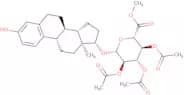
CAS:<p>17β-Estradiol 17-(2,3,4-tri-O-acetyl-b-D-glucuronide methyl ester) is a modified form of the natural estrogen estradiol. This product is a white to pale yellow powder that can be used in the synthesis of various drugs. It has been modified by glycosylation and methylation. The product is available for custom synthesis and modification.</p>Formula:C31H40O11Purity:Min. 95%Molecular weight:588.64 g/mol(R)-Propranolol glucuronide
CAS:<p>Propranolol is a racemic mixture of two optical isomers, which are (R)-propranolol and (S)-propranolol. The (-) form of propranolol metabolizes to the (+) form, and vice versa. The (+) form is more potent than the (-) form as an anti-hypertensive agent. It has been shown that the metabolism of propranolol in microsomes from rat liver differs from that in human liver microsomes. Both forms of propranolol can be metabolized by cytochrome P450 enzymes, but the (-) form can also be metabolized by esterases and glucuronidases.</p>Formula:C22H29NO8Purity:Min. 95%Molecular weight:435.47 g/mol1-Amino-1-deoxy-D-psicose hydrochloride
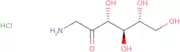
CAS:<p>1-Amino-1-deoxy-D-psicose hydrochloride is a Glycosylation product with the CAS No. 51296-39-0(free basis). It is a white crystalline powder that is soluble in water and ethanol, but insoluble in ether. This compound is used for complex carbohydrate synthesis, methylation, click modification, polysaccharide modification, fluorination, saccharide modification, sugar modification and oligosaccharide synthesis. The purity of this product ranges from 98% to 99%, and it can be customized depending on the customer's needs.</p>Formula:C6H13NO5·HClPurity:Min. 95%Molecular weight:215.63 g/molD-Arabinopyranosyl thiosemicarbazide
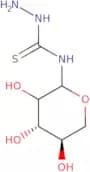
CAS:<p>D-Arabinopyranosyl thiosemicarbazide is a synthetic compound. It has been shown to be effective in the synthesis of oligosaccharides and sugars, as well as glycosylation reactions. This product can be used in fluorination, methylation, and other custom synthesis reactions. D-Arabinopyranosyl thiosemicarbazide is also useful for click modification of complex carbohydrates. The purity of this product is high and it can be modified with various functional groups.</p>Formula:C6H13N3O4SPurity:Min. 95%Molecular weight:223.25 g/molRhein D-Glucuronide (mixture of 1 & 8 Isomers)
<p>Rhein D-Glucuronide is a mixture of 1 and 8 isomers. It is a natural product that has been modified by methylation and saccharide modification. The CAS number for Rhein D-Glucuronide is 7062-00-2. This product can be custom synthesized to meet your needs. Rhein D-Glucuronide has the following properties: Polysaccharides, Click modification, Modification, Oligosaccharides, Custom synthesis, Glycosylation, High purity, Carbohydrate sugar, Synthetic and Fluorination. Rhein D-Glucuronide is a complex carbohydrate with high purity.</p>Purity:Min. 95%3,4,6-Tri-O-acetyl-2-deoxy-2-phthalimido-b-D-glucopyranosyl chloride
CAS:<p>3,4,6-tri-O-acetyl-2-deoxy-2-phthalimido-b-D-glucopyranosyl chloride is a modification of the carbohydrate. It is a complex carbohydrate that has been custom synthesized for research purposes. It can be used as a monosaccharide or polysaccharide in glycosylation reactions. This compound has not been fluorinated and the CAS number is 7772-87-4.</p>Formula:C20H20ClNO9Purity:Min. 95%Molecular weight:453.83 g/mol5-Deoxy-3,4-di-O-methyl-D-arabinose
<p>5-Deoxy-3,4-di-O-methyl-D-arabinose is a custom synthesis that is a complex carbohydrate. It has been modified by methylation and glycosylation. This product is soluble in water and can be used as a saccharide or sugar. The product has been fluorinated and modified with click chemistry to provide high purity.</p>Purity:Min. 95%Neocarrabiose (b anomer, crystalline)
CAS:<p>Neocarrabiose is a complex carbohydrate that is synthesized by the methylation of carrageenan. It has a molecular weight of about 1,000 Daltons and consists of a linear chain of alternating units of D-galactose and D-glucuronic acid. Neocarrabiose is used in the production of polysaccharides such as heparin, glycosaminoglycans, and polysulfated glycosaminoglycans. The enzyme modification process converts the anomeric configuration to L-arabinofuranose in order to produce polysaccharides with high purity.</p>Formula:C12H20O10Purity:Min. 95%Molecular weight:324.28 g/mol4-Hydroxypropofol-4-O-b-D-glucuronide
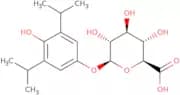
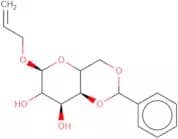
CAS:<p>4-Hydroxypropofol-4-O-b-D-glucuronide (HPG) is a synthetic carbohydrate with a 4,5-dihydroxypropyl group at C2 and an O-glycosidic bond between the hydroxyl group at C1 and the b position of a glucuronic acid. HPG is used in the synthesis of complex carbohydrates and saccharides. It can be methylated in order to produce 5,6-dimethoxycarbonyloxypropyl glycosides or glycosylated to produce mannosides. HPG has been synthesized by click modification from 4,5-dihydroxypropionic acid.</p>Formula:C18H26O8Purity:Min. 95%Molecular weight:370.4 g/molAllyl 4,6-O-benzylidene-a-D-glucopyranoside
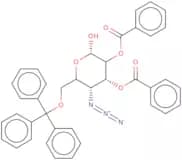
CAS:<p>Allyl 4,6-O-benzylidene-a-D-glucopyranoside is a custom synthesis of an oligosaccharide. It is a complex carbohydrate that belongs to the group of saccharides. This product is methylated and glycosylated, and contains a hexose sugar (glucose) at its reducing end. Allyl 4,6-O-benzylidene-a-D-glucopyranoside has been fluorinated with hydrogen fluoride gas in order to increase its purity. This product is synthesized by click chemistry and has CAS number 65987-12-4.</p>Formula:C16H20O6Purity:Min. 95%Molecular weight:308.33 g/mol4-Azido-2,3-di-O-benzoyl-4-deoxy-6-O-trityl-a-D-glucopyranoside
<p>4-Azido-2,3-di-O-benzoyl-4-deoxy-6-O-trityl-a-D-glucopyranoside is a synthetic glycosylation reagent that can be used for the synthesis of oligosaccharides. It is a fluorinated sugar that can be custom synthesized to order. 4A2B4D6OATG is a high purity product with CAS No. 62990-51-1 and has been modified using click chemistry to incorporate azide functional groups.</p>Formula:C39H33N3O7Purity:Min. 95%Molecular weight:655.7 g/molPalbociclib N-glucuronide
<p>Palbociclib N-glucuronide is a synthetic, modified sugar that is used in the synthesis of carbohydrates. It has a molecular weight of 542.34 and was originally synthesized by glycosylation and methylation of palbociclib. The chemical formula for Palbociclib N-glucuronide is C10H18N4O5•C6H7O6•2HCOOH.</p>Formula:C30H37N7O8Purity:Min. 95%Molecular weight:623.66 g/molMonosialyl, difucosyllacto-N-neohexaose
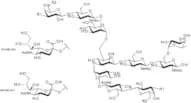
<p>Monosialyl, difucosyllacto-N-neohexaose is a high purity, custom synthesis sugar that can be modified with fluorination and glycosylation. It has CAS No. and has the following properties: oligosaccharide, monosaccharide, saccharide, complex carbohydrate. Monosialyl, difucosyllacto-N-neohexaose is a synthetic carbohydrate that is used in click modification and methylation. This product can also be used for glycosylation and modification.</p>Formula:C63H105N3O47Purity:Min. 95%Molecular weight:1,656.5 g/mol4-C-Acetoxymethyl-1,2-di-O-acetyl-3,5-di-O-benzyl-a-D-ribofuranose
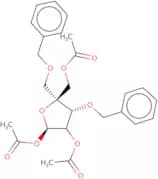
<p>4-C-Acetoxymethyl-1,2-di-O-acetyl-3,5-di-O-benzyl-a-D-ribofuranose is a custom synthesis that belongs to the class of complex carbohydrates. It is an oligosaccharide with a CAS number. This product is a modification of saccharides and has been methylated and glycosylated. This product has been fluorinated using the click chemistry reaction, which has made it more stable. 4CAMDBF is high purity and synthetic.</p>Formula:C26H30O9Purity:Min. 95%Color and Shape:Colourless syrup.Molecular weight:486.51 g/molAnhydro-4-azido-5,6,8-tri-O-benzyl-1,2,4-trideoxy-D-glycero-D-gulo-oct-1-ynitol
CAS:Anhydro-4-azido-5,6,8-tri-O-benzyl-1,2,4-trideoxy -D-glycero-D-gulo-oct 1 -ynitol is a methylated saccharide. It is a fluorinated sugar that can be used as an intermediate in the synthesis of oligosaccharides and polysaccharides. This compound has been modified by click chemistry to allow for the incorporation of azide groups at the 3′ position of the sugar moiety. The modification allows for the synthesis of complex carbohydrates with high purity and high yield. The product is a white powder that is soluble in water.Formula:C29H29N3O4Purity:Min. 95%Color and Shape:Colourless syrupMolecular weight:483.56 g/molPhenyl 2,3-di-O-benzyl-b-D-thioglucopyranoside
CAS:<p>Phenyl 2,3-di-O-benzyl-b-D-thioglucopyranoside is a Glycosylation product that belongs to the category of complex carbohydrates. Phenyl 2,3-di-O-benzyl-b-D-thioglucopyranoside is an Methylation product that can be Click modified with Polysaccharides and Fluorinated with saccharides. This product has been shown to have Modification capabilities in sugar and Oligosaccharides. Phenyl 2,3-di-O-benzyl-b-D-thioglucopyranoside is a Synthetic product that can be Custom synthesized for High purity.</p>Formula:C33H34O5SPurity:Min. 95%Molecular weight:542.69 g/mol2,6-Anhydro-1-deoxy-1-nitro-3,4,5-tri-O-acetyl-D-gulitol
CAS:<p>2,6-Anhydro-1-deoxy-1-nitro-3,4,5-tri-O-acetyl-D-gulitol is a custom synthesized sugar that is manufactured by Click modification with the fluorination and glycosylation of the 2,6 anhydro sugar. The CAS No. 20204-84-6 belongs to the category of high purity and is a synthetic carbohydrate. This complex carbohydrate can be modified for its methylation and oligosaccharide content.</p>Purity:Min. 95%Human urine oligosaccharides
<p>This mixture contains some of the neutral and sialylated oligosaccharides found in human urine.</p>Purity:Min. 95%3,4,6-Tri-O-acetyl-2-azido-2-deoxy-D-galactose - non-animal origin
CAS:<p>3,4,6-Tri-O-acetyl-2-azido-2-deoxy-D-galactose (TADA) is a non-animal origin sugar that can be custom synthesized to meet your needs. TADA is modified with fluorination, glycosylation, and methylation to increase its stability and improve its properties. It also has an acetate group at the 3 position of the glucose molecule for easy conjugation with proteins. TADA is used in glycosylations to produce oligosaccharides and monosaccharides.</p>Formula:C12H17N3O8Purity:Min. 98 Area-%Molecular weight:331.28 g/molPhenyl 2,3-di-O-benzyl-6-deoxy-b-D-thioglucopyranoside
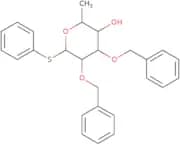
CAS:<p>Phenyl 2,3-di-O-benzyl-6-deoxy-b-D-thioglucopyranoside is a synthetic glycosylated sugar with a fluorinated benzene ring. It is used as an intermediate in the synthesis of oligosaccharides, polysaccharides and saccharides. Phenyl 2,3-di-O-benzyl-6-deoxy-b-D-thioglucopyranoside has an appearance of a white powder and a melting point of around 100°C. This compound has been evaluated for its purity and quality by analytical methods such as high performance liquid chromatography (HPLC), gas chromatography (GC) and nuclear magnetic resonance (NMR).</p>Formula:C26H28O4SPurity:Min. 95%Molecular weight:436.56 g/mol3,2',3',4'-Tetra-O-acetyl-6,6'-di-O-tert-butyldiphenylsilyl-lactal
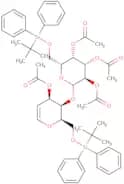
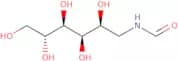
CAS:<p>3,2',3',4'-Tetra-O-acetyl-6,6'-di-O-tert-butyldiphenylsilyl-lactal is a modification of the oligosaccharide. The structure of this compound is an alpha-(1→4)-linked beta-D-galactopyranosyl residue, which is attached to a 3,2',3',4'-tetra-O-acetyl 6,6'-di-O-[ tert -butyldiphenylsilyl] lactal residue. This compound has been shown to be synthesized by methylation and glycosylation of the monosaccharide maltose. This modification has also been shown to inhibit the growth of bacteria. CAS No. 308103-45-9</p>Purity:Min. 95%N-Formyl-1-amino-1-deoxy-D-glucitol
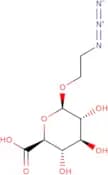
CAS:<p>N-Formyl-1-amino-1-deoxy-D-glucitol (NFA) is a custom synthesis that has been modified by fluorination, methylation, and monosaccharide click modification. It is a saccharide with CAS No. 89182-60-5. NFA is a synthetic sugar with complex carbohydrate properties.</p>Purity:Min. 95%2-Azidoethyl b-D-glucopyranosiduronic acid
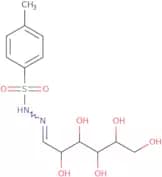
CAS:<p>2-Azidoethyl b-D-glucopyranosiduronic acid is a synthetic, fluorinated sugar that is used as a click modification to saccharides. It has the ability to be modified with methyl groups and glycosylation, which provide potential for synthesis of complex carbohydrates. The CAS number for 2-azidoethyl b-D-glucopyranosiduronic acid is 128095-64-7.</p>Formula:C8H13N3O7Purity:Min. 95%Molecular weight:263.2 g/molD-Glucose-(toluene-4-sulfonylhydrazone)
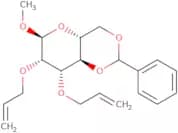
CAS:<p>D-Glycose-(Toluene-4-sulfonylhydrazone) is a modified sugar that is used as a building block for glycosylation. It has been used in the synthesis of complex carbohydrates, methylation, click chemistry and polysaccharides. The sulfonyl group on the toluene ring makes this compound a good candidate for fluorination, saccharide modification and Oligosaccharide synthesis. This product can be custom synthesized with high purity and CAS No. 5328-51-8.</p>Purity:Min. 95%Methyl 2,3-di-O-allyl-4,6-O-benzylidene-a-D-mannopyranoside
CAS:<p>Methyl 2,3-di-O-allyl-4,6-O-benzylidene-a-D-mannopyranoside is a high purity and custom synthesis of a sugar. It can be used for the modification of the carbohydrate and saccharide. Methyl 2,3-di-O-allyl-4,6-O-benzylidene-a-Dmannopyranoside is an oligosaccharide that has been modified with fluorination. It is also a polysaccharide that contains saccharides.</p>Formula:C20H26O6Purity:Min. 95%Molecular weight:362.42 g/mol6-O-Benzyl-D-mannose
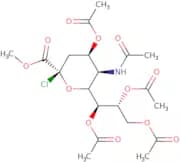
6-O-Benzyl-D-mannose is a methylated monosaccharide. It is an important intermediate in the synthesis of oligosaccharides and polysaccharides. 6-O-Benzyl-D-mannose can be used for modification of saccharides, carbohydrates and sugars. This product has high purity and a custom synthesis.Formula:C13H18O6Purity:Min. 95%Molecular weight:270.28 g/molN-Acetyl-2-chloro-2-deoxyneuraminic acid methyl ester 4,7,8,9-tetraacetate
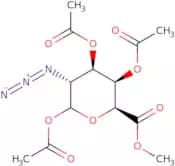
CAS:<p>N-Acetyl-2-chloro-2-deoxyneuraminic acid methyl ester 4,7,8,9-tetraacetate is a sialic acid analog that has been shown to have antiviral properties. It binds to the influenza virus and inhibits its activity by blocking the hemagglutinin receptor. The compound is soluble in water and organic solvents and can be modified with perbenzylated groups to increase its stability in plasma and tissues. N-Acetyl-2-chloro-2-deoxyneuraminic acid methyl ester 4,7,8,9-tetraacetate is resistant to hydrolysis by esterases and can also be used for the treatment of infections caused by bacteria or fungi.</p>Formula:C20H28ClNO12Purity:Min. 95%Color and Shape:PowderMolecular weight:509.89 g/mol2-Azido-1,3,4-tri-O-acetyl-2-deoxy-D-galacturonide methyl ester
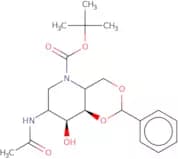
CAS:<p>2-Azido-1,3,4-tri-O-acetyl-2-deoxy-D-galacturonide methyl ester is a custom synthesis that is intended for use in research. This product is not a food or drug and is not intended to diagnose, treat, cure or prevent any disease.</p>Formula:C13H17N3O9Purity:Min. 95%Color and Shape:Colourless SolidMolecular weight:359.29 g/mol2-Acetamido-4,6-O-benzylidene-N-Boc-1,2,5-trideoxy-1,5-imino-D-glucitol
CAS:<p>2-Acetamido-4,6-O-benzylidene-N-Boc-1,2,5-trideoxy-1,5-imino-D-glucitol is a complex carbohydrate that belongs to the class of oligosaccharides. It is a methylated and glycosylated saccharide. 2ACBG has been modified with Click chemistry to introduce a fluorine atom at the C2 position on the glucose moiety. This modification prevents the formation of an intramolecular hemiacetal linkage between C2 and C3 in the ring structure, thereby preventing cyclization and stabilizing the linear configuration of 2ACBG. 2ACBG can be synthesized using high purity raw materials such as glucose and acetic acid in a two step process using ethyl bromoacetate as a reagent for acetylation followed by NBS (N-(3-bromopropyl)phthal</p>Formula:C20H28N2O6Purity:Min. 95%Molecular weight:392.45 g/molA2F Glycan, 2-AB labelled
<p>A2F Glycan is an oligosaccharide that is synthesized from 2-AB labelled methylated saccharides. It can be used in the synthesis of polysaccharides and as a click modification. A2F Glycan has a CAS number, which allows for custom synthesis, and it is available in high purity. The glycosylation of this product can be modified to suit the needs of the customer. The fluorination of A2F Glycan helps with the synthesis process and provides a complex carbohydrate with few impurities.</p>Purity:Min. 95%Ethyl 4-O-allyl-3,6-di-O-benzyl-2-O-levulinoyl-b-D-thioglucopyranoside
<p>Ethyl 4-O-allyl-3,6-di-O-benzyl-2-O-levulinoyl-b-D-thioglucopyranoside is a carbonylated sugar. It is used as an intermediate in the synthesis of glycosides and saccharides. This chemical can be custom synthesized to meet your requirements. Ethyl 4-O-allyl-3,6-di-O-benzyl 2,5,6 trideoxygalactoside can be methylated, glycosylated, or fluorinated to produce different derivatives.</p>Purity:Min. 95%D-[1-13C]Galacturonic acid potassium salt
<p>D-[1-13C]Galacturonic acid potassium salt is a sugar that is synthesized by the reaction of galactose with carbon dioxide. This sugar has been custom synthesized and is used in glycosylation reactions. Other modifications to this sugar include methylation and click modification, which can be done to make the sugar more reactive. D-[1-13C]Galacturonic acid potassium salt is a high purity product with a CAS number.</p>Purity:Min. 95%3'-Sulfated Lewis X methyl glycoside
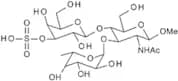
CAS:<p>3'-Sulfated Lewis X methyl glycoside is a synthetic, fluorinated oligosaccharide that can be used as a sugar or as an intermediate in the synthesis of complex carbohydrates. It is available for custom synthesis and modification to meet your specific needs. 3'-Sulfated Lewis X methyl glycoside is a monosaccharide that has been modified with a click reaction to attach sulfate groups. This modification allows for easier saccharide recognition and binding in the body. The CAS number for 3'-sulfated Lewis X methyl glycoside is 386264-50-2.</p>Formula:C21H37NO18SPurity:Min. 95%Molecular weight:623.58 g/mol2,3,4,6-Tetra-O-acetyl-b-D-thioglucopyranose sodium salt
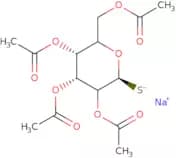
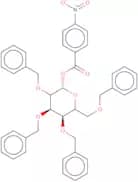
CAS:2,3,4,6-Tetra-O-acetyl-b-D-thioglucopyranose sodium salt is a synthetic monosaccharide that can be used for glycosylation. This product is synthesized by the addition of acetyl groups to the 2-, 3-, 4-, and 6-positions on the glucose moiety. The resulting product has been shown to have a high degree of purity as well as a low content of impurities.Formula:C14H19O9SNaPurity:Min. 95%Molecular weight:386.35 g/mol2,3,4,6-Tetra-O-benzyl-1-O-(4-nitrobenzoyl)-b-D-glucopyranose
2,3,4,6-Tetra-O-benzyl-1-O-(4-nitrobenzoyl)-b-D-glucopyranose is a synthetic sugar that is the building block for oligosaccharides and polysaccharides. It has been modified with fluorination and methylation to produce a high purity product. The CAS number for this compound is 248940-24-5.Formula:C41H39NO9Purity:Min. 95%Molecular weight:689.77 g/molDextran sulfate sodium salt - MW 150,000
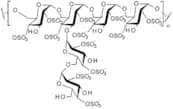
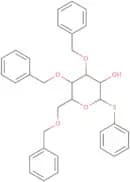
CAS:Induces ulceration; used to model inflammatory bowel diseasePurity:Min. 95%Color and Shape:PowderPhenyl 3,4,6-tris-o-(phenylmethyl)-1-thio-B-D-glucopyranoside
CAS:<p>Please enquire for more information about Phenyl 3,4,6-tris-o-(phenylmethyl)-1-thio-B-D-glucopyranoside including the price, delivery time and more detailed product information at the technical inquiry form on this page</p>Formula:C33H34O5SPurity:Min. 95%Molecular weight:542.7 g/molMethyl 4,6-di-O-acetyl-2,3-didehydro-2,3-dideoxy-a-D-galactopyranoside
CAS:<p>Methyl 4,6-di-O-acetyl-2,3-didehydro-2,3-dideoxy-a-D-galactopyranoside is a carbohydrate that is synthesized by glycosylation with methyl 4,6-di-O-acetyl-2,3-didehydrohexahydropyranose. It is used as a synthetic intermediate in the production of saccharides and oligosaccharides. This product has high purity and custom synthesis can be requested.</p>Formula:C11H16O6Purity:Min. 95%Molecular weight:244.24 g/molD-Mannose-6-13C
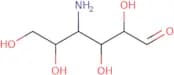
CAS:Please enquire for more information about D-Mannose-6-13C including the price, delivery time and more detailed product information at the technical inquiry form on this pageFormula:C6H12O6Purity:Min. 95%Molecular weight:180.16 g/mol4-Amino-4-deoxy-D-glucopyranose
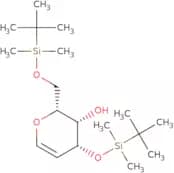
CAS:<p>4-Amino-4-deoxy-D-glucopyranose is an anticancer agent that has been found to be effective against cancer cells. It is a chitosan derivative that acts as an inhibitor of apoptosis in cancer cells. This compound has been detected in urine and has been shown to inhibit the growth of human cancer cells by inhibiting kinase activity. 4-Amino-4-deoxy-D-glucopyranose is an analog of glucose and can be used as a potential therapeutic agent for the treatment of tumors. It specifically targets kinases involved in the regulation of cell growth and protein synthesis, which makes it a promising candidate for cancer treatment.</p>Formula:C6H13NO5Purity:Min. 95%Molecular weight:179.17 g/mol3,6-Di-O-tert-butyldimethylsilyl-D-galactal
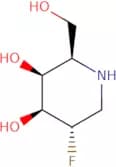
CAS:<p>3,6-Di-O-tert-butyldimethylsilyl-D-galactal is a sugar that has been modified with fluorination. This sugar can be used as an intermediate for the synthesis of complex carbohydrate or glycosylation. 3,6-Di-O-tert-butyldimethylsilyl-D-galactal can also be used in Click chemistry to modify proteins and polysaccharides. This product is offered at high purity and custom synthesis.</p>Purity:Min. 95%1,2-Dideoxy-2-fluoro-galactonojirimycin
CAS:<p>1,2-Dideoxy-2-fluoro-galactonojirimycin is a synthetic glycoside derived from galactonojirimycin. It has been modified to include fluorine and methyl groups. 1,2-Dideoxy-2-fluoro-galactonojirimycin is an oligosaccharide with a complex carbohydrate structure. It can be synthesized by Click modification of the sugar moiety with fluoroacetate followed by glycosylation and methylation of the saccharide chain.</p>Formula:C6H12NO3FPurity:Min. 95%Molecular weight:165.16 g/molR-Phenyleprine-3-D-glucuronide
<p>R-Phenyleprine-3-D-glucuronide is a synthetic compound that is used for the modification of saccharides. It has fluoro groups and has been shown to be active in glycosylation reactions. R-Phenyleprine-3-D-glucuronide can also be used as a methylating agent, or as an intermediate in the synthesis of oligosaccharides and monosaccharides. The molecular weight of this compound is 594.</p>Purity:Min. 95%Hyaluronate fluorescein - Molecular Weight - 2500kDa
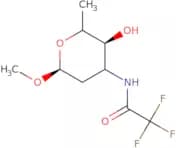
<p>Hyaluronate fluorescein is a polymer of hyaluronic acid that has been modified with fluorescein. It is synthesized by the methylation and saccharide coupling of an oligosaccharide, followed by Click modification and the addition of a fluorescent dye. Hyaluronate fluorescein has a molecular weight of 2500kDa. It is highly purified and can be custom-synthesized to suit specific needs.</p>Purity:Min. 95%Color and Shape:PowderMethyl N-trifluoroacetyldaunosaminide
CAS:<p>Methyl N-trifluoroacetyldaunosaminide is a naturally occurring amino sugar that has been shown to have biological relevance. It has been shown to inhibit the activity of bacterial enzymes, such as daunosamine reductase and daunosamine kinase, which are involved in the biosynthesis of anthracyclines in bacteria. The structural analogues of methyl N-trifluoroacetyldaunosaminide have been shown to be effective against a range of Gram-positive and Gram-negative bacteria including Staphylococcus aureus, Mycobacterium tuberculosis, Mycobacterium avium complex and Pseudomonas aeruginosa.</p>Formula:C9H14F3NO4Purity:Min. 95%Molecular weight:257.21 g/mol1,3,6-Tri-O-benzoyl-2-deoxy-a-D-glucopyranoside
<p>1,3,6-Tri-O-benzoyl-2-deoxy-a-D-glucopyranoside is a glycosylation molecule that is synthesized by the addition of a benzoyl group to the C1 position of glucose. This product is an example of an oligosaccharide with a triester linkage. The synthesis of this product involves methylation and fluorination reactions. 1,3,6-Tri-O-benzoyl-2-deoxy-a-D-glucopyranoside is stable in acidic environments and can be custom synthesized at high purity level.</p>Formula:C27H30O5Purity:Min. 95%Molecular weight:434.52 g/molDecyl glucose neopentyl glycol
CAS:<p>Decyl glucose neopentyl glycol is a molecule that is commonly used in cell-based assays to measure the hydrogen peroxide release by cells. It is also used to transport hydrogen peroxide, which is a reactive oxidative species, intracellularly and extracellularly. Decyl glucose neopentyl glycol has been shown to have a range of different isoforms in cellular systems. This allows it to be used as an effective fluorescent marker for the detection of hydrogen peroxide mediated events.</p>Formula:C35H68O12Purity:Min. 95%Molecular weight:680.91 g/molDipalmitin
CAS:<p>Dipalmitin is a chemical substance that belongs to the group of fatty acid esters. It has been shown to inhibit the activity of a number of enzymes, including proteases and lipases. Dipalmitin also inhibits the production of diacylglycerol and glycerides in cells, which are necessary for cellular growth. The exact mechanism by which dipalmitin inhibits these enzymes is unknown, but it has been hypothesized that it may function as a competitive inhibitor or an allosteric inhibitor. Dipalmitin also has been shown to have antiviral properties against HIV infection in model systems. The antiviral activity has been attributed to its ability to inhibit viral protein synthesis and block the assembly of viral particles at the cell membrane.</p>Formula:C35H68O5Purity:Min. 95%Molecular weight:568.91 g/molLacto-N-fucopentaose III-BSA
<p>Lacto-N-fucopentaose III-BSA is a carbohydrate that is modified with fluorine. It is a complex carbohydrate that has been custom synthesized and methylated. Lacto-N-fucopentaose III-BSA is a high purity, synthetic oligosaccharide that has been glycosylated and click modified. The CAS number for this product is 73638-80-9.</p>Purity:Min. 95%trans-3'-Hydroxycotinine-O-b-D-glucuronide D3 sodium salt
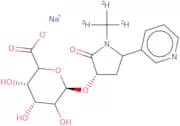
Controlled Product<p>Trans-3'-Hydroxycotinine-O-b-D-glucuronide D3 sodium salt is a modification of the natural product trans-3'-hydroxycotinine. It is an oligosaccharide with a complex carbohydrate structure, which may be synthesized by custom synthesis or by glycosylation. This modification has a high purity and may be monosaccharide or polysaccharide. Trans-3'-hydroxycotinine-O-b-D-glucuronide D3 sodium salt may have CAS number and fluorination. It has been shown to have antihistamine activities, which are due to its ability to inhibit the release of histamine from mast cells in the lungs.</p>Formula:C16H16N2O8D3·NaPurity:Min. 95%Molecular weight:393.34 g/molN-Acetylglucosamine-BSA (3 atom spacer)
<p>Please enquire for more information about N-Acetylglucosamine-BSA (3 atom spacer) including the price, delivery time and more detailed product information at the technical inquiry form on this page</p>Purity:Min. 95%1-Oxododecyl-D-glucopyranoside
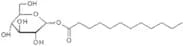
CAS:<p>1-Oxododecyl-D-glucopyranoside is a custom synthesis that contains an oligosaccharide and polysaccharide. The monosaccharides are modified with methylation, glycosylation, or fluorination. The complex carbohydrate is prepared by the click modification of a sugar. 1-Oxododecyl-D-glucopyranoside is synthesized with high purity and high quality. It can be used in medicine as an anti-inflammatory drug and for treatment of diabetes.</p>Formula:C18H34O7Purity:Min. 95%Color and Shape:SolidMolecular weight:362.4 g/molMethyl 2-deoxy-L-threo-pentofuranoside
CAS:<p>Methyl 2-deoxy-L-threo-pentofuranoside is a custom synthesis that has been fluorinated, methylated, and modified with a click modification. It is an oligosaccharide with a saccharide structure and a carbohydrate modification. Methyl 2-deoxy-L-threo-pentofuranoside contains the CAS number 302349-32-2. The molecular weight of this compound is 522.2 g/mol. The molecular formula is C14H26O12F3N3O8S2. This product can be used in the production of glycosylation reactions to create complex carbohydrates with high levels of purity and yield.</p>Formula:C6H12O4Purity:Min. 95%Molecular weight:148.16 g/mol1,2:5,6-Di-O-cyclohexylidene-myo-inositol
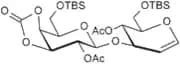
CAS:<p>1,2:5,6-Di-O-cyclohexylidene-myo-inositol is an experimental solvent that has been shown to form hydrogen bonds with solutes. It crystallizes in the monoclinic system and shows a single crystal x-ray diffraction pattern. The molecule consists of two vicinal cyclohexane rings linked by a six carbon chain. The molecule has two conformations: one where the hydroxyl group is on the top of the ring and one where it is on the bottom. The former conformation is more favorable because it stabilizes the molecule by covering its hydroxyl group and uncovers its other functional groups. This conformation also makes the dihedral angle between C1 and C2 larger than that between C1 and C3, which causes conformational strain. In addition, this conformation creates polarities in different areas of the molecule, which may be due to intramolecular bonding or vic</p>Purity:Min. 95%3,2'-Di-O-acetyl-3',4'-O-carbonyl-6,6'-di-O-tert-butyldimethylsilyl-lactal
<p>3,2'-Di-O-acetyl-3',4'-O-carbonyl-6,6'-di-O-tert-butyldimethylsilyl-lactal is a fluorinated oligosaccharide that is custom synthesized for glycosylation and polysaccharide modifications. This product has been shown to be resistant to degradation by enzymes, including aminoglycosides, beta-lactam antibiotics, and penicillin. 3,2'-Di-O-acetyl-3',4'-O-carbonyl-6,6'-di-O-tert-butyldimethylsilyl--lactal is a high purity product with CAS number 207787 - 39 - 0.</p>Purity:Min. 95%Molecular weight:646.87 g/mol1,3,4-Tri-O-benzyl-D-ribitol
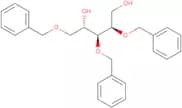
CAS:1,3,4-Tri-O-benzyl-D-ribitol is a synthetic sugar that can be used in the synthesis of oligosaccharides and saccharides. It has high purity and is custom synthesized to meet your specifications. This chemical can be modified with fluorination, glycosylation, or methylation to produce desired products. The molecular weight of 1,3,4-tri-O-benzyl-D-ribitol ranges from 400 Da to 2000 Da. Its CAS number is 13189700-2.Purity:Min. 95%k-Carratriose disulfate disodium salt
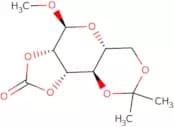
<p>k-carrageenan derived trisaccharide disulfate</p>Formula:C18H30O21S2•2NaPurity:Min. 95%Color and Shape:White PowderMolecular weight:692.51 g/molMethyl 2,3-O-carbonyl-4,6-O-isopropylidene-a-D-mannopyranoside
CAS:Methyl 2,3-O-carbonyl-4,6-O-isopropylidene-a-D-mannopyranoside is a custom synthesis of an oligosaccharide. It has a CAS No. 74948-73-5 and is a polysaccharide. The modification of the saccharide is methylation and glycosylation. Carbohydrate is the sugar in this compound. Click modification and fluorination are two synthetic modifications that have been done on the sugar molecule. This high purity product has a purity of 98% with a molecular weight of 587.Formula:C11H16O7Purity:Min. 95%Molecular weight:260.25 g/molHyaluronate biotin - Molecular Weight - 1000kDa
<p>Hyaluronate biotin (HB) is a modified form of hyaluronic acid. It is produced by the methylation and glycosylation of hyaluronic acid and it has an average molecular weight of 1000 kDa. HB is used in tissue engineering, cell culture, and as a contrast agent for magnetic resonance imaging. The modification of hyaluronate with biotin allows for the visualization of HB using immunofluorescence microscopy. Hyaluronate biotin is a synthetic product that can be custom-synthesized to customer specifications, such as purity level, oligosaccharide content, and monosaccharide content.</p>Purity:Min. 95%1,2,3,4-Tetra-O-acetyl-a-D-galacturonic acid methyl ester
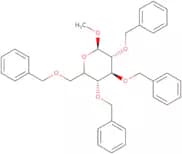
CAS:1,2,3,4-Tetra-O-acetyl-a-D-galacturonic acid methyl ester is a custom synthesis that has been modified with fluorination and methylation. The monosaccharide is an acetylated form of galacturonic acid. This synthetic compound has been shown to be effective in inhibiting the glycosylation of polysaccharides. Its saccharide chain includes four monosaccharides linked by glycosidic bonds. 1,2,3,4-Tetra-O-acetyl-a-D-galacturonic acid methyl ester is used as a sugar in the production of complex carbohydrates.Purity:Min. 95%Methyl 2,3,4,6-tetra-O-benzyl-D-mannopyranoside
CAS:<p>Methyl 2,3,4,6-tetra-O-benzyl-D-mannopyranoside is a benzylated sugar that has been glycosidically linked to an amino acid. This product has been shown to be a contaminant in the synthesis of other compounds and can be used as a chloride or benzylating reagent. It is used in the preparation of glycosyl halides and condensations. Methyl 2,3,4,6-tetra-O-benzyl-D-mannopyranoside is also used in the synthesis of natural products such as flavones and alkaloids.</p>Formula:C35H38O6Purity:Min. 95%Molecular weight:554.67 g/mol3,4-Di-O-acetyl-1,6-anhydro-2-deoxy-2-fluoro-b-D-glucopyranose
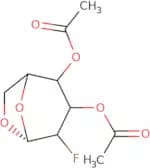
CAS:<p>3,4-Di-O-acetyl-1,6-anhydro-2-deoxy-2-fluoro-b-D-glucopyranose is a synthetic sugar that has been modified to include a fluorine atom. It is a complex carbohydrate that is used in the synthesis of glycosides. 3,4-Di-O-acetyl-1,6-anhydro-2,3 -difluoro b D glucopyranose can be used in the synthesis of an acetylated glycoside with click chemistry. This modification can be achieved through methylation and/or glycosylation reactions. 3,4 Di O acetyl 1,6 anhydro 2 deoxy 2 fluoro b D glucopyranose can also be used in the synthesis of oligosaccharides or saccharides by modifying either its glycone or reducing end.</p>Formula:C10H13FO6Purity:Min. 95%Molecular weight:248.21 g/mol3,4,6-Tri-O-acetyl-2-deoxy-2-phthalimido-D-glucopyranosyl bromide
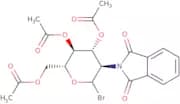
CAS:3,4,6-Tri-O-acetyl-2-deoxy-2-phthalimido-D-glucopyranosyl bromide is a synthetic compound that has been used in the synthesis of glycosides and oligosaccharides. It can be used to prepare an artificial sugar with a click modification. The chemical structure consists of three acetyl groups on the 2′ position on the sugar ring, which may be methylated or fluorinated. The compound is insoluble in water and melts at 161°C. 3,4,6-Tri-O-acetyl-2-deoxy-2-phthalimido-D-glucopyranosyl bromide is classified as a carbohydrate and is soluble in alcohols, ethers, and chloroform.Formula:C20H20BrNO9Purity:Min. 95%Molecular weight:498.28 g/molMethyl 2,3,4-tri-O-acetyl-b-D-thiogalacturonide methyl ester
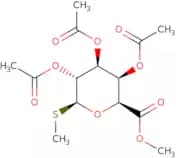
CAS:<p>Methyl 2,3,4-tri-O-acetyl-b-D-thiogalacturonide methyl ester is a modified carbohydrate that has been synthesized for use as a building block in the synthesis of complex carbohydrates. The compound is readily available and can be custom synthesized to meet your specifications. It is also available as a fluorinated form. This product is manufactured by a process called Click chemistry and it has been shown to have high purity, making it suitable for use in pharmaceuticals and other applications.</p>Formula:C14H20O9SPurity:Min. 95%Molecular weight:364.37 g/molN,N-Dimethyl-D-glucosamine
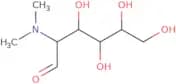
CAS:<p>N,N-Dimethyl-D-glucosamine is a natural amino sugar that yields pyrazoles, triazoles, and formaldehyde. It can be prepared by the reaction of acetyl chloride with potassium hydroxide in hydrochloric acid. The synthesis of N,N-Dimethyl-D-glucosamine has been optimized on a Raney nickel catalyst to produce high yields of the desired product. This product is a broad spectrum antibiotic that has been shown to inhibit bacterial growth through inhibition of protein synthesis. The salt form of N,N-Dimethyl-D-glucosamine is sodium salt.</p>Formula:C8H17NO5Purity:Min. 95%Molecular weight:207.22 g/mol3-Deoxy-3-fluoro-D-glucitol
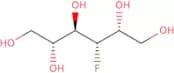
CAS:<p>3-Deoxy-3-fluoro-D-glucitol is a glucose analog that is used as a marker for glycogen in tissue extracts. 3-Deoxy-3-fluoro-D-glucitol has been shown to be the most sensitive molecular marker for muscle glycogen concentrations, although it does not react with all types of muscle. It can also be used as a marker for glycogen content in extracts of tissue or cells because it reacts with locusta migratoria fat body. In addition, 3-deoxy-3-fluoro-D-glucitol can be used as a nuclear magnetic resonance (NMR) probe to study the structure of trehalose and fructose. The compound has been shown to bind to locusta migratoria fat body and can be used as an NMR probe to study the structure of trehalose and fructose.</p>Formula:C6H13FO5Purity:Min. 95%Molecular weight:184.16 g/mol4-O-[3-O-(2-Acetamido-2-deoxy-a-D-galactopyranosyl)-b-D-galactopyranosyl]-D-glucose
CAS:<p>4-O-[3-O-(2-Acetamido-2-deoxy-a-D-galactopyranosyl)-b-D-galactopyranosyl]-D-glucose is a saccharide that is modified with a methyl group at the C4 position. It can be used for the synthesis of other saccharides, oligosaccharides and polysaccharides. The molecular weight of this compound is 564.47 g/mol and its chemical formula is C44H62O30Glu. This product has CAS No. 96623-71-1 and can be purchased from custom synthesis companies with high purity and good quality.</p>Formula:C20H35NO16Purity:Min. 95%Color and Shape:PowderMolecular weight:545.5 g/molMethyl 2-deoxy-2-fluoro-D-ribofuranoside
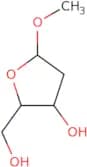
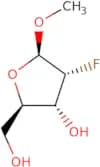
CAS:<p>Methyl 2-deoxy-2-fluoro-D-ribofuranoside is a crystalline compound that contains a methoxyl group and benzoyloxy. It is used as an intermediate for the synthesis of nucleosides, pyranoside, and glycosides. Methyl 2-deoxy-2-fluoro-D-ribofuranoside has been shown to have antibacterial activity against Mycobacterium tuberculosis in the amorphous form. This compound is also debenzoylated by alkali to give methyl 2,3,4,5,6-pentafluoropentanoate.</p>Purity:Min. 95%Phenyl 3,6-di-O-benzyl-2-deoxy-2-phthalimido-b-D-thioglucopyranoside
CAS:<p>Phenyl 3,6-di-O-benzyl-2-deoxy-2-phthalimido-b-D-thioglucopyranoside is an oligosaccharide that has been modified by the introduction of a benzyl group at one of the hydroxyl groups. The synthesis of this compound was achieved through a custom synthesis. Phenyl 3,6-di-O-benzyl-2-deoxy -2 -phthalimido -b -D -thioglucopyranoside is produced as a high purity monosaccharide, and can be used as a substitute for glucose in glycosylation reactions. This product also has CAS No. 159734-70 0, which makes it easier to order from suppliers.</p>Purity:Min. 95%Methyl b-D-glucuronide
CAS:<p>Methyl b-D-glucuronide is a glucuronide compound, which is a derivative of D-glucuronic acid. It is typically sourced from the oxidation of glucose, which naturally occurs in plants and the human body. As a derivative, Methyl b-D-glucuronide is involved in the conjugation processes that aid in the detoxification and elimination of various compounds.The mode of action for Methyl b-D-glucuronide centers around its conversion by UDP-glucuronosyltransferases in the conjugation pathway, rendering xenobiotics and endogenous substances more water-soluble for excretion. This ability to facilitate glucuronidation makes it a valuable model compound in biochemical research and pharmacology, particularly in studying metabolism and pharmacokinetics of drugs.In terms of applications, Methyl b-D-glucuronide finds significant use in analytical chemistry and molecular biology. It serves as a reference or control compound in enzyme assays and studies investigating drug metabolism and transport. Additionally, its role in detoxification pathways offers insights into liver function and disease mechanisms, providing a foundation for developing therapeutic interventions. Such versatile uses make it an integral component in physiological and pharmacological research.</p>Purity:Min. 95%Color and Shape:Powder1,2,3,4-Tetra-O-acetyl-6-deoxy-6-fluoro-a-D-glucopyranose
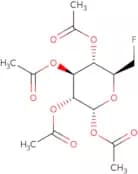
CAS:<p>1,2,3,4-Tetra-O-acetyl-6-deoxy-6-fluoro-a-D-glucopyranose is a synthetic sugar that contains four acetyl groups and one fluorine atom. It can be used for the synthesis of oligosaccharides and glycosylations. This product is custom synthesized according to customers' requirements, with high purity and good quality.</p>Formula:C14H19FO9Purity:Min. 95%Molecular weight:350.29 g/mol2,3,4,6-Tetra-O-acetyl-1-deoxy-1-fluoro-a-D-galactopyranosyl cyanide
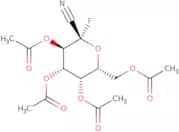
CAS:<p>2,3,4,6-Tetra-O-acetyl-1-deoxy-1-fluoro-a-D-galactopyranosyl cyanide is a glycosylation product that is used in synthetic chemistry research. It has been shown to be useful for the Click modification of proteins and polysaccharides. The sugar is obtained by custom synthesis and can be modified with fluorination or saccharide modificaitons. 2,3,4,6-Tetra-O-acetyl-1-deoxy-1-fluoro galactopyranosyl cyanide is also a complex carbohydrate that can be synthesized using monosaccharides or oligosaccharides. This compound can be purified to high purity and is available in different sizes.</p>Formula:C15H18FNO9Purity:Min. 95%Molecular weight:375.3 g/molBenzyl b-D-glucopyranosiduronic acid methyl ester triacetate
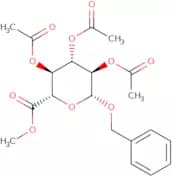
CAS:<p>Benzyl b-D-glucopyranosiduronic acid methyl ester triacetate is a synthetic sugar that can be modified to produce a wide range of oligosaccharides. It is suitable for glycosylation reactions, such as the synthesis of complex carbohydrates. This compound has high purity and is custom synthesized according to customer specifications. Benzyl b-D-glucopyranosiduronic acid methyl ester triacetate has been fluorinated, methylated, and monosaccharide modifications. These modifications provide this compound with many potential uses in the food industry, medicine, and other industries.</p>Formula:C20H24O10Purity:Min. 95%Molecular weight:424.4 g/mol3-O-Methyl-D-mannopyranose
CAS:<p>3-O-Methyl-D-mannopyranose is a glycosidic compound with immunostimulating properties. It is an intermediate in the synthesis of 3,6-anhydro-N-acetylneuraminic acid and other related carbohydrates. The hydrolysis of this molecule yields silver trifluoromethanesulfonate, chloride, and low molecular weight material. 3-O-Methyl-D-mannopyranose can be used as a reagent for the preparation of high molecular weight material by ion exchange chromatography or by dehydrative coupling.</p>Formula:C7H14O6Purity:Min. 95%Molecular weight:194.18 g/mol6,6'-Di-O-tert-butyldimethylsilyl-lactal
CAS:6,6'-Di-O-tert-butyldimethylsilyl-lactal is a synthetic glycosylation reagent that has been used in the synthesis of oligosaccharides and sugar derivatives. This compound is known to have a high purity and can be custom synthesized to meet your specifications. The fluorination reaction of this compound yields 6,6'-di-O-tert-butyldimethylsilyl-lactal, which can be methylated to yield 6,6'-di-O-methyl-lactal. The methylation reaction can be used to introduce a click modification onto the molecule. A complex carbohydrate is formed by the reaction of 6,6'-di-O-methyl lactal with other monosaccharide or polysaccharide. The saccharide group can also be modified with a click modification.Purity:Min. 95%Hyaluronate biotin - Molecular Weight - 250kDa
Hyaluronate biotin (HB) is a modified form of hyaluronic acid. It is produced by the methylation and glycosylation of hyaluronic acid and it has an average molecular weight of 250 kDa. HB is used in tissue engineering, cell culture, and as a contrast agent for magnetic resonance imaging. The modification of hyaluronate with biotin allows for the visualization of HB using immunofluorescence microscopy. Hyaluronate biotin is a synthetic product that can be custom-synthesized to customer specifications, such as purity level, oligosaccharide content, and monosaccharide content.Purity:Min. 95%Ethyl 2,3-di-O-(4-methoxybenzyl)-4,6-O-(4-methoxybenzylidene)-b-D-thiogalactopyranoside
<p>Ethyl 2,3-di-O-(4-methoxybenzyl)-4,6-O-(4-methoxybenzylidene)-b-D-thiogalactopyranoside is a high purity, custom synthesis sugar that can be modified with fluorination, glycosylation, and methylation. This product has CAS number 401071-27-8. Ethyl 2,3-di-O-(4-methoxybenzyl)-4,6-O-(4-methoxybenzylidene)-b-D-thiogalactopyranoside is an oligosaccharide and monosaccharide of the carbohydrate complex.</p>Formula:C32H38O8SPurity:Min. 95%Molecular weight:582.7 g/mol[12-C13]-Lactulose
<p>12-C13 Lactulose is a synthetic monosaccharide that is used in the preparation of complex carbohydrates. This compound can be modified by fluorination or methylation. It has an average molecular weight between 350 and 500 Da. 12-C13 Lactulose can be synthesized from D-galactopyranose and C2-C3 alkyl bromides, which are readily available commercially.</p>Formula:C12H22O11Purity:Min. 95%Molecular weight:354.21 g/molChondroitin sulphate hexasaccharide ammonium salt
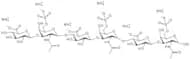
<p>Chondroitin sulphate hexasaccharide ammonium salt is a synthetic glycoconjugate that is used as a drug for the treatment of osteoarthritis and other joint diseases. It is a complex carbohydrate consisting of glucuronic acid, galactose, N-acetylgalactosamine, and sulfate residues. Chondroitin sulphate hexasaccharide ammonium salt has high purity and can be custom synthesized to your specifications. This product is methylated with an acetyl group at carbon 6. The monosaccharides are modified by glycosylation with glucose or mannose residues. Chondroitin sulphate hexasaccharide ammonium salt has been click-modified to include a carboxylic acid moiety on the primary amine group at carbon 2 and an amino group on the terminal amino group at carbon 3.</p>Purity:Min. 95%Color and Shape:PowderMolecular weight:1,488 g/molb-D-Galactopyranosyl-(1,4)-O-b-D-glucopyranosyl-(1,4)-D-glucose
<p>This custom synthesis complex carbohydrate has a CAS number and is a polysaccharide. It is modified by methylation, glycosylation, click modification, and fluorination. This carbohydrate has high purity and is synthesized synthetically.</p>Purity:Min. 95%a-D-Galactose-1-phosphate disodium salt
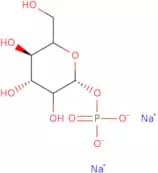
<p>a-D-Galactose-1-phosphate disodium salt is a carbohydrate with a molecular weight of 277.14 Da. It is an oligosaccharide that belongs to the group of saccharides and sugars. It is also known as an Methylated, Glycosylated, Click-modified Galactose Analogue. This product has been custom synthesised for use in research, and has a high purity level.</p>Formula:C6H11Na2O9PPurity:Min. 95%Molecular weight:304.1 g/molTri-b-GalNAc-C12-amido-C3-azide
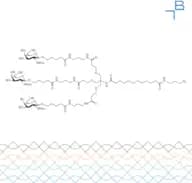
Tri-b-GalNAc-C12-amido-C3-azide is a unique bifunctional ligand for ASGPR-targeted applications. The three terminal GalNAc sugars can bind to ASGPR receptors that permit hepatocyte uptake, the C12-amide linker offers a stable spacer and the C3-azide moiety enables tailored bioconjugation via CuAAC click chemistry. This design has the potential for targeted delivery of therapeutic cargo (drugs, siRNA, nanoparticles) to hepatocytes, development of LYTACs for selective protein degradation, and creation of in vivo ASGPR imaging probes.Formula:C76H136N14O29Purity:Min. 95%Molecular weight:1,709.97 g/molTri-b-GalNAc-triazolyl-C5-amine
CAS:Tri-b-GalNAc-triazolyl-C5-amine is used for ASGPR-targeted delivery research. This molecule features three ASGPR-binding groups connected by a five-carbon alkyl (C5-alkyl) linker and a reactive amine group for attaching other molecules. When tri-b-GalNAc-triazolyl-C5-amine binds to ASGPR on cells, the entire complex is efficiently taken up into the cell and allows easy conjugation to various cargos such as RNA or Cas9 complexes, specifically to liver cells (hepatocytes). Additionally, tri-GalNAc-C5-amine can be used to create targeted chimeric molecules (LYTACs) or be attached to dyes for cellular imaging.Formula:C67H118N14O31Purity:Min. 95%Molecular weight:1,615.73 g/mol4,7,8,9-Tetra-O-acetyl-N- acetyl- 2- S- 2- propyn- 1- yl- 2- thio- a- neuraminic acid methyl ester
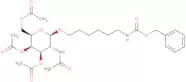
CAS:This product is a custom synthesis of an oligosaccharide. It is a complex carbohydrate that is synthesized from monosaccharides and polysaccharides in the form of a sugar. The product has been fluorinated to improve its purity. This product can be used for glycosylation, methylation, or modification of complex carbohydrates.Formula:C23H31NO12SPurity:Min. 95%Molecular weight:545.56 g/mol2-Acetamido-3,4,6-tri-O-acetyl-1-O-(N-Cbz-6-aminohexyl)-2-deoxy-b-D-galactopyranose
CAS:2-Acetamido-3,4,6-tri-O-acetyl-1-O-(N-Cbz-6-aminohexyl)-2-deoxy-b-D-galactopyranose is a glycosylation agent that is used in the preparation of complex carbohydrates. It is also a methylation agent, fluorinated saccharide and an oligosaccharide. This compound can be custom synthesized for your specific needs. It is a white to off white powder and has a purity of 99%. The CAS number for this product is 159173 -77 -0.Formula:C28H40N2O11Purity:Min. 95%Molecular weight:580.62 g/mol2,3,5-Tri-O-benzyl-D-arabinofuranosyl chloride
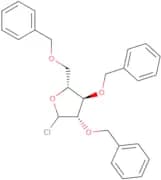
CAS:2,3,5-Tri-O-benzyl-D-arabinofuranosyl chloride is an antitumour drug that is a purine nucleoside analogue. It is a synthetic compound and has been shown to have chemotherapeutic and antitumor activities. This drug binds to the enzyme RNA polymerase II, leading to inhibition of DNA synthesis and cell death. 2,3,5-Tri-O-benzyl-D-arabinofuranosyl chloride has potential as an antitumor agent.Formula:C26H27ClO4Purity:Min. 95%Molecular weight:438.94 g/mol1,2,3,4,6-Penta-O-acetyl-1-thio-beta-D-galactopyranose
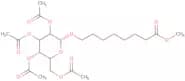
CAS:<p>1,2,3,4,6-Penta-O-acetyl-1-thio-beta-D-galactopyranose is a nucleoside that is a derivative of glucopyranose. It is an aprotic molecule and can be used as an aprotic solvent. 1,2,3,4,6-Penta-O-acetyl-1-thio-beta-D-galactopyranose has been shown to inhibit viral growth in vitro by interfering with the synthesis of DNA and RNA. The compound inhibits the growth of herpes simplex virus type 1 (HSV) and vaccinia virus (VACV) but not influenza A virus (IAV). This drug also has antiplasmodial activity against the erythrocytic stages of Plasmodium falciparum.</p>Formula:C16H22O10SPurity:Min. 95%Molecular weight:406.41 g/mol8-Methoxycarbonyloctanoyl 2,3,4,6-tetra-O-acetyl-b-D-galactopyranoside
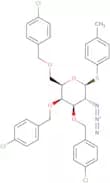
CAS:<p>8-Methoxycarbonyloctanoyl 2,3,4,6-tetra-O-acetyl-b-D-galactopyranoside is a carbohydrate which is synthesized by the reaction of 8-methoxycarbonyloctanoic acid and D-galactose. It is an oligosaccharide that has been modified with fluorine on the C2 position of the sugar ring. This product can be used as an analytical reagent for saccharides and carbohydrates.</p>Formula:C23H36O12Purity:Min. 95%Molecular weight:504.52 g/mol4-Methylphenyl 2-azido-3,4,6-tri-O-(4-chlorobenzyl)-2-deoxy-b-D-thiogalactopyranoside
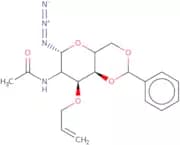
CAS:<p>4-Methylphenyl 2-azido-3,4,6-tri-O-(4-chlorobenzyl)-2-deoxy-b-D-thiogalactopyranoside is a synthetic glycosylation agent that has been shown to be a potent inhibitor of the synthesis of bacterial polysaccharides. It is also used in the modification of saccharides and oligosaccharides. 4MPAPG is an azide sugar that can be modified with chlorobenzyl groups by click chemistry. The resulting product is a potent inhibitor of bacterial polysaccharide production. This product has been shown to have high purity and is synthesized in custom quantities on request.</p>Formula:C34H32Cl3N3O4SPurity:Min. 95%Molecular weight:685.06 g/mol2-Acetamido-3-O-allyl-4,6-O-benzylidene-2-deoxy-b-D-glucopyranosyl azide
CAS:<p>2-Acetamido-3-O-allyl-4,6-O-benzylidene-2,3-deoxy-bDglucopyranosyl azide is a sugar that can be synthesized from an acetamido group and an allyl group. It is used in the synthesis of complex carbohydrates. 2A3BPGA is a monosaccharide with a glycosylation pattern of alpha 1,2. The methylation of the hydroxyl groups on the glucose rings leads to the formation of 2A3BPGAM. This modification has been shown to alter the solubility and reactivity of this sugar.</p>Formula:C18H22N4O5Purity:Min. 95%Molecular weight:374.4 g/mol3,4,6-Tri-O-acetyl-a-D-glucopyranose 1,2-(methyl orthoacetate)
CAS:<p>3,4,6-Tri-O-acetyl-a-D-glucopyranose 1,2-(methyl orthoacetate) is an iridoid glucoside. It has been shown to have a protective effect against eye disorders in rats and was found to have low toxicity in the eye. 3,4,6-Tri-O-acetyl-a-D-glucopyranose 1,2-(methyl orthoacetate) can be used for treatment of cardiac diseases such as heart disease. The compound may also be able to provide protection against neurologic impairment by inhibiting the production of free radicals due to its antioxidant properties.</p>Formula:C15H22O10Purity:Min. 95%Color and Shape:PowderMolecular weight:362.33 g/molCyanomethyl-2,3,4,6-tetra-O-acetyl-a-D-thiomannopyranoside
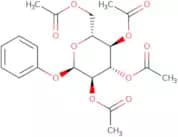
CAS:<p>Cyanomethyl-2,3,4,6-tetra-O-acetyl-a-D-thiomannopyranoside is a glycosylated thioglycoside that contains sulfur. It is used as an intermediate in the synthesis of 2′,3′,5′-trihydroxybenzaldehyde and 2′,3′,5′-trihydroxybenzoic acid.</p>Purity:Min. 95%Phenyl 2,3,4,6-tetra-O-acetyl-a-D-glucopyranoside
CAS:<p>Phenyl 2,3,4,6-tetra-O-acetyl-a-D-glucopyranoside is a custom synthesis of a monosaccharide. Phenyl 2,3,4,6-tetra-O-acetyl-a-D-glucopyranoside can be fluorinated and methylated to produce other compounds. It is also used in the modification of saccharides and oligosaccharides to produce polysaccharides. Phenyl 2,3,4,6-tetra-O-acetyl-a -D -glucopyranoside is soluble in water and has CAS No. 34274500.</p>Formula:C20H24O10Purity:Min. 95%Molecular weight:424.4 g/molMemantine N-b-D-glucuronide
CAS:Memantine N-b-D-glucuronide is a monosaccharide. The methylation of the amine group on memantine with methanethiol in the presence of sodium iodide gives the corresponding methylated compound, which is then hydrolyzed to give memantine N-b-D-glucuronide. Memantine N-b-D-glucuronide has been shown to be an inhibitor of polysaccharides and saccharides. It is also fluorinated at position 2 by means of a click modification reaction. This product is available for custom synthesis and modification.Formula:C18H29NO6Purity:Min. 95%Color and Shape:PowderMolecular weight:355.43 g/mol







![D-[1-13C]Galacturonic acid potassium salt](/_next/image/?url=https%3A%2Fstatic.cymitquimica.com%2Fproducts%2F3D%2Fthumb-webp%2FMG28931.webp&w=3840&q=75)



![4-O-[3-O-(2-Acetamido-2-deoxy-a-D-galactopyranosyl)-b-D-galactopyranosyl]-D-glucose](/_next/image/?url=https%3A%2Fstatic.cymitquimica.com%2Fproducts%2F3D%2Fthumb-webp%2FOA10409.webp&w=3840&q=75)




![[12-C13]-Lactulose](/_next/image/?url=https%3A%2Fstatic.cymitquimica.com%2Fproducts%2F3D%2Fthumb-webp%2FOL57708.webp&w=3840&q=75)