Glycoscience
Glycoscience is the study of carbohydrates and their derivatives, as well as the interactions and biological functions they participate in. This field of research is crucial for understanding a wide variety of biological processes, including cell recognition, signaling, immune response, and disease development. Glycoscience has important applications in biotechnology, medicine, and the development of new drugs and therapies. At CymitQuimica, we offer a wide selection of high-quality, high-purity products for glycoscience research. Our catalog includes monosaccharides, oligosaccharides, polysaccharides, glycoconjugates, and specific reagents, designed to support researchers in their studies on the structure, function, and applications of carbohydrates in biological systems. These resources are intended to facilitate scientific discoveries and practical applications in various areas of bioscience and medicine.
Subcategories of "Glycoscience"
- Aminosugars(108 products)
- Glyco-Related Antibodies(282 products)
- Glycolipids(46 products)
- Glycosaminoglycans (GAGs)(55 products)
- Glycosides(419 products)
- Monosaccharides(6,624 products)
- Oligosaccharides(3,682 products)
- Polysaccharides(503 products)
Found 11046 products of "Glycoscience"
Sort by
Purity (%)
0
100
|
0
|
50
|
90
|
95
|
100
γ-Cyclodextrin
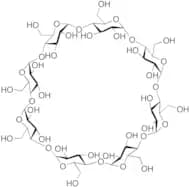
CAS:<p>Stability Hygroscopic<br>Applications γ-Cyclodextrin is used as nanomolecular encapsulation for drug delivery and pharmaceuticals. Used in the synthesis of unilamellar vesicles.<br>References Ikeda, A. et al.: Chem. Comm., 50, 1288 (2014); Gudmundsdottir, B. et al.: J. Ocular Pharm. Ther., 30, 35 (2014);<br></p>Formula:C48H80O40Color and Shape:WhiteMolecular weight:1297.12L-Glyceric Acid (>90%)
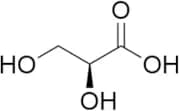
CAS:Controlled Product<p>Applications L-Glyceric acid (CAS# 28305-26-2) is a useful research chemical compound.<br></p>Formula:C3H6O4Purity:>90%Color and Shape:NeatMolecular weight:106.077Inulin
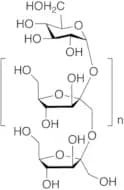
CAS:Controlled Product<p>Applications Is a safe plant polysaccharide with a variety of uses in the food and chemical medical industry. It is a functional food, providing functional groups for beneficial bacteria, as well as improving properties of food such as texture, hydration and shelf-life. They are also used for vaccine and drug delivery via soluble storage.<br>References Corradini, C. et al.: Anal. Bioanal. Chem., 405, 4591 (2013); Kumar, S. et al.: Mol. Pharm., 10, 1845 (2013);<br></p>Formula:(C6H10O5)nColor and Shape:Neatα-D-Glucosamine Pentaacetate
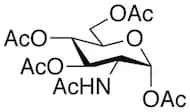
CAS:Controlled Product<p>Applications α-D-Glucosamine Pentaacetate is a protected form of glucosamine<br>References Cudic, P., et al.: Bioorg. Med. Chem. Lett., 11, 3107 (2001),<br></p>Formula:C16H23NO10Color and Shape:NeatMolecular weight:389.351,6-Hexane-1,1,6,6-d4-diamine
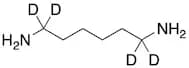
CAS:Controlled Product<p>Applications 1,6-Hexane-1,1,6,6-d4-diamine (CAS# 115797-49-4) is a useful isotopically labeled research compound.<br></p>Formula:C6H12D4N2Color and Shape:NeatMolecular weight:120.23D-(+)-Cellotetraose
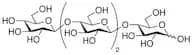
CAS:Controlled Product<p>Applications D-(+)-Cellotetraose (cas# 38819-01-1) is a compound useful in organic synthesis.<br></p>Formula:C24H42O21Color and Shape:NeatMolecular weight:666.58L-Glucose-1-13C
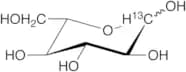
CAS:Controlled Product<p>Applications Labelled L-Glucose is the enantiomer of D-Glucose (G595000), a naturally occurring carbohydrate used in an abundance of cellular processes. L-Glucose is a synthetic sugar used in the formation of L-Glucose Pentaacetate (G596510), a potential therapeutic agent regarding type II diabetes. In addition, L-glucose can be used as a colon cleansing agent for before a colonoscopy procedure.<br>References Malaisse, W. et al.: Int. J. Mol. Med., 2, 383 (1998); Raymer, G. et al.: Gastrointest. Endosc., 58, 30 (2003); Wang, R., et al.: J. Mol. Catal. B. Enz., 56, 131 (2009),<br></p>Formula:CC5H12O6Color and Shape:NeatMolecular weight:181.149Calcium D-gluconate monohydrate
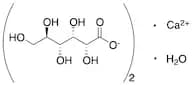
CAS:Controlled Product<p>Applications Calcium D-gluconate monohydrate (cas# 66905-23-5) is a useful research chemical.<br></p>Formula:C6H11O7·Ca·H2OColor and Shape:NeatMolecular weight:448.39Chitin, Practical Grade
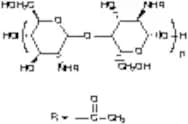
CAS:<p>Applications A naturally occuring fibre found in the shells of shellfish. Used for the analysis of Chitinase.<br>References Skujins, J.J., et al.: Arch. Biochem. Biophys., 111, 358 (1965).<br></p>Formula:C24H39N3O15X2Color and Shape:NeatMolecular weight:609.58Fructoseglutamic Acid Disodium Salt
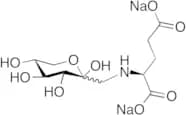
CAS:<p>Stability Very Hygroscopic<br>Applications Fructoseglutamic Acid Disodium Salt is an Amadori compound (derivatives of aminodeoxysugars) that is formed in food (such as dehydrated fruits such as tomatoes and carrots) as a result of the Maillard reactions.<br>References Baltes, W.: Food Chem., 9, 59 (1982); Sanz, M., et al.: J. Agr. Food Chem., 49, 5228 (2001); Wellner, A., et al.: J. Agr. Food Chem., 59, 7992 (2011)<br></p>Formula:C11H17NO9·2NaPurity:>80%Color and Shape:NeatMolecular weight:353.234D-Fructose 6-phosphate Disodium Hydrate
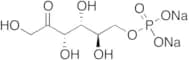
CAS:<p>Applications D-Fructose-6-phosphate Disodium Salt is useful reagent in biological study of functional genomics of Rhodococcus opacus PD630 for biofuels development.<br>References Holder, J., et al.: PLoS Gen., 7, 1002219 (2011);<br></p>Formula:C6H11Na2O9PColor and Shape:White To Off-WhiteMolecular weight:304.099D-Xylulose (0.5 M in Water)
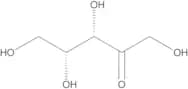
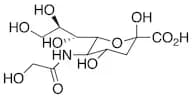
CAS:Controlled Product<p>Applications D-Xylulose can be used through fermentation to produce ethanol.<br>References Yuan, D. et al.: Biores. Tech., 102, 3246 (2011);<br></p>Formula:C5H10O5Color and Shape:Single SolutionMolecular weight:150.13N-Glycolyl Neuraminic Acid
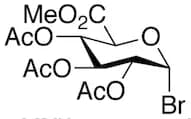
CAS:<p>Applications Regulation of N-glycolylneuraminic acid biosynthesis in rat and mouse liver.<br>References Malykh, Y., et al.: Biochimie, 83, 623 (2001), Angata, T., et al.: Chem. Rev., 102, 439 (2002), Soh, N., et al.: Anal. Sci., 18, 1159 (2002), Taylor, P., et al.: Clin. Biochem., 38, 328 (2005),<br></p>Formula:C11H19NO10Color and Shape:White To Off-WhiteMolecular weight:325.27Acetobromo-α-D-glucuronic Acid Methyl Ester (contains 2% CaCO3)
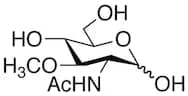
CAS:<p>Stability Moisture Sensitive, Temperature Sensitive<br>Applications Acetobromo-α-D-glucuronic Acid Methyl Ester (cas# 21085-72-3) is a useful compound for preparing a fluorogenic probe for human heparanase.<br>References Honda, T., et al.: J. Med. Chem., 31, 1295 (1988), Liu, J., et al.: Chem. Sci., (2020)<br></p>Formula:C13H17BrO9Color and Shape:White To BeigeMolecular weight:397.172-Acetamido-2-deoxy-3-O-methyl-D-glucopyranose
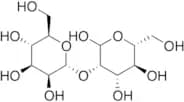
CAS:Controlled Product<p>Stability Hygroscopic<br>Applications Inhibitor of N-Acetylglucosamine kinase in the glucose metabolism pathway<br>References Gerwig, G., et al.: J. Biol. Chem., 264, 1027 (1989), Zeitler, R., et al.: Eur. J. Biochem., 204, 1165 (1992),<br></p>Formula:C9H17NO6Color and Shape:Off-WhiteMolecular weight:235.232-O-(a-D-Mannopyranosyl)-D-mannopyranose
CAS:Controlled Product<p>Applications 2-O-(a-D-Mannopyranosyl)-D-mannopyranose is a component of yeast Candida catenulata that may provide antigenic effects.<br>References Kobayashi, H. et al.: Adv. Microbiol., 3, 222 (2013);<br></p>Formula:C12H22O11Color and Shape:NeatMolecular weight:342.3Bromo 2,3,4,6-Tetra-O-acetyl-α-D-glucopyranoside (~ 5% CaCO3 as stabilizer)
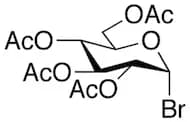
CAS:Controlled Product<p>Stability Hygroscopic<br>Applications Bromo 2,3,4,6-Tetra-O-acetyl-α-D-glucopyranoside (~ 5% CaCO3 as stabilizer) (cas# 572-09-8) is a compound useful in organic synthesis.<br></p>Formula:C14H19BrO9Color and Shape:NeatMolecular weight:411.20