Glycoscience
Glycoscience is the study of carbohydrates and their derivatives, as well as the interactions and biological functions they participate in. This field of research is crucial for understanding a wide variety of biological processes, including cell recognition, signaling, immune response, and disease development. Glycoscience has important applications in biotechnology, medicine, and the development of new drugs and therapies. At CymitQuimica, we offer a wide selection of high-quality, high-purity products for glycoscience research. Our catalog includes monosaccharides, oligosaccharides, polysaccharides, glycoconjugates, and specific reagents, designed to support researchers in their studies on the structure, function, and applications of carbohydrates in biological systems. These resources are intended to facilitate scientific discoveries and practical applications in various areas of bioscience and medicine.
Subcategories of "Glycoscience"
- Aminosugars(108 products)
- Glyco-Related Antibodies(282 products)
- Glycolipids(46 products)
- Glycosaminoglycans (GAGs)(55 products)
- Glycosides(419 products)
- Monosaccharides(6,622 products)
- Oligosaccharides(3,682 products)
- Polysaccharides(503 products)
Found 11042 products of "Glycoscience"
Sort by
Purity (%)
0
100
|
0
|
50
|
90
|
95
|
100
Maltodextrin - dextrose equivalent 13.0-17.0
CAS:<p>Produced from starch; white hygroscopic spray-dried powder; easily digestible</p>Purity:Min. 95%Color and Shape:White PowderChitopentaose hydrochloride
CAS:<p>Pentasaccharide derived from chitin</p>Formula:C30H57N5O21·5HClPurity:Min. 95 Area-%Color and Shape:White PowderMolecular weight:1,006.01 g/mol1-Deoxy-2,3:4,5-Bis-O-(1-methylethylidene)- D-glycero-D-gulo-heptitol
CAS:<p>1-Deoxy-2,3:4,5-Bis-O-(1-methylethylidene)-D-glycero-D-guloheptitol is a fluorinated monosaccharide that is synthesized to have a specific glycosylation pattern. This product is used in the synthesis of complex carbohydrates, glycosylations and polysaccharides. 1-Deoxy-2,3:4,5-Bis-O-(1-methylethylidene)-D-glycero--D--guloheptitol has high purity and can be custom synthesized to order.</p>Purity:Min. 95%b-D-Galactosylceramide
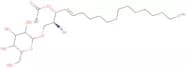
CAS:<p>Inducer of cytochine and chemochine production in blood cells</p>Purity:Min. 95%2,3-Di-O-benzoyl-L-threonic acid-1,4-lactone
<p>2,3-Di-O-benzoyl-L-threonic acid-1,4-lactone is a custom synthesis of a fluorinated monosaccharide methylated at the C2 position. It is an oligosaccharide with a saccharide and polysaccharide linkage. The glycosylation of this compound has been modified by the Click chemistry reaction to create new sugar moieties.</p>Purity:Min. 95%Maltohexaose
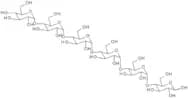
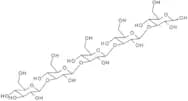
CAS:<p>Maltohexaose is a polysaccharide formed by 6 units of glucose and can be metabolised inside the cell to a substrate-based inhibitor of fucosyltransferases. It can also be converted to GDP-2-deoxy-2-fluoro-L-fucose, a competitive inhibitor of α-1,3-fucosyltransferase. Matohexaose is used as acceptor for measuring the activity of 4-Alpha-Glucanotransferase.</p>Formula:C36H62O31Purity:Min. 70 Area-%Color and Shape:White PowderMolecular weight:990.86 g/molLipopolysaccharide - from Porphyromonas gingivalis
CAS:<p>Lipopolysaccharide (LPS) is a molecule that is produced by Porphyromonas gingivalis. This molecule is also found in the outer membranes of Gram-negative bacteria and has been shown to have many effects on animal tissues. LPS activates HIF-1α, which leads to the production of inflammatory cytokines such as necrosis factor (TNF), and interferon regulatory factors (IRFs). These molecules signal for the production of more LPS. LPS also causes tissue growth and development by activating growth factors such as insulin-like growth factor 1. LPS also activates immune cells through signaling with chemokine receptors, promoting inflammation.</p>Purity:Min. 95%Color and Shape:Solid2,3,4,6-Tetra-O-benzyl-D-mannopyranose
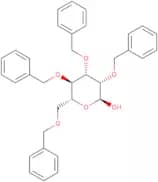
CAS:<p>2,3,4,6-Tetra-O-benzyl-D-mannopyranose is a trisaccharide that consists of two covalently linked glycosyl acceptors and one galacto moiety. This molecule is synthesized by chemoenzymatic synthesis and can be found in the biosynthesis of trehalose. 2,3,4,6-Tetra-O-benzyl-D-mannopyranose is an anomeric form of D-glucopyranose. The anomeric form is determined by the orientation of the hydroxyl group at C1' with respect to the anomeric carbon atom at C2'. This molecule has been isotopically labelled with 13C and 15N for use in studies on carbohydrate metabolism.</p>Formula:C34H36O6Purity:90%Color and Shape:Yellow PowderMolecular weight:540.65 g/molLaminaripentaose
CAS:<p>Ex algal/bacterial polysaccharides-value in b1-3 glucanase assays & diagnostics</p>Formula:C30H52O26Purity:Min. 85 Area-%Color and Shape:PowderMolecular weight:828.72 g/molLacto-N-hexaose
CAS:<p>Neutral hexasasaccharide naturally present in human breast milk</p>Formula:C40H68N2O31Purity:Min. 95%Color and Shape:White PowderMolecular weight:1,072.96 g/moliminosugar 2
<p>Iminosugar 2 is a custom synthesis that is modified with fluorination, methylation, and click modification. This product is a monosaccharide and an oligosaccharide that has glycosylation. It is a saccharide that has polysaccharides as complex carbohydrates. Iminosugar 2 can be used in the production of polymers and pharmaceuticals.</p>Purity:Min. 95%Difucosyllacto-N-tetraose
<p>Difucosyllacto-N-tetraose is a lacto-n-fucopentaose that has been shown to be secreted by human milk. The index of this oligosaccharide is not significantly different between breastfed and formula-fed infants, which indicates that it is not influenced by the type of infant feed. Difucosyllacto-N-tetraose can be used as a marker for the frequency of infections in neonates and infants, because its levels are decreased in cases of infection. This oligosaccharide is also related to the diversity of oligosaccharides in colostrum, as it is one component of a subset found only in colostrum samples from healthy mothers.</p>Formula:C38H65NO29Purity:Min. 95%Molecular weight:999.92 g/mol2,3,5,6-Tetra-O-trimethylsilyl-D-glucono-1,4-lactone
<p>2,3,5,6-Tetra-O-trimethylsilyl-D-glucono-1,4-lactone is a monosaccharide that has been modified with trimethylsilyl groups. This modification protects the molecule from undesired degradation and enables various chemical reactions to be performed. 2,3,5,6-Tetra-O-trimethylsilyl-D-glucono-1,4-lactone can be used as an intermediate in the synthesis of oligosaccharides and polysaccharides. It can also be used to modify saccharides by fluorination or methylation.</p>Formula:C18H42O6Si4Purity:Min. 95%Molecular weight:466.86 g/mol1,1,1-Kestopentaose
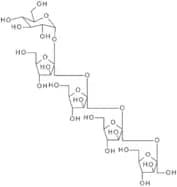
CAS:<p>Non-reducing sucrose analog containing glucose and fructose; prebiotic fibre</p>Formula:C30H52O26Purity:Min. 95 Area-%Color and Shape:White PowderMolecular weight:828.72 g/molMethyl b-D-cellobioside
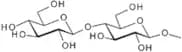
CAS:<p>Methyl β-D-cellobioside is the β-configured glycosylation product of cellobiose and methanol. It is a cellobiose mimetic without the reactive (reducing) properties of the cellobiose aldehyde/hemiacetal. As a highly water soluble, non-reducing mimetic of cellobiose (the repeating disaccharide of cellulose), methyl β-D-cellobioside has been applied as inhibitor of binding events involving cellulose-binding domains (CBD) in proteins, for instance as part of the eluent in the related affinity chromatography. It is also a substrate for various β-glucosidases and glycosyltransferases, and the scaffold is a useful starting material for the chemical synthesis of inhibitors of the latter types of enzymes.</p>Formula:C13H24O11Purity:Min. 95%Color and Shape:PowderMolecular weight:356.32 g/mol1-Azido-1-deoxy-D-fructose
CAS:<p>Fructose with azide functional handle</p>Formula:C6H11N3O5Purity:Min. 95 Area-%Molecular weight:605.17 g/mol2-Amino-2,6-dideoxy-L-mannose hydrochloride
<p>2-Amino-2,6-dideoxy-L-mannose hydrochloride is a high purity and custom synthesis sugar. It is synthesized from 2,6-Dideoxymannose with the use of Click chemistry. This modification allows for a variety of fluorinations, glycosylations, and methylations to be used in the synthesis process. The CAS number for this compound is 107625-00-3.</p>Purity:Min. 95%LacDiNAc dimer ethylazide
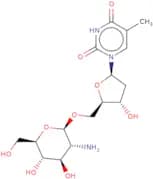
<p>LacDiNAc dimer ethylazide is a modified form of LacdiNAc that has been iodinated. It is synthesized by the reaction of two molecules of LacdiNAc with ethylazide. The product has an average molecular weight of 2,000 and is the most highly purified synthetic carbohydrate available. It can be used in a wide range of applications, including click chemistry, glycosylation reactions, and fluorination synthesis.</p>Formula:C34H57N7O21Purity:Min. 95%Molecular weight:899.85 g/mol5'-O-(2-Amino-2-deoxy-D-glucopyranosyl)-thymidine
CAS:<p>5'-O-(2-Amino-2-deoxy-D-glucopyranosyl)-thymidine is a custom synthesis of saccharide that is fluorinated, methylated, and monosaccharide. This compound has been modified with a click modification and an oligosaccharide. The saccharide is glycosylated with sugar and Carbohydrate. 5'-O-(2-Amino-2-deoxy-D-glucopyranosyl)-thymidine has CAS No. 631842-24-5</p>Formula:C16H25N3O9Purity:Min. 95%Molecular weight:403.38 g/molKinetin-9-glucoside
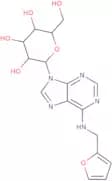
CAS:<p>Kinetin-9-glucoside is a conjugate of kinetin and glucose. It has been shown to inhibit the growth of several types of bacteria, including Pseudomonas aeruginosa, Staphylococcus aureus, and Streptococcus pyogenes. Kinetin-9-glucoside also has anti-inflammatory properties that may be due to its ability to inhibit prostaglandin synthesis. Kinetin-9-glucoside is used in tissue culture for the induction of plant regeneration from callus tissue or from excised root tissues. Kinetin-9-glucoside has been shown to stimulate the formation of apical roots in plantlets and promote cell division in neuronal cells.</p>Formula:C16H19N5O6Purity:Min. 95 Area-%Color and Shape:PowderMolecular weight:377.35 g/mol