Glycoscience
Glycoscience is the study of carbohydrates and their derivatives, as well as the interactions and biological functions they participate in. This field of research is crucial for understanding a wide variety of biological processes, including cell recognition, signaling, immune response, and disease development. Glycoscience has important applications in biotechnology, medicine, and the development of new drugs and therapies. At CymitQuimica, we offer a wide selection of high-quality, high-purity products for glycoscience research. Our catalog includes monosaccharides, oligosaccharides, polysaccharides, glycoconjugates, and specific reagents, designed to support researchers in their studies on the structure, function, and applications of carbohydrates in biological systems. These resources are intended to facilitate scientific discoveries and practical applications in various areas of bioscience and medicine.
Subcategories of "Glycoscience"
- Aminosugars(108 products)
- Glyco-Related Antibodies(282 products)
- Glycolipids(46 products)
- Glycosaminoglycans (GAGs)(55 products)
- Glycosides(419 products)
- Monosaccharides(6,622 products)
- Oligosaccharides(3,682 products)
- Polysaccharides(503 products)
Found 11041 products of "Glycoscience"
Sort by
Purity (%)
0
100
|
0
|
50
|
90
|
95
|
100
Galactinol hydrate
CAS:<p>Galactinol is a diterpene that belongs to the group of phytochemicals. It is synthesized in plants and bacteria from raffinose, an oligosaccharide that is present in high concentrations in beans. Galactinol has been shown to be involved in plant physiology, with its optimum concentration at a pH of 5-7. Galactinol reacts with ascorbic acid to form galactono-1,4-lactone in a reaction mechanism similar to the one for the synthesis of raffinose. It also regulates transcriptional activity by binding to DNA and altering its conformation. This compound has been used as an experimental model for biochemical studies on polymerase chain reactions (PCR).</p>Formula:C12H22O11•H2OxPurity:Min. 98 Area-%Color and Shape:PowderMolecular weight:342.3 g/molMethyl 5-O-Benzoyl-4-C-hydroxymethyl-2,3-O-isopropylidene-b-D-ribofuranoside
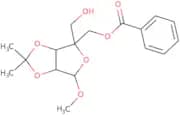
CAS:<p>Methyl 5-O-benzoyl-4-C-hydroxymethyl-2,3-O-isopropylidene-β-D-ribofuranoside is a monosaccharide. The methyl group is attached to the 5th carbon atom on the furan ring. This modification can be used in glycosylation reactions to produce complex carbohydrates, such as oligosaccharides and polysaccharides. Methyl 5-O-benzoyl4C hydroxymethyl2,3O isopropylideneb D ribofuranoside has a molecular formula of C6H8O6 and a molecular weight of 180.1 daltons. It is soluble in water and alcohols.</p>Purity:Min. 95%D-Glucosamine HCl - sea shell origin
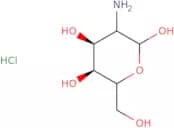
CAS:<p>D-Glucosamine (GlcN) is an aldohexose (2-Amino-2-deoxyglucose) in which the hydroxyl group at position 2 is replaced by an amino group (Collins, 2006). D-Glucosamine is found in chitosan as the N-Acetylated derivative in chitin (Rudrapatnam, 2003), glycoproteins, glycolipids and the glycosaminoglycan hyaluronic acid (Fallacara, 2018). Glucosamine, as its sulfate salt, often in combination with the polydisaccharide chondroitin, is marketed over-the-counter as a treatment for osteoarthritis inflammation and its accompanying pain. Only the D-enantiomer of glucosamine exists in nature.</p>Formula:C6H13NO5·HClPurity:(Titration) Min. 98%Color and Shape:White PowderMolecular weight:215.63 g/mol3-Azidopropyl 2,3,4,6-tetra-O-acetyl-b-D-galactopyranoside
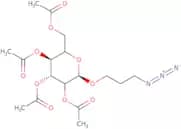
CAS:<p>3-Azidopropyl 2,3,4,6-tetra-O-acetyl-b-D-galactopyranoside is a Custom synthesis of the monosaccharide galactose. It is modified with fluorine at the 3 and 4 positions on the carbon chain and also has an acetyl group at the 6 position. 3-Azidopropyl 2,3,4,6-tetra-O-acetyl-b-D-galactopyranoside is synthesized from the sugar glucose by methylation of the hydroxyl groups on C1 and C2. The chemical formula for this compound is C8H14N2O5. This molecule has a molecular weight of 204.22 g/mol and its CAS number is 819053-49-1.</p>Formula:C17H25N3O10Purity:Min. 95%Color and Shape:Colorless PowderMolecular weight:431.39 g/molD-Talitol-1,6-diphosphate
<p>D-Talitol-1,6-diphosphate is a modified sugar. It is an oligosaccharide and polysaccharide composed of D-talitol and 1,6-diphosphate. This product can be used in the synthesis of complex carbohydrates or as a reagent for fluorination reactions. D-Talitol phosphates are also used to modify monosaccharides by methylation, click modification, or other modifications.</p>Purity:Min. 95%A3 Glycan, 2-AB labelled
<p>A3 Glycan, 2-AB labelled is a complex carbohydrate. It is synthesized by the methylation and glycosylation of the A3 sugar, which is a monosaccharide. The A3 Glycan, 2-AB labelled has a CAS No. of 711-81-2 and is a synthetic oligosaccharide with high purity. Its chemical formula is C6H8O5N2O2 and its molecular weight is 192.19 g/mol. The A3 Glycan, 2-AB labelled has an MW of 192.19 g/mol and an MW of 643 Da (1). It also contains one saccharide unit that consists of two bonded monosaccharides: fructose and glucose. A3 Glycan, 2-AB labelled CAS No.: 711-81-2 Molecular Formula: C6H8O5N2O2 Mole</p>Purity:Min. 95%Rhodamine B isothiocyanate-dextran - Average MW 70,000
<p>The fluorescence intensity of these Rhodamine B isothiocyanate-dextrans varies much less than with FITC-dextrans.</p>Color and Shape:PowderMolecular weight:7,000 g/molD-Altro-Amide
<p>D-Altro-Amide is a custom synthesis that has been modified by fluorination, methylation, and monosaccharide. The synthesis of D-Altro-Amide is done through modification, click modification, and oligosaccharides. It's CAS number is 69092-57-5. D-Altro-Amide is a polysaccharide made from glycosylation and sugar. Carbohydrates are complex carbohydrates with many saccharides connected together in an ordered manner.</p>Purity:Min. 95%3,4,6-Tri-O-acetyl-2-azido-2-deoxy-a-D-glucopyranosyl trichloroacetimidate
CAS:<p>3,4,6-Tri-O-acetyl-2-azido-2-deoxy-a-D-glucopyranosyl trichloroacetimidate is a custom synthesis of complex carbohydrates. This compound has CAS number 94715-56-7 and can be used for the modification of saccharides or carbohydrates. 3,4,6-Tri-O-acetyl-2-azido-2-deoxy -aD glucopyranosyl trichloroacetimidate can be modified with methylation, glycosylation, or fluorination. It is also a synthetic compound and has high purity.</p>Formula:C14H17Cl3N4O8Purity:Min. 95%Molecular weight:475.67 g/molL-Xylosamine
<p>L-Xylosamine is a carbohydrate that has been modified with fluorine. It is a monosaccharide and is found in plant cell walls. L-Xylosamine can be custom synthesized and has a high purity level. It is also methylated and glycosylated, which makes it an ideal compound for click chemistry.</p>Formula:C5H11NO4Purity:Min. 95%Molecular weight:149.15 g/mol2-Acetamido-2-deoxy-4-O-(a-D-galactopyranosyl)-D-glucopyranose
<p>The 2-acetamido-2-deoxy-4-O-(a-D-galactopyranosyl)-D-glucopyranose is a carbohydrate. It is an oligosaccharide, which is a sugar with more than two monosaccharides. The CAS number of this compound is 9077-98-0. The molecular weight of this compound is 450.01 g/mol and the purity level is 99%. This compound can be custom synthesized to meet your needs. This product can be methylated, glycosylated, or click modified to create products with different properties.</p>Formula:C14H25NO11Purity:Min. 95%Color and Shape:PowderMolecular weight:383.35 g/mol1,3-α-1,6-α-D-Mannotetraose
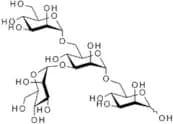
CAS:<p>Intermediate for synthesis of N-acetyllactosaminic glycans</p>Formula:C24H42O21Purity:Min. 95 Area-%Color and Shape:White Off-White PowderMolecular weight:666.58 g/mol2- C- (Hydroxymethyl) - 2, 3:5, 6- di- O- isopropylidene-D- mannose
<p>2-C- (Hydroxymethyl) -2, 3:5, 6-di-O-isopropylidene-D-mannose is an Oligosaccharide. It is a water soluble polysaccharide that is found in the cell walls of certain bacteria. The synthesis of this compound can be achieved through Click modification and fluorination. This product has a CAS number and can be custom synthesized to meet your needs.</p>Purity:Min. 95%Methyl 6-O-(a-D-mannopyranosyl)-b-D-mannopyranoside
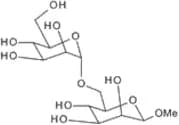
CAS:<p>Methyl 6-O-(a-D-mannopyranosyl)-b-D-mannopyranoside is a carbohydrate that has been modified with fluorination. It is synthesized by the methylation of glucose and mannose residues, followed by glycosylation. Methyl 6-O-(a-D-mannopyranosyl)-b-D-mannopyranoside is a custom synthesis and can be ordered in high purity.</p>Formula:C13H24O11Purity:Min. 95%Color and Shape:White To Off-White SolidMolecular weight:356.32 g/molD-Mannosaminuronic acid
<p>D-Mannosaminuronic acid is a monosaccharide that has been isolated from the seed of the African plant, Acacia drepanolobium. It is found to be an antigenic component of shigella and related enterobacteria and plays an important role in the biosynthesis of glycolipids. D-Mannosaminuronic acid can be hydrolyzed by acidic enzymes such as lipases, esterases, phosphatases, or proteases. This process may lead to the liberation of fatty acids and sugars. The purified enzyme preparations have been shown to catalyze the synthesis of D-mannosaminuronic acid from mannose and fructose.</p>Purity:Min. 95%Glycyl-lacto-N-fucopentaose VI
<p>Glycyl-lacto-N-fucopentaose VI is a polysaccharide that is synthesized by the enzymatic activity of glycosylase, methylase, and fluorinase. It can be modified with click chemistry to introduce a fluorine atom at the C4 position of the glucose molecule. This modification can be used for the synthesis of oligosaccharides. Glycyl-lacto-N-fucopentaose VI has CAS number 108897-96-5 and is available in high purity and custom synthesis.</p>Formula:C34H59N3O25Purity:Min. 95%Molecular weight:909.84 g/molN-[2-(4'-Nitrophenyl)-1-cyano-3-butene]-2,3,4,6-tetra-O-pivaloyl-D-glucopyranoside
<p>The product is a methylation, saccharide, Polysaccharide, CAS No., Click modification, Modification, Oligosaccharide, Custom synthesis, Glycosylation and High purity. The product is a fluorination and complex carbohydrate.</p>Formula:C36H51N3O11Purity:Min. 95%Molecular weight:701.8 g/molMethyl 7-chloro-7-deoxy-1-thiolincosaminide
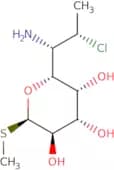
CAS:<p>Methyl 7-chloro-7-deoxy-1-thiolincosaminide is a modification of the monosaccharide D-glucose. It has a CAS number of 22965-79-3 and is a white powder. Methyl 7-chloro-7-deoxy-1-thiolincosaminide can be used in the production of various carbohydrates, such as oligosaccharides and polysaccharides. This compound is also useful for the synthesis of sugar related products, including saccharides, glycosylation, and fluorination. Methyl 7-chloro-7-deoxy 1 -thiolincosaminide has been shown to be highly pure and synthetic, making it suitable for use in research or industrial settings.</p>Formula:C9H18ClNO4SPurity:Min. 95%Color and Shape:PowderMolecular weight:271.76 g/mol7-Deoxy-D-glycero-D-gluco-heptitol
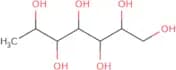
CAS:<p>7-Deoxy-D-glycero-D-gluco-heptitol is a synthetic sugar that can be used as a building block for the synthesis of complex carbohydrates. 7DGDG has shown to be a good substrate for glycosylation and has been modified with fluorine, methyl, and click chemistry. This sugar also shows high reactivity towards saccharide and oligosaccharides. 7DGDG may be useful in the production of polysaccharides or glycosylations.</p>Purity:Min. 95%Psyllium seed gum
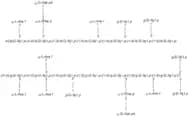
CAS:<p>Psyllium seed gum comes from plants of the Plantago genus and is cultivated mainly in the Mediterranian and in India. Psyllium has been used for many years medical applications and more recently there has been a resurgency of interest because it has been seen as a soluble dietary fibre. The proposed structure is of a backbone of D-xylopyranosyl units linked (1,4) and (1,3) with the 4-linked units bearing side chains. The side chains consist of α-L-arabinofuranosyl units linked (1,3) and (1,2) and β-D-xylopyranosyl units linked (1,3) and (1,2) and the α-D-GalAρ-(1,2)-α-L-Rhaρ aldobiuronic acid units linked (1,2) to the main chain.</p>Formula:C33H66O2Purity:Min. 95%Color and Shape:PowderMolecular weight:494.90 g/mol





![N-[2-(4'-Nitrophenyl)-1-cyano-3-butene]-2,3,4,6-tetra-O-pivaloyl-D-glucopyranoside](/_next/image/?url=https%3A%2Fstatic.cymitquimica.com%2Fproducts%2F3D%2Fthumb-webp%2FMN08500.webp&w=3840&q=75)