Glycoscience
Glycoscience is the study of carbohydrates and their derivatives, as well as the interactions and biological functions they participate in. This field of research is crucial for understanding a wide variety of biological processes, including cell recognition, signaling, immune response, and disease development. Glycoscience has important applications in biotechnology, medicine, and the development of new drugs and therapies. At CymitQuimica, we offer a wide selection of high-quality, high-purity products for glycoscience research. Our catalog includes monosaccharides, oligosaccharides, polysaccharides, glycoconjugates, and specific reagents, designed to support researchers in their studies on the structure, function, and applications of carbohydrates in biological systems. These resources are intended to facilitate scientific discoveries and practical applications in various areas of bioscience and medicine.
Subcategories of "Glycoscience"
- Aminosugars(108 products)
- Glyco-Related Antibodies(282 products)
- Glycolipids(46 products)
- Glycosaminoglycans (GAGs)(55 products)
- Glycosides(419 products)
- Monosaccharides(6,622 products)
- Oligosaccharides(3,682 products)
- Polysaccharides(503 products)
Found 11041 products of "Glycoscience"
Sort by
Purity (%)
0
100
|
0
|
50
|
90
|
95
|
100
Pentagalloylglucose - Bio-X ™
CAS:<p>A gallotannin found in plants, with various biological activities. Its anti-cancer effect has been demonstrated in several cancer cell lines, mediated by inhibition of DNA replication, proliferation and angiogenesis. Elicits anti-inflammatory, antioxidative and anti-diabetic effects. Recently, it has been identified as an inhibitor of c-Myc in hepatocellular carcinoma and multiple myeloma cells.</p>Formula:C41H32O26Purity:Min. 98 Area-%Color and Shape:PowderMolecular weight:940.68 g/molChitobiose dihydrochloride
CAS:<p>Chitobiose 2HCl is a synthetic sugar that has been modified using Click chemistry. It is a fluorescent sugar that can be used as an indicator for protein-sugar interactions. Chitobiose 2HCl is soluble in water and has a molecular weight of 258.078 g/mol.</p>Formula:C12H24N2O9•(HCl)2Purity:Min. 95%Molecular weight:413.25 g/molβ-D-Galactose pentaacetate plant origin (ex peach gum)
CAS:<p>1,2,3,4,6-Penta-O-acetyl-b-D-galactopyranose, also known as beta-D-galactose pentaacetate, has high chemical stability and long shelf life. This protected form of galactose is a key building block of any chemical synthesis of galactose-containing oligosaccharides or glycoconjugates. In the presence of Lewis acids it can be used as a glycosyl donor to make simple glycosides. In order to perform more complex galactosylations it can be converted into more reactive donors, such as glycosyl halides or thioglycosides.</p>Formula:C16H22O11Molecular weight:390.35 g/molRef: 3D-G-1782
1kgTo inquire5kgTo inquire10kgTo inquire500gTo inquire2500gTo inquire-Unit-kgkgTo inquireL-[UL-13C6]Rhamnose monohydrate
CAS:<p>L-[UL-13C6]Rhamnose monohydrate is a high purity, custom synthesis sugar. It has been modified with fluorination, glycosylation and methylation to synthesize a complex carbohydrate. This compound has been shown to be useful in the synthesis of oligosaccharides and monosaccharides. L-[UL-13C6]Rhamnose monohydrate is also used in click chemistry, which is a new method that uses the copper-catalyzed azide-alkyne cycloaddition reaction to form stable covalent bonds between molecules. The CAS number for this compound is 10030-85-0 (unlabelled).</p>Formula:C6H12O5·H2OPurity:Min. 95%Methyl 2,3-di-O-acetyl-4,6-O-(4-methoxybenzylidene)-a-D-mannopyranoside
<p>Methyl 2,3-di-O-acetyl-4,6-O-(4-methoxybenzylidene)-a-D-mannopyranoside is a custom synthesis that contains a fluorinated sugar with a methyl group attached to the 4 position. The oligosaccharide is synthesized through click chemistry and has been modified with an acetate at the 6 position. The CAS number is 108739-53-0. The carbohydrate is a complex carbohydrate that can be found in nature or synthesized in the laboratory.</p>Formula:C19H24O9Purity:Min. 95%Molecular weight:396.4 g/molBenzyl 2-acetamido-2-deoxy-6-O-trityl-a-D-glucopyranoside
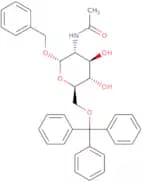
CAS:<p>Benzyl 2-acetamido-2-deoxy-6-O-trityl-a-D-glucopyranoside is a glycosylation of benzyl 2,3,4,6-tetraacetamido-2,3,4,6-tetra deoxyglucopyranoside. It is a complex carbohydrate that can be modified with methyl groups or fluorine atoms. This product is often used in Click chemistry and as a building block for oligosaccharides and polysaccharides. Benzyl 2-acetamido-2-deoxy 6O trityl a D glucopyranoside has CAS number 33493 71 9 and can be custom synthesized to meet individual requirements.</p>Formula:C34H35NO6Purity:Min. 95%Color and Shape:White PowderMolecular weight:553.64 g/molEthyl 4,6-O-benzylidene-β-D-thioglucopyranoside
CAS:<p>A protected thioglucose sugar</p>Formula:C15H20O5SPurity:Min. 95%Color and Shape:PowderMolecular weight:312.38 g/mol2,3,5-Tri-O-benzoyl-β-D-ribofuranosyl cyanide
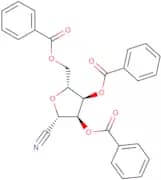
CAS:<p>Building block for C-nucleoside synthesis</p>Formula:C27H21NO7Purity:Min. 98 Area-%Color and Shape:White PowderMolecular weight:471.46 g/mol2-Acetamido-2-deoxy-a-D-galactopyranosyl serine
CAS:<p>2-Acetamido-2-deoxy-a-D-galactopyranosyl serine (2AGPS) is a naturally occurring glycosaminoglycan. It has been shown to inhibit the growth of cancer cells and to reduce the size of mouse tumors in vivo. This compound also inhibits viral replication in vitro, and its antiviral properties have been shown to work on several different types of viruses, including herpes simplex virus type 1, human cytomegalovirus, and influenza A virus. 2AGPS is also a potent inducer of toll-like receptor 4 signaling pathways in macrophages and dendritic cells. 2AGPS can be synthesized by using a polymerase chain reaction (PCR) technique with synthetic oligosaccharides as a template.</p>Formula:C11H20N2O8Purity:Min. 90 Area-%Color and Shape:Off-White Yellow PowderMolecular weight:308.29 g/mol(2R,2'R,3S,3'S,4R,4'R,5S,5'S)-6,6'-(1,4-Phenylenebis(ethyne-2,1-diyl))bis(2-(hydroxymethyl)tetrahydro-2H-pyran-3,4,5-triol
CAS:<p>Please enquire for more information about (2R,2'R,3S,3'S,4R,4'R,5S,5'S)-6,6'-(1,4-Phenylenebis(ethyne-2,1-diyl))bis(2-(hydroxymethyl)tetrahydro-2H-pyran-3,4,5-triol including the price, delivery time and more detailed product information at the technical inquiry form on this page</p>Formula:C22H26O10Molecular weight:450.44 g/molEugenol-β-D-glucuronide tetraacetate
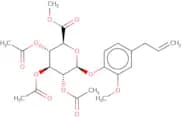
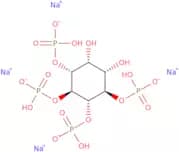
CAS:<p>Eugenol metabolite intermediate</p>Formula:C23H28O11Molecular weight:480.46 g/molD-myo-Inositol 1,4,5,6-tetraphosphate sodium salt
CAS:<p>D-myo-Inositol 1,4,5,6-tetraphosphate sodium salt is a colony-stimulating factor that is involved in the regulation of metabolism and growth. It has been shown to increase the number of blood cells in rats with myeloid leukemia by acting on stem cells. D-myo-Inositol 1,4,5,6-tetraphosphate sodium salt binds to stem cell factor receptors on cell membranes to activate the receptor activity and initiate protein synthesis. This leads to increased production of hematopoietic cells and monoclonal antibodies. D-myo-Inositol 1,4,5,6-tetraphosphate sodium salt also stimulates erythropoiesis by regulating red blood cell production through its interaction with epidermal growth factor (EGF).</p>Formula:C6H12O18P4Na4Purity:Min. 95%Color and Shape:PowderMolecular weight:588 g/molSimvastatin acyl-b-D-glucuronide
CAS:<p>Simvastatin acyl-b-D-glucuronide is a synthetic compound that is not naturally occurring. It has a molecular weight of 571.67 and the CAS number 463962-56-3. The chemical formula for this compound is C30H44O8 and its structural formula is shown below. The purity of this product is >99% and it has been modified with fluorination to improve solubility in water.</p>Formula:C31H48O12Purity:Min. 95%Molecular weight:612.71 g/molD-Arabitol
CAS:<p>D-Arabitol (or D-Arabinitol) is the reduced alcohol form of Arabinose. Arabitol is a commonly used food supplement, it is comparably sweet to sucrose but the oral flora cannot metabolize Arabitol, and hence protects from caries. Arabitol plays also an important role in energy controlled diets since it is absorbed slowly by the human digestive tract and has a low caloric content. The differential metabolism of the Arabitol D- and L-forms suggested its use in microbiological diagnostics (Bernard, E.M. et al. 1981) and became a routine urine laboratory test: L-Arabitol is metabolized by a variety of different bacteria and fungi utilizing an arabitol dehydrogenase enzyme. Therefore, it serves as a biomarker for, e.g., invasive candidiasis, since an infection results in an elevated urine D-Arabitol/L-Arabitol (DA/LA) ratio. Cymit Quimica offers both isomers in research grade: D-Arabitol (A-8270) and L-Arabitol (A-8280).</p>Formula:C5H12O5Purity:Min. 99.0 Area-%Molecular weight:152.15 g/molRef: 3D-A-8270
10gTo inquire1kgTo inquire250gTo inquire500gTo inquire2500gTo inquire-Unit-kgkgTo inquireL-Arabitol
CAS:<p>Used as source of carbon in culture medium.</p>Formula:C5H12O5Purity:Min. 98.0 Area-%Molecular weight:152.15 g/molAdonitol
CAS:<p>Used to differentiate bacteria on the basis of carbohydrate fermentation abilities.</p>Formula:C5H12O5Purity:Min. 98.0 Area-%Molecular weight:152.15 g/molRef: 3D-A-3000
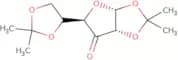
1kgTo inquire50gTo inquire100gTo inquire250gTo inquire500gTo inquire-Unit-kgkgTo inquire1,2:5,6-Di-O-isopropylidene-α-D-ribo-hexofuranose-3-ulose hydrate
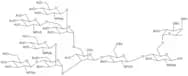
CAS:<p>This is a sugar that is found in the urine of reindeer and caribou. It was first identified in the urine of animals captured in Alaska during the winter months. It has been shown to be present in human urine, as well, but at lower concentrations. Radiocarbon dating has revealed that this sugar is produced seasonally, with higher levels being found during the winter months. The seasonal variation may be due to changes in diet or metabolism.</p>Formula:C12H18O6Purity:Min. 95%Color and Shape:PowderMolecular weight:258.27 g/mol4-O-{4-O-[[2,4-Di-O-acetyl-3-O-[2,4-di-O-(3,4,6-tri-O-acetyl-2-deoxy-2-phthalimido-β-D-glucopyranosyl)-3,6-di-O-benzyl-α-D-mannopyra nosyl]-6-O-[3,4-di-O-acetyl-2,6-di-O-(3,4,6-tri-O-acetyl-2-deoxy-2-phthalimido-β-D-glucopyranosyl)-α-D-mannopyranosyl]
CAS:<p>4-O-{4-O-[[2,4-Di-O-acetyl-3-O-[2,4-di-O-(3,4,6-tri-O-acetyl-2-deoxy-2--phthalimido--bD--glucopyranosyl)-3,6--di--O--benzyl aDmannopyra nosyl]-6--O-[3,4--di--O--acetyl 2,6--di--O-(3,4,6--tri - O - acetyl 2 - deoxy 2 - phthalimido bDglucopyranosyl) aDmannopyranosyl] } is a synthetic complex carbohydrate. It is an oligosaccharide that can be used in glycosylation reactions. This carbohydrate has been custom synthesized and modified to include methyl groups. The CAS number for this compound is 9461642899.</p>Formula:C196H200N6O72Purity:Min. 95%Molecular weight:3,791.68 g/mol5-O-Allyl-2,3,4-tri-O-benzyl-D-ribitol
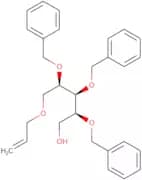
CAS:<p>5-O-Allyl-2,3,4-tri-O-benzyl-D-ribitol is an acid that has been used in preparative organic chemistry. It is a benzyloxymethyl derivative of ribose, which can be converted to the corresponding methyl ether by hydrolysis with sodium methoxide in methanol. 5-O-Allyl-2,3,4-tri-O-benzyl-D-ribitol functions as an isomer and dimerization reagent for the preparation of propenyl derivatives. 5-O-Allyl 2,3,4 tri O benzyl D ribitol has been shown to inhibit Influenza A H1N1 strains in vitro with a 50% inhibitory concentration (IC50) of 1 μM.</p>Formula:C29H34O5Purity:Min. 90.0 Area-%Color and Shape:Yellow Clear LiquidMolecular weight:462.58 g/mol(2R, 3S, 4R, 5S) -3,4-Di-O-Isopropylidene-2- methyl- 1- nonyl-3, 4, 5- piperidinetriol
<p>2R, 3S, 4R, 5S) -3,4-Di-O-Isopropylidene-2- methyl- 1- nonyl-3, 4, 5- piperidinetriol is a modification of the oligosaccharide. It is synthesized by custom synthesis and has high purity. This product can be found under CAS No. 9062-16-7 and has a molecular weight of 873. The chemical formula is (C6H10O5)n and the structural formula is CHNO. This product is an Oligosaccharide and Carbohydrate.</p>Purity:Min. 95%



![L-[UL-13C6]Rhamnose monohydrate](/_next/image/?url=https%3A%2Fstatic.cymitquimica.com%2Fproducts%2F3D%2Fthumb-webp%2FMR182508.webp&w=3840&q=75)