Glycoscience
Glycoscience is the study of carbohydrates and their derivatives, as well as the interactions and biological functions they participate in. This field of research is crucial for understanding a wide variety of biological processes, including cell recognition, signaling, immune response, and disease development. Glycoscience has important applications in biotechnology, medicine, and the development of new drugs and therapies. At CymitQuimica, we offer a wide selection of high-quality, high-purity products for glycoscience research. Our catalog includes monosaccharides, oligosaccharides, polysaccharides, glycoconjugates, and specific reagents, designed to support researchers in their studies on the structure, function, and applications of carbohydrates in biological systems. These resources are intended to facilitate scientific discoveries and practical applications in various areas of bioscience and medicine.
Subcategories of "Glycoscience"
- Aminosugars(108 products)
- Glyco-Related Antibodies(282 products)
- Glycolipids(46 products)
- Glycosaminoglycans (GAGs)(55 products)
- Glycosides(419 products)
- Monosaccharides(6,622 products)
- Oligosaccharides(3,682 products)
- Polysaccharides(503 products)
Found 11041 products of "Glycoscience"
Sort by
Purity (%)
0
100
|
0
|
50
|
90
|
95
|
100
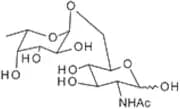
2-Acetamido-2-deoxy-6-O-(a-L-fucopyranosyl)-D-glucopyranose
CAS:<p>Adhesion molecule in eukaryotic-bacterial cell interactions</p>Formula:C14H25NO10Purity:Min. 95%Color and Shape:White PowderMolecular weight:367.35 g/mol5-O-Benzyl-D-ribose
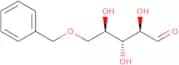
CAS:<p>5-O-Benzyl-D-ribose is an enantiomer of D-ribose. It has been used as an antiperspirant, although it does not stop the formation of sweat, but rather reduces the amount of perspiration. 5-O-Benzyl-D-ribose is also used in the synthesis of deodorants and enantiomers for optically active pharmaceuticals. The configurations are determined by the configuration of the substituents on the benzene ring and can be either R or S. The configurations can be separated into two groups:</p>Formula:C12H16O5Purity:Min. 95%Color and Shape:PowderMolecular weight:240.25 g/mol3-C-Methyl- 5, 6- O- isopropylidene)-D- mannonic acid g- lactone
<p>3-C-Methyl- 5, 6- O- isopropylidene)-D- mannonic acid g- lactone is a modification of the natural sugar D-mannonic acid. It can be used as an intermediate for the synthesis of oligosaccharides and complex carbohydrates. 3-C-Methyl-5,6 -O-isopropylidene)-D -mannonic acid g -lactone is synthesized by methylation and glycosylation. This product is available in high purity and CAS No.</p>Purity:Min. 95%L-Arabonic acid-1,4-lactone
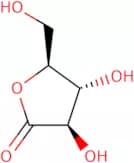
CAS:<p>L-Arabonic acid-1,4-lactone (LL) is the product of the reaction between L-arabinose and trifluoroacetic acid. LL is an enantiomer of D-arabinose and has a pK a of 6.5, which makes it a weak base. This compound has been shown to be a hydroxyl group donor in human liver and is also used as a chaperone for protein folding.</p>Formula:C5H8O5Purity:Min. 95%Color and Shape:White PowderMolecular weight:148.11 g/molUlvan
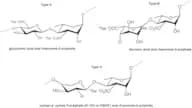
CAS:<p>Ulvans are structural polysaccharides present in the cell walls of green algae such as Ulva armoricana, Ulva rotondata, Ulva rigida, Ulva lacterca and Ulva pertusa. They are highly sulphated and contain rhamnose 3-sulphate, xylose, xylose 2-sulphate, glucuronic acid and iduronic acid residues. Ulvan has several potentially valuable functionalities such as gel formation for agricultural and food applications and possible anticoagulant, antioxidant, antihyperlipidemic and antitumor activities for pharmaceutical applications.<br>The image was kindly provided by Prof Mike Guiry from Cork who runs ‘The Seaweed Site’.</p>Color and Shape:PowderAllyl 2-O-benzoyl-3-O-benzyl-a-L-rhamnopyranoside
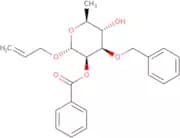
CAS:<p>Allyl 2-O-benzoyl-3-O-benzyl-a-L-rhamnopyranoside is a complex carbohydrate that can be used in the synthesis of saccharides and polysaccharides. It has been modified by methylation, glycosylation, and carbamylation. The CAS number for this product is 940274-21-5.</p>Formula:C23H26O6Purity:Min. 95%Molecular weight:398.46 g/mol1,2-O-IIsopropylidene -b- L- idofuranuronic acid g- lactone
<p>1,2-O-IIsopropylidene -b- L- idofuranuronic acid g- lactone is a fluorinated monosaccharide that is synthesized from the glycosylation of erythritol and glycerol. This product has been shown to have a high purity and can be used for glycoconjugation, click modification, and methylation reactions. It has a CAS number of 638984-63-7.</p>Purity:Min. 95%1,2,3,4-Tetra-O-acetyl-6-diphenylphosphoryl-b-D-mannopyranose
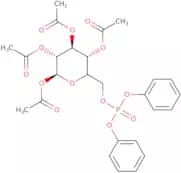
CAS:<p>This product is custom synthesized. The synthesis of this product was accomplished by modification, fluorination, methylation and monosaccharide synthesis. It is a synthetic oligosaccharide that has been modified with click chemistry. This product is made up of saccharides in a glycosylation configuration. It is a complex carbohydrate that contains sugar units in various configurations. This product has high purity and can be used as an intermediate for the synthesis of other products.</p>Formula:C26H29O13PPurity:Min. 95%Color and Shape:White PowderMolecular weight:580.47 g/mol1,2,3,4,6-Penta-O-trimethylsilyl-D-glucopyranose
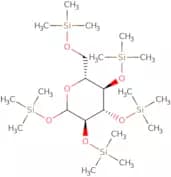
CAS:<p>1,2,3,4,6-Penta-O-trimethylsilyl-D-glucopyranose is a high purity product custom synthesized for research purposes. It is a sugar that has been modified by the Click modification and fluorination. 1,2,3,4,6-Penta-O-trimethylsilyl-D-glucopyranose is an oligosaccharide with a complex carbohydrate structure that can be used in glycosylation reactions. This product is a saccharide with a CAS number of 19126-99-9.</p>Formula:C21H52O6Si5Purity:Min. 95%Color and Shape:Colorless PowderMolecular weight:541.07 g/molDL-Arabinose
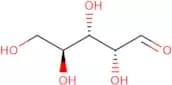
CAS:<p>Arabinose is a pentose sugar that has been shown to have antimicrobial properties. It inhibits the growth of bacteria by binding to their ribosomes and interfering with protein synthesis. Arabinose has also been shown to inhibit the growth of bone cancer cells in mice, which may be due to its ability to stimulate the production of growth factor-β1. The biochemical properties of arabinose are similar to those of d-arabinose, an active analogue that is used as a water vapor pump inhibitor. X-ray crystal structures have been obtained for both compounds, and they show that they differ in the position of one hydrogen atom on the sugar ring.</p>Formula:C5H10O5Purity:Min. 95%Color and Shape:White Off-White PowderMolecular weight:150.1 g/mol2,5-Anhydro-3-O-tert.butyldimethylsilyl-L-ribonic acid 1-isopropyl ester
<p>2,5-Anhydro-3-O-tert.butyldimethylsilyl-L-ribonic acid 1-isopropyl ester is a custom synthesized product containing an oligosaccharide sugar and fluorine atom. This product is available in large quantities with high purity, which is necessary for various applications such as glycosylation, oligosaccharide synthesis, methylation, and monosaccharide synthesis. The CAS number of this product is 6042-09-1.</p>Purity:Min. 95%2,3:4,5-Di-O-isopropylidene-D-arabitol
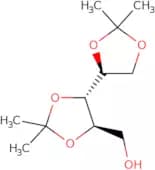
CAS:<p>2,3:4,5-Di-O-isopropylidene-D-arabitol is a synthetic sugar that is used for glycosylation, methylation, and fluorination. The compound is an oligosaccharide that has been modified with methyl groups and activated monosaccharides. 2,3:4,5-Di-O-isopropylidene-D-arabitol is white in color and has a melting point of 109°C. It can be synthesized from D-mannitol with the help of sodium methoxide in methanol.<br>2,3:4,5-Di-O-isopropylidene-D-arabitol is also known as 1-(2,3:4,5) triose; 1-(2,3:4)-diose; 1-(2,3:4)-triose; 1-(2,3:4)-</p>Formula:C11H20O5Purity:Min. 95%Color and Shape:Colorless PowderMolecular weight:232.27 g/mol(2R, 3R, 4R, 5S) -3, 4, 5- Trihydroxy- 2- (hydroxymethyl) - 1- piperidinepropanoic acid
CAS:<p>Glycosylation, complex carbohydrate, Methylation, Click modification, Polysaccharide, Fluorination, saccharide and Modification of sugars are some of the reactions that can be performed on this compound. It is a synthetic monosaccharide with CAS No. 78013-18-0. This product is available for custom synthesis and has been shown to have high purity.</p>Formula:C9H17NO6Purity:Min. 95%Molecular weight:235.23 g/molLewis X trisaccharide
CAS:<p>Milk oligosaccharide; antigen; expressed on gastric mucosa and cancer cells</p>Formula:C20H35NO15Purity:Min. 90 Area-%Color and Shape:PowderMolecular weight:529.49 g/mol2,3-O-IIsopropylidene-D-allono-1.4-lactone
<p>2,3-O-Isopropylidene-D-allono-1.4-lactone is a methylated saccharide that has been modified by the click reaction with a phosphonate group and an isopropylidene group. The synthesis of this product can be customized to suit your needs. This product is offered in high purity, and it is an excellent source of carbohydrates or sugars. 2,3-O-Isopropylidene-D-allono-1.4-lactone also has a fluorinated group on its molecule. It is a complex carbohydrate that can be used for glycosylation or as a click modification substrate.</p>Purity:Min. 95%Ezetimibe-D-glucuronide D4
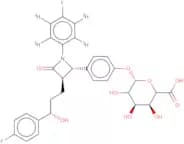
CAS:Controlled Product<p>Ezetimibe-D-glucuronide D4 is a deuterated version of the active molecule, ezetimibe. It is a white to off-white crystalline powder with a molecular weight of 592.1 Da and an empirical formula of C31H41NO7F2·C6H8O7. It is soluble in ethanol and water, and insoluble in ether or chloroform.</p>Formula:C30H25D4F2NO9Purity:Min. 85 Area-%Color and Shape:White Off-White PowderMolecular weight:589.57 g/molL-Mannose
CAS:<p>To assess substrate specificity of galactokinase from S. pneumoniae</p>Formula:C6H12O6Purity:Min. 98 Area-%Color and Shape:White PowderMolecular weight:180.16 g/molN-(Fmoc)-C-b-D-galacturonyl methylamine
<p>Fmoc-C-b-D-galacturonyl methylamine is a custom synthesis that is used in the modification of oligosaccharides and carbohydrates. It is also used as a precursor for the synthesis of glycosylated saccharides by methylation, glycosylation, and fluorination. Fmoc-C-b-D-galacturonyl methylamine has been shown to be an excellent starting material for the production of high purity complex carbohydrates.</p>Purity:Min. 95%1,2,3,4-Tetra-O-acetyl-L-rhamnopyranose
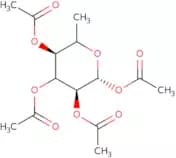
CAS:<p>1,2,3,4-Tetra-O-acetyl-L-rhamnopyranose is an acetylated disaccharide that is glycosylated with mercuric triflate and glycoalkaloid acceptors. It has been shown to be a glycosylation coupling agent for theophylline in solanum species. 1,2,3,4-Tetra-O-acetyl-L-rhamnopyranose can also act as a steroidal glycoalkaloid acceptor and has been identified in Solanum species.</p>Formula:C14H20O9Purity:Min. 95%Color and Shape:Colorless PowderMolecular weight:332.3 g/mol3-O-(a-D-Galactopyranosyl)-b-D-fucopyranosyl propylamine
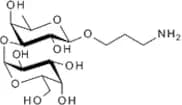
<p>3-O-(a-D-Galactopyranosyl)-b-D-fucopyranosyl propylamine is a custom synthesis. It is a modification of the natural product. This compound has been fluorinated, methylated and monosaccharide modified. <br>3-O-(a-D-Galactopyranosyl)-b-D-fucopyranosyl propylamine is a synthetic compound that has been created by click chemistry. It contains an oligosaccharide and saccharide group. The CAS number for this compound is 5873087-81-8. 3-O-(a-D-Galactopyranosyl)-b-D-fucopyranosyl propylamine is also glycosylated with sugar groups and has complex carbohydrate chains.</p>Formula:C15H29NO10Purity:Min. 95%Molecular weight:383.39 g/mol