Glycoscience
Glycoscience is the study of carbohydrates and their derivatives, as well as the interactions and biological functions they participate in. This field of research is crucial for understanding a wide variety of biological processes, including cell recognition, signaling, immune response, and disease development. Glycoscience has important applications in biotechnology, medicine, and the development of new drugs and therapies. At CymitQuimica, we offer a wide selection of high-quality, high-purity products for glycoscience research. Our catalog includes monosaccharides, oligosaccharides, polysaccharides, glycoconjugates, and specific reagents, designed to support researchers in their studies on the structure, function, and applications of carbohydrates in biological systems. These resources are intended to facilitate scientific discoveries and practical applications in various areas of bioscience and medicine.
Subcategories of "Glycoscience"
- Aminosugars(108 products)
- Glyco-Related Antibodies(284 products)
- Glycolipids(46 products)
- Glycosaminoglycans (GAGs)(55 products)
- Glycosides(419 products)
- Monosaccharides(6,622 products)
- Oligosaccharides(3,701 products)
- Polysaccharides(505 products)
Found 11034 products of "Glycoscience"
Sort by
Purity (%)
0
100
|
0
|
50
|
90
|
95
|
100
Lipopolysaccharide - from Porphyromonas gingivalis
CAS:Lipopolysaccharide (LPS) is a molecule that is produced by Porphyromonas gingivalis. This molecule is also found in the outer membranes of Gram-negative bacteria and has been shown to have many effects on animal tissues. LPS activates HIF-1α, which leads to the production of inflammatory cytokines such as necrosis factor (TNF), and interferon regulatory factors (IRFs). These molecules signal for the production of more LPS. LPS also causes tissue growth and development by activating growth factors such as insulin-like growth factor 1. LPS also activates immune cells through signaling with chemokine receptors, promoting inflammation.Purity:Min. 95%Color and Shape:Solid2,3,4,6-Tetra-O-benzyl-D-mannopyranose
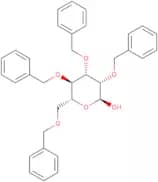
CAS:2,3,4,6-Tetra-O-benzyl-D-mannopyranose is a trisaccharide that consists of two covalently linked glycosyl acceptors and one galacto moiety. This molecule is synthesized by chemoenzymatic synthesis and can be found in the biosynthesis of trehalose. 2,3,4,6-Tetra-O-benzyl-D-mannopyranose is an anomeric form of D-glucopyranose. The anomeric form is determined by the orientation of the hydroxyl group at C1' with respect to the anomeric carbon atom at C2'. This molecule has been isotopically labelled with 13C and 15N for use in studies on carbohydrate metabolism.Formula:C34H36O6Purity:90%Color and Shape:Yellow PowderMolecular weight:540.65 g/molLaminaripentaose
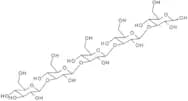
CAS:Ex algal/bacterial polysaccharides-value in b1-3 glucanase assays & diagnosticsFormula:C30H52O26Purity:Min. 85 Area-%Color and Shape:PowderMolecular weight:828.72 g/molLacto-N-hexaose
CAS:Neutral hexasasaccharide naturally present in human breast milk
Formula:C40H68N2O31Purity:Min. 95%Color and Shape:White PowderMolecular weight:1,072.96 g/mol4-Azido-4-deoxy-D-glucose
CAS:4-Azido-4-deoxy-D-glucose (4A4DG) is a potential inhibitor of lactose synthase, which is an enzyme that catalyzes the synthesis of lactose from glucose. 4A4DG is an azide analogue of D-glucose and acts as an acceptor substrate for the enzyme. It has been found to be crystalline in nature and is composed of a monosaccharide. 4A4DG has been used in syntheses of several analogues of D-glucose and can be used as a potential inhibitor for lactose synthase.Formula:C6H11N3O5Purity:Min. 95%Color and Shape:White PowderMolecular weight:205.17 g/mol5-Ketomannose
CAS:5-Ketomannose is a catalytic α-d-mannopyranoside that is used as a glycosidase inhibitor. It binds to the active site of glycosidases, blocking their activity and inhibiting the breakdown of carbohydrates. 5-Ketomannose has been shown to inhibit the action of a number of enzyme types, including glycosidases, glycoprocessing enzymes, and catalytic hydrogenation. This compound also inhibits deoxymannojirimycin, which is an inhibitor of glycosidase. 5-Ketomannose has anti-inflammatory effects and may be useful for treatment in inflammatory bowel disease (IBD) or ulcerative colitis.Formula:C6H10O6Purity:Min. 95%Color and Shape:PowderMolecular weight:178.14 g/mol4-Methoxyphenyl 2-azido-3,6-di-O-benzyl-2-deoxy-b-D-glucopyranoside
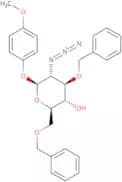
CAS:4-Methoxyphenyl 2-azido-3,6-di-O-benzyl-2-deoxy-b-D-glucopyranoside is a supramolecular compound that belongs to the group of curcumin analogs. It has shown anticancer activity against human papilloma virus and intestinal papilloma. 4-Methoxyphenyl 2-azido-3,6-di-O-benzyl-2-(2′,4′,6′)triphosphate is a hybridized compound with low bioavailability. This compound can be used for the treatment of cancers and other diseases as an anticancer agent.Formula:C27H29N3O6Purity:Min. 95%Color and Shape:White PowderMolecular weight:491.54 g/mol1-Amino-1-deoxy-D-fructose hydrochloride
CAS:1-Amino-1-deoxy-D-fructose hydrochloride is a chemical compound that has been used to study the effects of DNA damage on the rate of protein synthesis. 1-Amino-1-deoxy-D-fructose hydrochloride has been shown to be a strong inhibitor of DNA replication, particularly at sites where there is a high frequency of damaged bases. It also damages the DNA by cleaving it into fragments and inhibits protein synthesis by altering the sequences of DNA. The extent of damage caused by 1-amino-1-deoxy D fructose hydrochloride can be determined by analyzing the sequences in polyacrylamide gels after denaturing them. The reaction time for this chemical is short, so it can be used in studies with short reaction times.Formula:C6H13NO5·HClPurity:Min. 95%Color and Shape:White PowderMolecular weight:215.63 g/mol2-Azido-((R)-3,6-O-benzylidene)-2,6-dideoxy- L-galacto(gluco)furanose
CAS:2-Azido-((R)-3,6-O-benzylidene)-2,6-dideoxy- L-galacto(gluco)furanose is a synthetic sugar that is used as a substrate in glycosylation reactions. It is also used for click modification and fluorination reactions. The chemical structure of 2-azido-(R)-3,6-O-benzylidene)-2,6-dideoxy-- L--galacto(gluco)furanose is shown below:Purity:Min. 95%Stachyose hydrate
CAS:Stachyose hydrate is a methylated, custom-synthesized, click-modified oligosaccharide that is used as a synthetic complex carbohydrate. It is synthesized from the saccharide stachyose by fluorination and modification with methyl groups. This product may be used in biological research or as a fluoropolymer precursor. Stachyose hydrate has been shown to have high purity and can be modified to contain monosaccharides and sugars.Formula:C24H42O21·xH2OPurity:Min. 98.0 Area-%Molecular weight:666.58 g/mol1-(3'-Azidopropyl)-3,6-di-O-acetyl-2-deoxy-4-O-[2,4,6-tri-O-acetyl-3-O-(p-phenoxybenzyl)-b-D-galactopyranosyl]-2-phthalimido-b-D-glu copyranoside
This is a synthetic, fluorinated, monosaccharide. It has been custom synthesized and is available in high purity. This compound can be modified with additional functional groups to provide glycosylation or polysaccharides. The CAS number for this product is 538-37-0.Purity:Min. 95%2-Azidomethyl-2-deoxy-5,6-O-isopropylidene-L-gulono-1.4-lactone
2-Azidomethyl-2-deoxy-5,6-O-isopropylidene-L-gulono-1.4-lactone is a custom synthesis of a monosaccharide. This compound has been modified with fluorination, methylation, and click chemistry to create a glycosylated sugar. The CAS number for this compound is 628379-06-8. This synthetic carbohydrate can be used in the modification or synthesis of other carbohydrates.Purity:Min. 95%D-Fructose-1,6-diphosphate magnesium
CAS:D-Fructose-1,6-diphosphate magnesium (DFP) is a water soluble compound that inhibits hexokinases and aldolases. It has been shown to inhibit the activity of these enzymes in experimental models. DFP inhibits the synthesis of glyceraldehyde 3-phosphate and dihydroxyacetone phosphate, which are required for glycolysis, leading to cytosolic calcium ion concentrations increasing. This product also has an effect on energy metabolism by inhibiting mitochondrial oxidative phosphorylation and glutamate dehydrogenase activity. DFP also induces apoptosis in neuronal cells through activation of IL2 receptor and picolinic acid.Formula:C6H12O12P2•MgPurity:Min. 95%Color and Shape:PowderMolecular weight:362.4 g/molChitotriose undecaacetate
CAS:Chitotriose undecaacetate is a synthetic substrate that is used in transfecting experiments. It has high sensitivity and can be used to introduce nucleic acid into cells. Chitotriose undecaacetate is used as a synthetic fluorometric assay for the determination of chitinase activity in vitro or as a substrate for cell-free synthesis of nucleic acids. It has been shown to possess moieties that are sensitive to hydrogen chloride and chloride ions, making it an effective probe for the determination of these ions. Chitotriose undecaacetate also reacts with sephadex G-200, which makes it useful for separating DNA fragments by electrophoresis.Formula:C40H57N3O24Purity:Min. 95%Color and Shape:White PowderMolecular weight:963.89 g/molMethyl 2,3-di-O-benzyl-a-D-galactopyranoside
Methyl 2,3-di-O-benzyl-a-D-galactopyranoside is a fluorination reagent that can be used to introduce fluorine atoms in the sugar backbone of a carbohydrate. It has been used for the synthesis of complex carbohydrates and oligosaccharides. Methyl 2,3-di-O-benzyl-a-D-galactopyranoside can also be used to modify glycosylation or polysaccharide structures by methylating or chlorinating the sugar moiety. The chemical is available from various suppliers at different purity levels.Purity:Min. 95%Chrysin-7-glucuronide
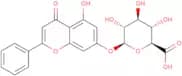
CAS:Chrysin-7-glucuronide is a metabolite of chrysin, which is found in the roots of Oroxylum indicum. This compound has been shown to inhibit the enzyme activity for multidrug resistance (MDR) and cancer resistance (CDR). It has been found that chrysin-7-glucuronide inhibits MDR and CDR in vitro by binding to the ATP binding site on these enzymes. Chrysin-7-glucuronide also inhibits the production of acid in vivo and in vitro, which may be due to its ability to inhibit cellular proliferation. Chrysin-7-glucuronide may be an effective anti-cancer agent when used as a dietary supplement.Formula:C21H18O10Purity:Min. 95%Color and Shape:Off-White PowderMolecular weight:430.36 g/mol2,3-O-Isopropylidene-D-erythrofuranose
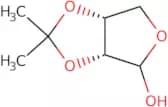
CAS:2,3-O-Isopropylidene-D-erythrofuranose is a synthetic anticancer agent that inhibits the synthesis of proteins. It binds to the sulfhydryl group of cysteine, which is an amino acid that is essential for protein synthesis. 2,3-O-Isopropylidene-D-erythrofuranose has been shown to be potent in inhibiting cancer cells and has been used in the treatment of leukemia and other cancers. This drug can also be used as a means of treating lysosomal storage diseases such as Gaucher's disease. Its anticancer activity may be due to its ability to inhibit glutamate dehydrogenase and glutathione reductase enzymes, which are required for the synthesis of glutathione, an important antioxidant enzyme. 2,3-O-Isopropylidene-D-erythrofuranose has been synthesised from l -tartaricFormula:C7H12O4Purity:Min. 95%Molecular weight:160.17 g/molN-Acetyl-D-lactosamine
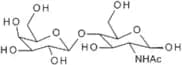
CAS:N-Acetyl-D-lactosamine (LacNAc) is a natural structural element in a variety of glycoconjugates, found in milk, urine, meconium and glyciproteins. It’s a substrate for galactosidases, fucosyltransferases, and sialyltransferases. This LacNAc is also useful as a lectin inhibitory sugar and for characterizing lectins.Formula:C14H25NO11Purity:Min. 98 Area-%Color and Shape:White PowderMolecular weight:383.35 g/molN-(2-Chlorobenzyliden)imino-2,3,4,6-tetra-O-pivaloyl-D-glucopyranoside
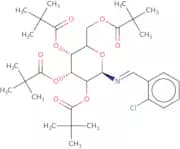
N-(2-Chlorobenzyliden)imino-2,3,4,6-tetra-O-pivaloyl-D-glucopyranoside is an oligosaccharide that is synthesized by the reaction of benzaldehyde with 2,3,4,6-tetra-O-pivaloyl D-glucopyranose. This compound has been modified to include a fluorine atom at the 6 position of the glucose ring. N-(2-Chlorobenzyliden)imino-2,3,4,6-tetra-O-pivaloyl-D-glucopyranoside can be used as a synthetic sugar in glycosylation reactions and Click chemistry.Formula:C33H48ClNO9Purity:Min. 95%Molecular weight:638.19 g/mol3-Deoxy-D-glucose
CAS:3-Deoxy-D-glucose (3DG) is a molecule that belongs to the class of carbohydrates. It is an analog of D-glucose, which is the key substrate for the production of energy in mammalian cells. 3DG has been shown to inhibit the uptake of glucose by trypanosomes and also inhibits glycolysis in mammalian cells. The inhibition of glycolysis may be due to its ability to prevent the phosphorylation of glucose by hexokinase, thus blocking the conversion of glucose into glucose 6-phosphate. 3DG is biosynthesized from d-xylose, which is a five carbon sugar that can be oxidized to form CO2 and H2O.
Formula:C6H12O5Purity:Min. 98 Area-%Color and Shape:White Off-White PowderMolecular weight:164.16 g/mol