Glycoscience
Glycoscience is the study of carbohydrates and their derivatives, as well as the interactions and biological functions they participate in. This field of research is crucial for understanding a wide variety of biological processes, including cell recognition, signaling, immune response, and disease development. Glycoscience has important applications in biotechnology, medicine, and the development of new drugs and therapies. At CymitQuimica, we offer a wide selection of high-quality, high-purity products for glycoscience research. Our catalog includes monosaccharides, oligosaccharides, polysaccharides, glycoconjugates, and specific reagents, designed to support researchers in their studies on the structure, function, and applications of carbohydrates in biological systems. These resources are intended to facilitate scientific discoveries and practical applications in various areas of bioscience and medicine.
Subcategories of "Glycoscience"
- Aminosugars(108 products)
- Glyco-Related Antibodies(282 products)
- Glycolipids(46 products)
- Glycosaminoglycans (GAGs)(55 products)
- Glycosides(419 products)
- Monosaccharides(6,622 products)
- Oligosaccharides(3,682 products)
- Polysaccharides(503 products)
Found 11041 products of "Glycoscience"
Sort by
Purity (%)
0
100
|
0
|
50
|
90
|
95
|
100
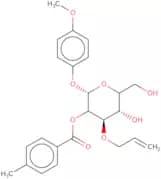
4-Methoxyphenyl 3-O-allyl-2-O-toluoyl-b-D-galactopyranoside
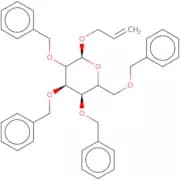
<p>4-Methoxyphenyl 3-O-allyl-2-O-toluoyl-b-D-galactopyranoside is a modified sugar. It is a white to off-white powder that is soluble in water and ethanol. This product has not been evaluated by the FDA, and the safety and efficacy have not been determined.</p>Formula:C24H28O8Purity:Min. 95%Molecular weight:444.49 g/molAllyl 2,3,4,6-tetra-O-benzyl-a-D-glucopyranoside
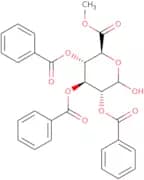
CAS:<p>Allyl 2,3,4,6-tetra-O-benzyl-a-D-glucopyranoside is a synthetic monosaccharide. It can be used in the synthesis of complex carbohydrates by glycosylation and polysaccharide modification. It can also be used for click chemistry modification, methylation, and sugar modifications. Allyl 2,3,4,6-tetra-O-benzyl-a-D-glucopyranoside is of high purity and is available for custom synthesis.</p>Formula:C37H40O6Purity:Min. 95%Molecular weight:580.71 g/mol2,3,4-Tri-O-benzoyl-D-glucuronide methyl ester
CAS:<p>2,3,4-Tri-O-benzoyl-D-glucuronide methyl ester is a modification of an oligosaccharide. It has a molecular formula of C12H22O11 and a molecular weight of 342.34 g/mol. This compound has been synthesized by custom synthesis and has high purity. 2,3,4-Tri-O-benzoyl-D-glucuronide methyl ester can be used as a pharmaceutical intermediate or in the manufacture of other chemicals such as glycosides or polysaccharides. It is also used in the synthesis of sugars such as glucose and fructose and can be found in many foods such as honey and milk.br>br>2,3,4-Tri-O-benzoyl-D-glucuronide methyl ester may be used to identify complex carbohydrates with a specific structure based on its fluorescence properties. This compound is registered under</p>Formula:C28H24O10Purity:Min. 95%Molecular weight:520.14 g/molMethyl 6-deoxy-3,4-O-isopropylidene-2-O-methyl-α-D-galactopyranoside
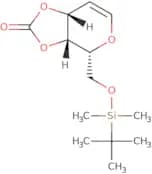
CAS:<p>Methyl 6-deoxy-3,4-O-isopropylidene-2-O-methyl-a-D-galactopyranoside is a custom synthesis that can be modified with fluorination, methylation, and monosaccharide modification. This product can also be used in click modification, oligosaccharide synthesis, saccharide modification, and glycosylation. Methyl 6-deoxy-3,4-O-isopropylidene-2-O-methyl-aD galactopyranoside is a CAS No. 7413523 2 and is a Polysaccharide. It has Carbohydrate properties and complex carbohydrate characteristics.</p>Formula:C11H20O5Purity:Min. 95%Molecular weight:232.28 g/mol6-O-tert-Butyldimethylsilyl-3,4-O-carbonyl-D-galactal
CAS:<p>6-O-tert-Butyldimethylsilyl-3,4-O-carbonyl-D-galactal is a modification of the sugar galactal. It is an oligosaccharide that can be synthesized from galactose and 6-O-tert-butyldimethylsilylchloride. It is used as a starting material for the synthesis of complex carbohydrates, as well as polysaccharides. This product has an average purity of 98% and is available in quantities of 50 grams.</p>Purity:Min. 95%N-Acetyl-D-lactosamine-sp-biotin
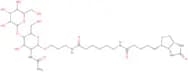
<p>N-Acetyl-D-lactosamine-sp-biotin is an oligosaccharide that is synthesized by the condensation of N-acetylglucosamine and sphingosine. It is a complex carbohydrate that can be modified with fluorination, monosaccharide, and polysaccharides. N-Acetyl-D-lactosamine-sp-biotin has been shown to have a high purity and can be used in the synthesis of glycosylation, methylation, or click chemistry.</p>Formula:C33H57N5O15SPurity:Min. 95%Color and Shape:PowderMolecular weight:795.9 g/molMonofucosyl-para-lacto-N-neohexaose IV
CAS:<p>Monofucosyl-para-lacto-N-neohexaose IV is a monofucosylated glycan consisting of a single pyranose ring. It is a synthetic oligosaccharide that has been modified with Click chemistry to introduce an alkyne group at the reducing end. The alkyne group can be further modified by nucleophilic substitution reactions, such as fluorination, or glycosylation. Monofucosyl-para-lacto-N-neohexaose IV is used in the synthesis of complex carbohydrates.</p>Formula:C46H78N2O35Purity:Min. 95%Molecular weight:1,219.1 g/mol2,3-Di-O-benzyl-5-O-tert-butyldimethylsilyl-L-arabinofuranose
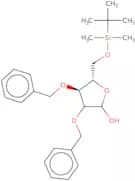
<p>2,3-Di-O-benzyl-5-O-tert-butyldimethylsilyl-L-arabinofuranose is a silyl ether of an arabinofuranose. It is a glycosylation that can be used in the synthesis of complex carbohydrates. This product has been modified with methylation and click chemistry to introduce fluorine atoms on the sugar ring. This compound can also be used for the synthesis of oligosaccharides or saccharides. The CAS number for this product is 104085-96-2.</p>Formula:C25H36O5SiPurity:Min. 95%Molecular weight:444.65 g/mol2,3,4,6-Tetra-O-acetyl-a-D-mannopyranosyl-N-Fmoc-L-serine pentafluorophenyl ester
CAS:<p>2,3,4,6-Tetra-O-acetyl-a-D-mannopyranosyl-N-Fmoc-L-serine pentafluorophenyl ester is a saccharide that has been modified using the Click chemistry. It is a polysaccharide and an oligosaccharide with a high degree of purity. The chemical formula for this compound is C22H32FN3O14PS and its molecular weight is 594.06 g/mol. This substance can be used in the synthesis of complex carbohydrates.</p>Formula:C38F5H34NO14Purity:Min. 95%Molecular weight:823.68 g/mol3-Deoxy-D-ribose
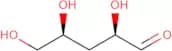
CAS:<p>3-Deoxy-D-ribose is a monosaccharide with a molecular formula of CH(OH)CO. It is the 3-deoxy form of ribose and its pyranose ring has an oxygen atom at the 3 position. 3-Deoxy-D-ribose can be synthesized by periodate treatment of glyceric acid in the presence of hydrochloric acid, followed by hydrolysis to produce sorbose and then reaction with glycolaldehyde to produce D-glycero-D-galactopyranosyl bromide. The final step is conversion to 3-deoxyribose by reaction with aqueous ammonia.<br>3-Deoxyribose inhibits ribulose synthesis, which prevents the formation of an intermediate molecule required for the synthesis of fatty acids and phospholipids.</p>Purity:Min. 95%Pregnanetriol 3a-O-b-D-glucuronide
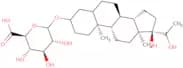
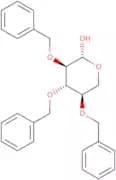
CAS:<p>Pregnanetriol 3a-O-b-D-glucuronide (PG3G) is a metabolite of progesterone that is excreted in the urine during the luteal phase. It is used as a marker for ovulation in women, and can be measured using immunoanalytical techniques. A multicentre study was conducted to measure PG3G levels and found that it is higher during ovulation than at other times of the menstrual cycle. This steroid hormone has been shown to inhibit follicular growth in rats, but its role in humans is less clear.</p>Formula:C27H44O9Purity:Min. 95%Molecular weight:512.63 g/mol2,3,4-Tri-O-benzyl-D-xylopyranose
CAS:<p>Calystegine is a benzyl ester of D-xylose. It is the reaction product of D-xylose with benzaldehyde and hydrochloric acid. The condensation product of calystegine with chondroitin sulfate is calystegine B2, which has been shown to be an inhibitor of protein glycosylation in human erythrocytes. This compound inhibits the oxygenated form of D-xylose, which may be useful in inhibiting the growth of certain cancer cells. Calystegine also has anti-inflammatory properties that may be due to its ability to inhibit prostaglandin synthesis.</p>Purity:Min. 95%2,5-Dideoxy-2,5-imino-D-mannitol HCl
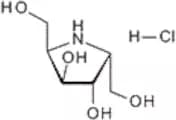
CAS:<p>Methylation is a chemical reaction that adds a methyl group to the substrate. The Methylation of saccharide is achieved by the addition of an alkyl group to the oxygen atom adjacent to the carbonyl group in the saccharide. The saccharide becomes a methylated saccharide. Click chemistry is a form of chemoselective reactions, which are reactions that involve only one reactant and produce one product. The most common example of click chemistry is a reaction between an azide and an alkynyl, which will give rise to 1,3-dipolar cycloaddition products. Carbohydrate modification includes modifications such as glycosylation, fluorination, and complex carbohydrate synthesis. Glycosylation refers to the process by which sugars are attached to other molecules, such as proteins or lipids. Fluorination refers to adding fluorine atoms (F) onto molecules using various methods. Complex carbohydrates can be synthesized from simple sugars with carbon</p>Formula:C6H13NO4·HClPurity:Min. 95%Molecular weight:199.63 g/molQuercetin 7-O-b-D-glucuronide
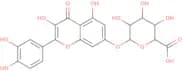
CAS:<p>Quercetin 7-O-b-D-glucuronide is a methylated glycoside of quercetin. Quercetin 7-O-b-D-glucuronide has been shown to inhibit the activity of Saccharomyces cerevisiae alpha amylase, alpha and beta amylases, and alpha glucosidase, which are enzymes that hydrolyze starch. This product also inhibits the growth of Candida albicans and Saccharomyces cerevisiae. Quercetin 7-O-b-D-glucuronide is available for custom synthesis in order to meet customers' specific needs.</p>Formula:C21H18O13Purity:Min. 95%Molecular weight:478.36 g/mol3'-Sialyl-3-fucosyllactose-BSA
<p>3'-Sialyl-3-fucosyllactose-BSA is a glycosylation that has been modified with fluorination and methylation. This product can be custom synthesized to order, in any quantity, using high purity reagents. 3'-Sialyl-3-fucosyllactose-BSA is a complex carbohydrate that is found on the surface of many human cells, including erythrocytes and B cells. It is also an important component of the oligosaccharide chains of glycoproteins and glycolipids. The modification of 3'-sialyl-3-fucosyllactose with fluorine or other halogens can be used as a fluorescent probe for carbohydrate binding proteins.</p>Purity:Min. 95%1,2,3-Tri-O-benzoyl-4,6-O-(4-methoxybenzylidene)-a-D-mannopyranose
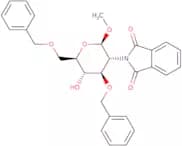
<p>1,2,3-Tri-O-benzoyl-4,6-O-(4-methoxybenzylidene)-a-D-mannopyranose is a carbonyl compound that is an intermediate in the synthesis of saccharides. The chemical modification of this compound can be used to synthesize complex carbohydrates. This compound has been fluorinated and methylated to produce a variety of derivatives with different properties. It also has been glycosylated and click modified for use in research and development.</p>Formula:C35H30O10Purity:Min. 95%Molecular weight:610.61 g/molMethyl 3,6-di-O-benzyl-2-deoxy-2-phthalimido-b-D-glucopyranoside
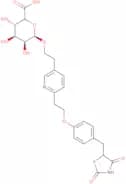
CAS:<p>Methyl 3,6-di-O-benzyl-2-deoxy-2-phthalimido-b-D-glucopyranoside is a custom synthesis product that is used to modify saccharides. This compound is an oligosaccharide and polysaccharide that can be fluorinated to form a complex carbohydrate. Methyl 3,6-di-O-benzyl-2-deoxy-2-phthalimido-b-D--glucopyranoside has been shown to react with monosaccharides and sugars in the presence of base to form a modified sugar.</p>Formula:C29H29NO7Purity:Min. 95%Molecular weight:503.54 g/molHydroxy pioglitazone (M-VII) b-D-glucuronide
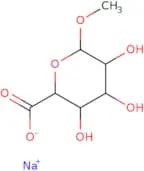
CAS:<p>Hydroxy pioglitazone (M-VII) b-D-glucuronide is a synthetic, fluorinated glucuronide of hydroxy pioglitazone. It has been shown to inhibit the activity of bacterial dna gyrase and topoisomerase IV enzymes.</p>Formula:C25H28N2O10SPurity:Min. 95%Molecular weight:548.56 g/molMethyl β-D-glucuronide sodium
CAS:<p>Methyl β-D-glucuronide sodium is a synthetic sugar that is used as a building block for the synthesis of glycoconjugates. This compound has been shown to be an efficient reagent for the introduction of click modifications into saccharides and oligosaccharides in order to produce glycosylations. Methyl β-D-glucuronide sodium is also used in the modification of polysaccharides, such as starch, cellulose, and chitin.</p>Formula:C7H11NaO7Purity:Min. 95%Color and Shape:PowderMolecular weight:230.15 g/molBlood Group H-BSA - 15 atom spacer
<p>The H-BSA-15-atom spacer is a synthetic polymer that can be modified to create a glycolipid or glycopeptide. The H-BSA-15-atom spacer is an oligosaccharide with a molecular weight of 3,500 daltons and has been custom synthesized for this use. This product is highly purified and does not contain any other substances, such as proteins. It has been fluorinated to increase its resistance to degradation by enzymes. Glycosylation and click modification have also been performed on the H-BSA-15 atom spacer.</p>Purity:Min. 95%Color and Shape:Powder