Glycoscience
Glycoscience is the study of carbohydrates and their derivatives, as well as the interactions and biological functions they participate in. This field of research is crucial for understanding a wide variety of biological processes, including cell recognition, signaling, immune response, and disease development. Glycoscience has important applications in biotechnology, medicine, and the development of new drugs and therapies. At CymitQuimica, we offer a wide selection of high-quality, high-purity products for glycoscience research. Our catalog includes monosaccharides, oligosaccharides, polysaccharides, glycoconjugates, and specific reagents, designed to support researchers in their studies on the structure, function, and applications of carbohydrates in biological systems. These resources are intended to facilitate scientific discoveries and practical applications in various areas of bioscience and medicine.
Subcategories of "Glycoscience"
- Aminosugars(108 products)
- Glyco-Related Antibodies(282 products)
- Glycolipids(46 products)
- Glycosaminoglycans (GAGs)(55 products)
- Glycosides(419 products)
- Monosaccharides(6,622 products)
- Oligosaccharides(3,682 products)
- Polysaccharides(503 products)
Found 11041 products of "Glycoscience"
Sort by
Purity (%)
0
100
|
0
|
50
|
90
|
95
|
100
(2S- trans) -4- Hydroxy- N- methyl 2- pyrrolidinecarboxami de
CAS:<p>(2S- trans)-4-Hydroxy-N-methyl 2-pyrrolidinecarboxamide is a modification of the sugar molecule. It is a complex carbohydrate that belongs to the group of oligosaccharides. It has CAS number 143035-54-5 and can be synthesized in high purity with a glycosylation process. This chemical can also be fluorinated and saccharide substituted to create a wide range of products with different properties.</p>Purity:Min. 95%4-Aminobenzyl b-D-thiogalactopyranoside
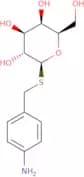
CAS:<p>4-Aminobenzyl b-D-thiogalactopyranoside is a chemical compound that belongs to the group of glycosylation, complex carbohydrate, Methylation, Click modification, Polysaccharide, Fluorination, saccharide, Modification and sugar. It is a synthetic product that can be modified according to customer requests. 4-Aminobenzyl b-D-thiogalactopyranoside is an oligosaccharide that has been custom synthesized for high purity. This product can be used in various applications such as pharmaceuticals and biochemistry research.</p>Formula:C13H19NO5SPurity:Min. 95%Color and Shape:PowderMolecular weight:301.36 g/mol1,2,3-Tri-O-benzyl-4,6-O-benzylidene-a-D-galactopyranoside
CAS:<p>The 1,2,3-Tri-O-benzyl-4,6-O-benzylidene-a-D-galactopyranoside is a synthetic glycoside that can be used as a saccharide in the synthesis of complex carbohydrates. This compound has been shown to have high purity and can be custom synthesized. It has been modified with methylation and fluorination. The CAS No. for this compound is 53929-36-5.</p>Formula:C34H34O6Purity:Min. 95%Molecular weight:538.63 g/molMogroside II A2
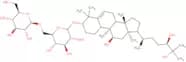
CAS:<p>Mogroside II A2 is a fructan that is found in the fruit of the plant Glycosmis erythrorhiza, which is a member of the family Rutaceae. This compound has been shown to have immune-modulating properties and is used as an ingredient in some pharmaceutical drugs. Mogroside II A2 has also been demonstrated to have antiviral activity and may be helpful for cancer treatment. The effects of this compound on kidney fibrosis are unclear; however, it does have anti-inflammatory properties.</p>Formula:C42H72O14Purity:Min. 95%Color and Shape:PowderMolecular weight:801.01 g/mol1,5-Dideoxy-D-xylulose
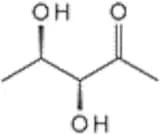
CAS:<p>1,5-Dideoxy-D-xylulose is a synthetic compound that has been modified to make it resistant to methylation and other modifications. It can be used as a raw material for the production of complex carbohydrates and saccharides, such as oligosaccharides and polysaccharides. 1,5-Dideoxy-D-xylulose is widely used in the modification of saccharides and carbohydrates. It is important in the production of high purity monosaccharides, which are used in the synthesis of pharmaceuticals. This product is also often used for fluorination reactions.</p>Formula:C5H10O3Purity:Min. 95%Molecular weight:118.13 g/molBlood group A type 3/4 tetrasaccharide
<p>Gala1-3(Fuca1-2)Galb1-3GalNAc</p>Formula:C28H48N2O20Purity:Min. 95%Molecular weight:732.68 g/molMethyl-O-b-D-glucopyranosyl-(1-3)-S-b-D-glucopyranosyl-(1-4)-O-4-thio-b-D-glucopyranosyl-(1-4)-b-D-glucopyranoside
CAS:<p>Methyl-O-b-D-glucopyranosyl-(1-3)-S-b-D-glucopyranosyl-(1-4)-O-4-thio-b-D-glucopyranosyl-(1,4)-b-D-[2] glucopyranoside is a synthetic saccharide with a single modification of 4'-fluoro substitution on the O6 position. This modification provides an increased stability to acid hydrolysis. Methylation and saccharide synthesis is performed in our lab and custom modifications are available upon request.</p>Formula:C25H44O20SPurity:Min. 95%Molecular weight:696.67 g/mol2,3,4,6-Tetra-O-acetyl-1,5-anhydro-D-mannitol
CAS:<p>2,3,4,6-Tetra-O-acetyl-1,5-anhydro-D-mannitol is a high yield precursor for the production of the drug 2,3,4,6-tetraacetoxybenzoin. The anomers are selectively formed by reacting with chlorides and iodides at elevated temperatures. The reaction yields the diastereomeric mixture of tetraacetoxybenzoin in a ratio of about 1:2. This product also reacts with acetobromoglucose to produce acrylonitrile (ACN). 2,3,4,6-Tetra-O-acetyl-1,5-anhydro-D-mannitol is a catalytic precursor for the production of the drug 2-(pyranosyl)-1-[2-(chloro)acetylamino]-2-(nitrophenyl)ethanol (PAN). This product can be</p>Formula:C14H20O9Purity:Min. 95%Molecular weight:332.3 g/molTolmetin acyl-b-D-glucuronide
CAS:<p>Tolmetin acyl-b-D-glucuronide is a nonsteroidal anti-inflammatory drug that is metabolized to the active form, tolmetin, in the liver. The major route of elimination is through the kidneys as an inactive conjugate with glucuronic acid and excreted in urine. Tolmetin acyl-b-D-glucuronide has been shown to react with lysines on proteins in biological fluids by forming covalent adducts. This reaction can lead to allergic reactions and other problems.</p>Formula:C21H23NO9Purity:Min. 95%Color and Shape:White to pale yellow solid.Molecular weight:433.41 g/molMethyl 3,4-O-isopropylidene-b-L-erythro-pentopyranosid-2-ulose
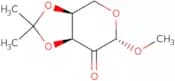
CAS:<p>Methyl 3,4-O-isopropylidene-b-L-erythro-pentopyranosid-2-ulose is a monosaccharide that has been synthesized using the Click chemistry. This compound is a fluorinated sugar and has been custom synthesized for the purpose of glycosylation. The synthesis of this compound was accomplished by first protecting the hydroxyl group with an acetate ester, followed by methylation of the hydroxyl group with dimethylchloromethylphosphonate. The resulting product was then subjected to acidolysis in order to cleave off the acetate ester and liberate free 3,4-O-isopropylidene b-L-erythro pentopyranosid 2 (1) as shown below:</p>Formula:C9H14O5Purity:Min. 95%Molecular weight:202.2 g/molEquilin 3-O-b-D-glucuronide sodium salt
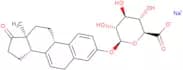
CAS:<p>Equilin 3-O-b-D-glucuronide sodium salt is a synthetic, monosaccharide that can be used as a raw material for various glycosylation reactions. This compound is an example of a fluorinated sugar. Equilin 3-O-b-D-glucuronide sodium salt has the CAS number 27610-12-4 and can be custom synthesized to order. It can be modified with a click reaction or other modification techniques to generate desired products. This product is available in high purity and can be used for glycosylation reactions.</p>Formula:C24H27O8·NaPurity:Min. 95%Molecular weight:466.46 g/molPhenyl 2,4,6-tri-O-acetyl-3-O-benzyl-b-D-thioglucopyranoside
CAS:<p>Phenyl 2,4,6-tri-O-acetyl-3-O-benzyl-b-D-thioglucopyranoside is a synthetic sugar that has been modified with three fluorine atoms. It is an intermediate in the synthesis of the Methylated Polysaccharides and Click Modifications. This product is a high purity, custom synthesis and can be used for glycosylation or to synthesize other carbohydrates.</p>Formula:C25H28O8SPurity:Min. 95%Color and Shape:PowderMolecular weight:488.55 g/molN-Acetyl-D-[UL-13C6]glucosamine
CAS:<p>N-Acetyl-D-[UL-13C6]glucosamine is a complex carbohydrate that contains a sugar at the end of a glycosidic bond. This product is modified with methylation, glycosylation, and fluorination. It has CAS No. 127959-06-2, High purity, and is custom synthesized for your specific needs.</p>Formula:C6C2H15NO6Purity:Min. 95%Molecular weight:227.21 g/molEthyl-3,6-di-O-benzoyl-2-trifluoromethanesulfonyl-4-O-(2,3,4,6-tetra-O-acetyl-b-D-galactopyranosyl)-b-D-mannopyranoside
CAS:<p>Ethyl-3,6-di-O-benzoyl-2-trifluoromethanesulfonyl-4-O-(2,3,4,6-tetra-O-acetyl-b-D-galactopyranosyl)-b-D-mannopyranoside is a synthetic modified oligosaccharide that has been fluorinated. It is a complex carbohydrate that has a CAS number of 1008750-65-9. The modification of the monosaccharides in this product are methylation and click modification.</p>Formula:C37H41F3O19SPurity:Min. 95%Molecular weight:878.77 g/molα,β-D-Glucose pentaacetate
CAS:<p>Glucose pentaacetate is a form of glucose that reacts with boron trifluoride etherate to produce anomers. This process can be used to synthesize the anomeric form of glucose, which is important for the biosynthesis of glycosides. Glucose pentaacetate has been shown to react with nitrate and trifluoride, forming conjugates with aluminum and chloride. The catalytic stereocontrol of this reaction allows for the production of disaccharides without hydrogen chloride or formylation.</p>Formula:C16H22O11Molecular weight:390.35 g/mol1-O-Oleoyl-2-O-acetyl-3-O-(b-D-galactopyranosyl) syn-glycerol
<p>1-O-Oleoyl-2-O-acetyl-3-O-(b-D-galactopyranosyl) syn-glycerol is a complex carbohydrate that is custom synthesized for use in modification reactions. It has been shown to be compatible with a variety of other saccharides and can be methylated, glycosylated, or fluorinated. This product is available in high purity and can be ordered as either a monosaccharide or a polysaccharide.</p>Formula:C29H52O10Purity:Min. 95%Molecular weight:560.72 g/mol4-Formylphenyl 2,3,4,6-tetra-O-acetyl-b-D-glucopyranoside
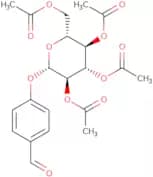
CAS:<p>4-Formylphenyl 2,3,4,6-tetra-O-acetyl-b-D-glucopyranoside is a custom synthesis that is modified with fluorine, methylated and acetylated. This compound has CAS No. 31873-42-4 and is a monosaccharide. It also can be used to synthesize oligosaccharides and polysaccharides. 4-Formylphenyl 2,3,4,6-tetra-O-acetyl-b-D-glucopyranoside is an example of a carbohydrate that has been glycosylated and modified with click chemistry.</p>Formula:C21H24O11Purity:Min. 95%Molecular weight:452.4 g/mol5-(Acetylamino)-4-amino-2,6-anhydro-3,4,5-trideoxy-7-O-methyl-D-glycero-D-galacto-non-2-enonic acid
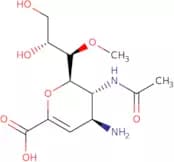
CAS:<p>5-(Acetylamino)-4-amino-2,6-anhydro-3,4,5-trideoxy-7-O-methyl-D-glycero-D-galacto-non-2-enonic acid is a custom synthesis. It is synthesized by modification of the 7th carbon in the glycosidic bond and fluorination of the 4th carbon on the sugar ring. The chemical structure is based on an amino sugar composed of two acetic acid residues, one anhydro sugar residue and one methyl group. This product is a white to off white solid with a molecular weight of 597.07 g/mol that has a melting point of 154°C.</p>Formula:C12H20N2O7Purity:Min. 95%Molecular weight:304.3 g/mol2,3,4,6-Tetra-O-acetyl-b-D-glucopyranosyl ethylxanthate
CAS:<p>2,3,4,6-Tetra-O-acetyl-b-D-glucopyranosyl ethylxanthate is a synthetic carbohydrate that has been modified with acetyl groups. This modification is used to produce a carbohydrate that is more resistant to hydrolysis by enzymes. 2,3,4,6-Tetra-O-acetyl-b-D-glucopyranosyl ethylxanthate is one of many glycosides that have been modified with acetyl groups and fluorinated. This modification can be used for the synthesis of high purity carbohydrates.</p>Formula:C17H24O10S2Purity:Min. 95%Color and Shape:White To Off-White SolidMolecular weight:452.5 g/molHydroxypropyl cellulose - Average MW 100,000
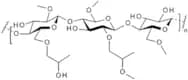
CAS:<p>In water, hydroxypropyl cellulose forms liquid crystals with many mesophases depending on concentration. These mesophases include isotropic, anisotropic, nematic and cholesteric, the latter resulting in many colors such as violet, green and red. Pharmaceutical applications include treatments for medical conditions such as dry eye syndrome (keratoconjunctivitis sicca), recurrent corneal erosions, decreased corneal sensitivity, exposure and neuroparalytic keratitis. It is also used as a binder in tablets. Hydroxypropylcellulose is also used as a thickener, a binder and emulsion stabiliser in foods with E number E463. HPC is used as a support matrix for DNA separations by capillary and microchip electrophoresis.</p>Purity:Min. 95%







![N-Acetyl-D-[UL-13C6]glucosamine](/_next/image/?url=https%3A%2Fstatic.cymitquimica.com%2Fproducts%2F3D%2Fthumb-webp%2FMA44797.webp&w=3840&q=75)